
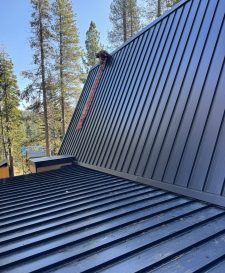
If your siding shows damage on more than one elevation, the substrate underneath has been wet for years, or your home hasn't been reinspected since the last major storm cycle, full residing is usually the sounder move — it lets us open the whole wall system, check for rot and termite activity, and install a uniform product with a single wind rating. If the damage is confined to one wall — often the west or southwest side that takes the brunt of afternoon storms — and the rest of your siding is sound, structurally intact, and reasonably close in age, partial residing can be the more practical choice. Homeowners across Tampa, Wesley Chapel, Lutz, Land O' Lakes, New Port Richey, Plant City, and Zephyrhills ask us to weigh in on this decision often enough that it's worth walking through both options honestly, including where each one falls short.
Full residing means stripping every elevation of the house down to the sheathing (or at least down to the existing weather-resistant barrier, depending on condition) and installing new siding, trim, and flashing as one continuous system. In this part of Florida, that matters for a few practical reasons. Wind-driven rain during tropical storms and hurricanes doesn't hit a house evenly — it finds the weakest seam, and seams are exactly where a patched-in repair from a partial job tend to sit. A full tear-off lets your contractor inspect the entire building envelope at once: sheathing that's absorbed moisture over the years, any termite damage in old wood trim (a real concern in a region with year-round termite pressure), and areas where the house wrap or flashing has failed. It also means every piece of siding on the house carries the same Florida Product Approval and the same wind rating, so there's no weak elevation that under-performs the rest during a named storm.
The tradeoff is upfront cost and disruption. A full residing project touches the entire exterior, so scaffolding or ladder work wraps the whole house, landscaping near every wall gets disturbed, and the project simply takes longer than a single-wall repair. For a home with no hidden rot and damage limited to one section, that scope may be more than the situation calls for.
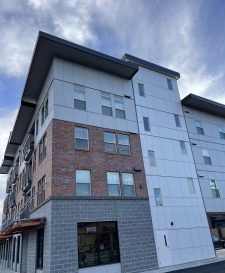
Partial residing replaces siding on one elevation, one addition, or one damaged section while leaving the rest of the house alone. It's the right call when the untouched siding is genuinely still sound — no soft spots, no chronic staining, no history of water intrusion — and the damaged section is clearly isolated, such as a wall that took a direct hit from a falling limb or years of wind-driven rain off an exposed corner.
The honest drawback is matching. Vinyl and fiber cement both change color slightly as UV exposure accumulates over years of Florida sun, so a brand-new panel run next to ten-year-old siding is rarely a perfect match on day one, and it can become more noticeable as the new section weathers at a different rate than the old. There's also a technical seam to manage: wherever new siding meets old, the flashing and water management detail at that transition has to be built correctly, or that exact joint becomes the point where wind-driven rain gets in — which defeats the purpose of doing the repair in the first place. Partial residing works well when it's planned carefully around that seam; it's a poor shortcut when it's used to avoid inspecting a section of wall that's actually been compromised.
| Full Residing | Partial Residing | |
|---|---|---|
| Cost | Higher upfront, typically a broad range depending on siding material and square footage, since the whole exterior is involved | Lower upfront cost, scaled to the size of the section being replaced |
| Lifespan | One consistent service life across the whole house, easier to track one warranty and one install date | Two service lives running on different clocks — the new section will outlast the older siding around it |
| Maintenance | Uniform upkeep — caulking, fastener checks, and cleaning happen on the same schedule everywhere | Split maintenance — the older siding may need attention (recaulking, panel replacement) years before the newer section does |
| Appearance | Consistent color and profile across every elevation from day one | Possible visible seam or slight color difference where new meets old, more noticeable over time as materials weather unevenly |
For Tampa Bay specifically, a few local factors tend to tip the decision. The first is age and moisture history. Florida's humidity keeps wall assemblies damp longer after a leak than they would stay in a drier climate, and that extended moisture exposure is what actually rots sheathing and invites termites — not the initial water intrusion itself. If your home is older and has never had its exterior opened up, a full residing project is the only way to actually see what's happening behind the siding rather than guess.
The second factor is wind performance. Under the Florida Building Code, siding products carry a Florida Product Approval tied to a tested wind rating, and that rating is only as reliable as the weakest installed section. Mixing a new, correctly rated product with older siding of unknown condition creates a wall system where one part may outperform the code minimum and another may not. If wind mitigation credits matter to your insurance premium — the kind of detail captured on the OIR-B1-1802 wind mitigation inspection form — a full residing project that upgrades the whole envelope at once is usually the more defensible way to improve that inspection outcome, since inspectors are evaluating the whole structure, not one wall.
Location within the region matters too. Homes closer to the Gulf side, including parts of New Port Richey, deal with more salt-laden air, which accelerates fastener corrosion and finish wear compared to more inland communities like Plant City, Zephyrhills, or Land O' Lakes. On a coastal-influenced home, we lean harder toward full residing so every fastener and flashing detail on the house is new and rated for that exposure, rather than leaving older, more corrosion-prone hardware in place on the untouched sections. Further inland, where salt exposure isn't a factor, a well-isolated partial repair holds up fine as long as the surrounding siding is genuinely sound.
The last factor is simply what the damage tells you. Isolated impact damage, a single storm-damaged wall, or cosmetic wear on one elevation with no signs of moisture behind it are reasonable candidates for partial work. Chronic staining, soft spots when you press on the siding, siding that's original to a home built decades ago, or damage that shows up in more than one place on the house are signals that what looks like a partial repair is really the first visible symptom of a whole-house problem. Alpine Exteriors walks every job with a hands-on inspection before recommending either approach, because the visible damage on the surface doesn't always match what's happening behind it.
Yes, and it's a common approach for homeowners managing the project around a budget. The key is choosing a siding product and color that's still available when you come back for the next phase, and making sure the transition point between phases is flashed correctly the first time so it doesn't need to be reopened later.
It shouldn't, as long as the original siding is still within its own manufacturer warranty and the new work is installed as a proper transition rather than tied directly into the old panels in a way that voids either product's terms. This is worth confirming with your contractor and the manufacturer before work starts, since warranty terms vary by product.
Press on the siding in a few spots away from the visibly damaged area — soft, spongy give usually means moisture has already spread past what you can see. Persistent staining, a musty smell near an exterior wall indoors, or siding that's original to an older home are all reasons to have the full wall opened up rather than assuming the damage stops where it looks like it stops.
It can, since a full residing project typically updates the entire wall assembly to current Florida Building Code standards and product approvals, which is what an inspector is evaluating on the OIR-B1-1802 form. Partial work on one wall doesn't change the rating of the rest of the house, so any credit tied to siding or opening protection is more likely to show up after a full exterior upgrade. Your insurance agent can confirm exactly how a given project affects your specific policy.
Every house carries its own history of storms, repairs, and wear, which is why this decision shouldn't be made from a photo or a phone estimate. Alpine Exteriors, licensed in Florida under RB29003900, inspects the siding and the wall assembly behind it before recommending full or partial residing, so the scope of the project actually matches the condition of your home. If you're in Tampa, Wesley Chapel, Lutz, Land O' Lakes, New Port Richey, Plant City, Zephyrhills, or anywhere nearby in Tampa Bay and want a straight answer on which approach fits your situation, reach out for an on-site evaluation.