
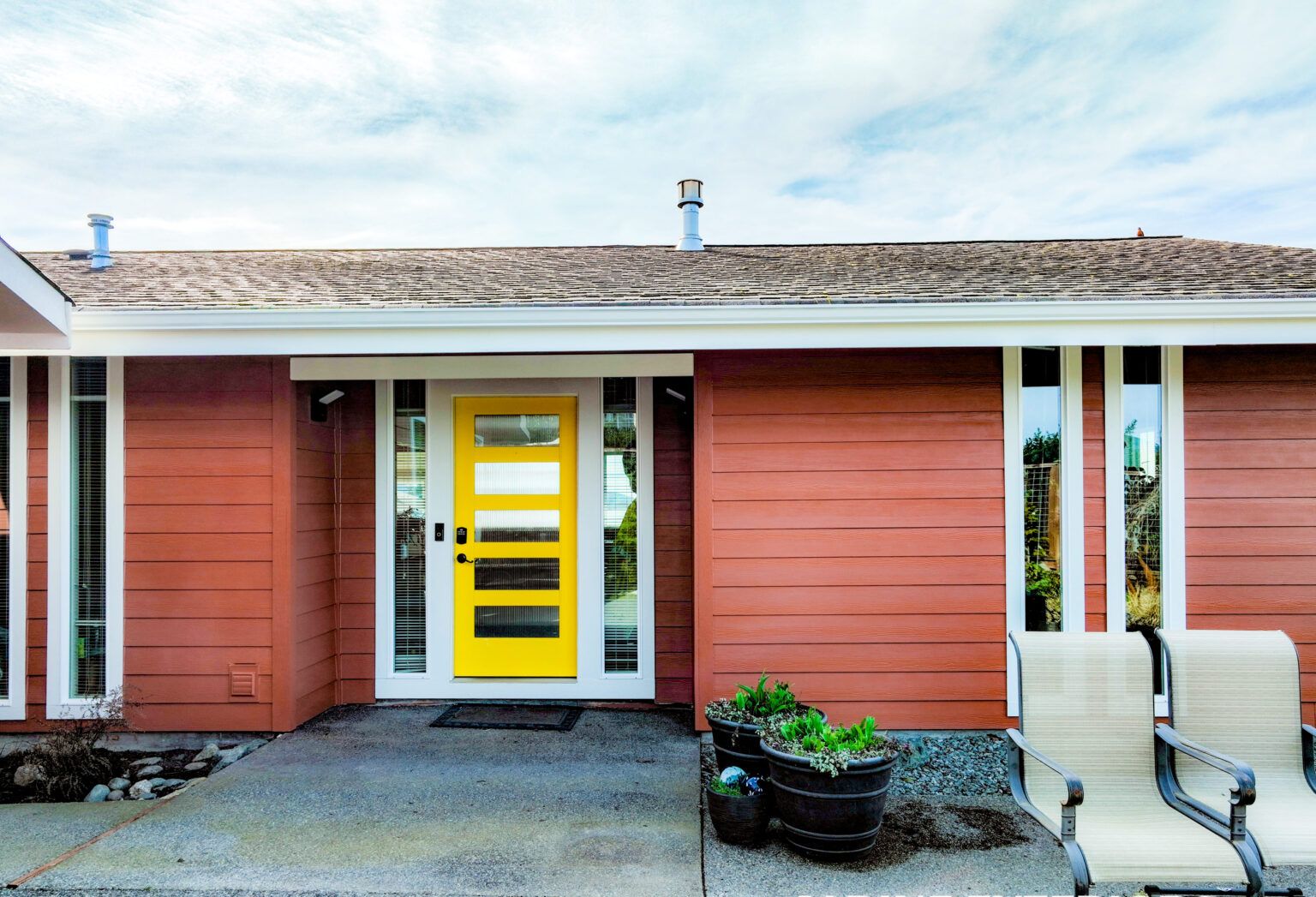
Board and batten has become one of the most requested looks in Tampa Bay over the past few years — wide vertical boards with narrower battens covering the seams, often mixed with lap siding or stone accents on the same elevation. It reads as modern farmhouse or coastal, depending on the trim and color, and it holds up well against the vertical lines of gables and porch fronts that a lot of Tampa, Wesley Chapel, and Land O' Lakes homes have. Before you start collecting quotes, it helps to understand what actually drives the price in this market, because board and batten spans a wider cost range than most siding styles — the material choice alone can swing the number more than almost any other decision you'll make.
For a full-house board and batten installation in the Tampa Bay area, most homeowners land somewhere in the moderate-to-upper range of exterior siding costs, with the final number depending heavily on material, house size, and how much of the existing wall assembly needs to be addressed before new siding goes up. Projects that use board and batten only as an accent — a gable end, a porch, a dormer — cost far less in total dollars than a whole-house application, even though the per-square-foot rate may be similar or slightly higher because of the extra trim work involved in a smaller, more detailed area.
| Cost Factor | Low End | High End |
|---|---|---|
| Vinyl board and batten (material + install) | Lower | Moderate |
| Fiber cement board and batten (material + install) | Moderate | Upper-moderate |
| Engineered wood board and batten (material + install) | Moderate | Upper-moderate |
| Tear-off and disposal of existing siding | Adds modestly | Adds significantly on multi-layer or stucco removal |
| House size / number of stories | Single-story, simple footprint | Two-story, complex roofline |
| Moisture barrier / rain screen upgrade | Basic weather-resistive barrier | Full drainage plane system |
| Trim, corner boards, and batten spacing detail | Standard spacing, simple corners | Custom spacing, mitered or wrapped corners |
| Accent application vs. whole-house | Single gable or porch | Full exterior |
Fiber cement tends to sit at the higher end of the material cost range, but it's also the material most Tampa Bay homeowners end up choosing for board and batten specifically because vertical seams and butt joints are more exposed to wind-driven rain than horizontal lap siding, and fiber cement handles that exposure, along with our humidity and termite pressure, better than wood-based alternatives over the long run. Vinyl board and batten profiles have gotten better looking in recent years and cost less up front, but panel flex in high heat and a more limited color depth are worth weighing against the savings.
A handful of factors push a board and batten quote up or down more than anything else. Tear-off matters — pulling old siding down to the sheathing, especially if there are multiple layers or old stucco underneath, adds labor that a straightforward re-side over sound sheathing doesn't. House complexity matters too: steep gables, dormers, and lots of window and door trim all mean more cutting, more waste, and more time on the ladder, which board and batten's vertical orientation only amplifies compared to horizontal siding.
Wind exposure is a real cost driver here, not a boilerplate line. Tampa Bay sits in a wind-borne debris region under the Florida Building Code, and any siding product installed here has to carry a valid Florida Product Approval rating tied to the wind pressures for the specific site and building height. That doesn't mean every project needs premium fastening, but it does mean the fastener schedule, panel thickness, and installation method all have to match what the product's approval allows for your exposure category — cutting corners here isn't just a durability issue, it can be a code compliance issue that shows up at final inspection or during a future insurance claim.
Moisture management is the other big one. Vertical board and batten creates more seams running down the wall than lap siding does, and in a climate with our humidity and mold pressure, the drainage plane behind the siding matters as much as the siding itself. A rain screen or upgraded weather-resistive barrier costs more up front but reduces the odds of trapped moisture behind the boards, which is a bigger long-term risk with board and batten than with most other profiles.
A complete board and batten quote from Alpine Exteriors should spell out material brand and profile, board width and batten spacing, whether the project is a tear-off or install-over, the type of moisture barrier being used, fastener type and schedule, trim and corner detail, paint or factory finish, and a start-to-finish timeline. It should also note the Florida Product Approval number for the specific siding product being installed, since that's what ties the job to code compliance for your wind zone. Anything short of that level of detail makes it hard to know what you're actually paying for, and makes it nearly impossible to compare against a second bid.
The biggest mistake in comparing siding bids is lining up the bottom-line number without checking whether both contractors are quoting the same scope. A low bid that skips tear-off, uses a thinner or unrated panel, or leaves out a proper moisture barrier isn't actually cheaper — it's a different, lesser project. Ask each contractor for the specific product name and thickness, whether the price includes removal and disposal of existing siding, and what moisture barrier is included. Ask to see the Florida Product Approval documentation for the exact product and confirm it covers your home's wind exposure. And ask what happens if rot or damaged sheathing is found once the old siding comes off — a contractor who has a clear answer for that up front is usually more trustworthy than one who hasn't thought about it.
It's also worth asking how each bid treats warranty coverage — material warranties from the manufacturer and labor warranties from the installer are two different things, and a quote should be clear about both. Alpine Exteriors carries Florida contractor license RB29003900, and any contractor you're comparing against should be able to produce their own active license number without hesitation.
Many Tampa Bay homeowners spread a siding project's cost through a home improvement loan, a home equity line, or manufacturer and retailer financing programs tied to specific products — terms and qualification vary by lender, so it's worth comparing more than one option rather than accepting the first offer a contractor presents. On the insurance side, replacing siding doesn't typically lower a homeowner's premium on its own, but it can be a good time to have a wind mitigation inspection done and file an updated OIR-B1-1802 wind mitigation form with your insurer, particularly if the new siding installation coincides with other exterior improvements like updated roof-to-wall connections. That form documents features that can affect windstorm premium calculations, and it's a separate process from the siding installation itself, so ask your contractor whether they coordinate with a licensed inspector or whether that's something to schedule independently.
It can be, mainly because of labor. The vertical boards and battens require more precise cutting and more fastening points per square foot than horizontal lap siding, and the extra seams need careful moisture detailing given our humidity. Material cost is often similar to lap siding in the same product line, but installation labor tends to run a bit higher.
Fiber cement board and batten generally performs well against intense UV exposure and humidity when it's installed with proper spacing and a functioning drainage plane behind it. Wood-based products need more diligent maintenance and repainting to avoid moisture problems in this climate, which is part of why fiber cement is the more common choice for full-house applications here.
Homes throughout Tampa Bay fall within a wind-borne debris region under the Florida Building Code, so the siding product and fastening method need a Florida Product Approval that matches your site's wind exposure. Homes closer to the coast may also deal with salt air, which is worth mentioning to your contractor so fastener material and finish selections account for it.
Sometimes, if the existing wall is flat, sound, and free of rot or moisture damage — this avoids tear-off labor and lowers cost. But it's not always a good idea in Florida; installing over compromised sheathing or trapped moisture just hides a problem instead of fixing it, so a contractor should inspect the wall before recommending an install-over approach.
Board and batten can be a strong long-term choice for Tampa Bay homes when the material, moisture barrier, and wind rating are matched correctly to your house and site. Alpine Exteriors serves Tampa, Wesley Chapel, Lutz, Land O' Lakes, New Port Richey, Plant City, and Zephyrhills, and can walk through material options, realistic cost ranges, and code requirements for your specific property. Reach out to schedule an on-site evaluation and get a written quote that spells out exactly what's included.