
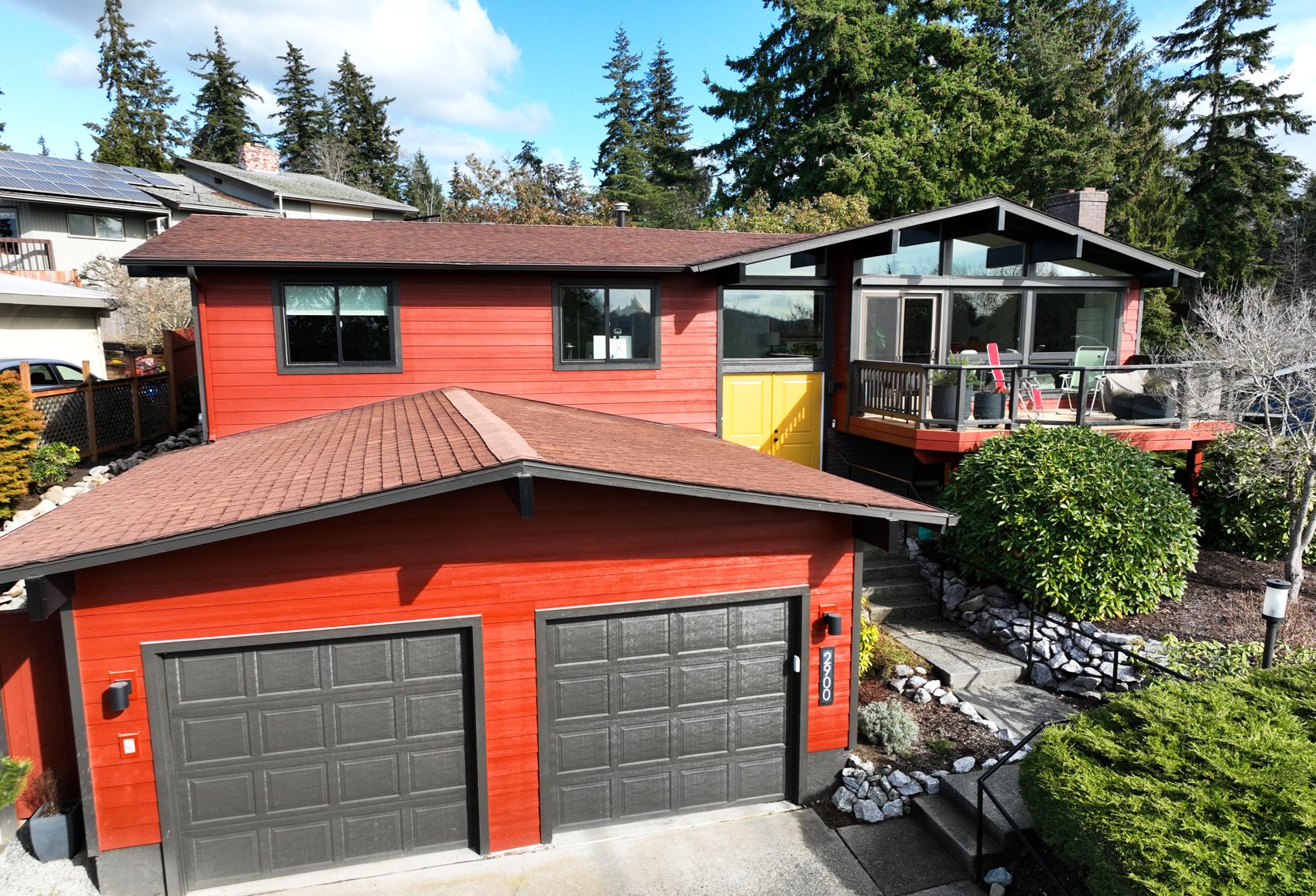
Odessa sits inland from Tampa Bay among the lakes and tree canopy of Pasco County, which sounds like it should spare local homes from the coastal beating that siding takes closer to the Gulf. It doesn't spare them by much. Odessa homes still sit through the same subtropical humidity, the same punishing summer UV, the same subterranean termite pressure, and the same hurricane-season wind and wind-driven rain as the rest of the Tampa Bay region. Siding is the first line of defense against all of it, and when it starts to fail, the damage is often happening behind the panels long before it's visible from the driveway. Below is a practical rundown of what to look for, what's actually causing it here in Odessa, and how to tell a cosmetic issue from one that needs attention now.
Walk your home's exterior a couple of times a year, especially after a heavy storm, and look for these:
This usually shows up as a wavy, uneven surface, most often on the south- and west-facing walls that take the brunt of the afternoon sun. In Odessa's climate, siding goes through constant expansion and contraction as temperatures swing between hot, humid afternoons and cooler nights, and vinyl in particular is designed to move slightly with those swings. When panels were installed too tightly, nailed flush instead of left to float, or hung without the clearance called for by the manufacturer's installation instructions, that movement has nowhere to go and the panel buckles instead. It's rarely a structural emergency by itself, but it does mean the siding is no longer shedding water the way it should at that spot.
Cracks can come from wind-blown debris during a summer thunderstorm or a tropical system, a stray hit from a mower or trimmer, or simple age-related brittleness after years of UV exposure. Fiber cement can crack from impact too, and older wood trim near siding transitions is an easy target for woodpeckers. The concern isn't just appearance — any break in the surface is a path for wind-driven rain to get behind the panel during the region's June-through-November storm season, and once water is behind the siding it doesn't dry out quickly in Tampa Bay's humidity.
When paint or caulk bubbles or lifts, it's almost always moisture pushing outward from underneath rather than a simple cosmetic failure. Humidity in this region keeps building materials damp longer than they'd stay in a drier climate, and once moisture gets trapped between a coating and the substrate, it has to go somewhere. Caulk joints at trim and seams also break down faster here under sustained UV exposure, and once a joint fails, water starts working its way in every time it rains.
Press your palm against the siding near the bottom of walls, under windows, and around any spot where caulk looks questionable. If it gives slightly, you're likely feeling rot in the wood sheathing or trim behind the siding, not the siding material itself. This is one of the more serious signs on this list, because by the time it's soft to the touch, water intrusion has usually been going on for a while. Humidity and limited airflow behind poorly ventilated wall assemblies accelerate this kind of decay once it starts.
Look closely at where panels meet corner posts, trim boards, and window and door casings. Gaps here often trace back to fasteners that have backed out from years of thermal cycling, or to panels that were never given the expansion clearance called for under the manufacturer's Florida product approval. A small gap might just look untidy. During a named storm with sustained wind and driving rain, that same gap is an entry point, and it's often how water ends up inside a wall cavity with no visible sign on the interior for months.
Odessa's lake-adjacent, tree-shaded lots — think the areas around Lake Keystone and Lake Josephine — hold humidity longer than open, sun-baked lots, and north-facing walls or sections under deep eaves may never fully dry out between rains. That combination is exactly what mildew, algae, and mold need to take hold. Early on, this is cosmetic and often comes off with a gentle wash. If it keeps returning in the same spots no matter how often it's cleaned, that's usually a sign the siding or the wall behind it is staying wet longer than it should, which points to a drainage or ventilation problem rather than a cleaning problem.
Rub a hand across an older panel and check for a powdery residue. That chalking is the surface finish breaking down under Central Florida's intense, near year-round UV exposure. On its own it's a cosmetic and age indicator, not an emergency, but it's a useful clue: siding that's chalking has usually been in place long enough that the material is also more brittle and more prone to cracking under the next storm's wind-blown debris.
Subterranean termites are a fact of life throughout Pasco County, and siding, trim, and fascia give them an easy path from soil to structure if there's any wood-to-ground contact or hidden moisture. Watch for pencil-width mud tubes running up the foundation toward the siding, small piles of frass, or wood trim that sounds hollow when tapped. This is one area worth being direct about scope: a siding contractor can spot the damage and replace affected material, but active termite treatment is pest control work and should go to a licensed pest control company. Don't wait on that piece.
This one is easy to miss because it doesn't look like a siding problem. Gaps, rot, and compromised panels let humid outside air work its way into the wall assembly, which makes the AC system work harder to keep up. It's rarely enough on its own to diagnose siding failure, but paired with any of the visual signs above, an unexplained jump in cooling bills is worth factoring in.

Not everything on this list needs a same-week response, and it's worth being honest about that instead of treating every flaw as an emergency.
Address soon, ideally before the next storm system: soft or spongy sections, large or spreading gaps, missing or badly cracked panels, and any active termite activity reaching wood framing. These represent water or pest intrusion that's already underway, and Tampa Bay's storm season gives that intrusion regular opportunities to get worse. If a panel was damaged in a recent storm, getting it closed up before the next system rolls through matters more than getting a perfect color match.
Can be monitored and scheduled on your timeline: chalking or fading, isolated small cracks away from seams and openings, and mild mildew or algae staining that responds to a wash. These are worth tracking — take a photo every few months so you can see whether they're stable or spreading — but they don't typically justify an emergency repair.
The general rule: if water or pests can currently get behind the siding, treat it as urgent. If the issue is on the surface and the material behind it is still sound, it can go on a normal maintenance schedule.
Start with a walk around the exterior, camera in hand, especially after any storm with heavy wind or rain. Photos are useful for your own records and can also support an insurance claim or a wind mitigation inspection under the state's OIR-B1-1802 form if damage is storm-related. From there, get a professional assessment rather than guessing — a siding contractor like Alpine Exteriors can tell the difference between a cosmetic blemish and a sign of trouble behind the wall, often by probing a few suspect spots rather than replacing anything unnecessarily.
If replacement does turn out to be the right call, confirm that whatever product goes up carries a current Florida Product Approval rated for the wind pressures Pasco County construction requires, and that the installer is pulling the permit the Florida Building Code requires for the scope of work. It's also fair to know the tradeoffs going in: a full re-side is a bigger investment than patching a few panels, but if the existing siding is an older or discontinued profile, patch repairs may not match well and can end up looking worse than a coordinated section replacement. A straightforward repair to a few damaged panels can often run a few hundred to around a couple thousand dollars depending on material and access, while a full re-side of an average home is a much larger project — get a written, itemized estimate before committing either way, and don't assume the more expensive option is automatically the right one for your situation. Alpine Exteriors, licensed in Florida under RB29003900, provides these assessments across Tampa, Wesley Chapel, Lutz, Land O' Lakes, New Port Richey, Plant City, Zephyrhills, and Odessa, and will tell you plainly when a repair is enough and when it isn't.
Try a gentle cleaning on a small, inconspicuous section first. If the discoloration lifts and the surface underneath is smooth, solid, and consistent in color, you're likely dealing with surface grime, mildew, or algae rather than material failure. If cleaning doesn't fully remove the staining, or if the surface feels soft, chalky beyond normal fading, or uneven once it's clean, that points toward an underlying issue rather than dirt.
Light cleaning with a garden hose and soft brush is generally fine, but a pressure washer used incorrectly can force water behind panels, strip protective coatings, or crack aging fiber cement, which can turn a cosmetic problem into a real one. If you want to pressure wash, use the lowest effective pressure, keep the nozzle at a low angle rather than pointed straight at seams, and skip it altogether on any section that already feels soft or shows gaps.
It depends heavily on the cause and your policy. Damage from a specific storm event, like wind-driven rain forcing its way through a storm-cracked panel, is more likely to be considered than gradual deterioration from age, sun exposure, or long-term maintenance neglect, which most policies exclude. Document conditions with dated photos and talk to your insurer or agent directly about your specific policy language rather than assuming either way.
It varies by material, installation quality, sun exposure, and maintenance, and giving a single number for every home would be misleading. What's consistent is that intense UV, humidity, and periodic storm exposure tend to shorten the practical lifespan compared to cooler, drier climates, which is exactly why regular visual checks matter more here than they would somewhere with milder weather.
If you're seeing one or more of these signs on an Odessa home, the safest move is a hands-on look before the next storm-season decision point rather than after. Alpine Exteriors serves Odessa and the surrounding Tampa Bay communities of Tampa, Wesley Chapel, Lutz, Land O' Lakes, New Port Richey, Plant City, and Zephyrhills, and can walk your exterior, point out what's cosmetic versus what isn't, and lay out repair and replacement options in plain terms — including telling you when your siding still has good years left in it.