
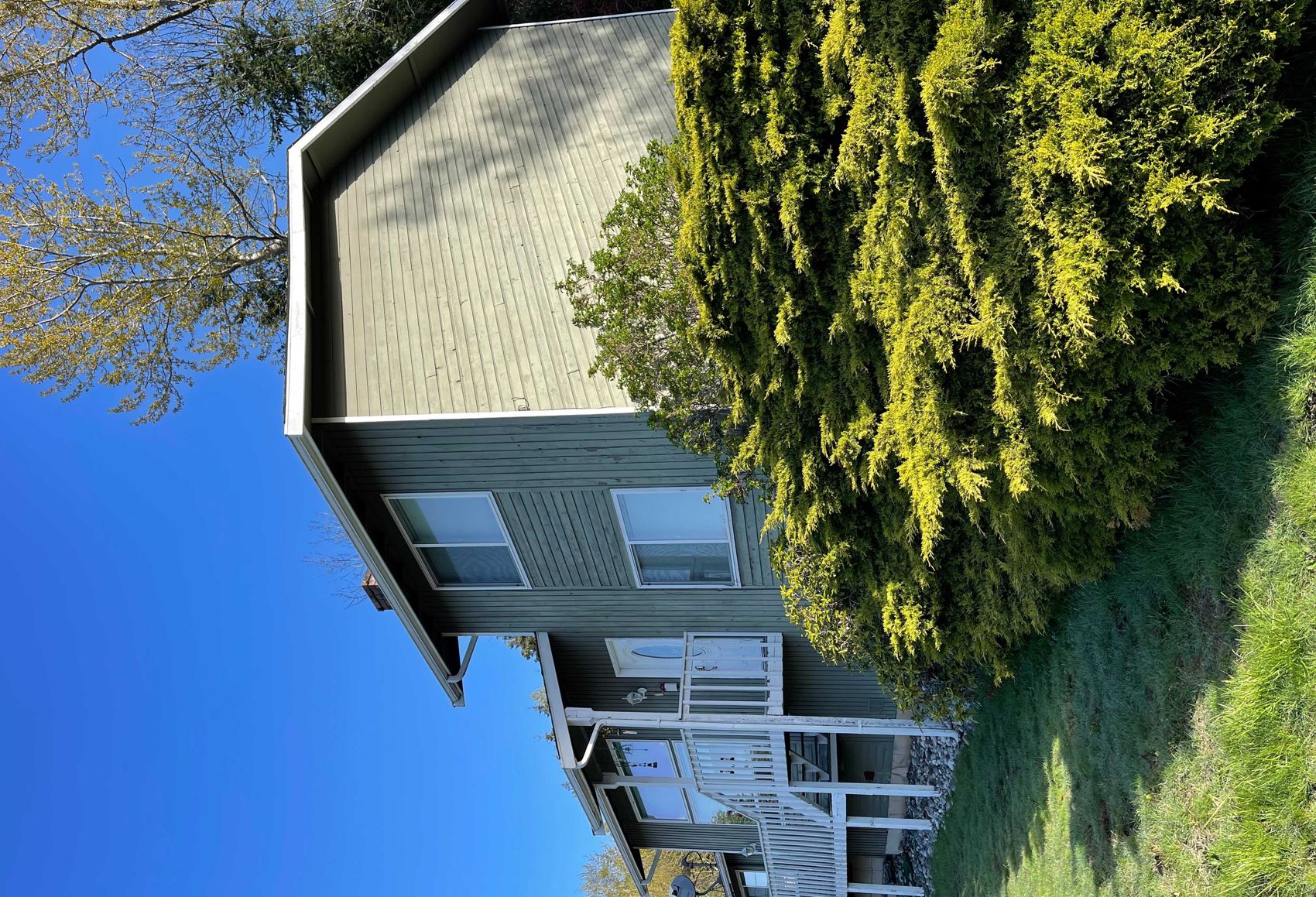
Trim is the part of a house that takes the most punishment and gets the least credit. The fascia, soffit returns, window and door casings, and corner boards around a Tampa Bay home absorb direct sun for most of the year, get soaked repeatedly during summer storms, and sit right where wind-driven rain likes to find a gap. When homeowners in Tampa, Wesley Chapel, Lutz, Land O' Lakes, New Port Richey, Plant City, and Zephyrhills call about trim, it's usually because a section has gone soft, is pulling away from the wall, or shows the telltale staining that means water has been getting behind it for a while. Below is an honest look at what trim replacement tends to cost in this market and why the range is as wide as it is.
Trim work is priced by the linear foot in most cases, but a whole-house quote can swing widely depending on material, how much of the trim run is affected, and what the crew finds once the old material comes off. A single window's casing repair is a very different job from re-trimming an entire roofline. As a rough planning range, expect trim replacement in the Tampa Bay area to run from a few hundred dollars for a small, isolated repair up to several thousand dollars for a full perimeter of fascia and soffit trim on a larger home. The table below breaks out what actually moves that number.
| Cost Factor | Typical Low | Typical High |
|---|---|---|
| Cellular PVC trim (material + install, per linear ft.) | $8/ft | $18/ft |
| Fiber cement trim, e.g. HardieTrim-style (per linear ft.) | $7/ft | $15/ft |
| Aluminum-wrapped wood trim (per linear ft.) | $6/ft | $13/ft |
| Hidden rot or substrate damage behind old trim | Adds $200 | Adds $2,000+ |
| Height/access (2-story walls, steep gables, tile roof edges) | Adds 10% | Adds 30%+ |
| Full tear-off and disposal of old wood trim | $300 | $1,200 |
| Custom paint or color-matching to existing siding | $150 | $800 |
The biggest swing factor is almost always what's hiding behind the old trim, not the trim itself. In this climate, humidity sits high for most of the year, and once wind-driven rain gets past a failed caulk joint or a nail hole in fascia board, the wood sheathing or framing behind it can stay damp long enough to soften or rot before anyone notices from the ground. Termites are also a real factor in this region — a subcontractor pulling old wood trim in Plant City or Zephyrhills will sometimes find termite galleries in the fascia or the rafter tails behind it, and that turns a trim job into a structural repair conversation. Homes closer to the water, including parts of New Port Richey and coastal Tampa, deal with salt-laden air that accelerates corrosion on fasteners and speeds up the breakdown of untreated wood, which is part of why so many Tampa Bay homeowners are moving away from painted wood trim altogether.
Material choice matters too. Cellular PVC trim has become popular in this market because it doesn't rot, doesn't feed termites, and holds paint well under intense Florida UV, but it costs more upfront than wood and needs to be installed with the right expansion gaps since it moves more with heat than wood does. Fiber cement trim is durable and holds paint for a long time but is heavier to work with and needs to be properly sealed at cut ends to resist moisture intrusion. Aluminum-wrapped wood trim is a lower-cost option in some cases but is only as good as the wood underneath it — if that wood is already compromised, wrapping it just hides the problem instead of solving it.
Roof and wall geometry change the labor side of the estimate. A single-story home with a simple roofline is straightforward to access and trim. A two-story home with steep gables, dormers, or tile roof edges requires staging or lift equipment, which adds both time and risk to the job, and that shows up in the price. Finally, any trim work touching the building envelope in this region has to account for Florida Building Code wind resistance requirements — fascia and soffit systems tie into the roof edge, which is a critical zone for wind uplift during storm season, so materials and fastening patterns need to carry documented Florida Product Approval for the application, not just look right from the ground.

A trim replacement quote from Alpine Exteriors covers more than a per-foot number. It should spell out the material being used and its manufacturer, the linear footage being replaced (not just an area estimate), whether any soffit or fascia substrate repair is anticipated or will be priced as a change order if damage is found once the old trim is removed, fastener type and spacing appropriate for the wind zone, caulking and sealant details at joints and end cuts, prep and paint or factory-finish specifications, disposal of old material, and a timeline that accounts for Florida's summer storm patterns, since trim work generally can't proceed safely in active rain or high wind.
A vague quote that just says "replace trim" with a lump sum and no material or linear footage detail is one of the more common ways homeowners end up disappointed later, either by a change order mid-project or by trim that doesn't hold up as well as expected.
When comparing bids for trim replacement, look past the bottom-line number first. Confirm each contractor is quoting the same material — a PVC trim quote and a painted wood trim quote for the same linear footage will look very different in price but aren't comparable jobs. Ask each bidder how they plan to handle substrate repair if rot or termite damage is found, since a suspiciously low bid sometimes means that scenario isn't priced in at all and will show up as a surprise change order. Confirm the contractor is a licensed Florida general or building contractor, ask to see their license number, and verify it's active through the Florida Department of Business and Professional Regulation. Also ask whether the installation will follow the manufacturer's Florida Product Approval installation instructions for the wind zone your home is in — this matters both for durability and for any insurance documentation tied to wind mitigation. Finally, get everything in writing, including linear footage, material brand and profile, fastening method, and paint or finish spec, so you're comparing the same job across every bid.
Trim replacement is sometimes bundled with a larger siding or exterior project, which can open up financing options that a standalone trim repair wouldn't qualify for on its own — it's worth asking whether financing is available if the scope grows once damage is uncovered. On the insurance side, trim replacement by itself typically isn't a covered claim unless the damage traces back to a specific covered event, like wind damage from a named storm; general wear, rot, or termite damage is usually considered a maintenance issue rather than an insurable loss, so it's worth talking to your insurance agent before assuming coverage applies. If trim work is done as part of a broader exterior upgrade that improves how the roof edge and wall assembly perform in wind, it's worth asking your insurer whether it affects your wind mitigation inspection, which is documented on the OIR-B1-1802 form and can influence windstorm insurance premiums in Florida.
For an isolated repair on a section of fascia or window casing, the work itself is often finished within a day. A full-perimeter trim replacement on a larger home can take several days to a couple of weeks depending on linear footage, access, substrate repairs, and weather delays, since installation and painting typically pause during active rain.
In many cases, yes — trim can be removed and replaced independently of the siding field itself, especially with PVC or fiber cement systems designed to integrate with existing siding. That said, if the siding immediately behind or beside the trim is also showing wear, it's worth having it inspected at the same time, since re-trimming around failing siding is a short-term fix.
For most Tampa Bay homeowners, yes, because cellular PVC trim doesn't rot and doesn't attract termites, which are two of the more common reasons trim fails here in the first place. The tradeoff is a higher material cost and the need for correct installation to accommodate its thermal expansion, so it should be installed by a crew familiar with the material.
It depends on the scope and your local jurisdiction. Minor, like-for-like trim repairs often don't require a separate permit, but larger trim replacement projects, especially any work that affects the roof edge or wall assembly's wind resistance, may fall under Florida Building Code permitting requirements. A licensed contractor should be able to tell you whether your specific project needs one before work starts.
Every Tampa Bay home wears its trim differently depending on sun exposure, roofline, and how well it's been maintained, so the only way to get a real number is to have someone look at what's actually going on behind it. Alpine Exteriors is a Florida-licensed contractor (RB29003900) serving Tampa, Wesley Chapel, Lutz, Land O' Lakes, New Port Richey, Plant City, and Zephyrhills, and can walk your property, identify whether you're dealing with cosmetic wear or something deeper, and put together a written quote with real material and labor detail instead of a vague lump sum. Reach out to schedule a trim inspection and get a price range you can actually plan around.