
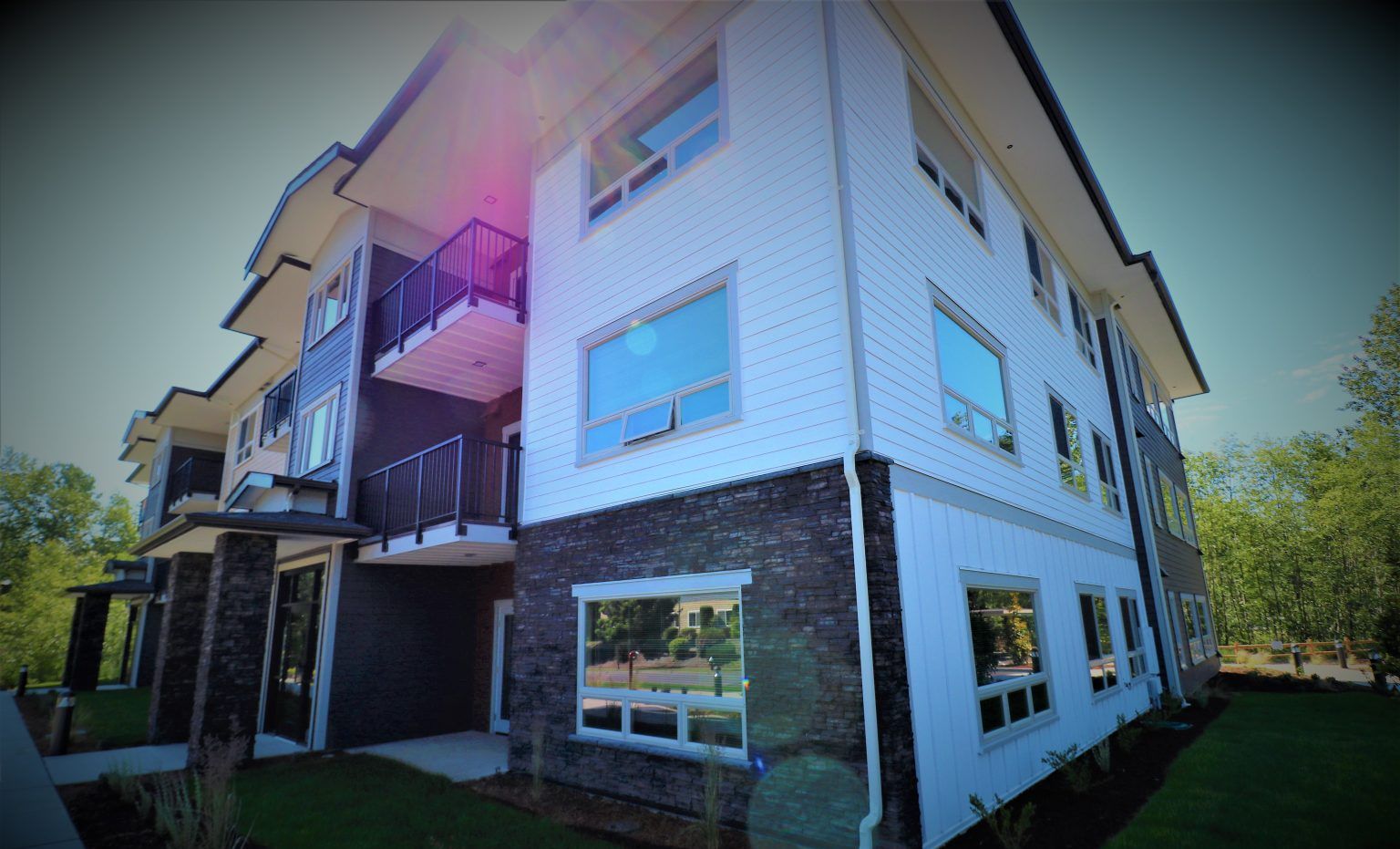
If your siding in Hudson has a cracked panel, a soft spot near the bottom course, or a section that pulled loose in a summer storm, most of the time it can be repaired rather than replaced outright. The exceptions are when the damage traces back to trapped moisture behind the siding, when the product itself has aged past the point of finding a color or profile match, or when more than roughly a third of one wall is affected, at which point a full replacement on that elevation usually costs less over time than ongoing patchwork.
Homeowners around Hudson call us about a fairly narrow set of problems, and once you know what you're looking at, the repair-or-replace decision gets a lot less confusing. Cracked or split vinyl panels are the most frequent call, usually from a lawnmower kickback, a ladder, or a wind gust that flexed a panel past its limit. A single cracked panel is almost always a straightforward repair: we unzip the course above it, slide the damaged piece out, and snap in a replacement. Buckled or warped panels are different. Vinyl buckles when it's been nailed too tightly, since it needs room to expand and contract with temperature swings, or when something behind it, like a dryer vent or a grill, has been pushing heat against the wall for years. That's repairable if caught early, but if the panel has been distorted for a long time it may not lay flat again even after reinstallation.
Soft, spongy, or dark-stained siding near the bottom of a wall, around window sills, or at seams deserves the most attention, because it's rarely just cosmetic. That softness usually means water has been getting behind the siding and into the wall sheathing or framing underneath, and Florida's humidity means wood in that condition doesn't dry out on its own between rain events. If you press on it and it gives, or you can see fungal staining, that section needs to come off so we can look at what's underneath before deciding whether a like-for-like repair is enough or whether the sheathing and house wrap need attention too. Patching over active rot just hides the problem for a year or two.
Faded or chalky siding, especially on south- and west-facing walls, usually isn't a repair issue at all. It's a sign the material has simply aged out under the sun, and matching new panels to it is going to be difficult regardless of what you do next. Siding that's pulled away from the wall at a corner or under an eave after a windstorm is often fixable if the underlying panels and fasteners are intact; the fix is mostly re-securing and, if a piece cracked in the process, replacing that piece.
The general rule we use in the field: if the damage is isolated, the fasteners and house wrap underneath are sound, and you can still source a reasonably close match, repair is the practical choice. If the damage is spread across a wall, if there's evidence of water intrusion behind multiple panels, or if the siding is old enough that a patch would stick out visibly, replacing that elevation, or the whole house if the siding is uniformly at the end of its life, is usually the better use of money. Replacing one wall in mismatched material to save a few dollars now is a common regret we see show up at resale.
Matching existing siding is its own challenge. Vinyl and fiber cement colors both fade under UV exposure, and manufacturers change their color lines and panel profiles over the years, so siding installed even eight or ten years ago may no longer be available in the exact same shade or exposure width. When we can get an exact match, that's the cheapest and least invasive path. When we can't, the options are: use the closest available match on a less visible wall, like a rear elevation or garage side, and reserve the fresher-looking match for the street-facing side; refinish the whole wall if the material allows it; or, if the color gap is too obvious to live with, replace the full elevation so everything reads as one continuous surface. We'll tell you honestly which of these applies before any work starts, rather than installing a mismatched patch and hoping it blends in.
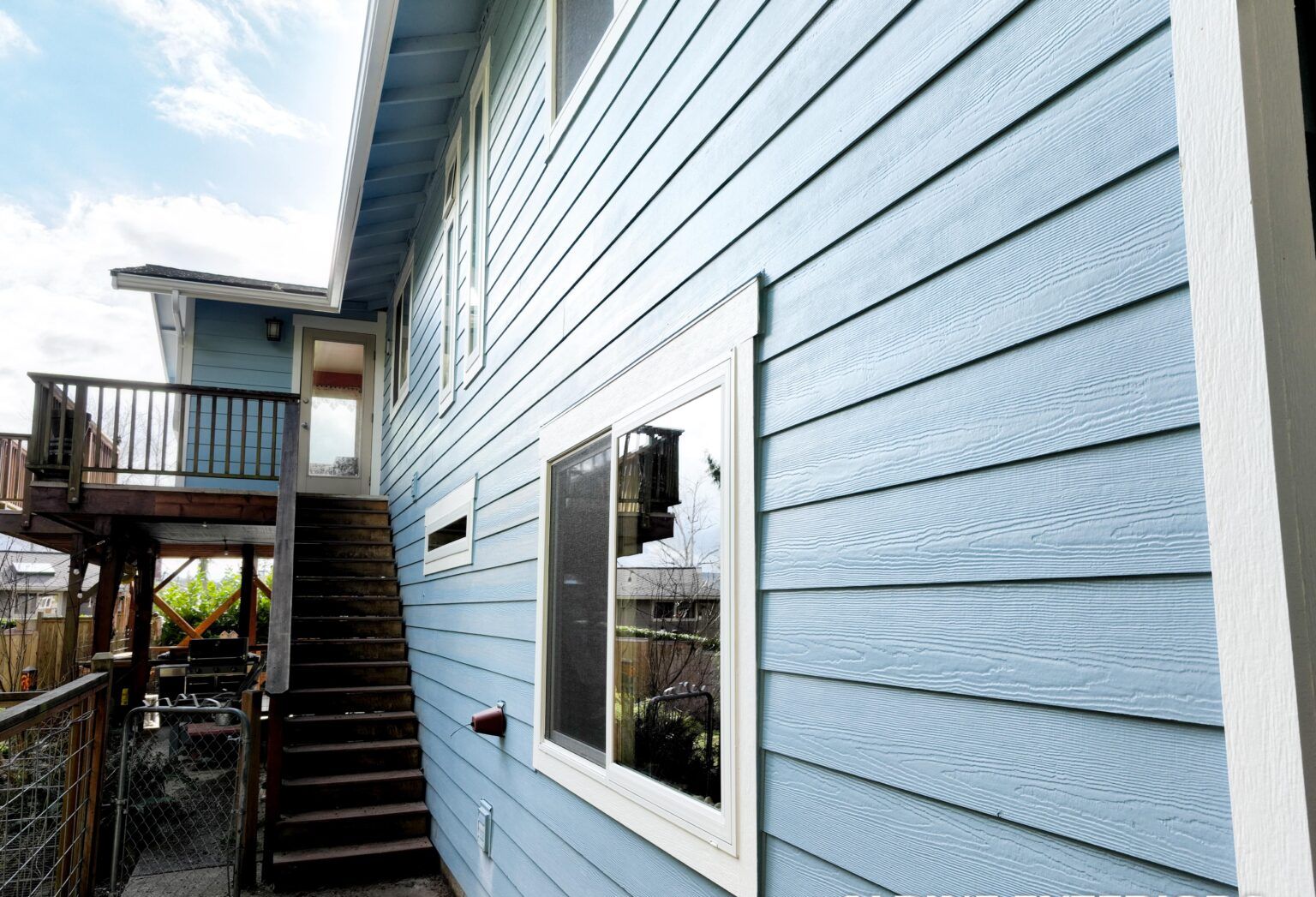
Siding here works harder than it does in most of the country, and that changes both what fails and how we fix it. Hurricane season brings wind-driven rain that gets pushed sideways into every seam, lap, and fastener hole in a wall assembly, which is why so much of the real damage in this area isn't the crack you can see but the moisture that got in behind it during a storm and sat there afterward. A repair that only addresses the visible crack without checking the house wrap and flashing behind it is an incomplete repair in this climate.
The humidity itself is a year-round factor, not just a storm-season one. Pasco County's combination of heat and moisture is a good environment for mold and mildew growth on siding surfaces, and an even better one for rot once water gets behind the cladding into wood sheathing or trim. That's part of why we're cautious about patch jobs over any area that shows staining or softness; sealing moisture in is worse than leaving it exposed.
UV exposure here is intense and constant, and it's the main reason color matching on repairs is harder in Florida than in cooler climates: siding installed a few years ago has already faded and chalked more than the same product would under milder sun exposure, so a same-brand, same-color-name replacement panel often still looks noticeably newer than the surrounding wall.
Hudson's homes, particularly the older ones with wood trim, fascia, or original wood lap siding, are also in an area where subterranean termites are a routine concern. Termite damage to wood siding components, or to the framing behind fiber cement and vinyl, isn't always visible from the outside until a panel is removed, which is one more reason we recommend an actual inspection rather than a phone estimate for anything beyond a single obviously cracked panel.
Because Hudson sits close to the Gulf, homes nearer the coast also deal with salt-laden air that accelerates corrosion on metal fasteners, flashing, and any exposed steel or aluminum trim. Nails that were fine for the first several years can start to rust and stain the siding around them, which is a repair we see more often the closer a property is to the water.
Any siding product installed or replaced in Hudson also has to meet the wind-load requirements of the Florida Building Code for our wind speed zone, and the products themselves need a valid Florida Product Approval for the application. That matters for repairs, not just full replacements; swapping in old stock panels, off-brand material, or fasteners that don't match the tested assembly can undermine the wind performance of the whole wall even if the patch looks fine the day it goes in. Alpine Exteriors uses code-compliant, approved products on every repair for this reason, not just on full re-sides.
Start by looking at the damage from a few angles, not just head-on, and press gently on any area that looks stained, discolored, or slightly bowed. If it's firm and the damage is limited to one or two panels, you're likely looking at a straightforward repair, and it's worth calling before the next storm rather than after, since a small gap in a wall assembly during hurricane season can let in a lot of water in a single event. If it's soft, spongy, or you can see staining spreading beyond the visible crack, don't caulk over it and wait; that delays the fix without stopping the damage underneath.
Take a few photos and, if you have it, the age of the siding or the name of the original installer, since that helps us figure out how likely an exact color and profile match is before anyone shows up. If your siding is nearing the end of its normal service life and you're facing a repair on a wall with visible fade, it's worth asking for both a repair quote and a full-elevation replacement quote side by side, because in a lot of Hudson cases those two numbers aren't as far apart as people expect.
If the damage followed a named storm, check with your insurance carrier before starting repairs, since wind and wind-driven-rain damage is often a covered event depending on your policy. Your homeowner's wind mitigation inspection, form OIR-B1-1802, primarily documents roof and opening-protection features for premium credits and doesn't evaluate siding condition, so a damaged wall won't show up there; you'll want your own photos and documentation as part of any claim.
Finally, get someone to actually put eyes on the wall from behind, not just the outside. A five-minute look with a panel removed tells us more about whether this is a repair or a replacement than any description over the phone. Alpine Exteriors, license RB29003900, handles this kind of assessment routinely across Pasco County and can usually tell you on-site which category your project falls into.
A single-panel or small-section repair is usually a modest cost, often a fraction of what re-siding a wall would run, because it's limited to material and labor for the affected area rather than tear-off and full reinstallation. Once damage spreads across a wall or you're dealing with underlying rot that requires opening up sheathing, the cost climbs and starts to close the gap with replacement, which is why we give both numbers when a repair is borderline so you can compare them directly.
Sometimes, but it depends on how much the existing siding has faded and whether the original manufacturer still makes that color and profile. UV exposure in this climate fades siding faster than in cooler regions, so panels more than a few years old often need a close approximation rather than an exact match, and we'll tell you honestly how close that match will look before any work begins.
No, and that's usually a sign water got behind the siding into the wall sheathing rather than just sitting on the surface, which is common here given how much wind-driven rain a storm can push sideways into seams and laps. That area should be opened up and inspected rather than patched over, since sealing moisture in behind new material tends to make the underlying damage worse over time.
Small, like-for-like repairs generally don't require a permit, but replacing siding on a full wall or the whole house typically does, and any replacement material needs to carry a valid Florida Product Approval and meet the wind-load provisions of the Florida Building Code for our area. Alpine Exteriors handles the permitting on replacement jobs as part of the process, so you're not left figuring out county requirements on your own.
If you're not sure whether your Hudson home needs a patch or a new wall, the fastest way to know is to have someone look at it in person rather than guess from a description. Alpine Exteriors serves Hudson and the rest of Pasco County, along with Tampa, Wesley Chapel, Lutz, Land O' Lakes, Plant City, and Zephyrhills, and we'll give you a straightforward repair-or-replace recommendation, in writing, before any work starts. Reach out to schedule a siding inspection and get an honest read on what your home actually needs.