
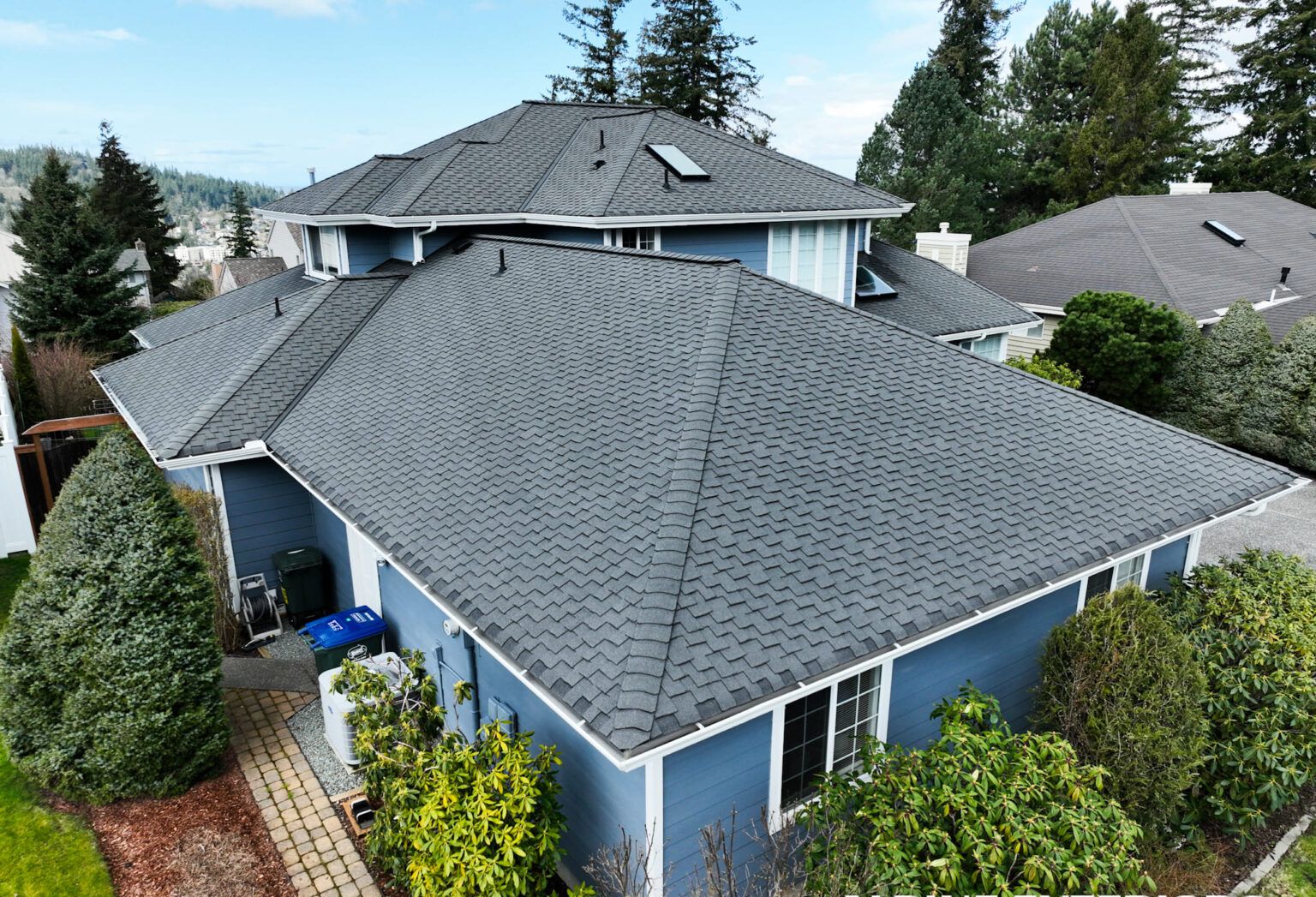
If you live in the Richland neighborhood off State Road 54 in Wesley Chapel, or anywhere else between Land O' Lakes and New Port Richey, your siding does more work than most homeowners realize. It is the first line of defense against wind-driven rain during summer storms, the barrier that keeps humidity from soaking into wall framing, and the surface that takes the brunt of Florida's UV load year after year. When siding starts to fail, it rarely announces itself with a single dramatic event. Instead it shows up as a handful of small, easy-to-miss clues. Catching those clues early is the difference between a patch job and a full tear-off. Alpine Exteriors, FL license RB29003900, put together this guide so Tampa Bay homeowners know exactly what to look for and when to act.
Siding that looks like it is rippling across the wall, especially on the sides of the house that catch the most afternoon sun, is usually a sign that the panels have expanded and contracted one too many times. Tampa Bay's combination of intense summer heat and sudden afternoon thunderstorms puts siding through extreme temperature swings almost daily. Vinyl siding is the most prone to this because it expands and contracts more than fiber cement, but even fiber cement can buckle if it was nailed too tightly during the original installation and never had room to move. Buckled panels are also more vulnerable during a named storm, since wind can catch the raised edge and peel the panel back.
Every siding product has seams, and every seam is a potential entry point for water. In a Richland-area home, seams that have cracked or pulled apart are often the result of wind-driven rain during a tropical system finding its way behind the panel and forcing the seam open from the inside. Once a seam separates, rain no longer has to be wind-driven to get in — normal rainfall can wick behind the siding on its own. If you notice separated seams clustered on one wall, it is worth checking whether that wall faces the prevailing storm direction, since that pattern usually points to wind exposure rather than a manufacturing defect.
Florida's UV exposure is some of the most intense in the continental United States, and painted siding pays for it. Paint that has gone chalky, or that bubbles and peels in sheets, has usually lost its bond with the substrate underneath. On fiber cement siding this is often just a cosmetic problem that a repaint can solve. On wood trim, fascia, or older wood-based siding, though, bubbling paint can be hiding trapped moisture underneath, and that moisture is what eventually leads to soft wood and rot.
Press gently on the siding near the bottom of the wall, around window trim, or under downspouts. If it gives like a wet cardboard box, water has already gotten behind the surface and started breaking down what's underneath, whether that's the siding itself, the sheathing, or the framing. This is one of the most serious warning signs on this list because by the time siding feels soft, the problem has usually spread past the siding into the wall assembly. Tampa Bay's high year-round humidity accelerates this kind of hidden rot far faster than it would progress in a drier climate.
Some surface mildew on siding is normal in a humid climate and can often be pressure washed away without concern. What is not normal is dark staining that returns within weeks of cleaning, or streaking that follows a seam or panel edge rather than sitting evenly across the wall. That pattern usually means moisture is being held against the siding from behind, not just settling on it from humid outdoor air. Persistent mold growth along one section of wall is one of the more reliable outdoor signs that something is wrong on the inside of that wall too.
Walk the perimeter of the house and look for daylight gaps between panels, or panels that have visibly bowed away from the sheathing. This is frequently a fastening problem — siding that was nailed incorrectly, or that has had its fasteners work loose over years of wind load, will start to separate from the wall. In a region that gets tested by hurricane-force gusts most years, a panel that has already started to pull away is a real liability, since it gives wind an edge to grab onto and can turn into a projectile hazard during the next storm.
Subterranean termites are active across the Tampa Bay area year-round, and they do not care whether your siding is fiber cement, vinyl, or wood trim — they care about the wood framing, sheathing, and trim boards behind and around it. Pencil-thin mud tubes running up the foundation toward the siding, small kick-out holes, or trim that sounds hollow when tapped are all signs of activity. Termite damage often gets discovered only when a siding contractor pulls panels for an unrelated repair, which is one more reason not to ignore small siding problems for too long.
Siding failure is not always visible from the curb. If you've noticed your air conditioner running longer than it used to, or you can feel airflow near an exterior wall on a windy day, gaps in the siding and its underlying weather barrier may be letting conditioned air escape and outside heat and humidity in. This is easy to overlook because it shows up on a utility bill rather than on the wall itself.
Not every sign on this list needs a same-week response, but some do. Soft or spongy siding, panels that have visibly detached or are flapping in the wind, and active termite mud tubes are urgent — each of these represents either an active safety hazard heading into storm season or ongoing structural damage that gets worse, and more expensive, every month it's left alone. If a named storm is approaching and you have loose or buckled panels, that also moves into the urgent category, since those panels can become debris in sustained winds.
Cosmetic issues like chalky paint, minor surface mildew that responds to cleaning, or a single small crack in an inconspicuous seam can usually wait for a scheduled inspection rather than an emergency call. The judgment call in between — persistent staining, a few separated seams, or paint that's peeling in more than one spot — is exactly where a professional opinion is worth getting sooner rather than later, since what looks minor from the ground can be a symptom of something more advanced underneath.
Start with a visual walk around the entire house, not just the side you see every day, since Tampa Bay's storm systems tend to hit certain wall orientations harder than others. Note anything from the list above, including the rough location on the wall. If you have a wind mitigation inspection report on file from your insurer (the OIR-B1-1802 form), it can help identify which parts of your exterior were noted as vulnerable at your last policy renewal, which is often a useful starting point for a siding inspection.
From there, a licensed contractor should assess whether the damage is isolated or systemic, and whether any wood framing or sheathing behind the siding has already been compromised. Alpine Exteriors performs these inspections across Tampa, Wesley Chapel, Lutz, Land O' Lakes, New Port Richey, Plant City, and Zephyrhills, and can tell you honestly whether you're looking at a targeted repair, a partial re-side of the affected walls, or a full replacement. Replacement siding installed in Florida has to carry Florida Product Approval for wind and water resistance and meet the wind-load requirements of the Florida Building Code for your specific wind zone, so any replacement work should reference those approvals rather than relying on generic national ratings.
It depends heavily on how much of the wall assembly is affected. A localized repair to a few panels typically runs a few hundred to a couple thousand dollars, while replacing siding on an entire elevation or the whole house is a much larger investment that can range from several thousand to tens of thousands of dollars depending on square footage, product choice, and how much of the underlying sheathing needs to be replaced. Getting an inspection first is the only reliable way to know which category your home falls into.
Coverage depends on the cause. Damage tied to a specific storm event is often covered subject to your policy's wind and hurricane deductibles, while gradual failure from age, sun exposure, or long-term moisture intrusion is typically treated as a maintenance issue and excluded. Your wind mitigation inspection report can sometimes support a storm-related claim, but you'll need to review your specific policy language or talk to your adjuster to know for certain.
It varies by material and installation quality, but siding in Tampa Bay tends to show wear earlier than the same product would in a milder, drier climate because of the combined effect of high humidity, intense UV, and periodic high-wind events. Fiber cement generally holds up longer against these conditions than vinyl, but no siding is maintenance-free here, and even well-installed siding benefits from periodic inspection rather than being left alone for decades.
Sometimes, yes — surface mildew that sits on top of the siding without penetrating it often comes off with a proper cleaning and doesn't indicate failure. But if the same staining returns within a few weeks, or if it's concentrated along a seam or panel edge rather than spread evenly, pressure washing is only masking the symptom. In that case the moisture source behind the siding needs to be identified before repeated cleaning starts doing more harm than good to the surface finish.
If you're seeing any of these warning signs on a home in Richland, elsewhere in Wesley Chapel, or anywhere across Tampa, Lutz, Land O' Lakes, New Port Richey, Plant City, or Zephyrhills, it's worth getting an honest, no-pressure inspection before the next storm season tests your walls further. Alpine Exteriors, license RB29003900, can walk your property, point out exactly what's cosmetic and what's structural, and lay out repair or replacement options that meet Florida Building Code wind requirements for your area. Reach out to schedule a siding inspection and get a clear picture of where your home actually stands.