

Replacing siding on a Port Richey home is a different project than it would be almost anywhere inland. This stretch of Pasco County sits close enough to the Gulf that salt-laden air is a real factor on older aluminum and steel siding, humidity sits high enough for long stretches of the year that trapped moisture behind a wall assembly becomes a mold risk rather than a theoretical one, and any product going on the house has to be rated for Florida's wind and water-intrusion requirements, not just nailed up and caulked. Homeowners who understand the sequence and the reasoning behind each step tend to have a much smoother project, fewer surprises, and a final result that actually holds up through the next storm season. This guide walks through what a siding replacement in Port Richey typically looks like from first call to final walkthrough, written by Alpine Exteriors, a siding contractor licensed to work throughout Tampa Bay under Florida contractor license RB29003900.
Most single-family siding replacements in Port Richey run somewhere between two and five weeks from signed contract to final inspection, though that range depends heavily on the size of the house, the siding product chosen, and how much of the original wall sheathing turns out to need repair once the old cladding comes off. It helps to separate the calendar into two distinct phases: the pre-construction phase, which is largely paperwork and waiting on materials, and the on-site construction phase, which is the part most homeowners picture when they think of a siding job.
The pre-construction phase — permitting, product ordering, and scheduling — is usually the longer of the two, often two to four weeks depending on the county's permitting queue and current lead times from the manufacturer. The physical installation on a typical single-story home usually takes three to seven working days once crews are on site; larger two-story homes, homes with a lot of architectural detail, or homes needing significant sheathing repair can run longer. Florida's summer rain pattern also plays a role — afternoon thunderstorms are common from roughly June through September, and a crew may need to stop work early or reschedule a day to keep the wall assembly from taking on water mid-installation. A contractor who tells you an exact date without caveats for weather and permitting is not being realistic; a good contractor gives you a range and communicates as conditions change.
Siding replacement in Pasco County requires a building permit in nearly all cases, and the work has to comply with the Florida Building Code, including wind-load and water-resistive barrier requirements for the wind zone Port Richey falls into. Any siding product installed has to carry a valid Florida Product Approval (or a Miami-Dade Notice of Acceptance, which Florida also accepts) demonstrating it has been tested for the wind pressures and wind-driven rain conditions this part of the state actually sees. This isn't paperwork for its own sake — a siding assembly that isn't rated correctly can pull away from the wall in a tropical storm or let wind-driven rain past the water-resistive barrier during a heavy system, and either failure is far more expensive to fix after the fact than to specify correctly up front.
If the home carries a wind mitigation inspection report (the OIR-B1-1802 form used by Florida insurers), it's worth pulling that document out before the project starts. It documents details like roof-to-wall connections and opening protection that insurers use to set premiums, and in some cases a siding replacement is a reasonable time to also address related items noted on that report, since the crew and equipment are already on site.
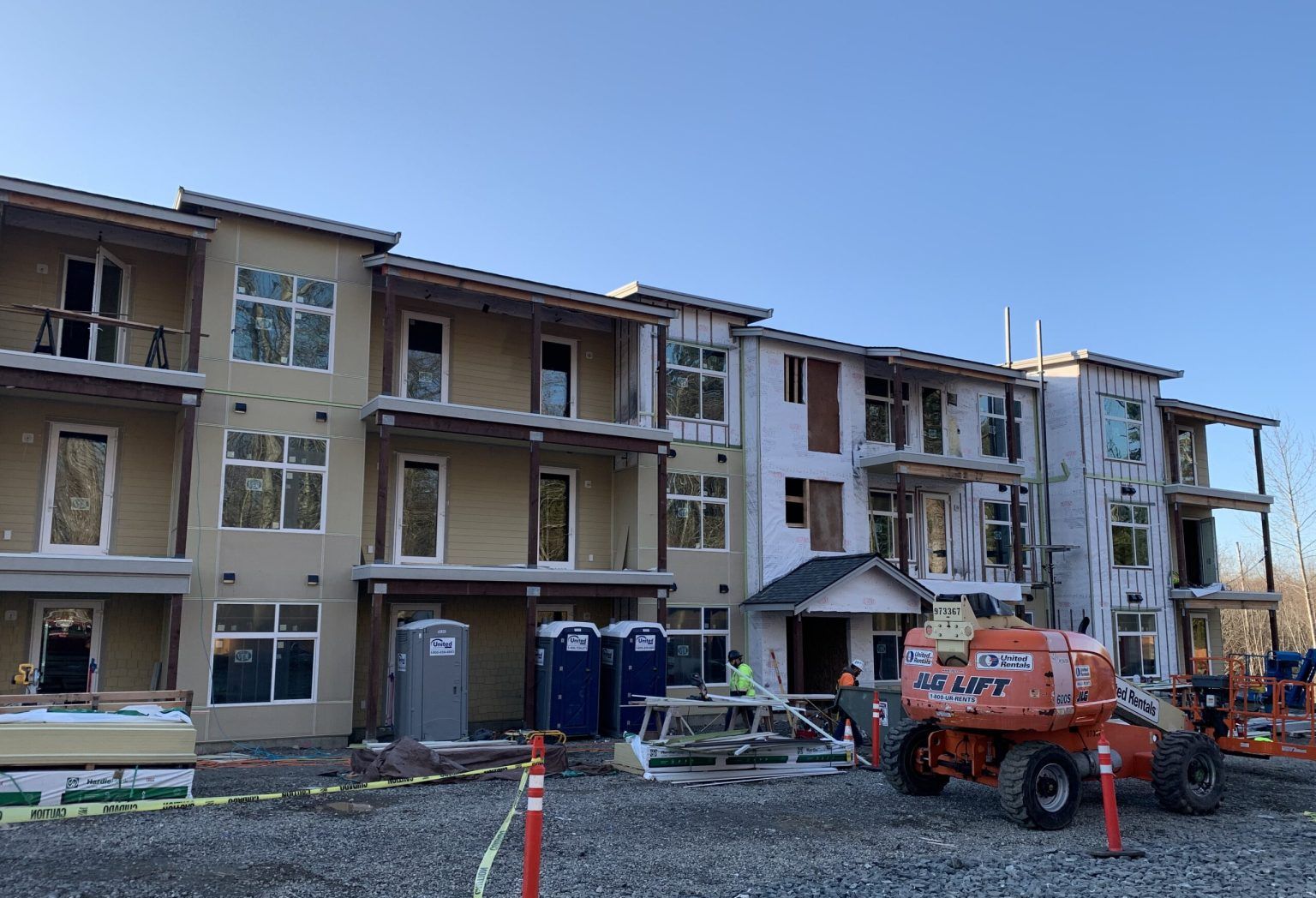
Once permits are in hand and material has arrived, the on-site work generally follows this sequence:
A few days of preparation on the homeowner's side makes the job go faster and protects belongings from dust and debris:
Once installation is complete, the local building department performs a final inspection to confirm the work matches the approved permit and the installed product's rated wind and water performance. This inspection is a real checkpoint, not a formality — if anything doesn't pass, it gets corrected before the permit closes.
After the inspection clears, the crew does a full site cleanup: magnetic nail sweeps across the yard and driveway to pick up stray fasteners, removal of the dumpster and any remaining material, and a check that landscaping and protected surfaces weren't damaged during the work. The final walkthrough is the homeowner's chance to look over every wall up close — checking that seams are tight, trim lines are straight, caulking is clean, and any touch-up paint matches — before signing off that the work is complete.
New siding in this climate still needs some ongoing attention. Annual or semi-annual rinsing with a garden hose helps keep salt residue, pollen, and mildew from building up on the surface, especially on homes closer to the water where salt air accelerates grime buildup. Caulked joints and sealant lines are worth a visual check each year, since Florida's UV exposure and heat cycling will eventually wear sealant down faster than in milder climates — catching a failed bead of caulk early is a lot cheaper than dealing with water intrusion behind the wall later.
Warranty coverage on a siding job is really two separate things: the manufacturer's product warranty, which covers defects in the siding material itself and varies by product line and sometimes by whether the installer is factory-certified, and the contractor's workmanship warranty, which covers installation errors. Alpine Exteriors reviews both warranties with homeowners before the contract is signed so there's no confusion later about what's covered by whom, and keeps copies of the permit, product approval documentation, and warranty paperwork on file for the homeowner's records.
New siding by itself doesn't automatically lower a wind mitigation discount the way roof or opening-protection upgrades can, but it's still worth giving your insurer the permit and completion documentation, since some carriers do factor exterior condition into underwriting. If your wind mitigation inspection (OIR-B1-1802) is outdated, this is a reasonable time to have it refreshed, since the crew and access equipment are already at the house.
Yes, projects run through the summer regularly, but afternoon thunderstorms can cause short delays, particularly during the water-resistive barrier and open-wall stages when an exposed section shouldn't be left uncovered overnight. A contractor experienced in this region plans daily sequencing around the weather rather than leaving sheathing exposed and hoping the forecast holds.
It gets flagged before any new material goes back on that section of wall. Both subterranean and drywood termites are present in this part of Florida and can damage sheathing or framing without any visible sign from the outside, so discovering hidden damage during tear-off is common enough that it shouldn't be treated as unusual — it should be documented, priced separately from the original scope, and repaired before the wall is closed back up.
Start with the Florida Product Approval number for any product you're considering and confirm it's rated for the wind pressures your specific site requires — that rating, not marketing language, is what determines how the product performs in a storm. Beyond wind rating, in a humid, salt-influenced coastal area like Port Richey it's also worth asking how the product handles moisture at the seams and how it's held up on similarly exposed homes nearby, since long-term performance here depends as much on installation detail as on the material itself.
Every Port Richey home is a little different — lot exposure, existing wall condition, and HOA requirements all shape how a siding replacement should be planned. Alpine Exteriors works throughout Tampa Bay, including Port Richey and the rest of Pasco County, and can walk your property, explain what's likely hiding behind your current siding, and lay out a realistic timeline and product options before any commitment is made. Reach out to schedule an on-site evaluation and get a clear, honest look at what your project actually involves.