
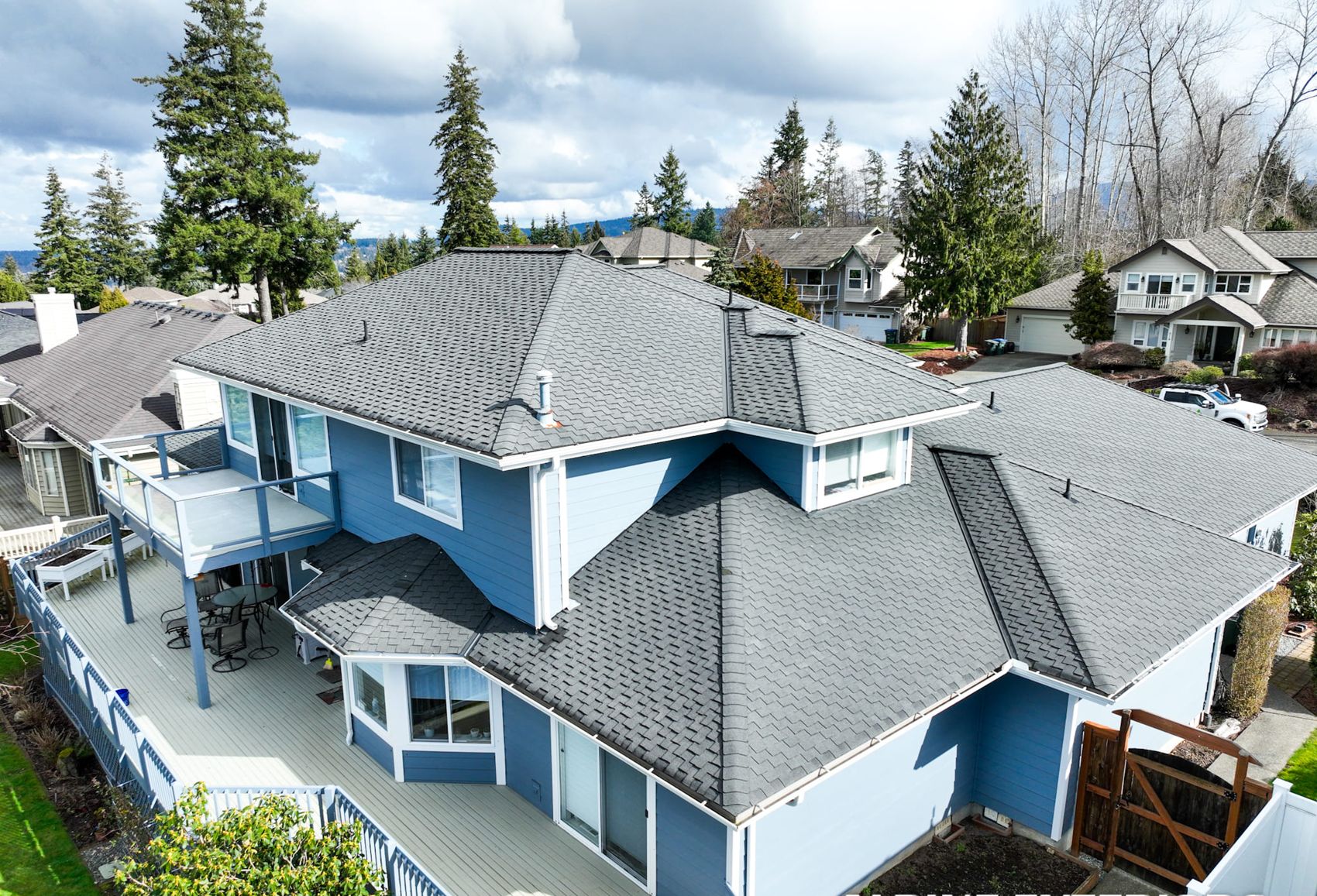
If your home sits inside the Zephyrhills city limits, your siding permit is issued by the City of Zephyrhills Building Division. If your address is in unincorporated Pasco County — which covers a large share of Wesley Chapel, Lutz, and Land O' Lakes — the permit comes from Pasco County Building Construction Services instead. In almost every case, a full siding replacement or recover on a house in this area requires a permit reviewed against the Florida Building Code, and skipping that step creates problems that show up later, usually at resale or during an insurance claim.
The line between "needs a permit" and "doesn't" comes down to scope. Patching a handful of damaged panels or replacing a section behind a downspout is typically treated as minor repair and may not require a separate permit, though it's worth a quick call to confirm, since both the city and the county make that call based on square footage and whether the weather-resistive barrier is disturbed. A full re-side — stripping a wall or the whole house down to the sheathing and installing new siding — is a permitted job everywhere in this area. So is any project that touches the sheathing itself, replaces house wrap, or changes the siding material (say, swapping old aluminum for fiber cement or vinyl).
When Alpine Exteriors pulls a permit for a Zephyrhills or Pasco County project, the application package generally includes the contractor's state license number, the Florida Product Approval (FL#) number for the specific siding product being installed, and the manufacturer's installation instructions showing the fastening schedule that matches the home's design wind speed. That last part matters more here than it does in a lot of the country — Florida requires exterior wall coverings to carry a current product approval and be installed per the tested assembly, not just nailed up to "look right." The building department checks that paperwork before the permit is issued, not after the siding is already on the wall.
Once the permit is active, expect at least one field inspection before the job is closed out. Many siding jobs call for an in-progress inspection of the weather-resistive barrier and flashing details — house wrap, window and door flashing, and any transition points — before the new siding covers them up. That inspection exists because those layers become invisible once the cladding goes on, and they're the layer actually doing the work of keeping wind-driven rain out of the wall assembly. A final inspection follows once the siding is complete, confirming the finished work matches what was approved on the permit.
Pasco County isn't in Florida's High-Velocity Hurricane Zone (that designation is specific to Miami-Dade and Broward), but it's still squarely inside the Florida Building Code's wind-load requirements, and the code assigns this part of west-central Florida a meaningful design wind speed under the ASCE 7 wind maps the code references. In practice, that's why the product approval and fastening schedule aren't a formality — the siding, the fasteners, and the attachment pattern all have to be rated for the wind pressures this area can see, not a generic national spec.
Wind-driven rain is the other half of that equation. A storm here doesn't just push wind against a wall — it drives rain sideways and upward under laps, at butt joints, and around penetrations. That's why inspectors care about flashing at windows, doors, and any wall penetration, and why a correctly lapped, taped weather-resistive barrier underneath the siding matters as much as the siding itself.
Between storms, the climate here works on the wall a different way. Pasco County's humidity sits high for most of the year, and any moisture that gets trapped behind siding — from a missed flashing detail, a low spot in the house wrap, or condensation inside the wall cavity — has ideal conditions to grow mold rather than dry out. That's a real argument for a rainscreen gap or drainage plane behind the cladding and for using sheathing and trim that tolerate occasional moisture without breaking down. Intense, near year-round UV exposure is the third factor: it fades color and can soften or warp lower-grade vinyl over time, and it degrades caulk and sealants faster than a milder climate would, which is why the caulking and sealant details around trim and penetrations need periodic attention even after the siding itself is holding up fine.
Termites are a standing concern across Florida, including inland Pasco County, and siding choices intersect with that risk more than people expect. Wood or wood-composite siding installed with ground contact, or trim run too close to grade, gives subterranean termites an easy path into the wall. It's not a reason to avoid wood-look products, but it is a reason to get the clearance and flashing details right at the base of the wall during installation, not after an inspection turns up damage.
Start by confirming which building department actually has jurisdiction over your address — Zephyrhills city limits and unincorporated Pasco County are not always obvious from the mailing address alone, and pulling a permit from the wrong office wastes time. A licensed contractor doing regular work in the area, including Alpine Exteriors, will already know which office covers your street and can confirm it in a few minutes.
None of this makes the process complicated, but it does take an extra phone call or two up front. That's a small cost compared to finding out during a home sale that a re-side was never permitted and now has to be opened up for a retroactive inspection.
Usually yes, if the work involves removing and replacing the siding down to the sheathing or house wrap on that wall, rather than patching a few damaged pieces. Both the City of Zephyrhills and Pasco County Building Construction Services base the decision on scope and whether the weather-resistive barrier is disturbed, so it's worth confirming with whichever office has jurisdiction over your address before assuming a partial job is exempt.
Timelines vary with each department's current workload and whether the submitted paperwork — product approval, installation instructions, contractor license information — is complete on the first pass. A complete, correctly assembled application generally moves faster than one that gets kicked back for missing documentation, which is one of the practical reasons to use a contractor who submits these applications regularly.
You can apply for an owner-builder permit in most cases, but the permit itself is still required for a full siding job — the requirement is tied to the scope of work, not to who's doing it. Skipping the permit altogether, rather than pulling one as an owner-builder, is the version that causes real problems later, particularly when a home with unpermitted exterior work goes up for sale or gets inspected for an insurance claim.
Siding itself isn't typically a line item on the wind mitigation inspection form (OIR-B1-1802), which focuses more on the roof, openings, and structural connections. That said, a permitted re-side is a reasonable time to have other wind mitigation items checked or updated, and keeping your permit and inspection records on file gives you documentation an insurer or a future buyer may ask for.
Permitting isn't the interesting part of a siding project, but getting it wrong is the part that costs homeowners the most later — a failed inspection, a stalled home sale, or an insurer asking questions about work that was never permitted. Alpine Exteriors handles siding projects across Zephyrhills, Wesley Chapel, Lutz, Land O' Lakes, New Port Richey, Plant City, and Tampa, and pulls permits through the correct city or county office as a standard part of the job, with product approval documentation and inspections handled up front rather than as an afterthought. If you're planning a siding replacement and want a straight answer about what your specific address requires, contact Alpine Exteriors (FL license RB29003900) for a consultation.