
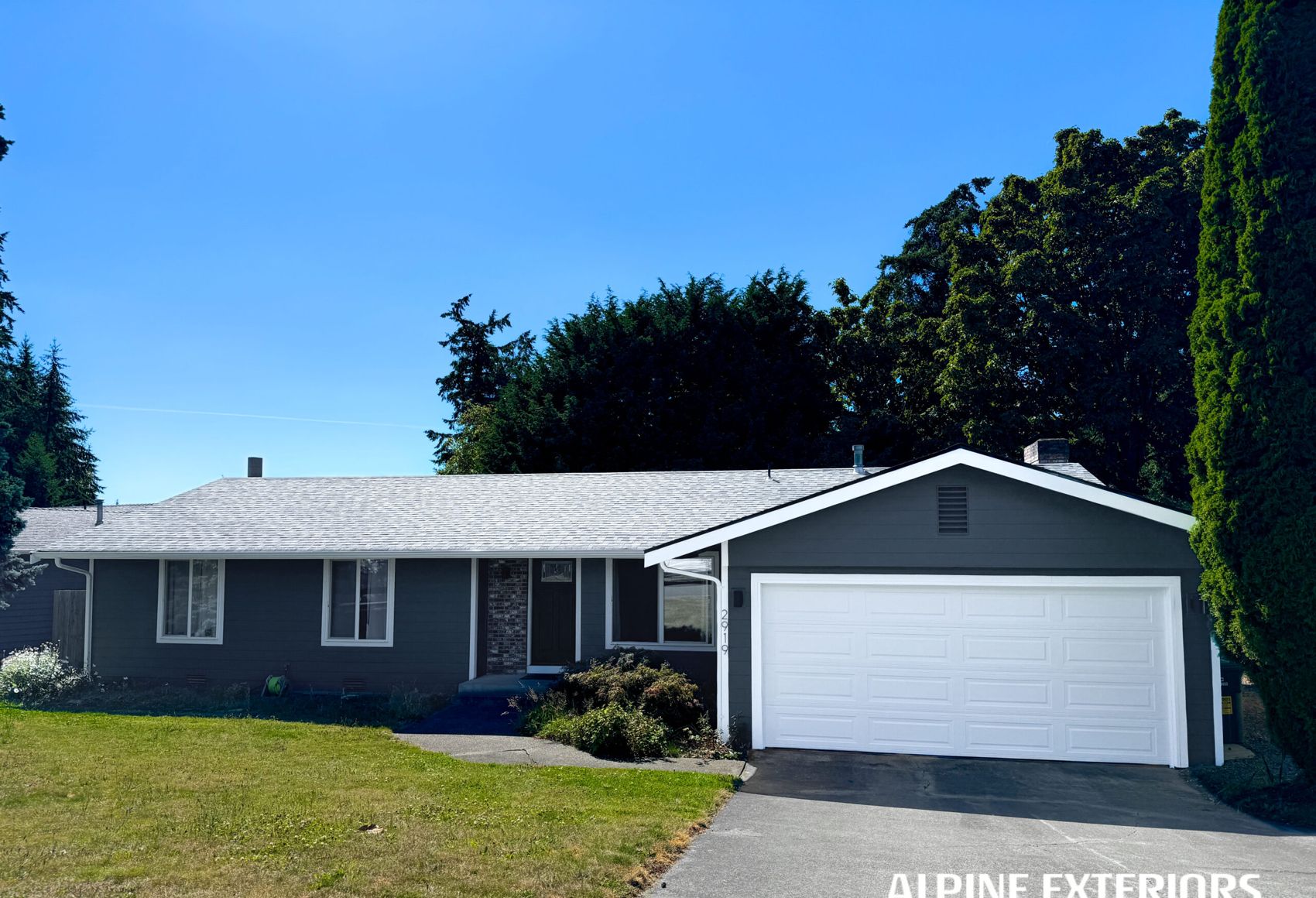
Homeowners in Avalon Park and across Wesley Chapel keep asking us the same question when a re-side or a new-construction upgrade comes up: James Hardie fiber cement or vinyl? Both materials show up on plenty of Pasco County streets, both hold up to some degree of Florida weather, and both have salespeople who will tell you theirs is the obvious answer. It isn't that simple. The right choice depends on your budget, how long you plan to own the home, how much wind and rain exposure your lot actually gets, and how much maintenance you're willing to do. Below we break down what each product is, how the two materials behave once summer storms and afternoon sun start working on them, and which one we'd point you toward for a home in this specific part of Pasco County.
If you're building new, planning to stay in the home long-term, or replacing siding after storm damage on a house that sits exposed to wind and driving rain, James Hardie fiber cement is the more durable, longer-lasting choice — and it's what Alpine Exteriors installs on the majority of full re-side jobs we quote in Wesley Chapel. If you're working with a tighter budget, doing a rental or flip where you won't own the long-term maintenance cost, or re-siding a smaller accessory structure, vinyl siding still has a legitimate place, especially now that better-engineered vinyl products handle Florida's wind and heat noticeably better than the vinyl from twenty years ago. Neither answer is universally right; the rest of this page walks through why, category by category, so you can make the call for your own house rather than take a contractor's word for it.
James Hardie board — often just called Hardie board — is fiber cement siding, meaning the panels are manufactured from a mix of portland cement, sand, and cellulose fibers pressed and cured into dense, dimensionally stable boards. That composition is what separates it from both vinyl and real wood: it doesn't expand and contract with humidity swings the way wood does, it isn't a food source for wood-destroying insects, and it holds paint and factory finish (Hardie's ColorPlus finish, in most cases) far longer than site-painted wood siding ever did.
In practice, Hardie panels on a Pasco County home read almost identically to real wood lap siding or board-and-batten from the curb — the texture, the shadow lines, the crisp trim details — without the rot risk that made cedar and hardboard siding a headache in Florida's humidity for decades. The tradeoff is weight and installation complexity: fiber cement is heavy, it has to be cut with the right blades and dust controls, and it needs to be fastened and flashed correctly to perform as designed. A rushed or undertrained installation crew can undercut a lot of what makes the material good in the first place, which is one reason the labor line on a Hardie quote runs higher than the labor line on a vinyl quote.
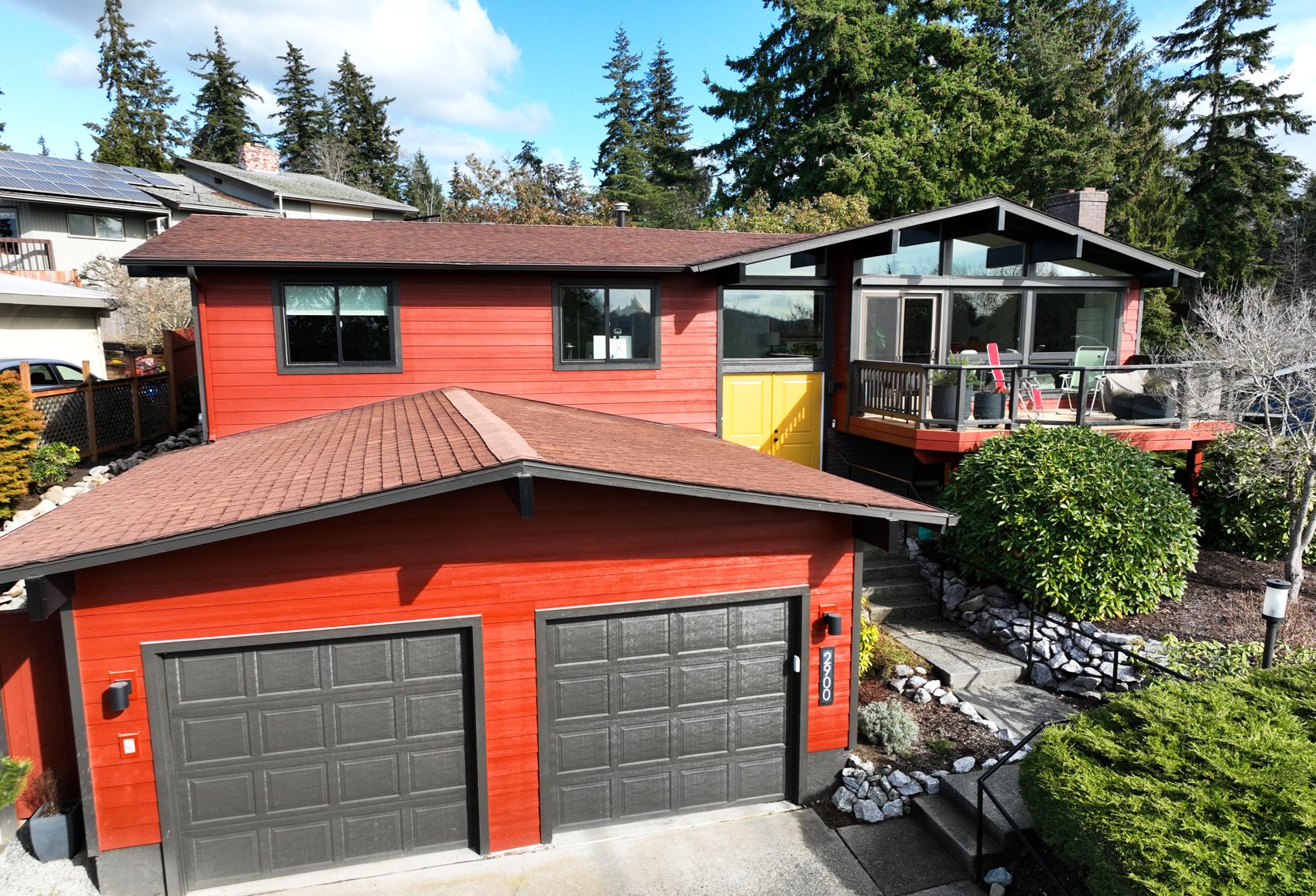
Vinyl siding is extruded polyvinyl chloride (PVC) formed into interlocking panels, usually with color mixed into the material itself rather than painted on top of it. It's been the budget-friendly default in Florida for a long time because it's light, fast to install, resists rot outright since there's no organic material in the panel, and never needs painting the way wood or older, worn-out fiber cement finishes eventually do.
The catch in a market like ours is that not all vinyl performs the same, and the differences show up fast once real Tampa Bay weather gets involved. Thin, older-generation vinyl panels are prone to a handful of well-documented problems on Pasco County homes: oil-canning (a rippled, warped look) when panels get too hot on west- and south-facing walls; cracking and shattering at the locking channels during wind events, especially once panels have gone brittle from years of UV exposure; and fading on darker colors, since pigment mixed into vinyl breaks down under intense, sustained Florida sun faster than a factory-baked fiber cement finish does. Thicker, code-rated vinyl products with a higher wind-load rating close some of that gap, but they cost more — which erodes the upfront cost advantage that makes vinyl attractive to begin with.
Here's how the two materials compare directly on the factors that matter most to homeowners deciding between them in Wesley Chapel, Land O' Lakes, Lutz, New Port Richey, Plant City, and Zephyrhills.
| Category | James Hardie Fiber Cement | Vinyl Siding |
|---|---|---|
| Typical cost per square foot installed | Higher — heavier material, more labor-intensive installation | Lower upfront cost; vinyl remains the budget entry point |
| Lifespan | Multiple decades of service life with proper installation and maintenance | Shorter practical lifespan in Florida sun and storms unless a premium, thicker panel is used |
| Maintenance | Occasional caulk and paint touch-up over the long haul; factory finish resists fading well | Essentially no painting needed, but faded or cracked panels usually need full-section replacement, not touch-up |
| Appearance | Reads as real wood; holds crisp lines and color; premium curb appeal | Improved over older vinyl, but can look and feel like plastic up close, especially in darker colors under heat |
| Wind resistance | Strong performance when installed per Florida Building Code fastening requirements | Adequate in standard-grade panels; noticeably better in code-rated, heavier-gauge products |
| Fire resistance | Non-combustible cement-based composition with a favorable class fire rating | Combustible plastic material; performs worse than fiber cement under direct flame exposure |
Pasco County sits within a wind-borne debris region under the Florida Building Code, and the code's wind speed maps put this stretch of Pasco County — including Avalon Park and the rest of Wesley Chapel — in roughly the 140-150 mph ultimate design wind speed range depending on exact location and risk category, with the higher end closer to the Gulf. That matters for siding because both materials carry Florida Product Approval listings, but the approved fastening schedules, panel gauge, and installation details are what actually deliver the rated wind resistance — not the material name on the box. A correctly installed Hardie panel system tends to hold up better in sustained high wind because of its mass and rigidity; standard vinyl is more prone to lifting at the locking edge in gusty conditions, though heavier-gauge, higher wind-rated vinyl narrows that gap considerably. If your home carries wind mitigation credits documented on an OIR-B1-1802 form, upgrading either siding material to code-current fastening and impact-rated components can help preserve or improve those insurance credits at renewal.
Central Florida's sun is relentless, and west- and south-facing walls in open Wesley Chapel subdivisions like Avalon Park see extreme heat loads for a good part of the day with little tree cover in newer developments. Vinyl panels absorb heat and expand; darker colors absorb more of it, which is exactly the scenario that produces oil-canning and warping on inferior or thin panels. Fiber cement is dimensionally stable across that same heat range — it doesn't expand and contract nearly as much, so it doesn't warp, and its factory-cured finish resists fading far longer than the pigment mixed into standard vinyl. If you're set on vinyl for a sun-exposed elevation, sticking to lighter colors and a thicker, insulated-backer panel meaningfully reduces the heat-related failure modes we see on older Pasco County homes.
Tropical systems and summer storms here don't just bring wind — they push rain sideways into wall assemblies for hours at a time, and Pasco County's humidity keeps whatever gets behind the siding from drying out quickly. Neither vinyl nor fiber cement is waterproof on its own; both rely on a correctly lapped weather-resistive barrier and properly flashed windows, doors, and penetrations behind the cladding to keep wind-driven rain out of the wall cavity. Where fiber cement has an edge is that it won't rot or swell if it does take on incidental moisture at a cut edge or fastener hole, whereas water intrusion behind vinyl that reaches untreated wood sheathing can encourage mold growth and, in older homes, create conditions subterranean termites take advantage of. Homes closer to the Gulf and the tidal stretches around New Port Richey also deal with salt-laden air, which can accelerate corrosion of uncoated fasteners behind either siding type over time. This is really an installation-quality issue more than a material issue, but it's one more reason we don't cut corners on flashing details regardless of which siding a homeowner picks.
Fire resistance is one of the more clear-cut differences between the two materials. James Hardie's cement-and-cellulose composition is non-combustible and carries a favorable class fire rating, which some insurance carriers factor into premiums and which matters if your home sits near dry brush, a detached structure, or simply for peace of mind. Vinyl siding is a PVC-based plastic and will soften, melt, and burn under direct flame exposure in a way fiber cement won't. For most Pasco County homeowners this isn't the deciding factor on its own, but it's a real point in fiber cement's favor if fire resistance is high on your priority list.
The upfront cost gap is real: vinyl siding costs meaningfully less than James Hardie fiber cement on a cost-per-square-foot-installed basis, and that gap widens further if you compare basic vinyl against premium Hardie profiles like board-and-batten or shake-style panels. Where the math shifts is long-term value. Fiber cement's longer service life, minimal repainting needs, better storm performance, and stronger resale value tend to spread its higher upfront cost over more years of ownership with fewer surprise repair or replacement costs along the way — particularly after a wind event, when patched or partially replaced vinyl sections rarely color-match panels that have already faded. If you're planning to sell within a few years, or the property is a rental where you're optimizing for the lowest install cost rather than decades of ownership, vinyl's lower upfront cost is a legitimate, rational choice. If you're in the home for the long haul, fiber cement's long-term value usually wins the comparison even though the invoice is bigger on day one.
Buyers and appraisers in this market increasingly recognize James Hardie siding as a premium, real-wood-look upgrade, and it shows up as a plus in a lot of Tampa Bay-area listing photos for exactly that reason. Vinyl isn't a dealbreaker — plenty of well-maintained homes sell just fine with quality vinyl siding — but next to a fiber cement re-side on a comparable home, Hardie tends to edge out vinyl on perceived quality and, in many cases, on resale value, especially on higher-end homes in newer Wesley Chapel communities where buyers compare finish quality closely.
There's no single right answer for every house, but here's how we'd frame the decision for the situations we see most often in this service area:
Whichever direction you lean, the material is only half the equation — correct fastening schedules, flashing, and moisture management matter as much as the product itself in this climate, and that's where installation quality separates a siding job that lasts decades from one that needs attention again in a few years.
For most homeowners planning to stay in their home for years rather than flip it quickly, yes. The higher upfront cost per square foot is offset by a longer service life, better wind and impact performance, minimal repainting, and stronger resale value in a market where buyers increasingly recognize fiber cement as a premium upgrade. If you're optimizing purely for the lowest install cost on a short ownership horizon, vinyl remains a legitimate lower-cost alternative rather than a mistake.
Standard vinyl siding, installed correctly to current Florida Building Code fastening requirements, can withstand routine tropical storm activity, but it's more vulnerable than fiber cement to wind uplift and impact cracking in a direct hurricane hit, particularly at panel locks and on older, sun-brittled sections. Thicker, code-rated, higher wind-load vinyl panels perform meaningfully better than basic-grade vinyl, but even upgraded vinyl generally underperforms fiber cement in sustained high-wind events.
Yes, vinyl can be painted, but it needs a paint formulated for vinyl (typically a flexible, vinyl-safe exterior paint) and a color no darker than the panel's original factory color, since darker paint absorbs more heat than vinyl was engineered to handle and can cause warping. Painting extends the life of faded vinyl, but it's a maintenance step you won't need at all with a factory-finished fiber cement product, and it will likely need to be redone again down the road.
James Hardie fiber cement is built to deliver a service life measured in multiple decades when properly installed and maintained, with only occasional caulk and touch-up work along the way. Vinyl's practical lifespan in Florida's sun and storm exposure tends to run shorter, especially on standard-grade panels facing direct west or south sun, and while it needs no painting, damaged or badly faded sections usually require replacement rather than a simple repair. In direct terms, fiber cement generally requires less maintenance over the long run even though it isn't entirely maintenance-free.
Both materials have a real place in Pasco County, but the right call depends on your home's exposure, your budget, and how long you plan to stay. Alpine Exteriors installs both James Hardie fiber cement and quality vinyl siding across Wesley Chapel, Land O' Lakes, Lutz, New Port Richey, Plant City, Zephyrhills, and the greater Tampa area, and we'll walk your specific home with you before recommending either one. As a licensed Florida contractor (RB29003900), we can also help you understand how your siding choice interacts with your home's wind mitigation documentation and Florida Building Code requirements. Contact Alpine Exteriors for a straightforward, no-pressure assessment of which siding actually fits your home — not just the one that's easiest to sell.