
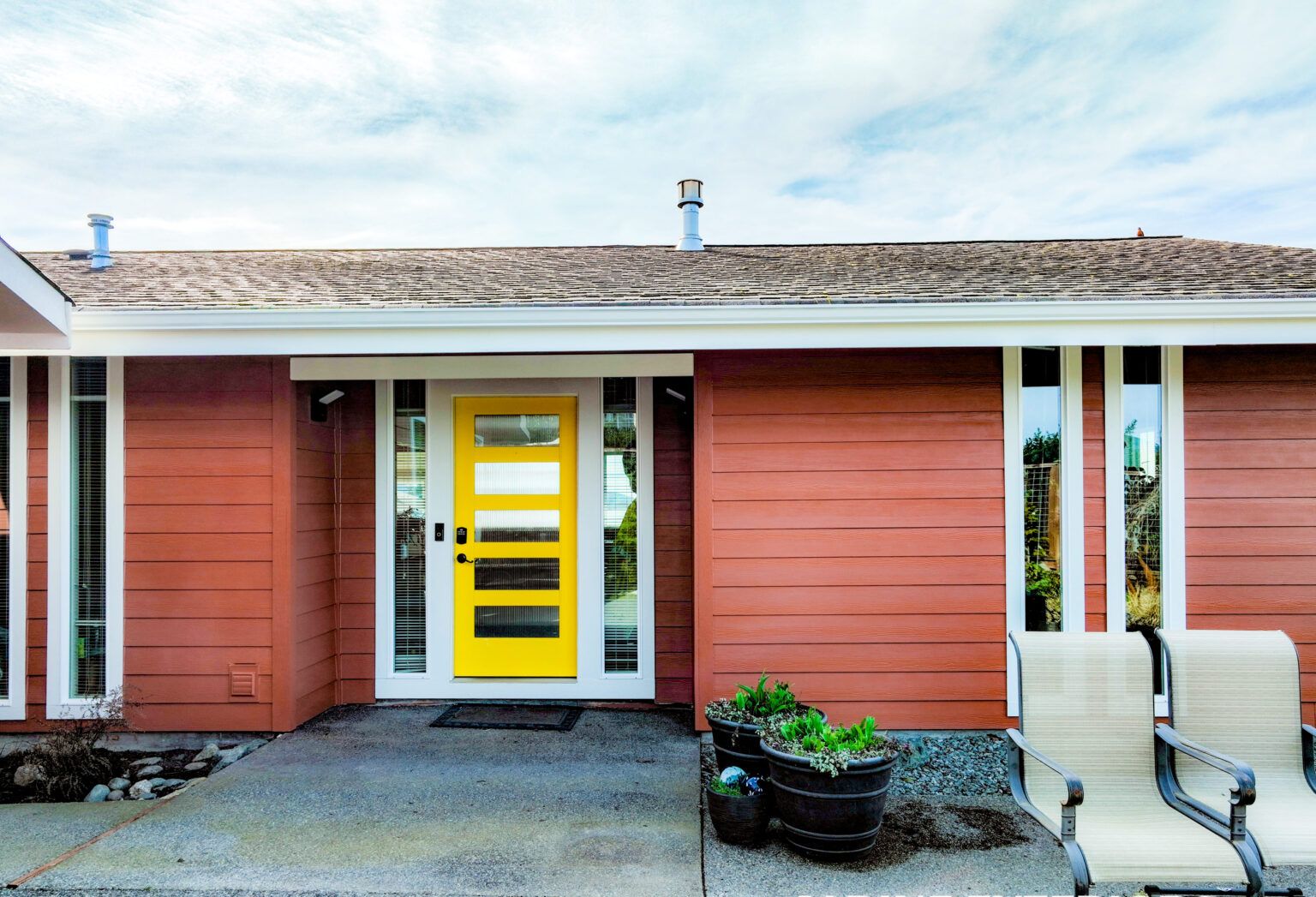
Walk any neighborhood from South Tampa to Wesley Chapel and you'll notice most homes share the same bones: concrete block construction, or CBS, topped with a stucco finish. That's not an accident. Block resists the subterranean termites that make wood-framed walls a long-term liability in this climate, and it stands up well to hurricane wind loads. But stucco isn't the only exterior finish that works on a block home, and it isn't always the right one for every situation. Fiber cement siding, best known by the James Hardie brand, has become a common alternative for additions, second stories, gables, and full re-clads across Tampa, Lutz, Land O' Lakes, New Port Richey, Plant City, and Zephyrhills. Here's how the two actually compare when the wall underneath is block.
If your home is a standard CBS house with stucco that's still sound — no widespread cracking, no soft spots, no history of moisture intrusion — recoating or patching that stucco is usually the more practical and less disruptive choice. If your stucco has failed extensively, if you're adding a wood-framed second story or lanai enclosure, or if you simply want a different look than the seamless Mediterranean finish that dominates the region, Hardie fiber cement is worth serious consideration. Neither product is universally "better." They solve different problems, and on a lot of Tampa Bay homes the right answer is actually a mix of both.
Stucco applied directly over concrete block is the default finish for most CBS construction in this part of Florida, and for good reason — it's monolithic, it doesn't require furring or a separate structural substrate, and a properly applied three-coat system (scratch, brown, and finish coats) sheds wind-driven rain reasonably well when it's intact. It also matches what's already on most of the street, which matters if you're thinking about resale in a neighborhood where stucco is the norm.
The drawback shows up over time. Concrete block and the stucco skin over it expand and contract at slightly different rates, and Florida's swings between summer heat, sudden thunderstorm cooling, and high humidity accelerate that stress. Hairline cracking around windows, corners, and stucco control joints is common, and once a crack opens, wind-driven rain during a tropical storm or hurricane can track behind the finish coat. Trapped moisture behind stucco doesn't dry out quickly in our humidity, which is exactly the condition mold and mildew need. Intense UV also breaks down paint and elastomeric coatings faster here than in milder climates, so most stucco homes in Tampa Bay are on a repaint or recoat cycle whether the walls show visible damage yet or not.
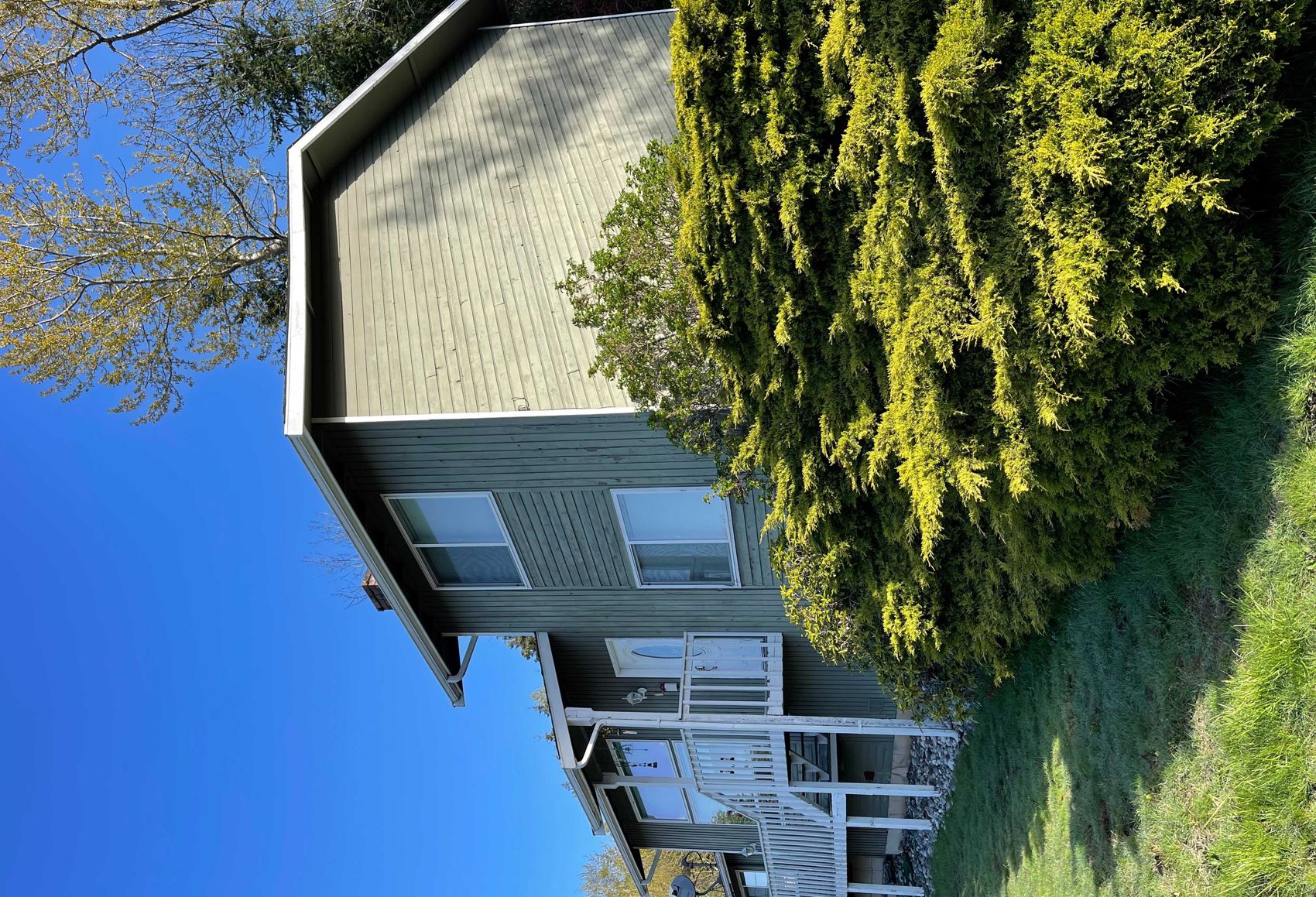
Fiber cement siding is a blend of cement, sand, and cellulose fibers, formed into lap boards, shingle-style panels, or vertical panels and factory-primed or pre-finished. James Hardie formulates products specifically for humid, high-UV Gulf Coast conditions, and the material itself doesn't rot, doesn't feed termites, and holds paint noticeably longer than most wood or vinyl alternatives when it's properly installed and maintained.
On a block home, Hardie isn't applied directly to the CBS wall the way stucco is. It's typically installed over furring strips or vertical strapping that create a drainage gap, with a code-compliant water-resistive barrier behind it, and the assembly has to carry a valid Florida Product Approval for the wind zone the home sits in. That extra layer of labor is the main reason Hardie tends to cost more than stucco when it's going over an existing block wall rather than a plain wood-framed section. Where Hardie is genuinely at home is on wood-framed gables, dormers, additions, garage bump-outs, and second stories — the parts of a Tampa Bay house that were never block to begin with. It also holds up better than raw wood in humidity and doesn't give termites anything to eat, which matters on framed sections attached to a block first floor. The trade-off is appearance: Hardie gives you a lap, shake, or panel look, not the smooth, seamless stucco finish that a lot of Florida buyers expect on a full masonry home.
| Stucco (over block) | Hardie Fiber Cement | |
|---|---|---|
| Cost | Generally lower on a block home since it applies directly to the CBS wall with no furring; repair costs rise if cracking is widespread and hard to texture-match. | Higher installed cost on block due to furring, drainage plane, and trim work; repairs are often more contained since you can replace individual boards or panels. |
| Lifespan | A sound stucco skin can last decades, but cracking and the need for recoats start earlier in coastal humidity and UV than in drier climates. | Manufacturer limited warranties commonly run in the 30-year range for the material itself when installed and maintained per spec; paint finish life depends on the coating used. |
| Maintenance | Periodic recaulking at penetrations, crack monitoring and patching, and a repaint or elastomeric recoat cycle driven by Florida sun and humidity. | Periodic repainting (longer intervals with factory-finished products), caulk joint checks, and keeping the bottom edge clear of grade, mulch, and irrigation spray. |
| Appearance | Seamless, monolithic look with a range of textures; the traditional finish across most Tampa Bay neighborhoods. | Lap, shingle, or panel profiles; reads more coastal-cottage or craftsman than smooth Mediterranean stucco. |
For a straightforward, intact CBS home in Tampa, Wesley Chapel, or Zephyrhills, staying with stucco and keeping it properly maintained is usually the more cost-effective path — you're not fighting the wall's natural finish, and you're not introducing a furring assembly where one isn't needed. The calculus changes once stucco has failed in more than isolated spots. Chasing cracks and patching the same wall every few years costs real money over time, and if moisture has already gotten behind the finish coat, a full Hardie re-clad with a proper drainage plane can actually solve the underlying problem instead of masking it again.
Wood-framed additions are the clearer call. A lanai enclosure, a second-story addition, or a garage extension built on wood framing over a block first floor doesn't have the same relationship to stucco that solid CBS does — it's more prone to the kind of moisture and movement issues fiber cement is specifically built to resist. We generally point homeowners in Land O' Lakes and New Port Richey toward Hardie for those sections, especially anywhere closer to Gulf-influenced salt air where corrosion and coating breakdown show up faster on lower-quality materials.
Wind performance matters everywhere in this region, and both products can be installed to meet current Florida Building Code wind load requirements when the correct Florida Product Approval numbers are used for the assembly and the fasteners are spaced to spec — that's an installation detail as much as a material choice, and it's worth confirming with whoever does the work. On the insurance side, it's worth knowing that the wind mitigation inspection used for premium discounts (the OIR-B1-1802 form) is focused on roof shape, roof deck attachment, roof-to-wall connections, and opening protection — not wall cladding — so re-siding or re-stuccoing on its own generally won't move that particular discount, even though it can meaningfully improve how the wall performs in a storm. Alpine Exteriors works with both stucco repair and Hardie installation across the Tampa Bay area, and in a lot of cases the honest recommendation is a hybrid: keep sound stucco where it's doing its job, and bring in fiber cement where framing, moisture history, or a full re-clad make it the better fit.
Not directly against the block. A proper installation uses furring strips or vertical strapping fastened to the CBS wall to create a drainage gap, with a water-resistive barrier and flashing detailed underneath, all sized to a Florida Product Approval for the assembly. Skipping that gap is one of the more common ways fiber cement installations trap moisture and fail early in a humid climate.
It addresses a different failure mode rather than "fixing" stucco cracking directly. Stucco cracks largely come from the finish coat moving differently than the block behind it; fiber cement siding is a separate cladding layer with its own drainage plane, so it isn't subject to that same bond-line stress. If the underlying issue was trapped moisture from cracked stucco, a properly installed Hardie assembly can resolve it — but a poorly installed one can develop its own moisture problems, so the installation quality matters as much as the material.
Usually not directly. The wind mitigation inspection insurers use for premium credits (Florida's OIR-B1-1802 form) evaluates roof shape, roof deck attachment, roof-to-wall connections, and opening protection — wall cladding isn't a line item on that form. Either product can still improve how well your walls actually perform in wind-driven rain, which is a real benefit even if it doesn't show up as a separate insurance credit.
It varies by exposure, coating quality, and sun orientation, but the combination of intense UV and high humidity here generally shortens repaint intervals compared to drier, less sunny climates. Rather than working off a fixed number of years, it's worth having a professional look at chalking, fading, and any hairline cracking periodically, since catching a small crack before a storm season is far cheaper than repairing water damage after one.
Every block home in Tampa Bay carries its own history of additions, repairs, and prior work, so the right call between stucco and Hardie really does depend on what's actually on your walls right now. Alpine Exteriors, FL contractor license RB29003900, inspects both stucco and fiber cement systems on block homes throughout Tampa, Wesley Chapel, Lutz, Land O' Lakes, New Port Richey, Plant City, and Zephyrhills, and can tell you honestly whether your home needs a repair, a recoat, or a re-clad. Reach out for a walk-through and a straightforward recommendation before your next storm season.