
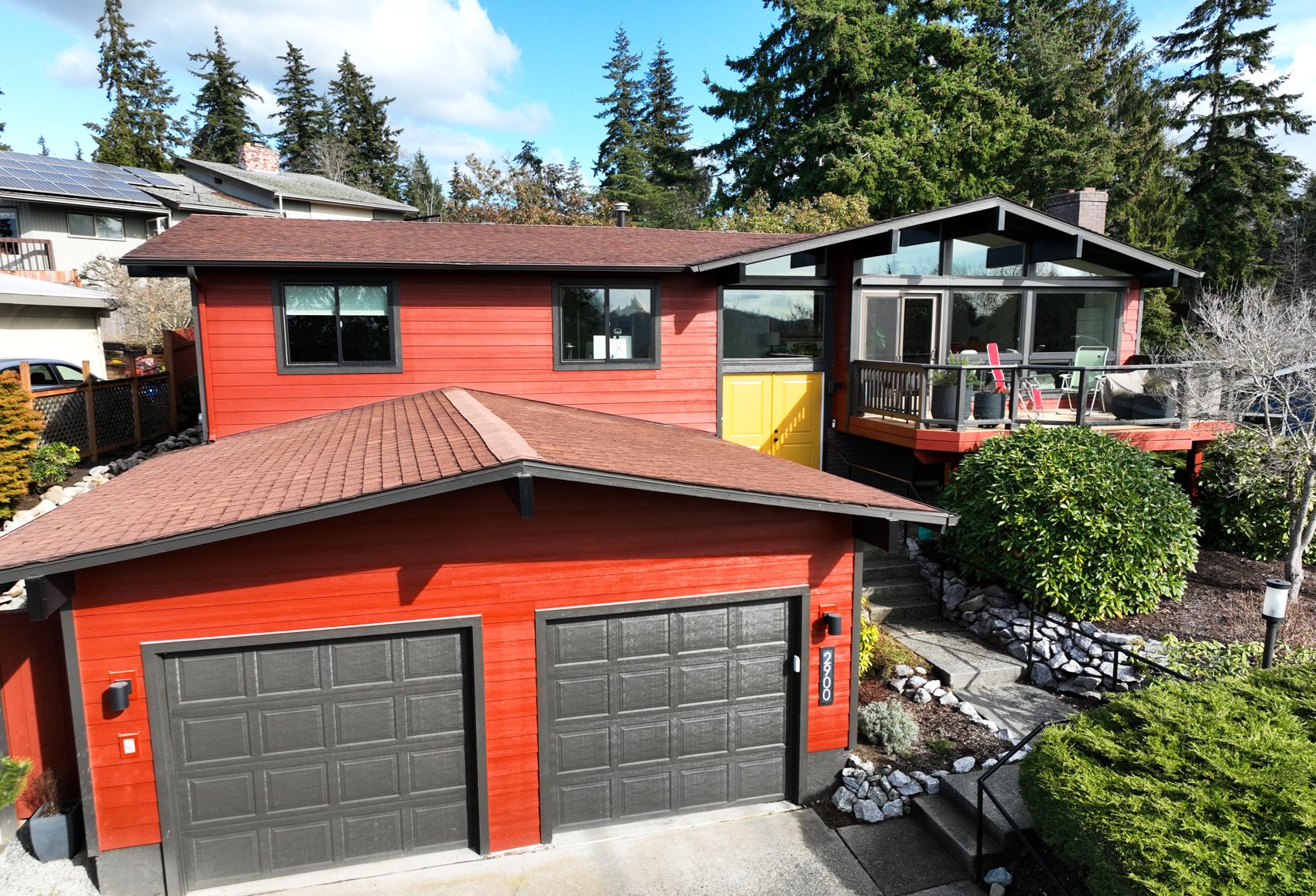
For most homes in Land O' Lakes and the rest of Pasco County, James Hardie fiber cement siding is the stronger long-term match for our climate — it stands up better to wind-driven rain, holds paint and color through intense Florida UV, and doesn't soften or sag in summer heat. Vinyl siding still has a real place here: it costs less up front, it's a practical option on rental properties or homes going to market soon, and modern wind-rated vinyl products installed correctly can meet current wind requirements. The right choice usually comes down to how long you plan to own the home, your budget for the first year versus the next twenty, and how much maintenance you're willing to take on. Below, we break down both materials specifically for the conditions this part of Tampa Bay throws at exterior walls.
James Hardie siding is made from a blend of Portland cement, sand, and cellulose fiber, pressed and cured into planks, shingles, or panels. It's not plastic and it's not wood — it's a manufactured cementitious product engineered specifically to resist the things that wear down other siding materials: moisture, sun, and pests. Hardie manufactures a version of its siding, marketed under the HardieZone HZ5 designation, formulated for regions like ours that see a mix of high humidity, heavy seasonal rain, and freeze-thaw swings further north in the state. Products used here carry Florida Product Approval and are engineered to meet the wind-load and water-infiltration testing required under the Florida Building Code, which matters at permitting and again at insurance renewal.
In practical terms, fiber cement handles our environment well because it doesn't absorb bulk water the way wood does, and it doesn't expand and contract with heat the way vinyl does. It holds screws and nails tightly for wind resistance, and because it's cement-based, it isn't a food source for termites, which are a routine concern on Pasco County lots backing up to wooded or previously wooded land. The tradeoffs are real, though: fiber cement is heavier and more labor-intensive to install than vinyl, which raises labor cost; it requires factory-primed or factory-finished boards to be field-painted or touched up at the joints; and while the material itself doesn't rot, poor caulking or flashing at trim and window returns can still let water behind it, so installation quality matters as much as the product.
Vinyl siding is an extruded PVC product formed into interlocking panels that snap onto a starter strip and nail over the wall sheathing. Its biggest advantages are cost and speed — panels go up quickly, there's no field painting, and the material itself won't rot, rust, or feed termites. For a homeowner watching the budget, or an investor prepping a rental for turnover, that combination is genuinely appealing. Wind-rated vinyl products, when installed with the correct nailing pattern and fastener spacing for the wall's exposure category, can carry Florida Product Approval and satisfy Florida Building Code wind-load requirements for typical Pasco County wind zones.
Where vinyl struggles here is heat and UV. Land O' Lakes summers run hot and sun-intense for months at a stretch, and standard vinyl can soften, warp, or bow on south- and west-facing walls, especially darker colors that absorb more heat. Color also fades unevenly over the years under sustained UV exposure, and unlike fiber cement, faded vinyl generally can't be repainted — it has to be replaced to restore a uniform look. Vinyl's panel-and-lap design relies on overlapping joints and weep holes rather than a fully sealed surface, so during the sideways, wind-driven rain that comes with our tropical storms and hurricanes, a poor installation is more likely to let water track behind the panels than a properly flashed fiber cement wall. None of this makes vinyl a bad product — it makes correct installation and product selection more important than the marketing on the box.
| Factor | James Hardie Fiber Cement | Vinyl Siding |
|---|---|---|
| Upfront cost | Higher material and labor cost; heavier product, more install time and crew skill required | Lower material and labor cost; faster installation, fewer trade specialties needed |
| Lifespan | Multi-decade lifespan when properly installed and periodically repainted; resists warping, rot, and pest damage | Multi-decade lifespan under normal conditions, but heat-softening, fading, and cracking from impact can shorten real-world service life in our sun and storm exposure |
| Maintenance | Needs repainting or refinishing on a multi-year cycle; caulking at joints and trim should be inspected after storm seasons | No painting; occasional washing to remove mildew film and pollen; damaged panels are replaced rather than repaired, and older color runs can be hard to match |
| Appearance | Authentic wood-grain or smooth finish, holds crisp trim lines, accepts custom paint colors, reads as a higher-end exterior | Wide color and profile selection at a lower price point, but a more uniform, less dimensional look, and color options fade or discontinue over time |
Land O' Lakes sits inland within Pasco County, which means homes here don't take a direct hit from storm surge the way waterfront Tampa Bay properties do, but they still see the same tropical systems moving through with sustained wind and hours of wind-driven rain. The Florida Building Code sets design wind speeds for this part of west-central Florida in the range that requires tested, approved siding assemblies rather than a generic product pulled off a shelf — whatever you choose, confirm the specific product carries current Florida Product Approval for your wall's exposure category, and ask your contractor how the fastening schedule changes near corners, eaves, and gable ends where wind pressure concentrates. If you're planning to file an insurance wind mitigation report — the OIR-B1-1802 form — after the project, keep your product approval documentation and installation photos on file, since some carriers ask for that paperwork when applying wind mitigation credits.
Humidity is the other constant here. Pasco County runs warm and wet for a good stretch of the year, which creates steady mold and mildew pressure on any exterior surface, and it's part of why we lean toward fiber cement on homes that get significant shade from oak canopy or sit close to retention ponds, where surfaces stay damp longer between rains. Fiber cement's density and factory finish resist mildew growth better than vinyl's textured surface, and it won't soften under the kind of sustained afternoon heat that bakes west-facing walls through a Tampa Bay summer. For a home you plan to keep for the long haul, especially a larger or more visible elevation, that combination of storm performance, heat stability, and finish quality is usually worth the higher upfront cost.
That said, vinyl remains a sound, honest choice in the right situation — a starter home, a rental property, a smaller secondary structure, or a tight renovation budget where a properly rated vinyl product installed to code gets a home a durable, code-compliant exterior without the painting upkeep. Alpine Exteriors installs both materials across Land O' Lakes, Wesley Chapel, Lutz, and the rest of Pasco County, and we'll walk your specific home, roofline, and sun exposure before recommending one over the other rather than defaulting to whichever is easier to sell.
Yes, eventually. Factory finishes on fiber cement hold up for years, but intense Florida UV and the wear from wind-driven rain during storm season will dull and thin any exterior paint over time. Most homeowners here plan for a repaint or touch-up on a multi-year cycle rather than never painting at all, and keeping caulking fresh at trim and butt joints between paint cycles helps prevent water intrusion.
Vinyl products carrying current Florida Product Approval and installed with the manufacturer's specified fastening pattern are engineered to meet Florida Building Code wind-load requirements for our area. The real-world weak point isn't the material rating, it's installation quality — under-driven or overdriven nails, wrong fastener spacing, or panels not locked properly can let a section pull loose in sustained wind, so the installer's attention to detail matters as much as the product choice.
Any siding product installed here needs Florida Product Approval documentation showing it's been tested for the wind pressures and water infiltration standards that apply to your wall's exposure category under the Florida Building Code. Your permit application and final inspection will reference that approval, and keeping the paperwork is also useful later if your insurer requests it for a wind mitigation report such as the OIR-B1-1802 form.
It's technically possible and some homeowners do it on additions, gables, or secondary elevations, but mixing materials creates a visible seam where the products meet and can complicate flashing details at that transition. If budget is the driver, it's usually more effective to keep one material throughout and adjust the trim package or accent details instead, so ask your contractor to price both approaches before deciding.
If you're weighing James Hardie fiber cement against vinyl siding for a home in Land O' Lakes, Wesley Chapel, Lutz, or anywhere else in Pasco County, Alpine Exteriors can walk the property with you, point out the sun exposure and moisture patterns specific to your lot, and give you a straightforward estimate for both options so you're comparing real numbers instead of guesswork. Alpine Exteriors holds Florida contractor license RB29003900 and handles the permitting and product-approval paperwork as part of the job. Reach out to schedule a walkthrough and get a written estimate for your siding project.