
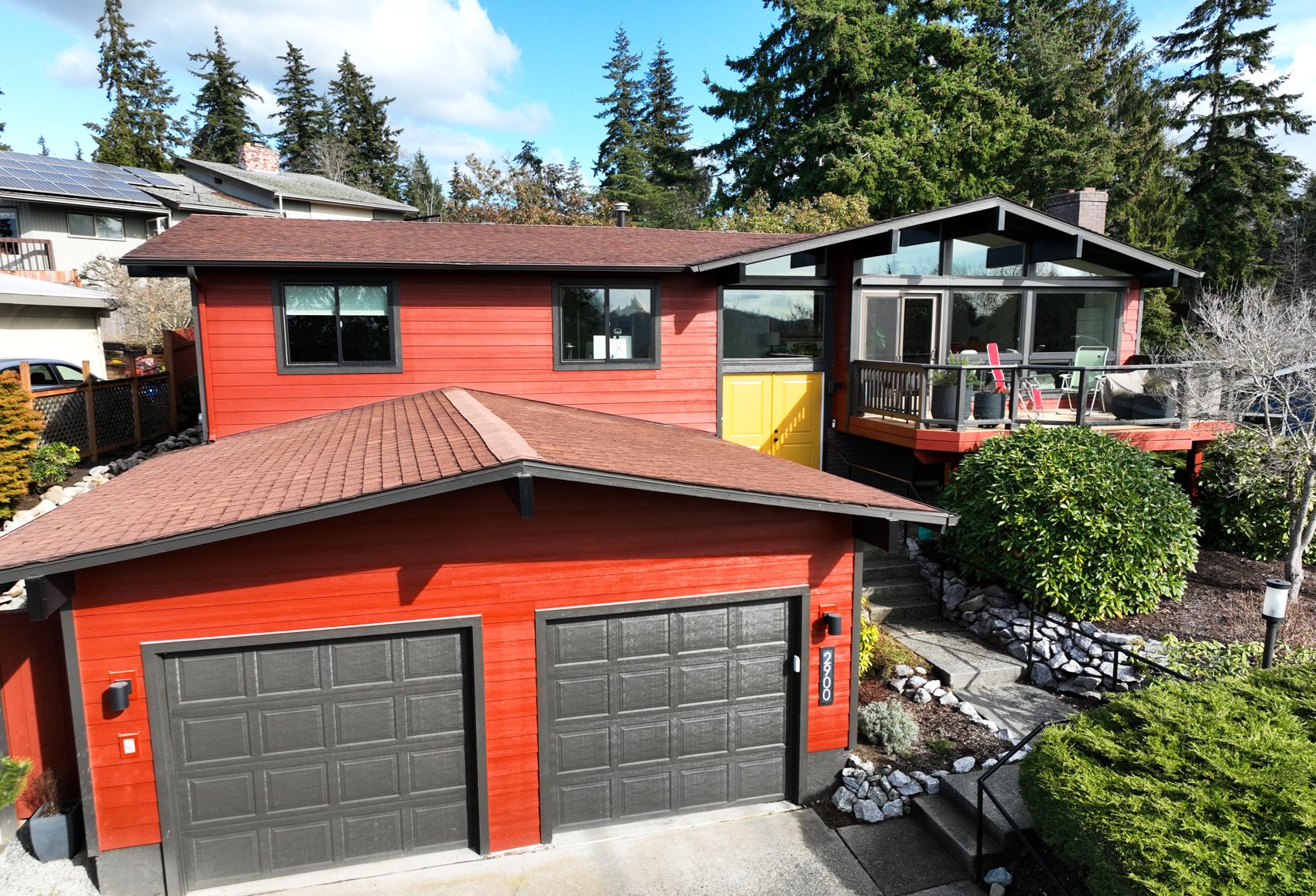
Most Tampa Bay homeowners end up happiest with lap siding, and it's what Alpine Exteriors installs on the large majority of full re-sides across Tampa, Wesley Chapel, Lutz, Land O' Lakes, New Port Richey, Plant City, and Zephyrhills. It's simpler to flash correctly against wind-driven rain, easier to source in wind-rated fiber cement or vinyl profiles, and less labor-intensive to repair after a storm. Shingle siding earns its place on homes where the owner wants a textured, cottage or coastal look — an accent gable, a dormer, a front elevation facing the street — and is willing to accept a higher install cost and a bit more upkeep for that appearance. Neither option is wrong; the decision usually comes down to how much of the house you're covering, your budget per square foot, and how much of a design statement you want the exterior to make. If you're re-siding an entire two-story home on a contractor's timeline and budget, lap wins on practicality. If you're accenting a single wall or gable and appearance is the priority, shingle earns its keep.
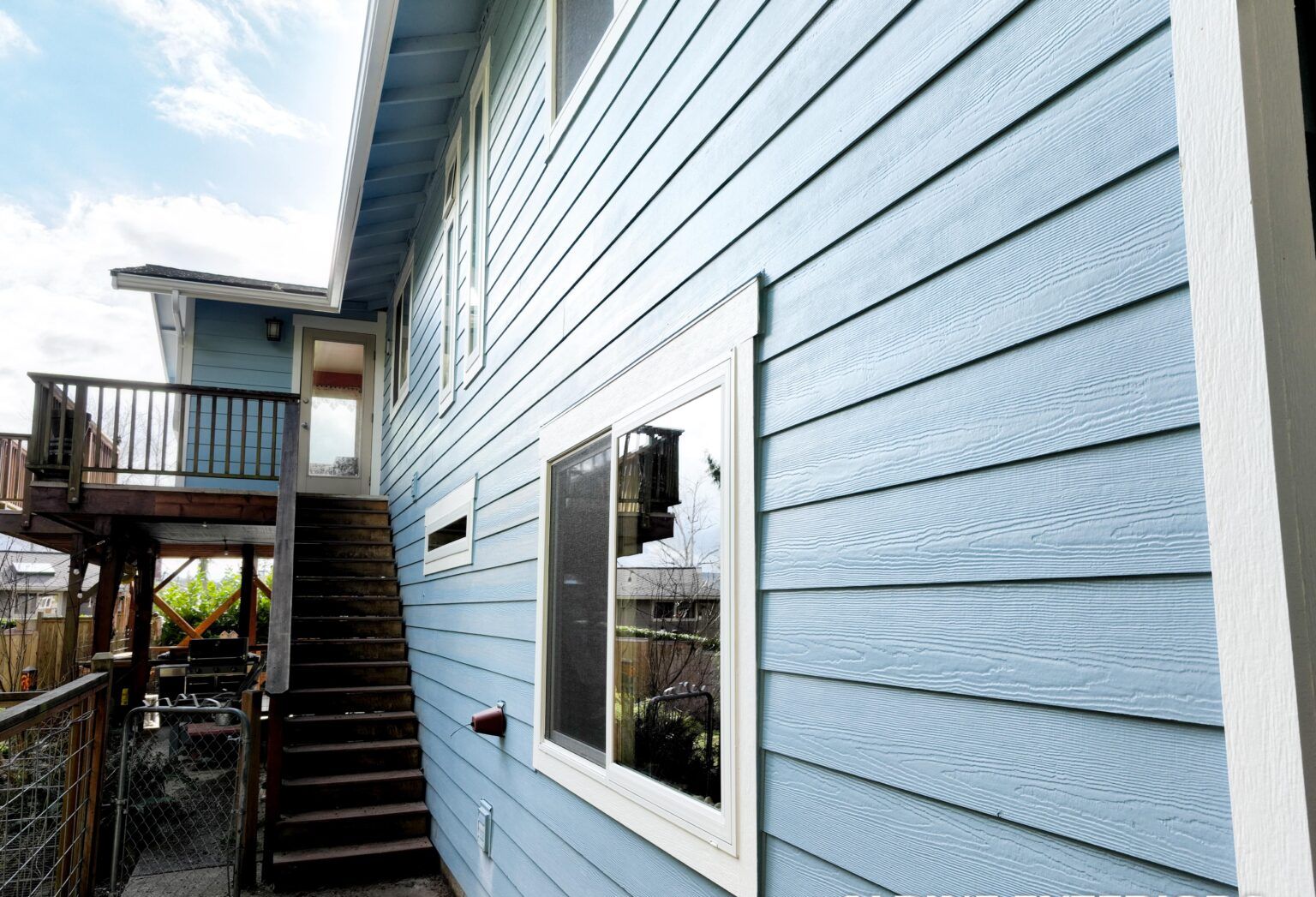
Lap siding is the horizontal-board look most people picture when they think of siding — each course overlaps the one below it, shedding water down and away from the wall assembly. In this market it's almost always installed in fiber cement (James Hardie and similar) or vinyl, both of which carry Florida Product Approval numbers verifying they meet the wind pressure and water infiltration testing required under the Florida Building Code. That matters here because Tampa Bay sits in a wind-borne debris region even outside the High-Velocity Hurricane Zone counties further south, and every siding product on the house needs a documented wind rating tied to your home's exposure category, not just a manufacturer's marketing claim.
Fiber cement lap siding resists the two things that age siding fastest in this climate: constant UV exposure and moisture cycling in near-100% summer humidity. It doesn't support mold growth the way untreated wood can, and it holds paint and factory finishes through repeated wet-dry cycles better than most alternatives. Vinyl lap costs less up front and never needs painting, but very thin or older vinyl profiles can deform in direct west-facing Florida sun and are more prone to cracking on impact from wind-driven debris during a tropical system. The horizontal lap profile also has fewer seams and transitions per square foot than shingle siding, which in practice means fewer places for wind-driven rain to find a way behind the water-resistive barrier — a real consideration during the long stretch of summer thunderstorms and named storms this region sees every year.
Shingle-style siding uses individual, staggered, or coursed shingle units instead of continuous horizontal boards, giving a textured, shadow-lined appearance often associated with coastal or craftsman-style homes. In Florida, this is almost never installed as actual cedar wood shingle siding — traditional wood shingles are vulnerable to termite pressure and moisture retention in our climate, and most manufacturers and installers, Alpine Exteriors included, steer customers toward fiber cement shingle-profile panels that mimic the look without the wood's maintenance burden. These fiber cement shingle products carry the same Florida Product Approval and wind-testing requirements as lap siding, so the wind performance question isn't automatically worse — it depends on the specific product and its rated attachment method.
Where shingle siding does ask more of you is at the seams. More individual pieces and more butt joints per square foot mean more places where caulking, flashing, and fastener placement have to be right, and more places where a missed detail can let wind-driven rain track behind the cladding during a hard-blowing storm. It's also a slower, more labor-intensive install than lap siding, which shows up directly in the labor portion of the price. The upside is real: shingle siding reads as a premium, high-texture finish that lap siding simply can't replicate, and on the right house — a Craftsman bungalow in Seminole Heights, a coastal-style build near the water in Land O' Lakes — it's worth the extra installation care.
| Factor | Lap Siding | Shingle Siding |
|---|---|---|
| Typical installed cost | Generally $6-$11 per sq. ft. installed in fiber cement; less in vinyl | Generally $9-$16 per sq. ft. installed, driven by labor and piece count |
| Lifespan in this climate | 25-40+ years for fiber cement with proper caulking and repaint cycles; shorter for lower-grade vinyl in full sun | 25-35+ years for fiber cement shingle profiles; wood shingle products are not recommended here due to termite and moisture exposure |
| Maintenance | Repaint or refinish roughly every 10-15 years; periodic caulk inspection at trim and penetrations | Same repaint cycle, but more linear feet of seams and butt joints to inspect and re-caulk |
| Appearance | Clean, traditional horizontal lines; wide range of reveal widths and colors | Textured, dimensional, shadow-lined look; strong fit for coastal or craftsman styling |
For a full-house re-side anywhere in the Tampa Bay service area, lap siding is generally the more practical choice, and it's what we recommend to most homeowners as the primary field material. It installs faster, costs less per square foot, and has fewer joints for wind-driven rain to exploit during the summer storm season or a tropical system moving through. It also gives you a straightforward path to compliant, wind-rated coverage across large wall areas without stacking up labor hours on detail work.
That said, we don't think every house should be all lap or all shingle. A common approach we use on Tampa Bay projects is mixing the two: lap siding as the primary field material across most elevations, with fiber cement shingle siding called out on a front gable, a dormer, or a porch accent wall. That gives the home the dimensional curb appeal shingle siding delivers without paying the labor premium across the entire exterior, and it keeps every product on the wall within its Florida Product Approval and wind-rating limits. If salt air is a factor for a property closer to the Gulf side of the service area, we also weigh corrosion-resistant fastener specs and trim materials regardless of which siding profile is chosen, since fastener and flashing corrosion — not the siding panel itself — is usually what fails first near the coast.
Fiber cement shingle siding holds up comparably well to fiber cement lap siding in terms of the material itself resisting mold and moisture absorption. The bigger factor is installation detail — shingle profiles have more seams and butt joints, so proper caulking and flashing at those transitions matter more than with a continuous lap board. Installed correctly, either product performs well through Tampa Bay's humid, wet-summer climate.
Yes, provided the specific product carries a current Florida Product Approval number rated for your home's wind exposure and design pressure. This applies to both lap and shingle-profile siding, and it's determined by the manufacturer's testing and the attachment method used, not by which style you choose. Alpine Exteriors specifies products and fastening schedules to match the wind rating your home needs.
We generally don't recommend traditional wood shingle siding for this region. Florida's humidity, frequent rain, and termite pressure make wood siding a higher-maintenance and higher-risk choice compared to fiber cement shingle-profile products, which deliver a similar textured look without the same vulnerability to moisture retention and pests.
Shingle siding typically costs more per square foot than lap siding, mainly because of the added labor to install and detail more individual pieces. Exact pricing depends on the product, the home's elevations, and how much of the exterior is shingle versus lap, so we provide project-specific numbers after an on-site look rather than a flat estimate.
If you're weighing lap siding against shingle siding for a home in Tampa, Wesley Chapel, Lutz, Land O' Lakes, New Port Richey, Plant City, or Zephyrhills, Alpine Exteriors can walk your property, point out where each option makes sense, and put together a written estimate that accounts for your home's wind exposure and Florida Building Code requirements. Alpine Exteriors holds Florida contractor license RB29003900. Contact us to schedule a free on-site consultation.