
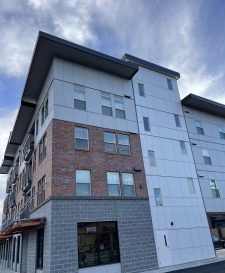
Both HardiePlank and Hardie Panel are fiber cement products made by James Hardie, and both hold up well against the conditions that actually wear out siding here — wind-driven rain, year-round humidity, intense UV, and the termites that make wood trim a losing bet in this part of Florida. The real difference isn't durability, it's profile and aesthetic. HardiePlank is horizontal lap siding: individual overlapping boards that read as traditional clapboard. Hardie Panel is a large vertical sheet, usually finished with battens, that reads as clean, modern board-and-batten or contemporary flat-panel siding.
If you're updating a traditional ranch or two-story home in Plant City or Zephyrhills and want the widest local installation track record, lap siding is the lower-risk choice. If you're building or remodeling toward a modern farmhouse or contemporary look in Wesley Chapel, Lutz, or Land O' Lakes, panel siding — often mixed with lap — is usually the better fit. Alpine Exteriors installs both across Tampa Bay, and the choice usually comes down to the home's architecture more than any real performance gap between the two.
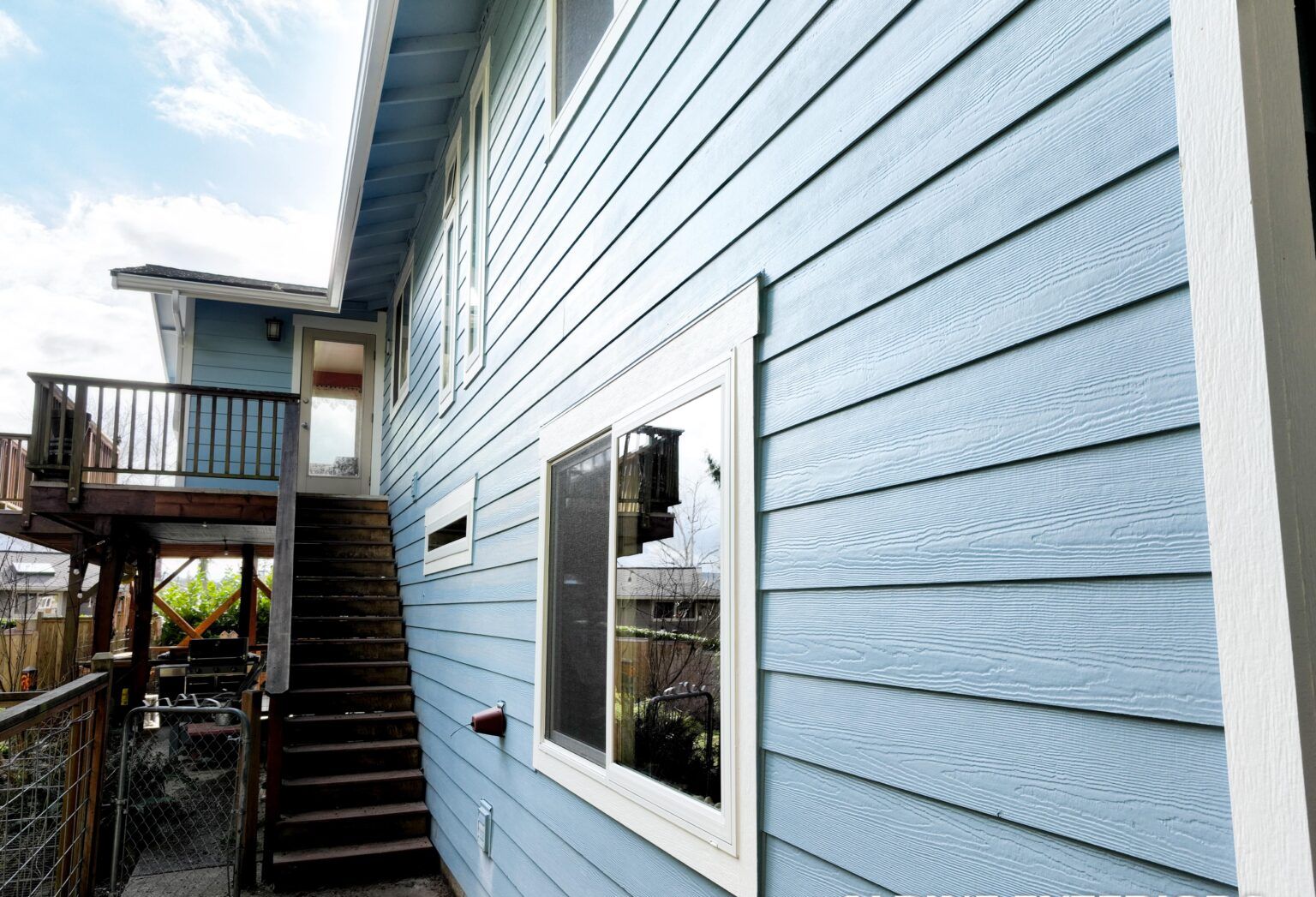
HardiePlank is sold in individual boards — common widths run from about 5.25 inches up to 9.25 inches — installed horizontally with each course overlapping the one below it. It comes in a smooth finish or a cedar-textured finish (Select Cedarmill), and it's available prefinished through Hardie's ColorPlus system or ready for field painting.
Hardie Panel comes in large sheets, commonly 4x8 or 4x10 feet, installed vertically. The board-and-batten look — smooth or stucco-textured panels with vertical wood-look battens covering the seams — has become a common choice on newer construction and remodels around Wesley Chapel and Land O' Lakes, where a more modern exterior is the goal.
| Factor | HardiePlank Lap Siding | Hardie Panel |
|---|---|---|
| Installed cost | Generally the lower of the two, since installation is straightforward per-board labor with no furring system required. | Typically runs somewhat higher due to added battens or furring and the extra care panel installation requires — the gap narrows if panel is used only as an accent rather than whole-house. |
| Lifespan | Same fiber cement core as panel; realistically decades of service life when installed correctly and refinished on a normal repaint cycle. | Same material, same expected lifespan — the panel format itself doesn't add or subtract years, installation quality does. |
| Maintenance | More linear feet of caulked joints to inspect and touch up over time, especially where boards butt together. | Fewer joints to maintain in the field of the wall, but battens and panel seams still need periodic caulk inspection, and vertical seams can be more visible if caulk fails. |
| Appearance | Traditional, widely recognized clapboard look; the safer choice for matching an existing traditional streetscape. | Clean, modern board-and-batten or flat-panel look; stands out on contemporary or farmhouse-style builds, less common on older traditional homes. |
Tampa Bay's building conditions push both products toward the same baseline: whatever you choose has to be installed to withstand wind pressures set by the Florida Building Code, resist wind-driven rain intrusion during summer storms and hurricane season, shrug off the humidity and UV load that breaks down lesser siding materials within a few years, and not give termites anything to eat — fiber cement handles all of that regardless of profile. That's why the decision here really is architectural rather than performance-based.
A few things worth knowing before you decide. Neither siding profile factors into the wind mitigation credits insurers evaluate on the OIR-B1-1802 form — that inspection is almost entirely about roof shape, roof-to-wall connections, and opening protection, not wall cladding. Don't expect a premium insurance discount just from switching siding types; the value of fiber cement here is resisting storm and moisture damage directly, not an insurance line item. Both HardiePlank and Hardie Panel assemblies carry Florida Product Approval when installed per the manufacturer's fastening schedule, which your contractor should be able to reference for your specific wall assembly and wind zone, including homes closer to the Gulf in New Port Richey where salt-laden air accelerates corrosion on lesser fasteners and trim.
Given that, our general guidance for Tampa Bay homeowners: if your home is a traditional single-story or two-story build common in Plant City, Zephyrhills, or older sections of Tampa, HardiePlank alone is usually the most cost-effective, lowest-risk option, and it's what most of the neighborhood already has. If you're doing new construction or a full remodel with a modern or farmhouse-style elevation — increasingly common in Wesley Chapel, Lutz, and Land O' Lakes — Hardie Panel on gables and accent walls paired with lap on the main field usually delivers the look you're after without paying panel pricing across the entire house. Alpine Exteriors, Florida contractor license RB29003900, walks Tampa Bay homeowners through both options on-site so the recommendation fits your actual home and budget rather than a generic answer.
Not meaningfully. Both are the same fiber cement material and both are rated under the same Florida Building Code wind provisions and Florida Product Approval process for their respective assemblies. Performance in a storm comes down almost entirely to installation quality — correct fastener type and spacing, proper flashing at joints and openings, and following the manufacturer's approved details — rather than whether the boards run horizontal or vertical.
Yes. Fiber cement doesn't provide food for termites the way wood siding or trim does, and it doesn't absorb moisture and swell the way wood-based products can in our humidity. It does still need a properly installed weather-resistive barrier behind it and periodic caulk maintenance at joints and penetrations, since water problems in a fiber cement wall almost always trace back to a flashing or sealant failure rather than the siding material itself.
Panel installation generally costs more per square foot than lap because of the added furring or batten work and the extra labor care the larger sheets require. The gap is smaller if you're using panel selectively as an accent rather than covering the whole house, which is also why mixing the two is a popular way to get a modern look without paying panel pricing on every wall.
Yes, and it's a common approach on Tampa Bay remodels and new builds looking for a modern-traditional mix — lap siding on the main walls with panel siding on gables, dormers, a garage face, or a porch surround. Done well, it reads as an intentional design choice rather than mismatched materials, and it lets you control cost by limiting the higher-labor panel product to smaller accent areas.
The right choice between HardiePlank and Hardie Panel depends on your home's architecture, your neighborhood, and how you want the finished exterior to read from the street — not on which one is "better" in the abstract. Alpine Exteriors serves Tampa, Wesley Chapel, Lutz, Land O' Lakes, New Port Richey, Plant City, and Zephyrhills, and can walk your specific home with you to recommend a siding plan that fits the budget and the building. Reach out for an on-site look and a written estimate before you decide.