
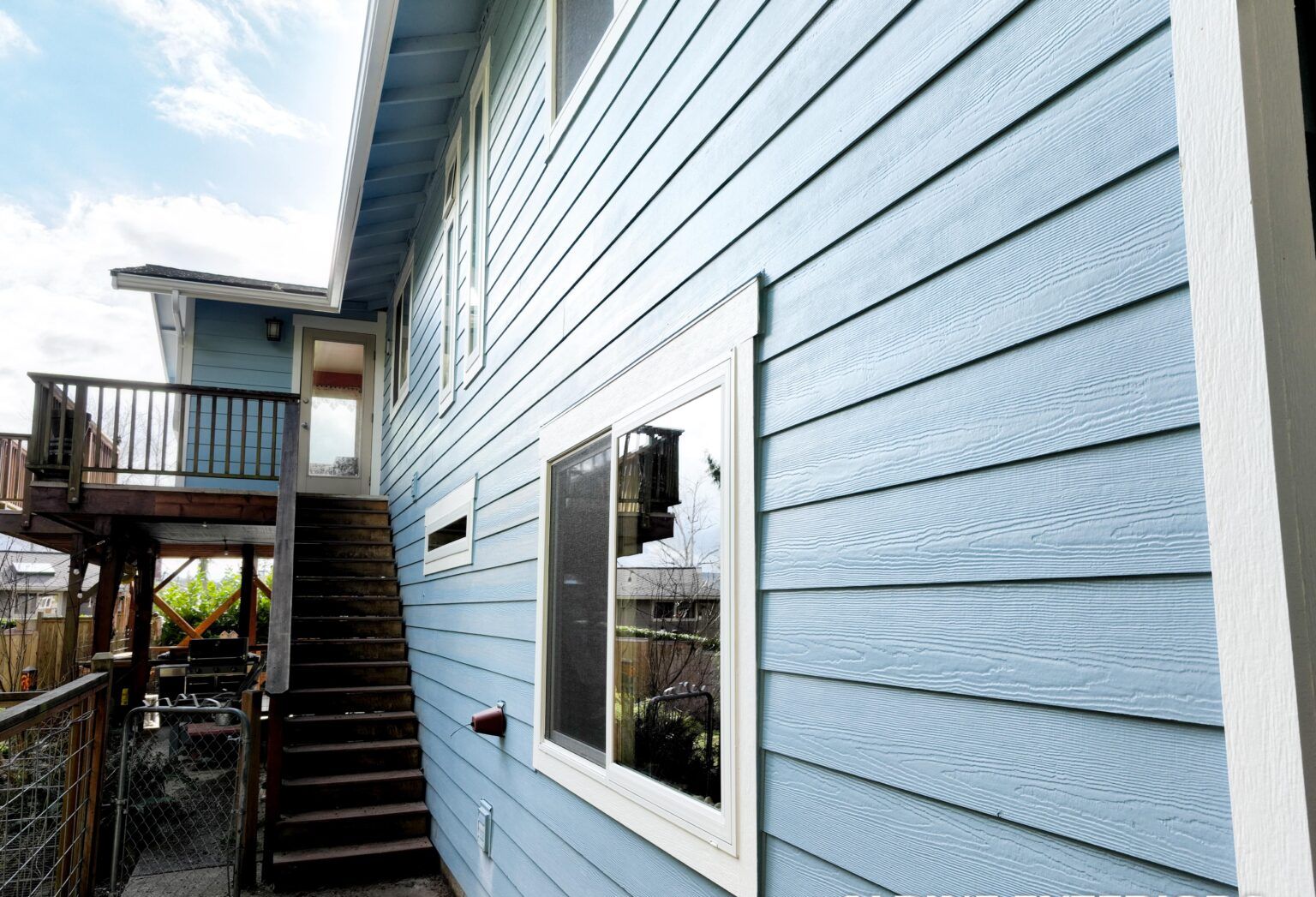
Soffit is the finished underside of your roof overhang — the horizontal surface visible when you look up at the eaves from the driveway. It closes off the attic while still letting air move through built-in vents. Because it sits low and faces upward into wind-driven rain, soffit is often one of the first exterior components to show trouble on a Tampa Bay home, sometimes before a homeowner ever notices a roof leak.
Walk the perimeter of the house and look up at every overhang, not just the ones near the front door. Warning signs include:
One sign alone may be minor. Several together, on the same stretch of eave, usually mean water has been getting in for a while.
Soffit failure around Tampa, St. Petersburg, Clearwater, and Apollo Beach rarely comes from one event — it is the buildup of a few conditions that come with living on the Gulf Coast.
Wind-driven rain during tropical storms and hurricanes is the biggest factor. Storm winds push rain sideways and upward into the underside of eaves, where standard soffit was never built to shed water. Even an unnamed storm can drive enough rain under a loose panel to start rot or mold.
Humidity does the rest of the work quietly, year-round. Attics here run hot and moist, and if soffit vents are blocked, painted shut, or undersized, that air has nowhere to escape. Condensation forms on the roof deck and drips back onto the soffit framing, feeding rot from the inside until the panel finally sags.
Closer to the water in St. Petersburg, Clearwater, and Apollo Beach, salt-laden air adds corrosion on top of the moisture problem. Aluminum vent screens and fasteners break down faster in salt air, which is why coastal soffit often shows rust and loose fasteners years before an inland home would.
Florida's intense, near-year-round UV takes its own toll. Vinyl soffit can go brittle and crack at the seams, and painted wood soffit loses its protective coating faster than it would in a milder climate, leaving bare wood exposed to the next rain.
Clogged gutters make everything worse, sheeting water down the fascia and into the back of the soffit instead of away from the house.

A few situations belong at the top of the list: active animal entry, since a squirrel or rat inside the attic does compounding daily damage; soft or crumbling wood you can push a finger into, since that section has already lost structural integrity; and visible daylight through a gap or a panel loose enough to flap in the wind, which needs attention before the next storm, not after.
A faint old stain with firm material underneath and no odor can usually wait for a scheduled inspection. Honestly, though, you often cannot tell the difference from the ground — a stain that looks cosmetic can sit over rotted framing, and a small gap can be the only visible sign of a larger hidden problem. That is the case for having a contractor physically probe the material rather than guess from a photo.
A single damaged section on a home with vinyl or aluminum soffit is often a straightforward patch: cut out the failed piece and splice in a matching section. It is the cheaper, faster path, and reasonable when the damage is localized and the framing underneath is still sound.
Wood soffit is different. Rot rarely stays inside neat boundaries, and once moisture has softened a section, the damage has usually spread further along the fascia and rafter tails than it appears from below. Patching one board while leaving compromised wood next to it just delays the next repair. A full run of soffit, sometimes paired with fascia replacement, tends to be the more durable answer.
The tradeoff is real: full replacement costs more and takes longer, while a patch is cheaper but only as good as the untouched material around it. A contractor who insists every job is one or the other is not looking closely enough. Alpine Exteriors makes that call based on what the wood looks like once the damaged panel is off, not before.
Most soffit failure here is slow and preventable if caught early.
None of this replaces periodic professional inspection. Attic ventilation is also a Florida Building Code matter, not just a maintenance preference — code sets a minimum ratio of net free ventilation area, and soffit vents typically supply the intake side of that system, working with ridge or gable vents on the exhaust side. Undersized or blocked soffit venting throws off the balance of the whole attic assembly, not just the soffit itself.
Caulk can slow a small surface crack, but it does not address moisture already trapped behind the panel. If a stain keeps returning after a repaint, the material behind it needs to be checked, not just sealed over.
Soffit takes on wind-driven rain and humidity directly, independent of the shingles or tile above it. A roof can be in good shape while the soffit beneath it fails from moisture that entered sideways during a storm or built up from poor attic ventilation.
Both outlast uncoated wood since neither rots. Vinyl can go brittle with long-term UV exposure, and aluminum near the coast needs fasteners and screens that resist salt corrosion — there is no single best answer; it depends on the home's exposure and what is already installed.
Not always, but the two are physically connected, and water that damages one has often reached the other. Whenever fascia is opened up for repair, it is worth having the adjoining soffit inspected in the same visit.
Soffit damage is one of the easier problems to catch early and one of the costlier ones to ignore, since it sits directly above framing, insulation, and in many homes, electrical runs. If you have noticed staining, sagging, or gaps on your eaves anywhere from Tampa to St. Petersburg, Clearwater, or Apollo Beach, it is worth having someone physically check the material rather than watching it from the ground through another storm season. Alpine Exteriors inspects soffit, fascia, and the roofline as a system, gives a straight answer on patch versus full replacement, and explains what is actually driving the damage before any work starts.