
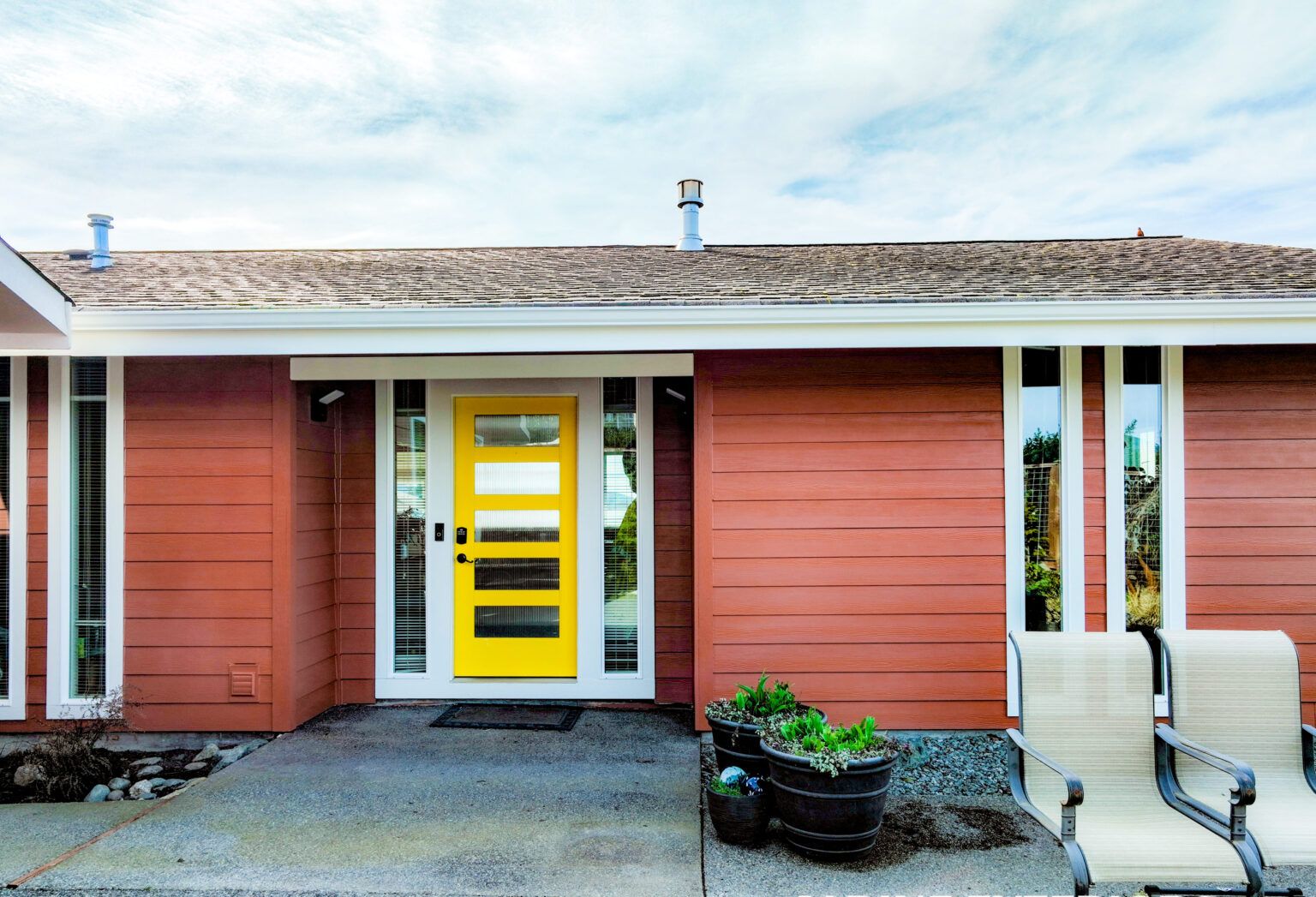
If you're pricing Hardie panel siding for a home in Tampa, Wesley Chapel, Lutz, Land O' Lakes, New Port Richey, Plant City, or Zephyrhills, the honest answer to "what does it cost" is: it depends on your home's size, condition, and how much wind and moisture protection the job requires to meet Florida Building Code. Below is a realistic breakdown of what shapes the price in this specific market, what a trustworthy quote should spell out, and how to compare bids that aren't actually comparable. Alpine Exteriors put this together as a planning guide, not a sales pitch — every range here is general, and your actual number will come from a written, in-person estimate.
Fiber cement panel and lap siding (James Hardie's HardiePlank, HardiePanel, and HardieShingle product lines) generally lands in a mid-to-upper tier compared to vinyl on the low end and true masonry or stone veneer on the high end. In the Tampa Bay market, total project cost is driven less by the siding material itself and more by three regional factors: the wind-load fastening schedule required under the Florida Building Code for your specific wind speed zone, how much of the existing wall assembly needs repair before new siding can go on, and whether the home requires storm-related upgrades like new flashing and water-resistive barrier detailing to manage wind-driven rain. Coastal-influenced areas closer to the Gulf, including parts of New Port Richey, can also see added cost for corrosion-resistant fasteners and trim due to salt air exposure.
The table below breaks out the main cost factors as broad, low-to-high ranges. These are general planning figures, not a quote — think of them as the levers that move your final number up or down, not a price list.
| Cost Factor | Lower End of Range | Higher End of Range |
|---|---|---|
| Siding material tier (smooth lap vs. shingle/panel accents, factory ColorPlus finish) | Standard HardiePlank lap in a stock color | Mixed panel, shingle, and board-and-batten accents with premium ColorPlus finishes |
| Existing wall condition | Sound sheathing, straightforward re-side over existing house wrap | Rotted sheathing, mold-damaged framing, or full tear-off to bare studs |
| Home size and complexity | Single-story, simple rectangular footprint | Two-story homes with dormers, multiple gables, or lots of trim transitions |
| Wind-zone fastening and code compliance | Standard fastening schedule for the applicable wind speed line | Enhanced fastening, structural screws, or added bracing in higher-exposure zones |
| Moisture and flashing detail work | Standard window/door flashing per manufacturer install instructions | Full re-flashing, new weather-resistive barrier, and additional drainage plane work |
| Removal and disposal of old siding | Vinyl or newer siding, easy removal | Old stucco, asbestos-era siding, or multiple layers requiring specialized disposal |
| Trim, soffit, and fascia scope | Siding-only scope, trim left as-is | Full trim package replaced or wrapped to match new siding |
Beyond the factors in the table, a handful of Tampa Bay-specific conditions tend to push a project toward the higher end of any range:
A complete, usable quote for Hardie panel siding in this market should spell out more than a bottom-line number. At minimum, look for:
Alpine Exteriors provides written estimates that break out these items individually rather than bundling everything into one number, specifically so homeowners can see what they're paying for before work starts.
The biggest mistake homeowners make when comparing siding bids is assuming a lower number means a better deal. In practice, two quotes that look close on the bottom line can represent very different scopes of work. When you're lining up estimates side by side, check that each one specifies the same Hardie product and profile, the same removal scope (over-existing versus tear-off), the same trim package, and the same fastening approach for your wind zone. A bid that's noticeably lower than the others is often lower because it's leaving something out — commonly sheathing repair allowances, code-required fastening upgrades, or full trim replacement — not because the contractor found a more efficient way to do the same job. It's also worth asking directly whether the fastening schedule and flashing details in the bid actually reference the Florida Building Code requirements for your specific address, or whether they're a generic, one-size-fits-all install. Finally, confirm the contractor's Florida license number and that it's active — Alpine Exteriors holds Florida contractor license RB29003900, and any licensed contractor should provide their license number without hesitation.
Many homeowners in the Tampa Bay area finance siding replacement rather than paying the full amount up front, and it's reasonable to ask a contractor what financing options they offer or partner with before committing to a project. Separately, siding replacement can intersect with your homeowner's insurance in a couple of ways worth understanding ahead of time. If your project involves storm or wind damage, your insurer may require documentation of the work and the products used, so keeping copies of the product approval paperwork and the contractor's invoice is worth doing regardless of whether a claim is involved. And if you haven't had a wind mitigation inspection done recently, it's worth asking your insurance agent about the OIR-B1-1802 Uniform Mitigation Verification Inspection Form — certain wind-resistant construction features, which new, correctly installed siding and flashing can support, are sometimes eligible for a premium credit. Alpine Exteriors doesn't handle insurance claims or file that paperwork directly, but can provide documentation of the products and methods used on request.
For many Tampa Bay homeowners, yes, because fiber cement holds up differently than vinyl under sustained UV exposure, doesn't soften or warp in extreme heat the way vinyl can, and isn't a food source for termites. Vinyl is typically less expensive up front, so the right choice depends on how long you plan to stay in the home and how much you weigh long-term durability against initial cost — it's a genuine trade-off, not a clear win for either material in every situation.
It depends on the condition of what's underneath. If the existing wall assembly is sound and the current siding provides a flat, stable surface, installing over it can sometimes be an option, which affects cost. But if there's any sign of moisture intrusion, rot, or the existing material isn't a suitable substrate under the manufacturer's installation instructions, a tear-off is the responsible approach even though it costs more — installing over a compromised wall just hides a problem rather than fixing it.
Timelines vary with home size, scope, and weather, and Florida's rainy season can add delays that are hard to predict precisely. A straightforward re-side on a single-story home generally moves faster than a full tear-off with sheathing repair and trim replacement on a larger two-story home. Any contractor should give you a realistic timeline range in writing rather than a single fixed date, and should explain upfront how weather delays are handled.
New siding itself doesn't automatically lower your premium, but certain wind-resistant construction and installation details can factor into a wind mitigation inspection and the OIR-B1-1802 form your insurer may use to evaluate discounts. It's worth a conversation with your insurance agent both before and after the project, and keeping your contractor's documentation of the products and fastening methods used in case it's needed.
The only way to turn these ranges into a real number is a walk-through of your specific home. Alpine Exteriors serves Tampa, Wesley Chapel, Lutz, Land O' Lakes, New Port Richey, Plant City, and Zephyrhills, and provides written, itemized estimates for Hardie panel siding projects that spell out material, scope, and code-required detailing before any work begins. If you're planning a siding project and want a straight answer on what it will actually take for your home, reach out to schedule an on-site estimate.