
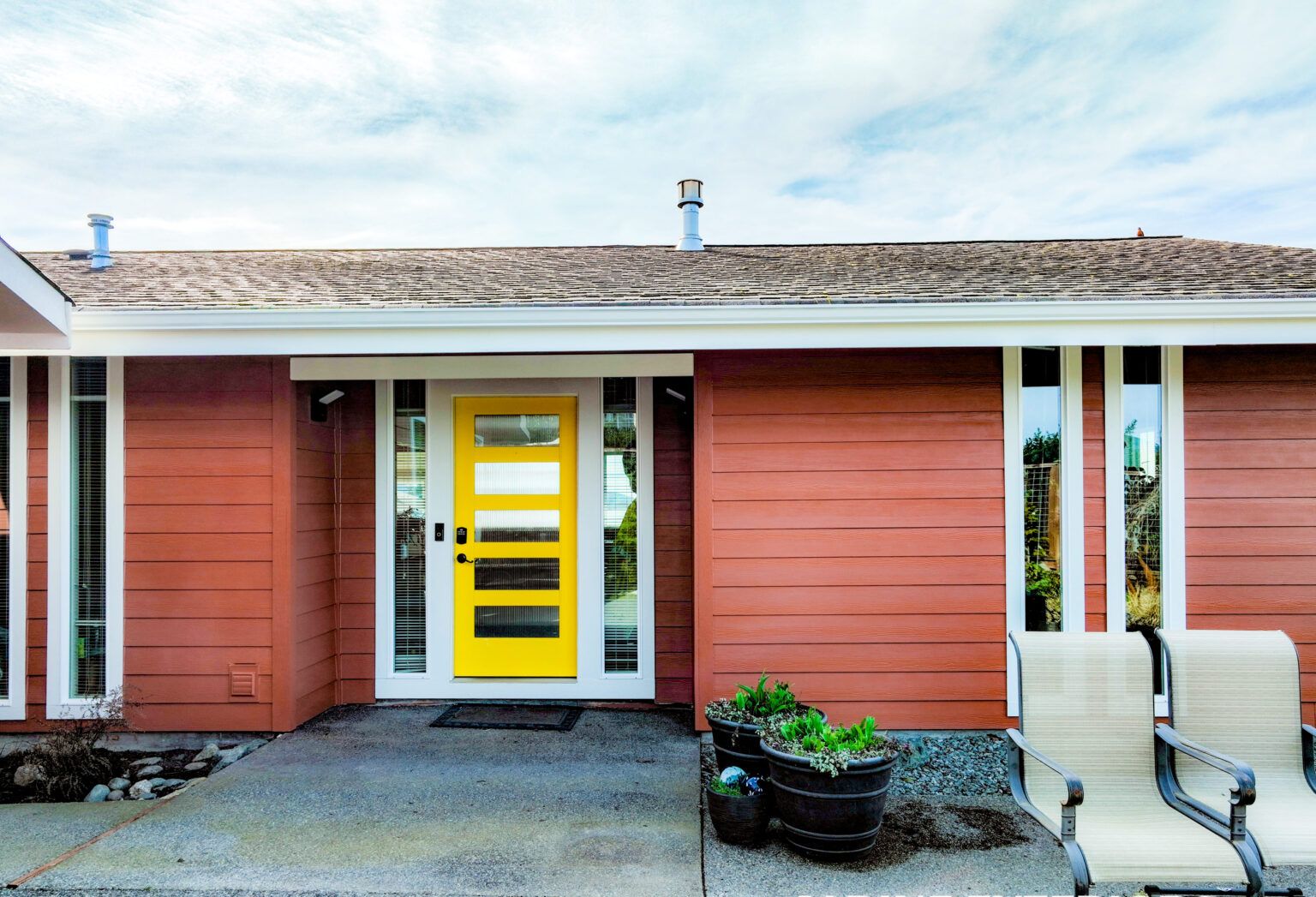
Dover sits inland in eastern Hillsborough County, a stretch of strawberry fields and rural subdivisions between Plant City and Seffner. It doesn't get salt spray off Tampa Bay, but it gets everything else Central Florida throws at a house: long, humid summers that keep siding damp for hours after every afternoon storm, intense UV that fades and chalks cheap materials within a few years, subterranean termite pressure that never really lets up, and hurricane-force wind events that test every fastener and lap joint. James Hardie fiber cement siding is popular here because it's rated for those conditions when installed correctly, but the honest answer to "what does it cost" is a range, not a number pulled from a brochure. This page walks through that range and the variables that push a Dover project toward the low end or the high end.
For a typical single-story Dover home in the 1,800 to 2,600 square foot range, full removal and replacement with James Hardie lap siding generally lands in the moderate-to-upper range for the Tampa Bay market, with two-story homes, extensive trim work, or HardieShingle accent siding pushing toward the higher end. Homes that only need siding on a portion of the exterior, or that already have a sound weather barrier underneath, can land lower. The table below breaks out the main line items that make up a Dover quote, each shown as a low-to-high range rather than a fixed price, because the actual number depends on your home's size, layout, and current condition.
| Cost Factor | Typical Range Contribution |
|---|---|
| HardiePlank lap siding, material and installed labor (per sq. ft.) | Low: standard smooth or cedarmill lap, single story, easy access | High: two-story, cut-up walls, HardieShingle or HardiePanel accents |
| Tear-off and disposal of existing siding | Low: single layer of vinyl or hardboard | High: multiple layers, hidden rot, or asbestos-era siding needing special handling |
| Substrate repair (sheathing, framing, water damage) | Low: dry, sound sheathing found once old siding comes off | High: rotted OSB or framing discovered around windows, corners, or the roofline |
| House wrap / weather-resistive barrier | Low: standard synthetic wrap | High: upgraded drainable wrap plus flashing tape at every penetration |
| Trim, fascia, soffit, and corner boards | Low: reuse sound existing trim | High: full trim replacement in HardieTrim or comparable material |
| Finish (factory ColorPlus vs. field-applied paint) | Low: standard ColorPlus color from the current line | High: field painting after install, or a specialty ColorPlus color |
| Permits and code-required documentation | Low: standard Hillsborough County residential permit | High: additional engineering or product-approval documentation for unusual wall assemblies |
A handful of site-specific factors do more to move a Dover quote than anything else. The first is what's under the existing siding. Alpine Exteriors sees a meaningful share of Hillsborough County tear-offs where the sheathing has taken on moisture damage around window and door openings, at the base of walls, or where a prior roof leak went unnoticed for a while. Florida's humidity means wood-based sheathing rarely dries out on its own once it's wet, so if a crew finds soft OSB or framing once the old siding is off, that repair gets priced as it's discovered rather than guessed at up front. A reputable contractor should walk you through what a per-sheet or per-linear-foot repair rate looks like before work starts, so a surprise doesn't become a shock.
The second factor is wind design. Hillsborough County falls under Florida Building Code wind speed requirements that are lower than the coastal Windborne Debris Region closer to the water, but Dover homes still need siding, fasteners, and fastening schedules that carry a valid Florida Product Approval for the applicable wind pressure. Fastening every course to the manufacturer's nailing schedule, rather than skipping courses or under-nailing to save labor time, is not optional here — it's the difference between siding that stays put in a tropical storm and siding that peels off in sheets. That correct installation takes real labor hours, and it should be reflected in the labor portion of any quote rather than treated as a shortcut.
Termite exposure is the third regional factor. Eastern Hillsborough County has active subterranean termite pressure, and fiber cement siding itself isn't a food source, but the wood trim, furring strips, and sheathing behind it are. Installers who leave gaps for inspection clearance at grade, avoid burying trim below finished soil level, and flash penetrations correctly are protecting the wood components the termites actually care about — details that take a bit more care and time than a rushed install, and that show up as a modest labor difference rather than a material one.
Finally, home geometry matters as much in Dover as anywhere: dormers, bump-outs, multiple roof pitches meeting the wall plane, and a lot of trim around windows and doors all add cutting, fitting, and caulking time that a simple rectangular ranch house doesn't need.
A quote that's missing line items is a quote that's likely to grow once work starts. At minimum, expect a Dover siding proposal to spell out the specific James Hardie product and profile (HardiePlank lap, HardieShingle, or HardiePanel, along with the exposure and texture), the exact fastener type and nailing pattern being used, the weather-resistive barrier product, flashing details at windows, doors, and roof-to-wall intersections, whether ColorPlus factory finish or field paint is being used, disposal of the old siding, and the permit itself. It should also state, in writing, what happens if rotted sheathing or framing is found once demolition starts — a per-unit repair rate is far more useful to you than a vague "priced as needed" note. Alpine Exteriors builds Dover quotes this way specifically so a homeowner can see where every dollar is going rather than being handed a single lump sum.
When you're holding two or three bids side by side, resist the urge to just compare the bottom-line number. Start with the product itself: confirm each bid specifies the same Hardie profile, thickness, and exposure, because a wider exposure with fewer boards per wall is not the same job as a narrower, more labor-intensive reveal. Check that each contractor is quoting the correct Florida Product Approval and fastening schedule for your wind zone rather than a generic national spec sheet. Look for whether tear-off, disposal, and any sheathing repair are included or listed as likely add-ons, and ask each contractor directly how they price sheathing repair if it's found. Ask to see current Florida contractor licensing — Alpine Exteriors operates under Florida contractor license RB29003900, and any company doing exterior work on your home should be able to produce their license number without hesitation. Finally, ask about warranty coverage on both the material (James Hardie's manufacturer warranty) and the labor (the contractor's own workmanship warranty), since those are two separate things and a low bid sometimes comes with a short or nonexistent labor warranty.
Many siding contractors, Alpine Exteriors included, offer financing options that let a project be paid off over time rather than in a lump sum; terms and approval depend on the lender and your credit, so ask for current program details rather than assuming a rate. On the insurance side, replacing siding is a good moment to revisit your home's wind mitigation documentation. The Florida OIR-B1-1802 Uniform Mitigation Verification Inspection Form is what insurers use to apply premium discounts for wind-resistant construction features, and while siding replacement alone doesn't usually change that form's opening protection or roof-to-wall connection findings, it's worth asking your contractor whether the work being done (new sheathing fastening, updated flashing, etc.) is worth documenting for your insurer. Homeowners insurance in Hillsborough County has gotten more expensive and more particular about underwriting in recent years, and having clear documentation of what was installed, when, and to what code, can matter if you ever file a wind-related claim.
It depends on what you're optimizing for. Vinyl siding typically costs less up front, but James Hardie fiber cement holds up better against the combination of intense Florida UV, wind-driven rain, and repeated wet-dry cycling from the region's humidity. Fiber cement doesn't soften, warp, or blow off in high wind the way lower-grade vinyl can, and it takes paint and factory finishes better over the long run. For a homeowner planning to stay in a Dover home for many years, the higher upfront cost is often offset by lower repainting and repair frequency, but it's a legitimate trade-off, not a universal answer.
Timelines vary with home size, the amount of trim and cutting-in required, and whether sheathing repairs are needed once the old siding comes off, so any contractor quoting an exact day count before seeing your home and starting demolition is guessing. A single-story home with straightforward walls and no hidden damage moves faster than a two-story home with dormers and multiple roof-to-wall transitions. Weather is also a real factor during Florida's rainy season, since fiber cement installation and caulking need dry conditions to go in correctly.
Properly installed fiber cement siding, fastened per the manufacturer's Florida Product Approval schedule and flashed correctly at penetrations, is more wind- and impact-resistant than aging or already-cracked siding, and it closes off some of the small gaps and cracks that let wind-driven rain intrude during a tropical storm or hurricane. It is not a substitute for other hurricane preparedness steps like securing openings, maintaining roof integrity, and reviewing your broader wind mitigation features, but it is one legitimate piece of a home's overall wind resistance.
Sometimes, but it's not usually the right call in this region. Installing over existing siding means the wall's condition and any hidden moisture damage go unchecked, and in a climate where humidity and wood-destroying insects are ongoing concerns, that's a real risk to leave unaddressed. Most reputable installations, including those Alpine Exteriors performs in the Dover area, recommend full removal so the sheathing, weather barrier, and any termite or water damage can actually be inspected and corrected before new siding goes on.
The only way to turn these ranges into a real number for your Dover home is a site visit and a written, itemized estimate. Alpine Exteriors serves Dover and the surrounding Hillsborough County communities and can walk your home's exterior, look at what's actually behind your current siding where accessible, and put together a proposal that spells out product, fastening, flashing, and pricing line by line rather than a single lump figure. If you're weighing James Hardie siding for a Dover home, reach out to schedule an on-site estimate and get a clear picture of where your project falls in the range above.