
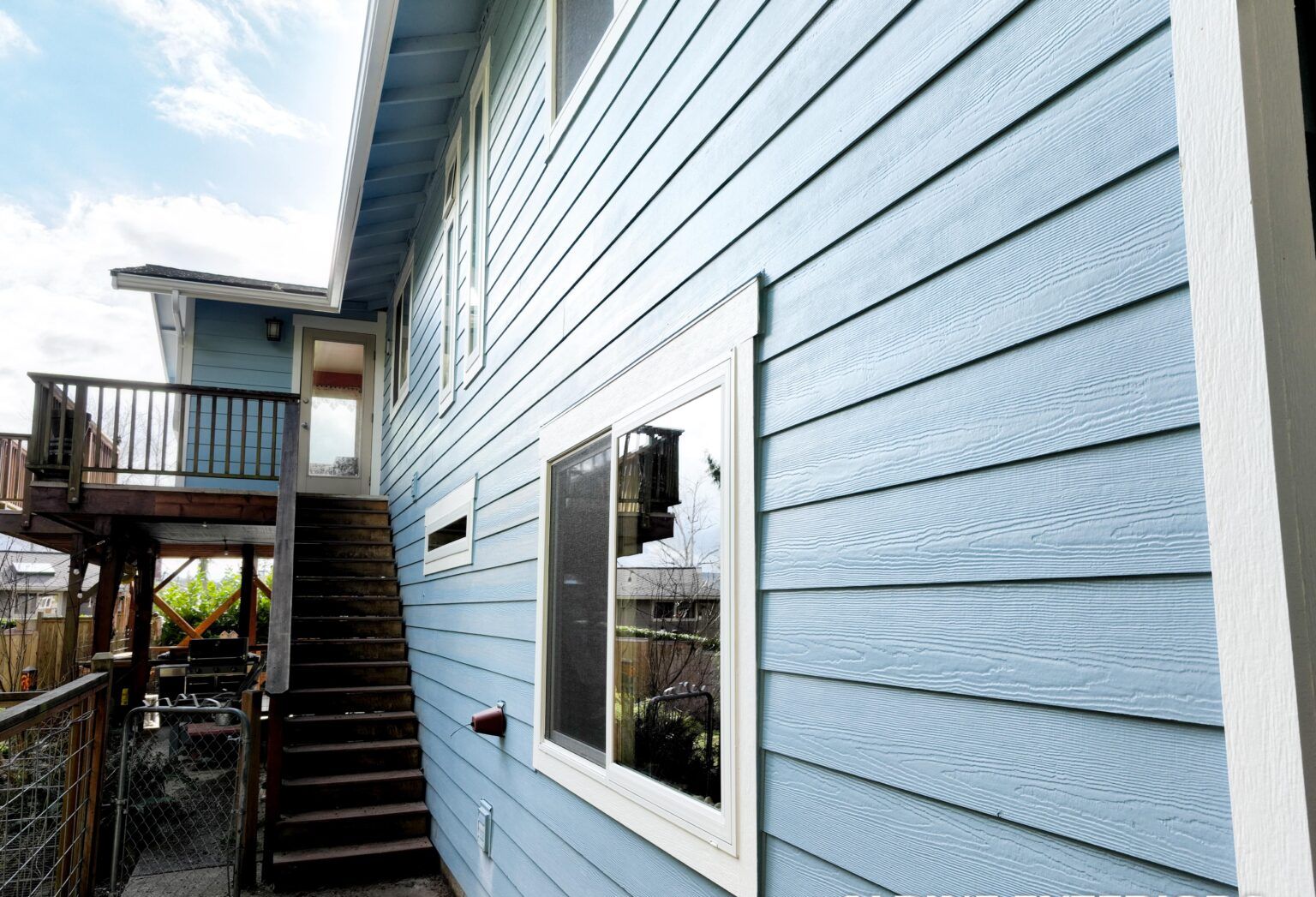
Moon Lake is one of the quieter unincorporated pockets of Pasco County, tucked between New Port Richey and Land O' Lakes, with a mix of older ranch homes on wooded, lake-adjacent lots and newer construction along the surrounding corridors. Homeowners here start pricing James Hardie fiber cement siding for a lot of overlapping reasons: aging wood or vinyl siding that has taken a beating from Gulf-influenced humidity, hail or storm damage that needs to be addressed for an insurance claim, or a straightforward desire for a material that holds up better to Central Florida's weather than what was on the house originally. This page walks through realistic cost ranges, the variables that push a project toward the low or high end, and what should show up in a legitimate quote. Every figure below is a range, not a quote — actual pricing depends on your home's size, condition, and the scope your contractor writes up after a site visit.
Fiber cement siding sits in the mid-to-upper tier of exterior cladding options, above vinyl and below full masonry or natural stone veneer. For a typical single-family home in the Moon Lake area, whole-house James Hardie installations tend to land in a broad range from the lower five figures for a smaller, simpler home with straightforward siding replacement, up through the higher five figures for a larger home with extensive trim work, tear-off, and substrate repair. Where a specific project falls in that range depends on the factors below, and a contractor should be able to walk you through which ones apply to your house before giving you a number.
| Cost factor | Pushes toward the low end | Pushes toward the high end |
|---|---|---|
| Home size and wall complexity | Smaller footprint, simple rectangular walls, single story | Large square footage, multiple stories, lots of gables, dormers, or bump-outs |
| Siding profile and texture | Standard lap siding in a common width | Board-and-batten, shingle/shake-style panels, or mixed profiles on one elevation |
| Trim and accessories | Minimal trim, existing trim reused where sound | Full HardieTrim package around windows, corners, fascia, and soffit areas |
| Tear-off and substrate condition | Sound sheathing, straightforward removal of existing siding | Rotted sheathing, water intrusion, or structural repair discovered mid-project |
| Finish | Factory ColorPlus prefinished panels in a stock color | Custom field-painted finish or specialty color matching |
| Site access and lot conditions | Open, easy-access lot with room for staging and equipment | Tight lot lines, mature tree canopy near the house, lake-side access limits common around Moon Lake |
| Permitting and wind-rated fastening | Standard fastening schedule for the design wind speed | Engineered fastening or additional product approval documentation for higher exposure areas |
A handful of Central Florida conditions show up in almost every siding estimate for this part of Pasco County, and they're worth understanding before you compare bids.
Hurricane wind loads and wind-driven rain. Even though Pasco County sits outside Florida's High-Velocity Hurricane Zone — which applies only to Miami-Dade and Broward counties — the Florida Building Code still requires exterior cladding to carry a valid Florida Product Approval number and to be installed with a fastening schedule engineered for the local design wind speed. That means the nailing pattern, fastener type, and flashing details on a Moon Lake project aren't optional upgrades; they're baseline code compliance, and a contractor pulling the correct permit and following the manufacturer's wind-rated installation instructions is doing table-stakes work, not an extra. Wind-driven rain during tropical storms and hurricanes also makes the water-resistive barrier and flashing details behind the siding just as important as the siding itself — a beautiful Hardie install over a poorly detailed weather barrier can still let water in.
Humidity and moisture pressure. Tampa Bay's year-round humidity, combined with the shade and moisture that come with lake-adjacent, tree-canopied lots like many around Moon Lake, creates real mold and mildew pressure on exterior walls. Fiber cement resists moisture damage far better than untreated wood, but proper installation still matters: a rain screen or drainage gap, correctly lapped house wrap, and sealed penetrations all affect how well the wall assembly manages moisture over the next couple of decades. Skipping these details to save money on labor is one of the more common ways a Hardie job underperforms.
Intense UV exposure. Central Florida sun fades and chalks lower-quality paint finishes faster than in milder climates. Hardie's factory-applied ColorPlus finish is baked on and warranted against fading in a way that most field-applied paint jobs can't match, which is why it typically costs more up front but can reduce repainting needs over the life of the siding.
Termites. Subterranean and drywood termites are a genuine concern for Pasco County homes, and unlike wood siding or many engineered wood products, fiber cement isn't a food source for them. That's a real, honest advantage of the material here — it doesn't eliminate the need for termite protection on the rest of the structure, but it removes the siding itself as a point of vulnerability.
Salt air, for homes closer to the coast. Moon Lake itself is a few miles inland from the Gulf, so salt exposure is a smaller factor here than it is for homes right along the coastline in New Port Richey. If your property sits closer to the water, ask your contractor about fastener and trim material choices that hold up better to salt-influenced corrosion.
A thorough written quote from Alpine Exteriors or any other siding contractor should spell out more than a single total dollar figure. Look for a scope of work that lists tear-off and disposal of the existing siding, repair or replacement of any damaged sheathing found underneath, installation of a water-resistive barrier appropriate for Florida's humidity, the specific Hardie product line and profile being installed, the trim package around windows, doors, corners, and fascia, the fastening schedule tied to your home's design wind speed, whether the finish is factory ColorPlus or field-applied paint, permit fees and who is responsible for pulling the permit, cleanup and job-site protection, and the manufacturer's and installer's warranty terms in writing. If a quote is a single line item with no breakdown, ask for more detail before comparing it to anything else.
The fastest way to end up disappointed with a siding project is to compare quotes that aren't actually pricing the same job. Confirm that each bid specifies the same Hardie product line, the same siding profile and exposure width, comparable trim scope, and the same water-resistive barrier approach — a bid that skips housewrap or reuses questionable sheathing will always look cheaper than one that doesn't. Verify that every contractor you're comparing is licensed and insured in Florida, that they intend to pull a permit rather than work around one, and that their fastening plan meets code for your specific wind zone rather than a generic national default. It's also worth asking each contractor directly how they handle moisture management and flashing detail around windows and penetrations, since that's where corner-cutting shows up years later as hidden water damage rather than something visible at project completion.
Many siding contractors, including Alpine Exteriors, can point homeowners toward third-party financing options if paying the full cost upfront isn't practical, so it's worth asking what's available during your consultation rather than assuming financing isn't an option. On the insurance side, Florida's wind mitigation inspection process — documented on the OIR-B1-1802 form — can factor in features like the fastening method and general wind resistance of your exterior envelope. Replacing siding with a properly installed, wind-rated Hardie system and keeping documentation of the work and permits can support a wind mitigation inspection, though whether it changes your premium depends on your insurer's underwriting and the rest of your home's wind mitigation features — a contractor can tell you what was done, but only your insurance company or a licensed inspector can tell you what it's worth on your policy. If the project is being driven by storm damage, keep photos, contractor estimates, and permit records organized, since that documentation is typically what an insurance adjuster will ask for.
It might help as part of a broader wind mitigation picture, but there's no guaranteed discount. Wind mitigation credits are based on the official OIR-B1-1802 inspection and depend on multiple features of your home, not siding alone, so ask your insurance agent what specifically affects your policy before assuming a savings.
Timelines vary with home size, trim complexity, and how much substrate repair is needed once the old siding comes off, plus normal weather delays during Florida's rainy season. A contractor should give you a project-specific timeline range after seeing the house in person rather than a generic number.
For many Tampa Bay homeowners, yes — Hardie siding generally handles humidity, UV fading, and wind-driven rain better than standard vinyl, and it isn't a termite food source. That said, it costs more upfront and is heavier to install, so the right choice depends on your budget, how long you plan to stay in the home, and how much of a priority long-term durability is for you.
Sometimes, but it depends on the condition of what's underneath and whether the existing surface provides a sound, flat base and doesn't trap moisture against the wall. In many Moon Lake homes, especially older ones, a full tear-off is the safer route because it lets the installer inspect and repair sheathing and flashing that would otherwise stay hidden.
Every one of the factors above — wind zone, moisture exposure, tree canopy, trim complexity — plays out differently on every lot around Moon Lake, which is why a real number has to come from a walk-through rather than a phone estimate. Alpine Exteriors is a Florida-licensed contractor (license RB29003900) serving Moon Lake and the surrounding Tampa Bay communities, including Tampa, Wesley Chapel, Lutz, Land O' Lakes, New Port Richey, Plant City, and Zephyrhills. Reach out to schedule an on-site assessment and get a written, itemized quote for your home's James Hardie siding project.