
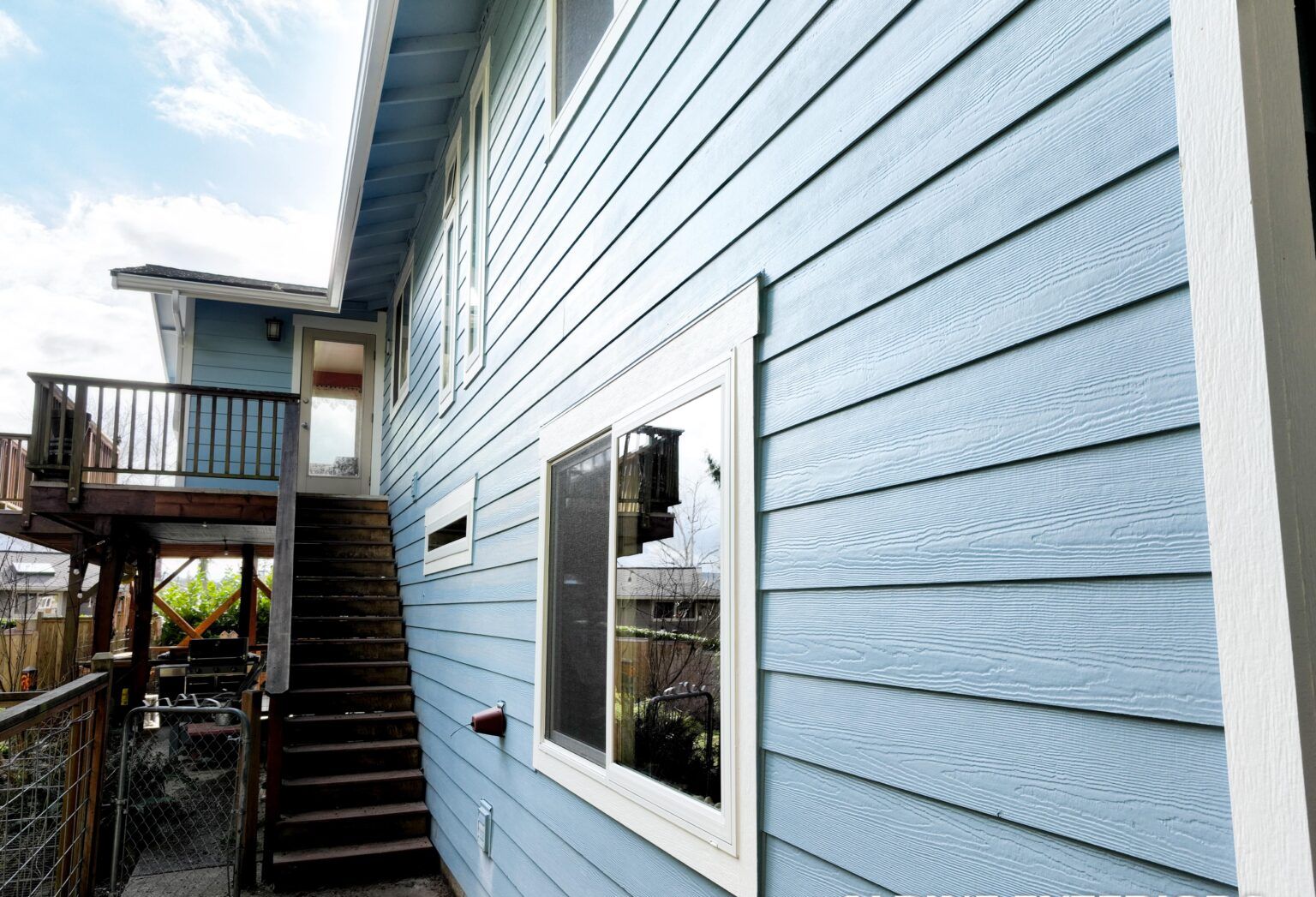
Plant City sits inland from Tampa Bay in eastern Hillsborough County, but that doesn't mean it's spared from the weather that drives Florida siding decisions. Homes here still face the full wind load requirements of the Florida Building Code, months of high humidity that push mold and moisture into anything less than a rated water-resistive barrier, intense subtropical UV that fades and chalks cheap vinyl within a few seasons, and a termite pressure that's constant across the strawberry fields and older neighborhoods alike. James Hardie fiber cement siding is one of the few claddings built to shrug off all four at once, which is why it's become the default upgrade for homeowners replacing worn vinyl, wood, or stucco-over-frame walls in Plant City, Dover, and the surrounding unincorporated county. This page walks through what the product actually costs installed in this market, what pushes the number up or down, and how to read a bid so you're comparing apples to apples.
There is no single number that fits every house, and any contractor who quotes a firm price before walking your property and looking at what's under the current siding isn't giving you a real estimate. What we can offer is a range built from the same factors every reputable installer in Hillsborough County has to account for: product line, substrate condition, home geometry, and finish level. Expect the installed cost of James Hardie siding on a typical Plant City single-family home to land somewhere in the moderate-to-upper range of Florida remodeling costs — meaningfully more than vinyl re-siding, and generally less than a full stucco replacement once you factor in stucco's typical crack repair and repainting cycle.
| Cost Factor | Typical Low End | Typical High End |
|---|---|---|
| HardiePlank lap siding, standard profile, field-painted | Lower mid-range per sq ft installed | Mid-range per sq ft installed |
| HardiePlank with factory ColorPlus finish | Mid-range per sq ft installed | Upper-mid range per sq ft installed |
| HardieShingle or HardiePanel accent areas (gables, dormers) | Mid-range per sq ft for accented area | Upper range per sq ft for accented area |
| Substrate repair — rot, sheathing replacement, house wrap | Minor repairs add a modest percentage to total | Extensive rot or full sheathing replacement adds substantially |
| Trim, soffit, fascia, and window/door casing package | Adds a moderate amount per linear foot of trim | Adds significantly on homes with heavy architectural detail |
| Full tear-off and disposal of existing siding (stucco or old wood) | Adds a modest line item | Adds a substantial line item for stucco removal |
Two-story homes, homes with steep or complex rooflines, and homes with a lot of window and door trim will always land toward the higher end of any of these bands, simply because there's more cutting, more flashing, and more labor hours per square foot of coverage. A simple one-story ranch with few wall breaks is the most cost-efficient shape to re-side.
Beyond the base product and labor, several things specific to this part of Hillsborough County tend to move a Plant City quote higher or lower than a generic statewide average.
A trustworthy siding quote for a Plant City home should spell out more than a single lump-sum number. Look for a clear breakdown of the product line and profile (HardiePlank, HardieShingle, or HardiePanel, and which specific texture), the finish (factory ColorPlus versus field-applied paint and primer), the scope of tear-off and disposal, any sheathing or house wrap replacement allowances, the trim and flashing package around windows, doors, and roof lines, and the fastening schedule the crew will follow to meet wind load requirements under the Florida Building Code. It should also state whether the quote includes pulling the required Hillsborough County building permit and scheduling inspections, since unpermitted siding work can complicate a home sale or insurance claim later. If the home is old enough to have visible wood rot, stucco cracking, or prior moisture staining, the quote should either include an allowance for repair or clearly state that repair costs will be itemized once the old siding is off and the substrate is visible — that's normal, not a red flag, as long as it's disclosed up front.
The biggest mistake homeowners make when comparing siding bids is lining up the bottom-line numbers without checking whether the scope behind them matches. A bid that's noticeably lower than the others is often missing something: no house wrap replacement, a thinner trim package, field paint instead of ColorPlus, or an allowance that assumes no substrate repair will be needed. Ask each contractor for the same breakdown — product line, finish, tear-off scope, and trim detail — so you're comparing the same job three times, not three different jobs. It's also worth confirming licensing and insurance directly rather than taking a business card at face value; Alpine Exteriors, for example, holds Florida contractor license RB29003900, and that number can be verified through the state licensing portal along with any contractor's general liability and workers' compensation coverage. Ask how the crew plans to meet the wind-rated fastening schedule for your address, and ask whether they'll pull the Hillsborough County permit themselves or expect you to. A contractor who's vague on either point is worth a second look before you sign.
Many Plant City homeowners pair a siding project with financing rather than paying the full cost up front, and several reputable lenders offer home-improvement loans or lines of credit specifically for exterior renovation work; a contractor who partners with a financing provider can usually walk you through options and approximate monthly payments before work starts. On the insurance side, replacing old or damaged siding with a wind-rated, code-compliant James Hardie installation can be worth discussing with your homeowner's insurance carrier, since some insurers factor exterior wall covering and overall wind mitigation into premium calculations. If your policy renewal involves an OIR-B1-1802 wind mitigation inspection, having documentation of a current, code-compliant siding installation — along with any updated roof-to-wall connections or opening protection completed at the same time — can be useful paperwork to have on hand, though siding alone typically has a smaller effect on that form than roof and opening-protection items. It's worth asking your agent directly what, if anything, a siding replacement changes about your premium rather than assuming a specific discount.
For most homeowners planning to stay in the home for several years, yes — fiber cement holds up better against intense Florida UV without the chalking and warping that shortens vinyl's usable life here, and it carries a stronger reputation for wind and impact resistance under Florida Building Code testing. The tradeoff is a higher installed cost and, if you choose field paint over ColorPlus, an eventual repainting cycle that vinyl doesn't require.
Yes, siding replacement in unincorporated Hillsborough County and within Plant City's jurisdiction generally requires a building permit and inspection, since the work involves the home's weather envelope and has to meet Florida Building Code wind resistance and fastening requirements. A licensed contractor should handle this as part of the project rather than leaving it to the homeowner.
Timelines vary with home size, whether tear-off reveals substrate repair needs, and weather, since siding crews generally can't install in active rain. A straightforward one-story home with minimal repair needs moves faster than a two-story home with extensive trim detail or unexpected rot discovered under old stucco or wood siding.
Fiber cement itself resists moisture damage far better than wood, but the real protection against Florida's humidity comes from correct installation — proper house wrap or rainscreen detailing, correctly lapped flashing, and adequate clearance at grade and roof lines. A quote that skips these details in favor of a lower price is cutting the part of the job that actually keeps moisture out.
The only way to know what your specific Plant City home will cost is to have someone look at the current siding, the substrate underneath, and the wall geometry in person. Alpine Exteriors serves Plant City and the rest of Hillsborough County and can walk your property, explain what's driving your number, and put together a written, itemized estimate before any work begins. Reach out to schedule a free on-site evaluation and get a quote you can actually compare.