
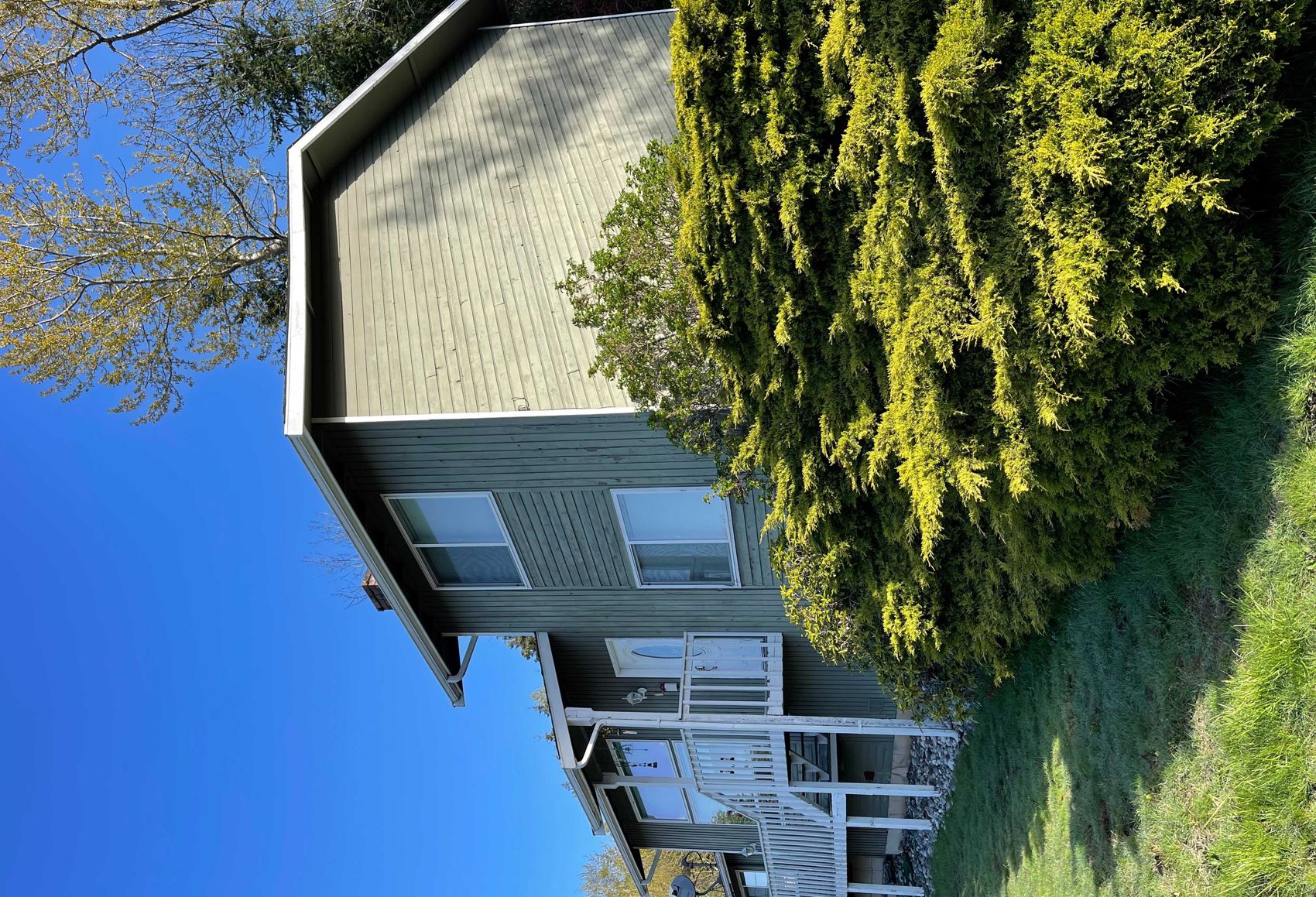
If you've noticed wavy, rippled, or bulging siding on a home in Tampa, Wesley Chapel, Lutz, Land O' Lakes, New Port Richey, Plant City, or Zephyrhills, you're not imagining it. Buckled siding is one of the most common exterior complaints Alpine Exteriors sees across the Tampa Bay region, and it has real, identifiable causes rooted in our climate. This page walks through how to spot it, why it happens here, whether it's an emergency, and what your realistic options are.
Buckling shows up differently depending on the siding material, but a few signs are consistent. Stand at the end of a wall and sight down its length in the early morning or late afternoon, when low-angle light makes distortions easier to see. Look for:
It helps to know that vinyl siding is engineered to expand and contract with temperature, and a small amount of movement at the nailing hem is normal, not a defect. True buckling is different — it's a permanent wave or bulge that doesn't relax once temperatures drop. Fiber cement and engineered wood siding buckle less from heat but can bow or cup if moisture gets behind the panel, so on those materials, buckling is more often a signal of water intrusion than of sun exposure alone.
Tampa Bay's climate stacks several stressors on siding that milder regions simply don't deal with, and it's usually a combination of factors rather than one single cause.
Intense, sustained UV and heat. Vinyl siding softens as it warms, and Tampa Bay's long, high-UV summers push panel surface temperatures well above what the material was originally tested for in cooler climates. Darker siding colors absorb more heat than light ones, which is why buckling shows up disproportionately on charcoal, navy, or deep bronze-toned siding.
Reflected and concentrated sunlight. A less obvious but genuinely common cause in newer Tampa Bay neighborhoods is solar glare from energy-efficient, low-E windows on a neighboring wall, pool cage, or even a parked vehicle. Low-E glass can reflect and concentrate sunlight onto a section of siding, raising its surface temperature well beyond normal ambient exposure and causing localized warping in exactly the reflected zone. If your buckling is confined to one patch of wall that faces a window or reflective surface, this is worth ruling in or out.
Installation too tight to the wall. Vinyl siding is designed to hang loosely on its nailing hem so it can expand and contract. If it was face-nailed too snugly, or if the original installer didn't leave the manufacturer's specified gap at panel ends, the panel has nowhere to go when it expands in summer heat, and it bows.
Humidity and moisture cycling. Tampa Bay's humidity keeps sheathing and siding backer materials damp longer than in drier climates, which accelerates warping in fiber-based products and can encourage mold growth behind panels that stay wet.
Wind pressure and storm cycling. Repeated exposure to tropical storm and hurricane-season wind loads flexes fasteners and panel edges over years, gradually loosening attachment points that then buckle under normal thermal expansion.
Salt air, for homes closer to the Gulf. In New Port Richey and similar coastal-adjacent areas, salt-laden air corrodes steel fasteners faster than inland, weakening the panel's grip on the wall and making it more prone to shifting and buckling.
Not every case of buckled siding is an emergency, but a few situations do call for prompt attention. Cosmetic waviness on a single panel, with no gaps and no sign of moisture behind it, can usually wait for a scheduled inspection. It becomes more urgent when buckling has opened gaps at seams or fastener points, because those gaps let wind-driven rain behind the siding during Tampa Bay's frequent summer thunderstorms and tropical systems — and once water gets behind siding in this climate, mold and sheathing damage can develop quickly. It's also urgent if a panel has come loose enough to flap or has partially detached, since the Florida Building Code's wind load provisions exist precisely because a loose panel can become airborne debris in a storm, damaging your home or a neighbor's. If you're due for a wind mitigation inspection (the OIR-B1-1802 form used for insurance credits), a contractor will also flag any siding attachment issues while they're up there.
The right call depends on how much of the wall is affected and what's underneath. A single buckled panel with dry sheathing behind it is usually a straightforward spot repair — the panel is unhooked, replaced, and re-hung with proper clearance, often for a few hundred dollars per affected area. That said, matching an older panel's color exactly can be difficult once siding has faded from years of Florida sun, so a repair may leave a slight color difference until the whole wall weathers evenly.
Replacement makes more sense when buckling is spread across multiple walls, when you find soft or discolored sheathing once a panel is removed, or when the siding is old enough that the manufacturer's original product line is discontinued. It's also worth considering full replacement if your current siding predates modern Florida Product Approval standards — siding installed today needs documentation showing it meets the wind pressure ratings required for your specific wind zone under the Florida Building Code, which older product runs may not have. Replacement costs vary widely by material and wall area, roughly in the range of several thousand dollars for a single elevation up to well over ten thousand for a full-house re-side, and Alpine Exteriors can walk through actual measurements and material options to get a firm number rather than a rough guess.
You can't change Tampa Bay's climate, but a few choices meaningfully reduce buckling risk going forward:
Minor thermal flexing at the nailing hem can relax as temperatures drop, but true buckling — a permanent wave, bow, or bulge — will not correct itself and typically gets more pronounced with each hot season unless the panel is reset or replaced.
Yes. It's less well known than heat or humidity, but reflected sunlight from energy-efficient low-E windows, pool enclosures, or even parked vehicles can concentrate enough heat on one section of siding to cause localized melting or warping, and it shows up more often in newer Tampa Bay subdivisions with modern window glazing.
It depends on the cause and your specific policy — storm-related damage is more likely to be covered than gradual heat-related warping, which many insurers treat as a maintenance issue rather than a covered peril, so it's worth reading your policy language or asking your agent directly.
Termites don't typically buckle vinyl or fiber cement siding directly, but if they've compromised the wood sheathing or trim underneath, the siding can lose its solid backing and start to sag or shift, so any buckling paired with soft trim or visible termite activity nearby should be inspected for structural damage, not just treated as a siding problem.
Buckled siding in this climate is rarely just one thing — it's usually heat, humidity, wind, and sometimes installation quality all working against the same wall. Alpine Exteriors is a Florida-licensed contractor (RB29003900) working throughout Tampa, Wesley Chapel, Lutz, Land O' Lakes, New Port Richey, Plant City, and Zephyrhills, and we can tell you honestly whether you're looking at a simple panel swap or a sign it's time to plan a full re-side. If you're seeing waves in your siding, reach out to Alpine Exteriors for an inspection before the next round of Florida heat makes it worse.