
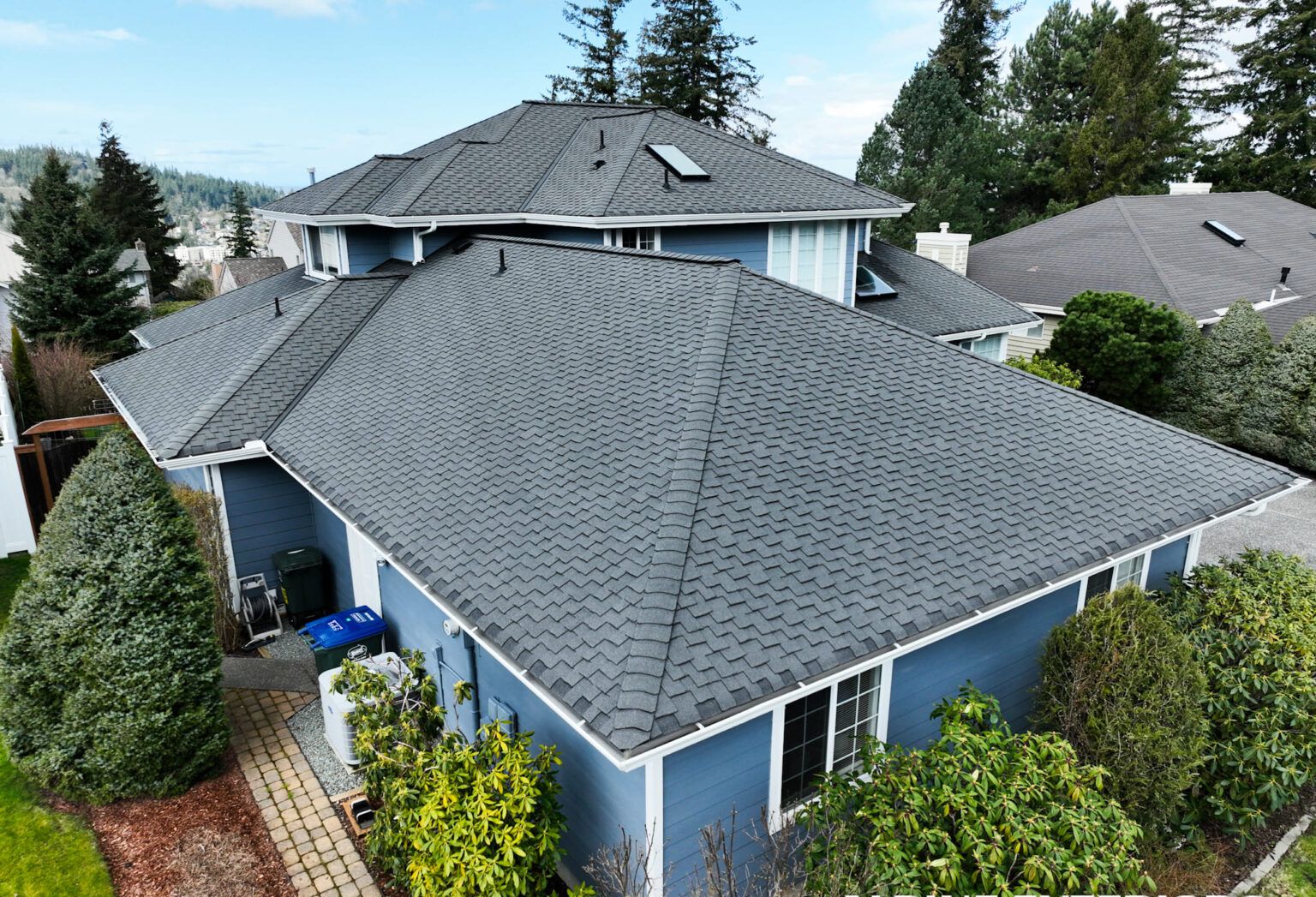
Fiber cement siding holds up best against mold growth in Tampa Bay's climate, because its cement-and-cellulose composition doesn't give fungus much organic material to feed on the way solid wood does. Vinyl is a reasonable second choice for a similar reason — it's inert PVC — but neither material is mold-proof if it's installed poorly or never cleaned.
"Mold resistant" actually covers two different problems, and it helps to separate them. One is decay: a material that mold and rot fungus can consume and break down from the inside. The other is surface mildew: a thin film of fungus growing on dust, pollen, and organic grime sitting on top of a material's texture. Solid wood siding, like cedar or cypress boards, is vulnerable to both. Its grain holds moisture, and once water gets past the paint film — usually at butt joints, lower courses near irrigation heads, or anywhere caulking has failed — rot and mold can develop underneath the finish where you can't see it until the board is soft.
Engineered wood products sit in between. They're wood fiber at the core, but treated with resins and fungicidal additives and sealed with a factory finish, so their resistance depends heavily on that coating and the cut edges staying sealed. Fiber cement is a different composition altogether: Portland cement, sand, and cellulose fibers cured into a dense board. The cellulose is bound up in the cement matrix rather than exposed on the surface, so it doesn't behave like a food source, and the board doesn't swell or wick bulk water the way solid wood does. Vinyl, being PVC plastic, doesn't feed mold at all — the greenish-black film people call "moldy vinyl" is almost always surface mildew growing on grime trapped in the panel's woodgrain texture, not decay of the vinyl itself, and it typically washes off.
Stucco, common across the region, is cementitious and resists surface mold reasonably well on its own. The mold problems that show up in stucco homes almost never start on the stucco face — they start behind it, where a crack, a damaged weep screed, or a compromised weather-resistant barrier lets water into the wall cavity. Once moisture is trapped against the sheathing and framing, that's where mold actually colonizes, often for a long time before it's visible from outside. The pattern holds across every material: the cladding itself is only part of the equation. How it's installed — the drainage gap behind it, the flashing at every window and penetration, the quality of the caulk joints — determines whether water ever gets trapped against the wall in the first place.
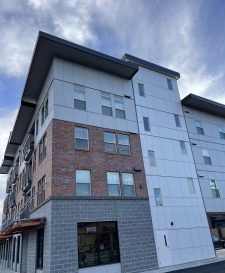
Tampa, St. Petersburg, Clearwater, and Apollo Beach sit in a subtropical climate where humidity stays high for most of the year and afternoon thunderstorms are a near-daily feature of the wet season. That means exterior surfaces stay damp longer between dry-outs than they would in a drier climate, which is exactly the condition mildew needs to establish. For homes closer to Tampa Bay, the Gulf, or the Intracoastal — a lot of St. Petersburg, Clearwater, and Apollo Beach properties fall into this category — salt-laden air adds another factor, accelerating corrosion on fasteners and metal trim and shortening the working life of some caulks and finishes faster than you'd see inland.
Hurricane wind loads matter too, and not just for structural reasons. The Florida Building Code sets wind speed design requirements for this coastal area that dictate how siding has to be fastened and what it has to withstand, but wind-driven rain during a storm is also the moment when water gets pushed sideways into any gap in a siding system that would sit dry the rest of the year. Add in Florida's intense, near year-round UV exposure, which degrades vinyl color and stiffens or cracks sealants faster than milder climates do, and you get a combination — constant humidity, salt air, wind-driven rain events, and aggressive UV aging — where both material choice and installation quality carry more weight here than they would somewhere drier and calmer.
Not the vinyl itself — PVC doesn't decay — but a thin film of surface mildew can grow on dust and pollen trapped in the panel's texture, especially on shaded or north-facing walls. It's cosmetic, not structural, and regular washing removes it.
It depends on the home. Fiber cement costs more upfront, is heavier, and needs correct fastening for wind resistance, but its non-organic core and impact resistance can be worth it on shadier lots or homes with heavier humidity exposure. Vinyl remains a reasonable, lower-cost option when it's installed and maintained correctly.
The stucco surface itself resists mold reasonably well, but cracks or a failed weather barrier can let water into the wall cavity behind it — and that's where stucco homes actually develop mold problems. Watching for cracks and repairing them promptly matters more than the stucco choice itself.
Once or twice a year is a reasonable baseline for most homes in this area, more often for shaded walls or properties close to the water where salt and organic buildup accumulate faster. Soft washing is preferable to pressure washing, which can force water behind panels.
If you're not sure whether your current siding or stucco is holding up the way it should in this climate, Alpine Exteriors offers on-site assessments for homeowners in Tampa, St. Petersburg, Clearwater, and Apollo Beach — a straightforward look at the material, the flashing details, and any early signs of trapped moisture before it becomes a bigger repair.