
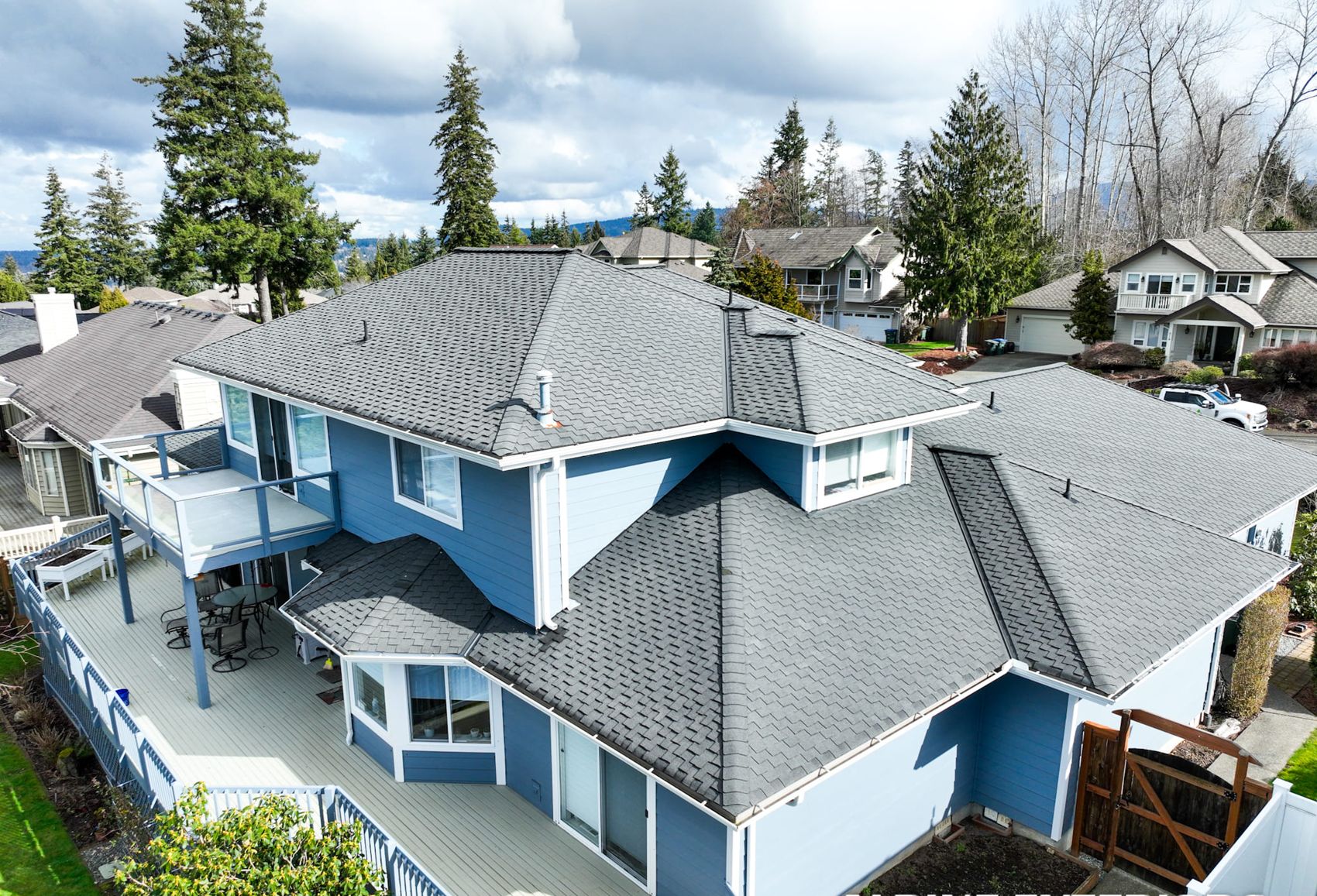
Moon Lake is an unincorporated community tucked between New Port Richey and Land O' Lakes in Pasco County, and it's a mix of older ranch homes on wooded lots, mobile and manufactured housing, and newer infill construction near the lake itself. That mix matters for siding pricing more than most homeowners expect, because a 1970s block-and-frame ranch, a manufactured home, and a two-story build from the last decade all carry different tear-off scope, different wall assemblies underneath, and different code obligations once a permit is pulled. Below is a realistic way to think about siding replacement cost in this pocket of Pasco County, without pretending there's one number that fits every house on the lake.
Most full siding replacement projects in this part of Pasco County land somewhere between a modest mid-four-figure job for a small vinyl re-side on a single-story home and a low-five-figure or higher project for fiber cement or engineered wood on a larger two-story house with extensive trim, soffit, and fascia work. That's a wide band on purpose — the table below breaks out why, factor by factor, so a quote can be sanity-checked against your specific house rather than a generic average.
| Cost Factor | Lower End of Range | Higher End of Range |
|---|---|---|
| Vinyl siding (material + install, per sq. ft.) | Basic profile, standard thickness | Insulated or heavier-gauge, hurricane-rated profiles |
| Fiber cement siding (material + install, per sq. ft.) | Standard lap board, factory-primed | Pre-finished, textured, or shake-style profiles |
| Tear-off & disposal of old siding | Single layer, easy access, no rot | Multiple layers, extensive wood rot, tight lot access |
| Moisture barrier & flashing upgrades | House wrap already sound, minor patching | Full replacement of water-resistive barrier and window/door flashing |
| Trim, fascia, and soffit work | Trim in serviceable condition | Rotted fascia/soffit requiring full carpentry rebuild |
| Home size and stories | Single-story, simple rectangular footprint | Two-story, multiple gables, dormers, or wrap-around porches |
| Code-driven upgrades (fastening schedule, product approval) | Standard Florida Product Approval assembly, no changes needed | Upgraded fastening or underlayment to meet current wind-load requirements |
The biggest swing factor is almost always what's happening underneath the old siding, not the siding itself. Pasco County sits in an area where wind-driven rain during tropical systems can force water behind poorly flashed siding over the years, and by the time a re-side is finally scheduled, the sheathing or framing underneath sometimes has hidden rot that only shows up once the old material comes off. A house that's been dry inside its wall assembly is a straightforward tear-off and re-cover. A house with soft sheathing at window heads, corners, or the base of walls needs carpentry repair before a single new panel goes up, and that work is priced separately from the siding install itself.
Humidity is the second driver. Central Florida's combination of heat and near-constant moisture is hard on wall assemblies that don't ventilate well, and it's part of why a correctly installed weather-resistive barrier and rainscreen gap matter more here than in drier climates — skipping that detail to save money up front tends to show up as mold or soffit staining a few years later. Intense UV exposure also plays a role in material choice: lower-grade vinyl can chalk, fade, or become brittle faster under a Florida sun, which is one reason many homeowners in this area upgrade to a heavier-gauge vinyl or move to fiber cement even though the upfront cost is higher.
Wind load is the third and often the most expensive driver. Because Moon Lake falls within Pasco County's wind-borne debris and hurricane wind-load requirements under the Florida Building Code, any new siding assembly installed here has to carry current Florida Product Approval for the wind zone and be fastened to that approval's schedule — not just nailed up the way it might have been done decades ago. That's not optional trim-level customization; it's a code floor, and it affects both material selection and labor time. Termite history can also add cost on older homes, since any wood trim, fascia, or sheathing with past termite damage needs to be replaced rather than covered over, and covering damaged wood with new siding just hides a problem that will resurface.
Homes closer to the Gulf side of the Tampa Bay service area — think New Port Richey proper versus inland Moon Lake — also deal with more salt-air exposure, which accelerates corrosion on fasteners and trim hardware. Moon Lake itself is a freshwater lake set back from the coast, so that pressure is lighter here than it is a few miles west, but it's still worth using corrosion-resistant fasteners on any Pasco County project given how close the whole service area sits to salt air on a bad wind day.
A siding quote that's actually useful to compare should spell out more than a single lump-sum number. At minimum, look for: the specific product line and profile being quoted (not just "vinyl" or "fiber cement" as a category), the Florida Product Approval number for that assembly and wind zone, whether tear-off and disposal of the existing siding is included or billed separately, what happens to the water-resistive barrier and flashing around windows and doors, whether damaged sheathing or trim carpentry is included in the base price or treated as an add-on once discovered, the fastening schedule being used, and a written timeline with a start and substantial-completion window. A quote missing most of these items isn't necessarily dishonest, but it's incomplete, and incomplete quotes are where surprise change orders come from later.
It's also worth asking directly whether the crew doing the work is licensed and insured, and whether the contract names the license holder. Alpine Exteriors holds Florida contractor license RB29003900, and any siding contractor working in Pasco County should be able to produce a license number without hesitation.
The single most common mistake homeowners make when shopping siding quotes is comparing a bare material-and-labor number from one company against a full-scope number from another. If one quote excludes tear-off, moisture barrier replacement, and trim carpentry while another includes all three, the first number will look better on paper and cost more once change orders start. Line up quotes side by side by scope item — material, tear-off, barrier work, trim, permit fees, cleanup — rather than by bottom-line total alone. Also compare the specific product being proposed, since two vinyl quotes can differ meaningfully in panel thickness and impact rating even when both are technically "vinyl." Finally, ask each contractor how they handle rot or damage found after tear-off begins; a fair contract should describe that process rather than leave it as a surprise.
Many siding contractors, Alpine Exteriors included, can point homeowners toward financing options for larger re-siding projects, which spreads the cost rather than requiring it all up front — worth asking about directly during the estimate, since terms and availability vary by lender and by the homeowner's own credit profile. On the insurance side, new siding installed to current Florida Building Code standards, with documented Florida Product Approval and correct fastening, can sometimes support a more favorable outcome on a wind mitigation inspection using the state's OIR-B1-1802 form, which insurers use to help set windstorm premiums. That form covers more than siding — roof shape, roof-to-wall connections, and opening protection all factor in — so new siding alone won't automatically move a premium, but it's a reasonable question to raise with your insurance agent once the work is documented. Keep copies of the permit, product approval documentation, and final inspection paperwork; they're the records an insurer or a future buyer will ask for.
The house itself is usually the reason, not the contractor's pricing philosophy. Two homes of the same square footage can have very different amounts of hidden rot, different trim complexity, different numbers of windows and corners to flash, and different existing moisture barrier conditions — all of which change labor time and material needs well before the siding brand is even chosen.
Yes. Any new siding assembly here has to carry current Florida Product Approval for the applicable wind zone and be installed to that approval's fastening schedule under the Florida Building Code. That requirement shapes which products qualify and how the crew fastens them, and it's a real cost driver rather than an optional upgrade.
In almost every case, yes. Covering damaged wood with new siding traps moisture against material that's already compromised, and in Central Florida's humid climate that tends to accelerate further rot and can encourage mold growth behind the new siding. Replacing damaged wood before new siding goes on costs more up front but avoids paying for the same repair twice.
Timelines depend heavily on home size, whether trim or sheathing repair is needed, and weather — Florida's rainy season can push completion dates back if storms roll through during the project. A straightforward single-story re-side is typically much faster than a two-story home with extensive carpentry repair, and a written timeline should be part of any signed contract.
Ranges are useful for planning, but the only way to know what siding replacement actually costs for a specific Moon Lake property is a walk-around inspection that looks at the current siding, the condition underneath it, and the trim and flashing details particular to that house. Alpine Exteriors serves Moon Lake as part of its broader Tampa Bay coverage area, including Tampa, Wesley Chapel, Lutz, Land O' Lakes, New Port Richey, Plant City, and Zephyrhills, and can walk through those specifics on site and put together a written, itemized estimate rather than a rough guess over the phone.