
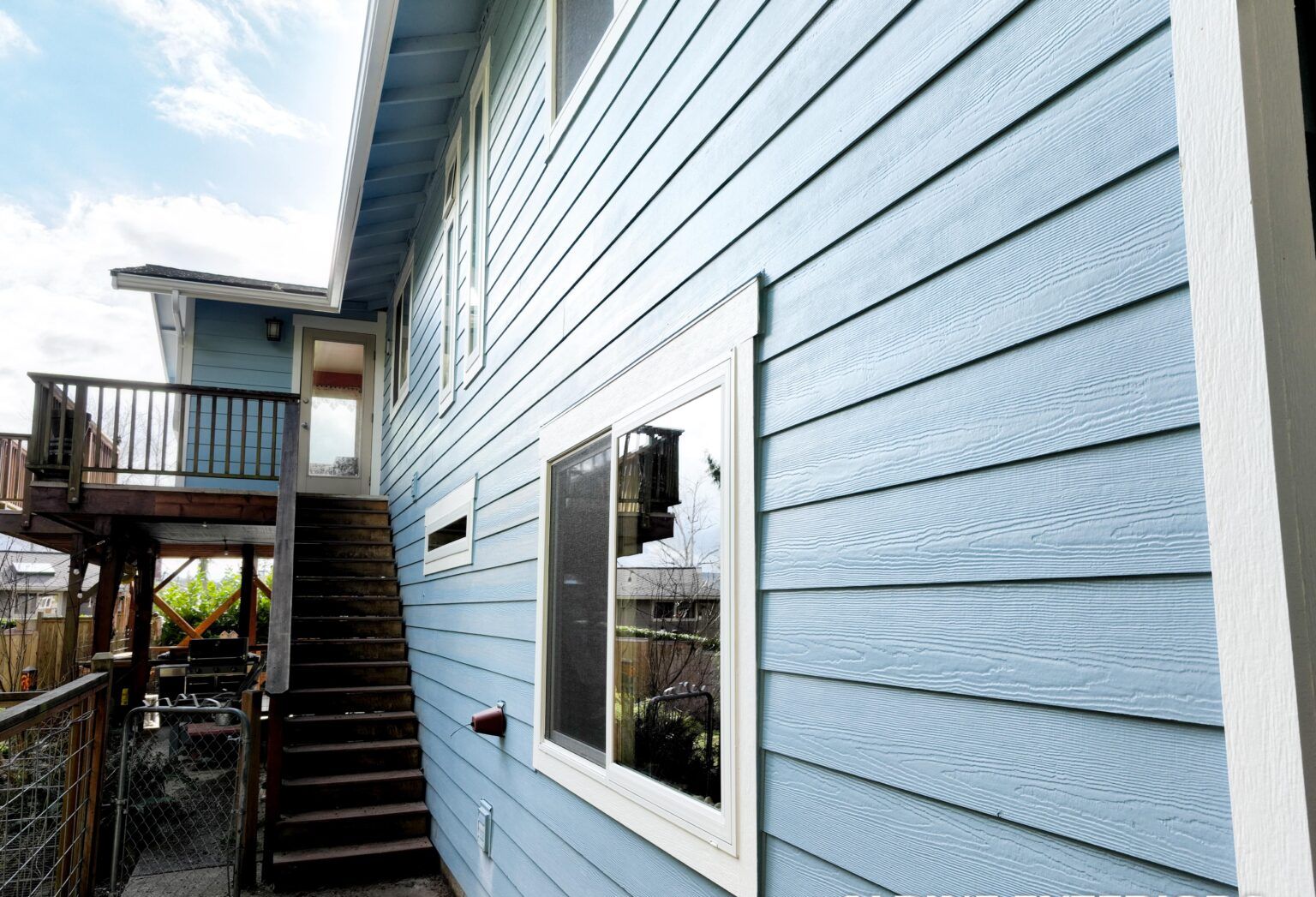
After a storm moves through Northdale, the siding damage that actually threatens your house is rarely the crack or missing panel you can spot from the driveway — it's the water that got behind the siding while wind pressure pried at seams, J-channel, and fastener heads. Walk the exterior as soon as it's safe, photograph everything before you touch or tarp anything, and get a licensed contractor to look at the wall assembly itself, not just the visible surface, before you decide whether this is a spot repair, a partial re-side, or an insurance claim.
Siding in Hillsborough County has to survive two separate forces during a summer thunderstorm or a tropical system's outer bands: straight-line or gust-front wind that flexes and pulls at the wall, and wind-driven rain that rides that same wind sideways — and sometimes upward — into every lap, gap, and nail hole. Vinyl and fiber cement siding are both engineered to shed water running down the face of a wall, not water being pushed horizontally by 50 to 70 mph gusts. When a panel's locking edge lifts even slightly, or a piece of trim separates from its J-channel, wind-driven rain reaches the water-resistive barrier and sheathing behind it. If that barrier is intact and dries quickly, you may get away with a few days of damp insulation. If the barrier was already compromised — an old nail hole from a satellite mount, a prior patch job, housewrap that had gone brittle from years of UV exposure before the siding ever went up — that's where a one-time storm turns into a rot or mold problem that shows up months later as a soft spot or a musty smell in an interior wall.
Debris is the other common culprit. Northdale's older, established streets carry a heavy oak and pine canopy, and falling limbs during high wind are a routine cause of punctures, cracked panels, and torn trim — damage that's obvious, but that homeowners sometimes underestimate because it looks cosmetic from the ground. A cracked panel with a hairline split doesn't leak much on a dry day, but the next heavy rain will find that crack and drive water straight through it.
There's also a clock running that has nothing to do with the storm itself. Once siding is compromised, Tampa Bay's humidity and long wet season mean a damp wall cavity doesn't dry the way it would in a drier climate — mold pressure can build within a day or two behind an already-humid assembly, especially in the peak of summer. And if any exposed sheathing or housewrap is left uncovered while you're waiting on a contractor or an adjuster, central Florida's UV intensity will start degrading it within days, not weeks. Speed on temporary protection matters here more than it does in milder climates.
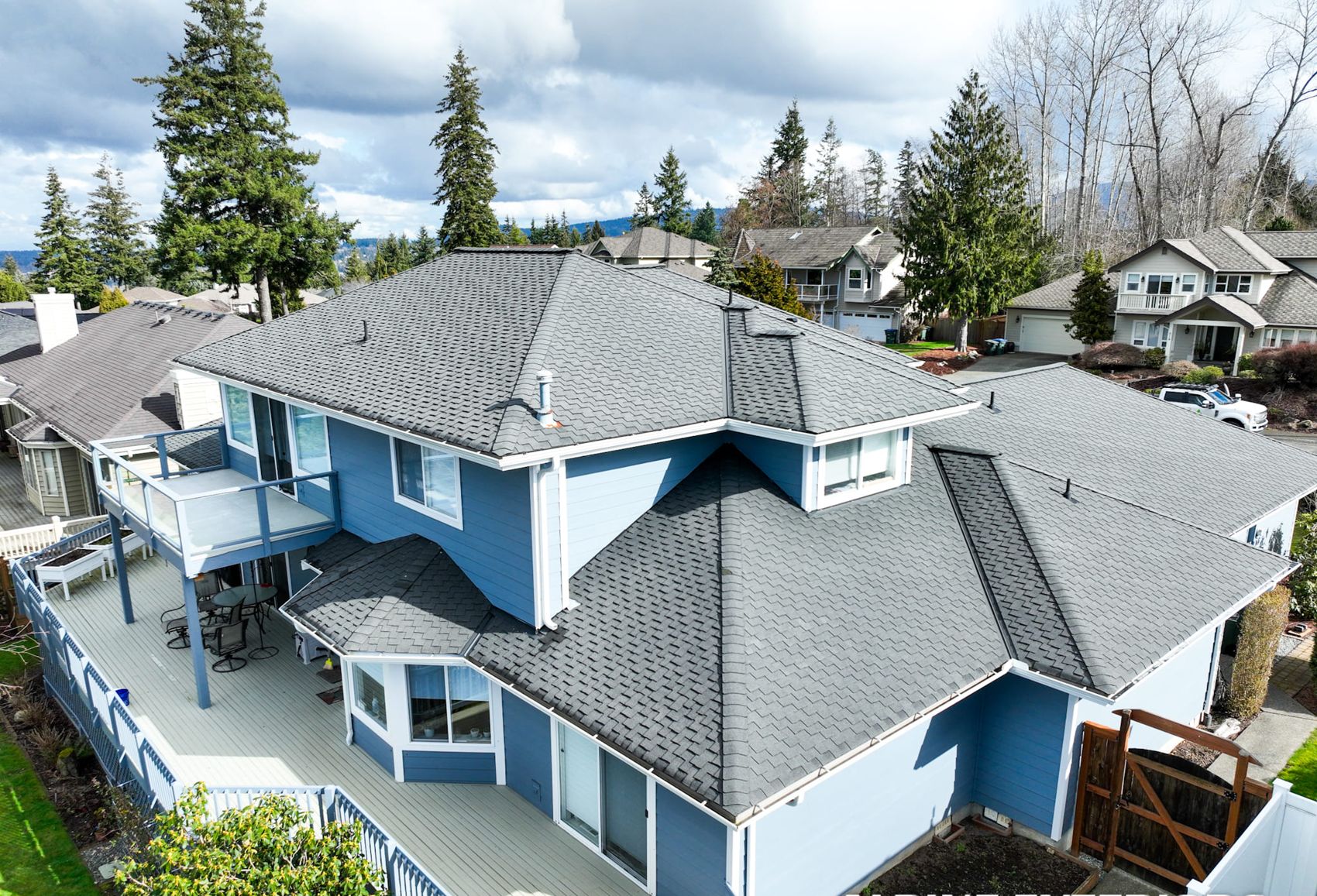
Northdale sits well inland — roughly 15 to 20 miles from Tampa Bay and the Gulf — so the salt-laden air that accelerates fastener corrosion and pits metal trim on our coastal jobs in Clearwater or along the barrier islands is a much smaller factor for this neighborhood. That's worth saying plainly, because it's tempting to treat every Tampa Bay property the same way, and it isn't accurate here: for Northdale specifically, wind, wind-driven rain intrusion, humidity, and UV are the threats that matter most, not salt corrosion.
What does apply is the tree canopy. Established neighborhoods like Northdale, built out decades ago with mature oaks and pines close to the homes, see more limb-strike and debris damage during a given storm than newer, treeless subdivisions a few miles away — even at similar wind speeds. It's also worth knowing where Hillsborough County sits under the Florida Building Code: this is not a High-Velocity Hurricane Zone (that designation applies to Miami-Dade and Broward Counties), but the county's wind speed maps still require exterior products carrying valid Florida Product Approval for the applicable wind exposure. If your home's siding was installed under an older code cycle, or if a previous repair used a product without matching approval, that's a detail worth resolving during a storm repair rather than after the fact.
Subterranean termites are active year-round throughout Hillsborough County, and they don't care whether the wall damage came from a hurricane or a garden hose. Wood trim, fascia, and soffit — which show up even on homes with vinyl or fiber cement field siding — become an easy entry point once they've been cracked open and left wet. A storm-damaged section that sits unrepaired through a rainy summer is exactly the kind of conducive condition a termite inspector flags later, so closing up storm damage promptly isn't just about water — it's about not creating a second problem on top of the first.
The sequence matters almost as much as the individual steps. Rushing to repair before documenting, or waiting weeks to document at all, both cause problems later with an insurance claim.
One honest caveat: not every storm-damaged section needs full replacement, and not every homeowner needs a public adjuster or a drawn-out claim. Sometimes a section of vinyl siding with a few cracked panels is a same-week repair with matched replacement pieces, no claim necessary. The inspection is what tells you which situation you're actually in — guessing from the driveway, in either direction, tends to cost more than the fifteen minutes it takes to have someone look properly.
It depends on whether the water intrusion reached the sheathing and how widespread the physical damage is. A handful of cracked or dislodged panels on one elevation, caught quickly and dried out, is usually a targeted repair — assuming a matching product is still available or a close match can be found. Widespread lifting across multiple courses, damage that's been sitting wet for more than a few days, or a house where the existing siding is old enough that matching panels aren't made anymore, usually points toward a larger re-side of at least that elevation. An inspection that includes pulling back a damaged section to look at the barrier and sheathing, not just an eyeball from the ground, is the only reliable way to tell which category you're in.
Most policies cover repair or replacement of the damaged area, and many insurers will pay for full-wall or whole-house matching if the original product is discontinued and a patch would create a visibly mismatched wall — but this varies by policy and by carrier, and it's not automatic. Read your policy's matching and ordinance-or-law provisions, and don't assume verbally what an adjuster will approve; get it in the written estimate. This is also where an independent contractor's inspection report is useful, since it documents the extent of damage in your own record, separate from the insurer's assessment.
Generally, yes, for anything beyond a small cosmetic patch — full section replacement, re-siding an elevation, or work that involves the water-resistive barrier or sheathing typically requires a permit under the Florida Building Code as adopted by Hillsborough County. Permit requirements and inspection scope can vary by the size and nature of the repair, so confirm with the county or with your contractor before work starts rather than after. Skipping a required permit can complicate a future home sale or insurance claim even if the repair itself was done well.
OIR-B1-1802 is the state's Uniform Mitigation Verification Inspection Form, used by Florida insurers to apply wind mitigation discounts based on features like roof shape, opening protection, and construction details. It's primarily a roof-and-openings form rather than a siding form, so a typical siding repair usually doesn't change your existing mitigation credits. Where it can intersect is if your repair involves replacing windows, doors, or other opening protection referenced on that form — in that case, it's worth confirming the new products meet the same or better rating so you don't lose a credit you were already receiving.
If a recent storm left your Northdale home with cracked, lifted, or missing siding, get an inspection before you sign a repair contract or finalize a claim — not after. Alpine Exteriors serves Northdale and the rest of Hillsborough and Pasco Counties, including Tampa, Wesley Chapel, Lutz, Land O' Lakes, New Port Richey, Plant City, and Zephyrhills, and we're licensed in Florida under RB29003900. Reach out for an inspection that looks at the wall assembly, not just the surface, so you know exactly what you're dealing with before any work starts.