
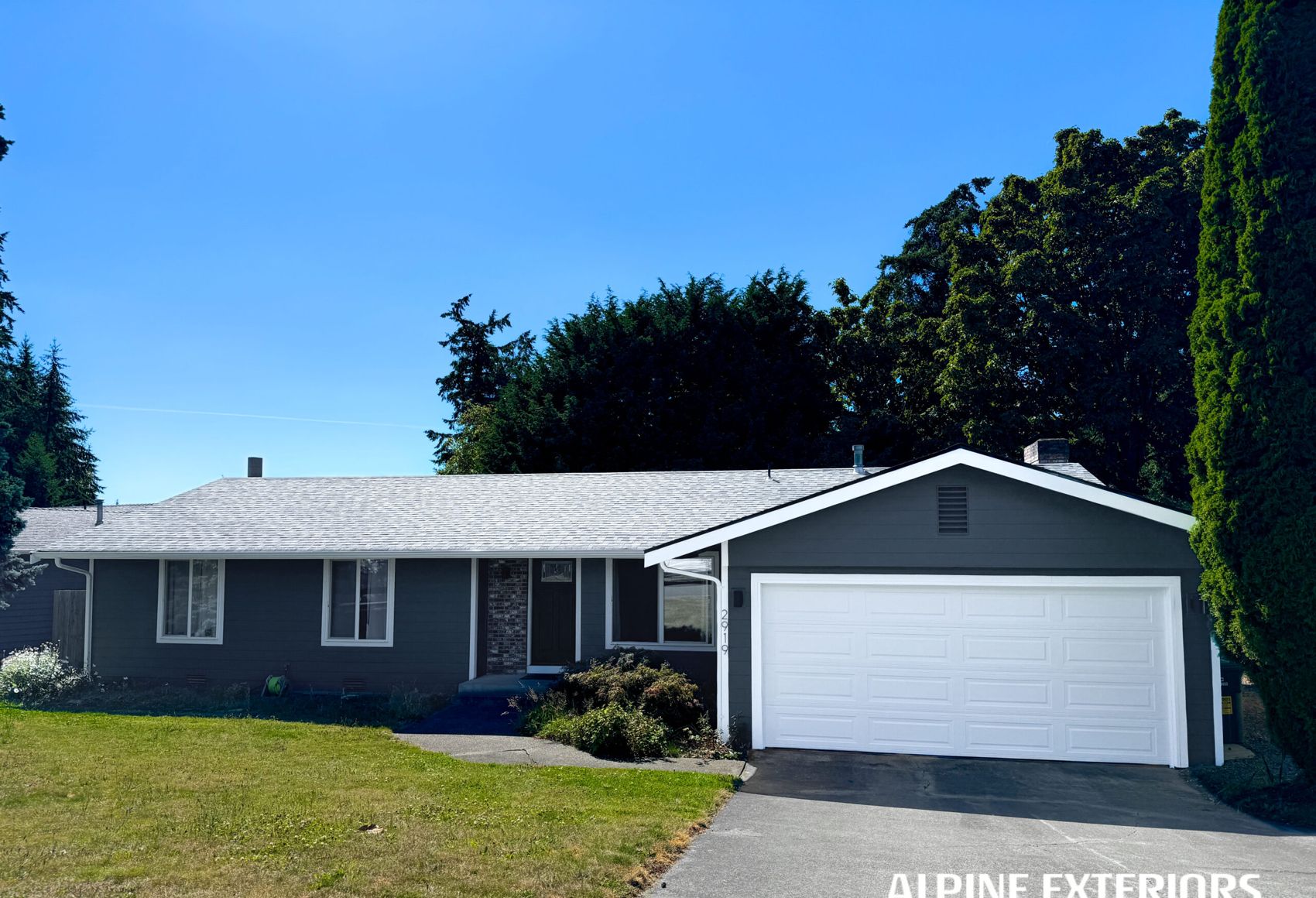
Land O' Lakes sits inland from the Gulf but is still squarely in Florida's hurricane wind belt, and its housing stock ranges from 1980s block ranches with old aluminum or wood trim to newer stucco-and-frame construction going up in communities like Connerton, Bexley, and Del Webb. Whatever era your house was built in, the siding on it has to survive the same three things every year: tropical humidity that never really lets up, UV exposure strong enough to chalk and fade pigment within a few seasons, and the wind and wind-driven rain that come with named storms. This guide breaks down which siding materials actually hold up here, which ones we'd steer you away from, and why — based on how each performs against Pasco County conditions, not marketing claims.
For most Land O' Lakes homes, fiber cement siding is the strongest all-around choice — it resists moisture, doesn't feed termites, holds paint and color well under intense sun, and is available with wind-rated Florida Product Approvals that satisfy the Florida Building Code for this wind zone. Insulated vinyl siding is a reasonable second choice for homeowners who want a lower upfront cost and are comfortable with a plastic-based product, provided it carries a real wind-load rating rather than a generic residential grade. Traditional stucco remains common on newer builds in the area and isn't going anywhere, but it's a different system (applied over a substrate, not a cladding panel) with its own maintenance profile we cover below. What we'd generally avoid: thin, low-gauge vinyl not rated for this wind zone, and unprotected or poorly detailed wood-look products in humid, termite-active ground.
Every option below was weighed against the conditions that actually determine how siding performs in Pasco County, not generic "curb appeal" criteria:
Fiber cement (cement, sand, and cellulose fiber pressed into planks or panels) is the material we most often recommend for Land O' Lakes homes, and it's a large share of what Alpine Exteriors installs in this market. It doesn't rot, it gives termites nothing to eat, and it holds factory-applied color far better under Florida UV than most vinyl products, which means less visible fading over the years. It's manufactured with documented wind-load testing and comes with Florida Product Approval numbers that make code compliance straightforward for permitting.
Pros: excellent moisture and termite resistance, strong wind performance when installed per the manufacturer's fastening schedule, holds paint and factory finishes well in intense sun, doesn't dent like metal or distort like vinyl in high heat.
Cons: heavier than vinyl, so installation takes longer and costs more in labor; it must be properly primed and painted or ordered pre-finished, and cut edges need sealing during installation or they can wick moisture; upfront material and labor cost is higher than vinyl, generally landing in a mid-to-upper range compared to other claddings.
Insulated vinyl — vinyl panels backed with a rigid foam layer — is a step up from standard vinyl and a reasonable option for Land O' Lakes homeowners working with a tighter budget. The foam backing adds rigidity, which helps the panels resist the oil-canning (visible waviness) that thin vinyl shows under Florida heat, and it adds a modest amount of insulation value. Look specifically for a wind-rated product with documented Florida Product Approval; not all vinyl on the market carries a rating adequate for this wind zone, and a generic big-box product may not.
Pros: lower material cost than fiber cement, never needs repainting, doesn't rot or feed termites, the foam backing improves impact resistance and reduces the wavy look of thinner vinyl.
Cons: still a plastic product, so color options are more limited (dark colors especially can absorb heat and warp over time in full Florida sun); seams and panel joints are a potential path for wind-driven rain if installation isn't precise; lifespan is generally shorter than fiber cement even when installed well; not repairable in the same way — a cracked panel typically gets replaced, not patched.
Standard, non-insulated vinyl is the most common budget option nationally, and it does show up on older Land O' Lakes homes and rentals. It can be a defensible choice on a tight budget, but it's the option where the gap between a good product and a poor one matters most in this climate.
Pros: lowest material cost of the mainstream options, widely available, easy to source replacement panels, no repainting needed.
Cons: thin, low-grade vinyl can crack under wind-borne debris impact and is more prone to blow-off in storm-force gusts if it isn't rated for this wind zone; dark colors especially can warp or buckle in direct summer sun; without a foam backing it telegraphs every imperfection in the wall behind it; the gap between a wind-rated, code-compliant product and a bargain product not engineered for Florida wind loads is real, and it's worth confirming the Florida Product Approval before buying on price alone.
Stucco isn't siding in the panel-and-plank sense, but it's the dominant exterior on many newer Land O' Lakes builds, so it's worth including for comparison, especially if you're deciding between re-stuccoing and switching to a cladding system during a renovation. Properly installed stucco over the correct substrate and weather barrier performs well against wind and fire, and it's a familiar, expected look in Florida subdivisions.
Pros: fire resistant, holds up structurally to wind loads when applied correctly, matches the aesthetic expectations of many Pasco County neighborhoods and HOAs.
Cons: prone to hairline cracking as the house settles and with temperature swings, and cracks that aren't sealed become entry points for wind-driven rain and, eventually, mold behind the wall; repairs require matching texture and color, which is harder than replacing a plank; if the original installation skipped proper flashing or a drainage plane, moisture problems can develop behind the stucco long before they're visible from outside.
Engineered wood siding (wood strand products bonded with resin, sometimes marketed as wood alternatives) shows up occasionally in this market, usually for its natural wood appearance at a lower cost than real cedar. We're more cautious about recommending it in Pasco County specifically because of the humidity and termite pressure here.
Pros: gives a wood-grain look some homeowners prefer, generally lighter and easier to install than fiber cement, typically less expensive than real wood siding.
Cons: more moisture-sensitive than fiber cement or vinyl; any breach in the factory coating or a poorly sealed cut edge can let humidity in and lead to swelling or rot over a few seasons; even termite-resistant engineered products are still wood-based at the core, which makes many homeowners uneasy given how active subterranean termites are locally; needs more diligent caulking and touch-up maintenance in this climate than fiber cement does.
A few choices come up often enough in Pasco County that they're worth calling out directly:
Yes. Pasco County enforces the Florida Building Code's wind-borne debris and pressure requirements, and siding products installed here should carry a valid Florida Product Approval (or an accepted Miami-Dade NOA) documenting the wind loads they're rated for. A licensed contractor can confirm a specific product's approval number before installation and pull the required permit.
More than most homeowners expect. Materials that trap moisture against wood sheathing — or that absorb water themselves, like poorly sealed engineered wood — are prone to rot and mold growth in a climate where the air rarely fully dries out. This is a large part of why fiber cement and properly installed vinyl are generally favored over wood-based products in this area.
Often, yes, if budget rules out fiber cement. The rigid foam backing reduces the warping and oil-canning that standard vinyl can show under intense Florida heat, adds some impact resistance, and typically holds its shape better over time. It's still a plastic product with a shorter realistic lifespan than fiber cement, so it's a middle-ground choice rather than a top-tier one.
It depends heavily on material and installation quality rather than a single number. Well-installed fiber cement with proper sealing and periodic repainting tends to outlast vinyl by a meaningful margin in this climate, while budget vinyl or poorly detailed wood-look products can show problems within just a few years if wind rating, sealing, or drainage details were cut short during installation.
The right siding for a 1990s block ranch near downtown Land O' Lakes isn't necessarily the right siding for a new build in Bexley or Connerton — house type, exposure, and existing wall assembly all matter. Alpine Exteriors is a licensed Florida contractor (RB29003900) serving Land O' Lakes and the rest of Pasco County, and we'll walk your specific house, talk through wind ratings and Florida Product Approvals in plain language, and give you an honest recommendation rather than a one-size-fits-all pitch. Reach out to Alpine Exteriors for a free on-site evaluation and a written estimate before your next storm season.