
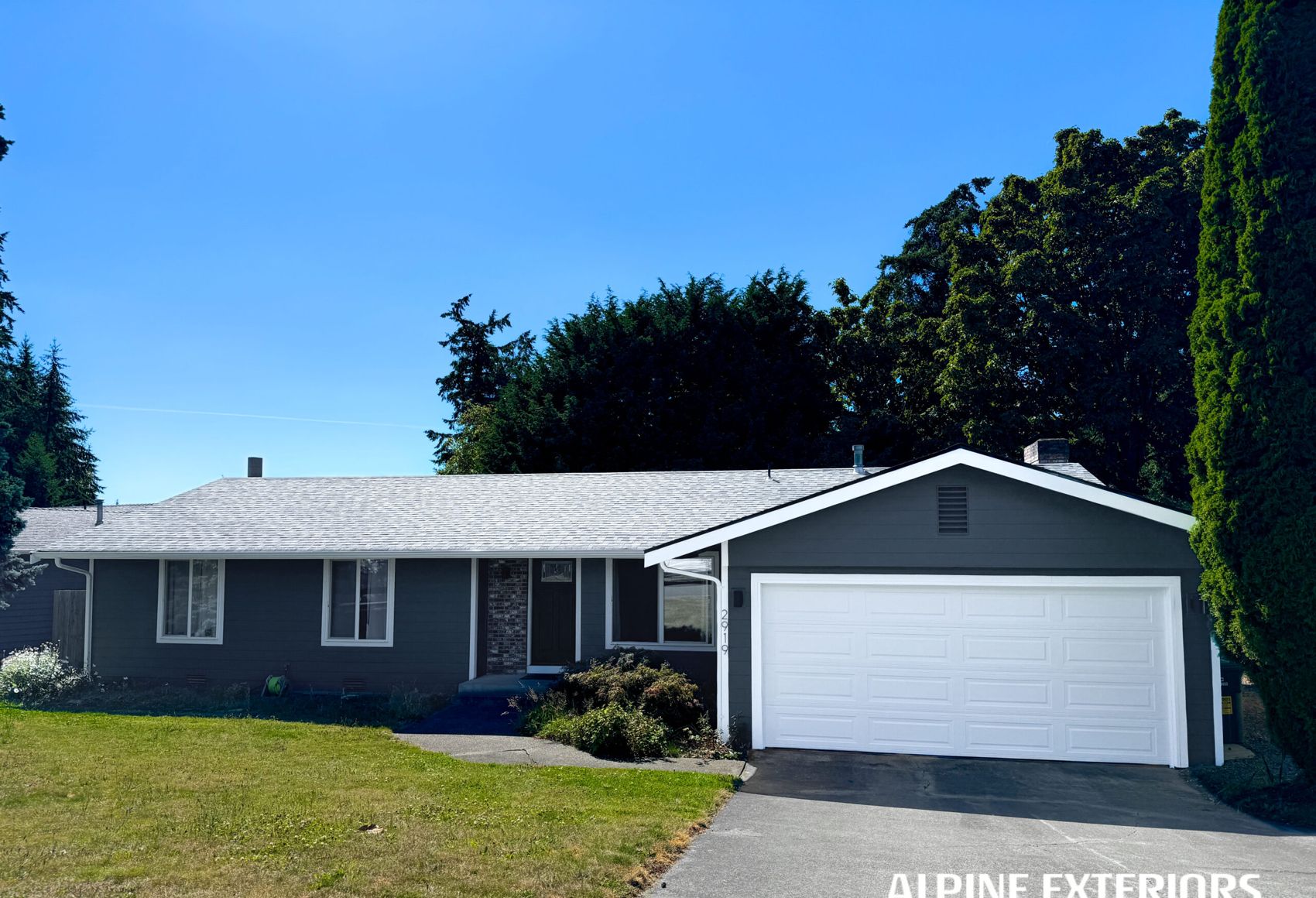
In Dover, siding permits are issued by Hillsborough County's Development Services Department, not a city hall, because Dover is unincorporated and has no building department of its own. Most full or partial siding replacement jobs require a permit and at least one inspection under the Florida Building Code; a small cosmetic patch on a few square feet sometimes doesn't, but the honest answer is that the threshold is easy to misjudge, so it's worth confirming before work starts rather than assuming.
Hillsborough County's Development Services Department handles permitting for the unincorporated parts of the county, and Dover — along with nearby communities like Seffner, Thonotosassa, and Sydney — falls into that category. This matters because the incorporated cities nearby run their own permitting: Plant City has its own Building Division, and the City of Tampa has its own building department. An address that looks like it's "near Plant City" can still be miles outside city limits and squarely under county jurisdiction, which is the case for most of Dover. Getting this wrong is one of the more common mistakes homeowners make — calling the wrong office, or assuming a contractor's crew knows the boundary without checking a parcel address against the county's zoning map.
Once jurisdiction is settled, the permit itself is a straightforward but not trivial process. Under the Florida Building Code, siding is treated as part of the building's exterior wall covering and, by extension, part of its wind-resistance and water-management system — not a purely cosmetic finish. That's why a permit application for a re-siding job typically has to include the specific product's Florida Product Approval number (or, in some cases, a Miami-Dade County Notice of Acceptance where the manufacturer uses that pathway instead), documentation showing the product's wind pressure rating is adequate for this part of the county, and the manufacturer's installation and fastening instructions the crew intends to follow. The permit has to be pulled by a licensed contractor in most cases; an owner can pull an owner-builder permit and take on the liability directly, but that also means taking on responsibility for scheduling every inspection correctly and understanding code requirements without a licensed professional's guidance, which is a real risk for anyone who hasn't done it before.
Permit fees are generally scaled to the declared value of the job rather than a flat rate, and the county reviews the application — checking that the submitted product approval and installation method match what's proposed — before issuing the permit. None of this is unique to siding, but siding gets flagged for review more often than homeowners expect, because it sits right at the intersection of wind resistance and moisture management, the two things Florida's code is most protective about on the exterior envelope.

Hillsborough County sits in a part of the Gulf coast that sees direct and indirect hurricane impacts on a regular basis, and the Florida Building Code's wind provisions reflect that. Siding products approved for sale in, say, the Midwest or the mid-Atlantic are not automatically approved for use here — the Florida Product Approval system exists specifically because a product has to be tested and rated for the wind pressures this region can see, not a generic national standard. A contractor proposing a siding product without being able to point to its approval number and pressure rating is skipping a step that matters here in a way it might not elsewhere.
Wind and rain arrive together in this part of Florida, and wind-driven rain is arguably the harder problem to design around. Code-compliant installation depends on a continuous, correctly lapped weather-resistive barrier (house wrap or equivalent) underneath the siding, proper flashing at every window, door, and penetration, and careful attention to how water is shed at seams and terminations. This is also why some jobs get a mid-installation inspection before the siding closes everything in — once the siding is up, the flashing and wrap details underneath are hidden, and if they were done wrong, nobody finds out until there's a leak.
Central Florida's humidity compounds the moisture issue. Even a well-built wall assembly here stays damp longer after a storm than the same assembly would in a drier climate, so any gap in the weather barrier gives mold and wood rot a real foothold behind the siding rather than a theoretical one. The intense UV exposure typical of this latitude is a separate consideration — it's not something a permit inspector checks, but it does affect how quickly certain siding materials and finishes fade, chalk, or become brittle over the years, which is worth factoring into the material conversation even though it has nothing to do with the permit itself. Termite pressure is also high across this part of the state, and siding installed with insufficient clearance from grade, or over wood trim that traps moisture against the foundation, can create an access point that a careful contractor should avoid regardless of whether an inspector happens to catch it.
Dover itself has a rural, agricultural character that shapes what the average permit application looks like: larger lots, a mix of older site-built homes, manufactured and mobile homes, and newer construction, generally with more setback from the road and neighbors than in denser Tampa neighborhoods. Some homeowners assume agricultural zoning or a rural address means lighter code enforcement — it doesn't. The structure itself, and the work done on its exterior, is still subject to the same Florida Building Code requirements as anywhere else in the county; zoning affects land use and setbacks, not whether a siding job needs a permit and an inspection.
Start by confirming the contractor's Florida license is active — the state's licensing database is public and takes a minute to check — and have the licensed contractor pull the permit under their own name rather than agreeing to an owner-builder permit unless there's a specific reason to take that on. Ask to see the exact siding product being proposed and its Florida Product Approval number, and don't accept a vague answer like "it's rated for Florida" — the number should be checkable, and the rating should match what this part of the county requires.
None of this is complicated, but it does take a homeowner actually asking the questions rather than assuming a crew has it handled. Alpine Exteriors treats permit pulling and inspection scheduling as a normal part of a siding job in Hillsborough County, not an optional extra, because skipping it creates real risk for the homeowner later — at resale, at claim time, or simply if the work has to be redone.
It depends on the size and nature of the repair. Minor patchwork on a small area is sometimes exempt, but Hillsborough County's threshold isn't something to guess at, and a repair that touches the weather-resistive barrier or flashing underneath tends to get treated differently than a purely cosmetic fix. The safer approach is to ask the county's Development Services Department or a licensed contractor before assuming a repair is too small to need a permit.
Most of what people call "Dover" is unincorporated Hillsborough County, but addresses near the edges can sit closer to Plant City than they appear on a map. The most reliable way to check is to look up the parcel on the county's property appraiser or zoning map, or simply ask whichever office you contact first — if it's not their jurisdiction, they'll generally point you to the right one.
Unpermitted work can create problems well beyond the immediate risk of a stop-work order or fine. It can complicate a home sale, since unpermitted exterior work often has to be disclosed and may need to be retroactively permitted or even removed and redone. It can also affect an insurance claim if damage occurs later and the insurer discovers the siding wasn't installed under permit, and it can undermine a wind mitigation inspection that's supposed to document code-compliant construction.
It can, in both directions. Siding itself typically isn't the focus of the wind mitigation form the way roof-to-wall connections or opening protection are, but permitted, code-compliant exterior work generally supports a stronger insurance profile, while unpermitted work can raise questions during underwriting or after a claim. Keeping the permit record and product approval documentation from the siding job is worth doing specifically so it's available if a wind mitigation inspection or claim ever asks about it.
If you're planning a siding replacement or repair in Dover or anywhere else in Hillsborough County, Alpine Exteriors can walk through what your specific project will need — permit, product approval, and inspection schedule included — before any work starts. Alpine Exteriors holds Florida contractor license RB29003900 and handles the permitting process directly rather than leaving it to the homeowner to sort out. Reach out for a straightforward conversation about your project and what it will actually take to get it done right.