
Plant City sits in an inland pocket of Hillsborough County where the light is different from what you'd see on the coast — long, flat stretches of strawberry fields and pasture throw off a hard, unfiltered glare for most of the year, and the older neighborhoods near downtown mix Craftsman bungalows and brick ranch homes with newer subdivisions built in the last two decades. Choosing a siding color here isn't just about what looks good on a sample chip. It's about how a color behaves under nine months of intense Florida sun, how it reads against the specific green of live oaks and citrus rather than pine or palm, and whether it will still look sharp in ten years instead of chalking, streaking, or clashing with an HOA's idea of "neutral." Alpine Exteriors has worked on homes throughout Plant City, Wesley Chapel, Lutz, Land O' Lakes, New Port Richey, and Zephyrhills, and the color questions we get in Plant City specifically tend to be shaped by its rural, agricultural character as much as by the storms and humidity every Tampa Bay homeowner deals with.
For most Plant City homes, we steer people toward warm neutrals — greige, warm gray, and soft tan tones — followed by classic soft white and a well-placed deep charcoal or black used as an accent rather than a full-house color. These choices hold up visually against the bright, high-UV light typical of inland Hillsborough County, they photograph well against the reddish local soil and agricultural landscape rather than fighting it, and they tend to sail through HOA architectural review committees, which in Plant City's newer developments often specify an approved palette of muted, earth-toned colors. None of this means bolder choices are off the table — they're just riskier here, for reasons we get into below.
We didn't rank these colors on style alone. Plant City's climate and building stock create a specific set of pressures that any exterior color has to survive, so we weighed each option against the same list of real conditions:
Greige — the gray-beige hybrid — has become close to a default choice in Tampa Bay for good reason, and it works especially well in Plant City. It reads as neutral and current without looking stark, it pairs comfortably with the red-brown clay soil and brick accents common on local homes, and it tends to be pre-approved or close to it on most HOA palettes.
Pros: Hides pollen, dust, and light mildew film between cleanings better than pure white; flexible with roof colors from charcoal to terracotta-brown; broadly accepted by architectural review boards; ages gracefully as pigments fade toward a lighter, still-neutral tone rather than an obviously "off" color.
Cons: It's common enough now that some buyers see it as safe to the point of forgettable; in factory-finished vinyl, cheaper greige formulations can shift slightly warmer or cooler over years of UV exposure, so it's worth asking about the fade warranty specifically rather than assuming all greiges perform the same.
A clean, slightly warm white — not stark white — is a strong option for the older, Craftsman-style and farmhouse-influenced homes scattered through Plant City's established neighborhoods. It plays well against dark shutters, metal roofing, and covered porches, all of which are common features locally.
Pros: Reflects heat rather than absorbing it, which matters on unshaded lots; classic look that doesn't date the way trend colors can; makes a home visible and legible from the road on the area's longer, more rural streets.
Cons: Shows dirt, pollen, and mildew streaking faster than a neutral tone will, which means more frequent washing in our humidity; a pure, stark white can look almost glaring under direct midday sun on an open lot with no tree cover, which is a real consideration on newer subdivision lots that haven't matured with landscaping yet.
Charcoal and near-black tones have become popular for trim, shutters, front doors, and gable accents, and used that way in Plant City they look sharp against a lighter body color. We're more cautious recommending them as a full-house siding color here.
Pros: Strong visual contrast that highlights architectural features like porch columns and window trim; pairs well with the region's dark metal roofing; reads as modern without feeling out of place next to older farmhouse-style homes.
Cons: Dark colors absorb more heat, which matters on south- and west-facing walls that sit in full Florida sun for much of the day; darker pigments generally show fade and chalking more visibly over time than mid-tones do, since any lightening is easier to spot against a dark base; some Plant City HOA guidelines cap how much of a home's elevation can be a dark accent color, so it's worth checking the covenants before committing to more than trim and accents.
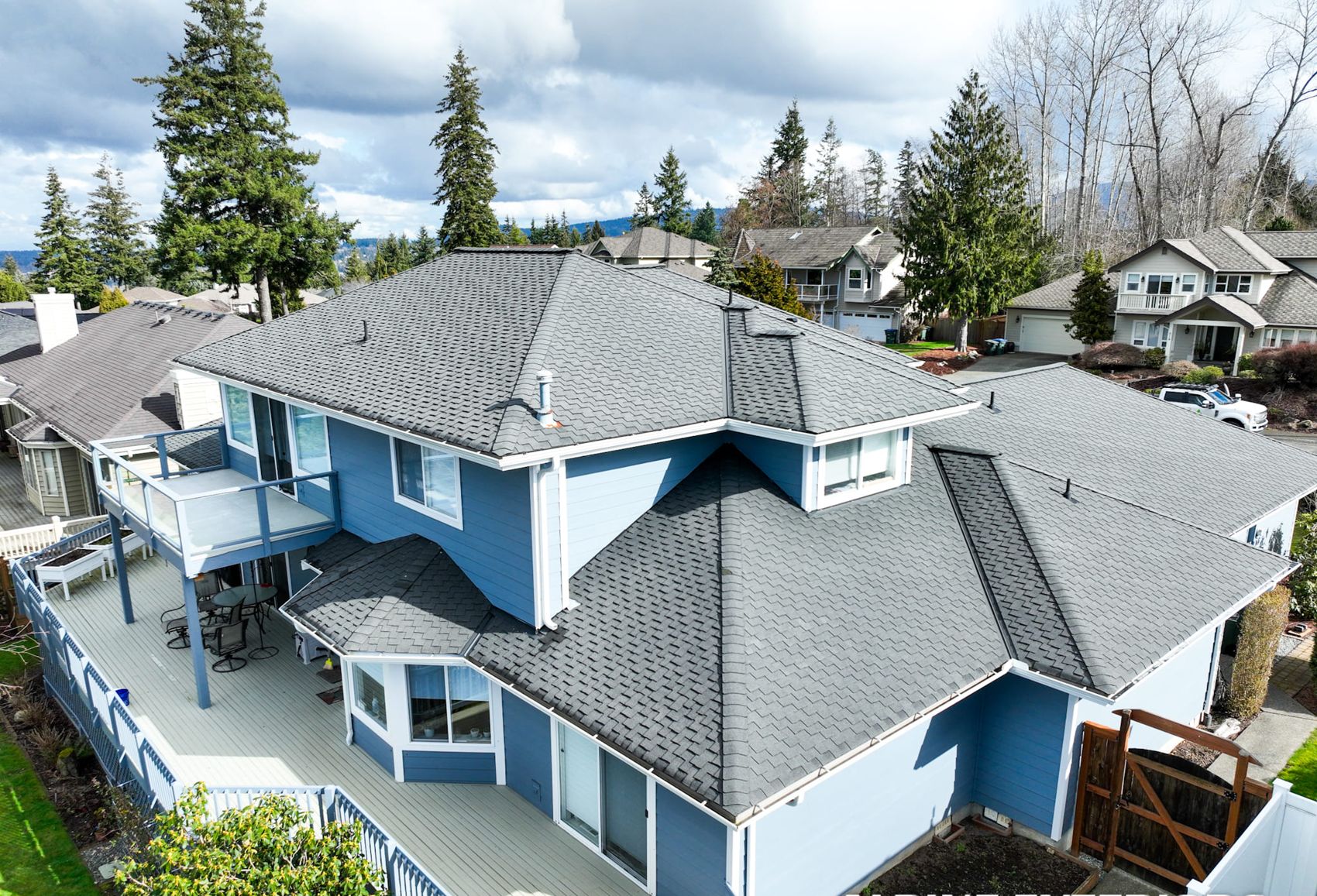
A cooler, muted blue-gray gives a home a slightly more contemporary feel without straying from the neutral palette most HOAs expect. It's less common in Plant City than warm neutrals, which can be an advantage for homeowners who want something a little different without being loud about it.
Pros: Reads as calm and current; distinct from the greige-and-tan look that dominates many nearby streets; complements white or light gray trim cleanly.
Cons: Against Plant City's warm, agricultural landscape of red soil and oak greens, a cool blue-gray can feel slightly disconnected from its surroundings compared to warmer neutrals; on some budget vinyl products, blue pigments have historically been more prone to visible fading than earth tones, so this is a case where it's worth asking specifically about the manufacturer's fade performance data for that exact color.
Warm tans and soft clay tones nod directly to Plant City's agricultural surroundings — the red-brown fields, the brick storefronts downtown, and the general warmth of the area's light. These tones tend to feel especially at home on properties with mature oak trees and larger lots.
Pros: Complements the local landscape more directly than cooler tones; hides dust and pollen well; a strong match for homes with brick foundations, chimneys, or accent walls already on the property.
Cons: The warmest, most saturated clay and terracotta shades can look more "southwestern" than "Florida" if pushed too far, and a few HOA palettes in newer Plant City developments restrict how orange or red a tan can lean; worth viewing a large sample panel outdoors in real sunlight before committing, since these tones can shift noticeably under different light than they show on a small chip.
A few categories of color choices consistently cause problems for Plant City homeowners, either immediately or a few years down the road:
No — wind and wind-driven rain performance comes from the siding product itself, its Florida Product Approval, and how it's installed and fastened to meet the Florida Building Code requirements for Hillsborough County's design wind speed, not from the pigment. Color is a separate decision from structural performance, so you can choose freely among code-compliant products without worrying that a particular color is more or less storm-resistant.
Not necessarily. Many of Plant City's newer subdivisions have recorded architectural guidelines that specify an approved palette, usually built around neutrals, and require submitting a color sample or application before installation. Older, unrestricted county parcels typically have far more flexibility. Either way, it's worth confirming your specific neighborhood's rules before finalizing a color.
More than most homeowners expect. Central Florida's UV exposure is intense for most of the year, and unshaded lots — common on newer Plant City streets before landscaping matures — see faster and more visible fading than shaded properties. This is why fade warranty details and pigment quality matter more here than in milder climates, especially for darker and more saturated colors.
It's one of the most reliable ways to get a cohesive result, especially on Plant City homes with existing brick foundations, chimneys, or accent walls, or with the dark metal roofing common in the area. Bringing a physical roof or brick sample to a siding consultation, rather than relying on memory or photos, makes it much easier to land on a color that reads as intentional rather than mismatched.
Picking a siding color is easier when you can see full-size samples outdoors, in Plant City's actual light, against your own roofline and landscaping — not just on a small chip under indoor lighting. Alpine Exteriors is licensed under Florida contractor license RB29003900 and works throughout Tampa, Wesley Chapel, Lutz, Land O' Lakes, New Port Richey, Plant City, and Zephyrhills. If you're weighing colors, checking HOA guidelines, or just want an honest read on what will hold up on your specific home, reach out to Alpine Exteriors for a consultation before you order materials.