
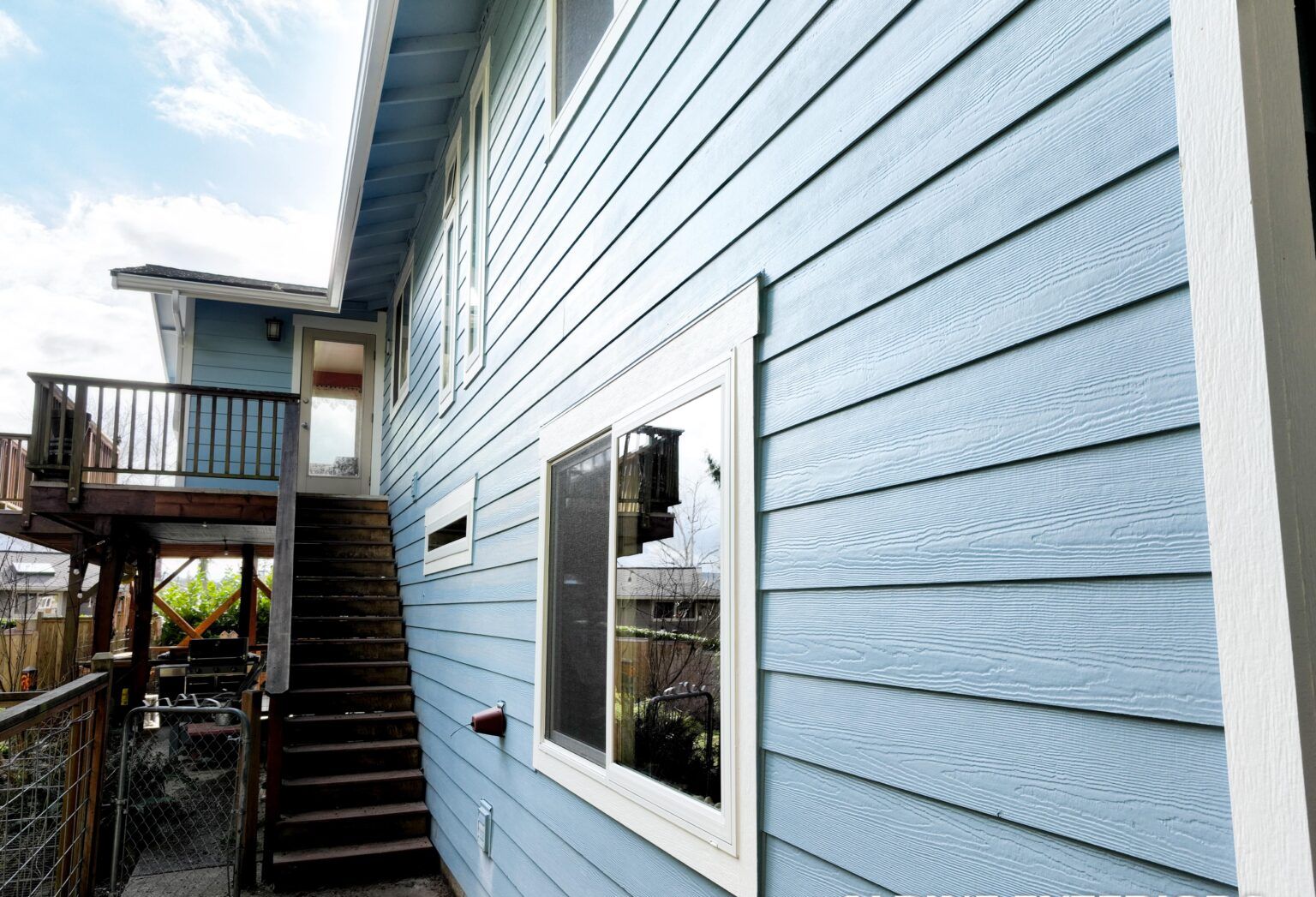
Most siding damage in Holiday can be repaired if it's limited to a section or two and the wall sheathing underneath is still dry and sound; once water has been getting behind the siding for a while, or damage is spread across multiple elevations, replacement is usually the more honest and more economical choice. The right call almost always comes down to what's happening behind the siding, not just what you can see from the driveway.
Holiday sits in the western part of Pasco County, close enough to the Gulf that salt-laden air, heavy summer humidity, and tropical storm systems all take a toll on exterior cladding faster than they would inland. The damage patterns we see on siding calls in this area tend to fall into a handful of categories:
None of these are unusual for the area — they're the ordinary cost of Florida weather over years of exposure. What matters is catching them before a small, repairable issue becomes a large, expensive one.
There's no single rule that covers every house, but a few honest guidelines hold up on most Holiday homes:
One thing worth saying plainly: a contractor who always recommends full replacement, and one who always recommends a cheap patch regardless of what's happening behind the wall, are both giving you the same answer before they've actually looked. The honest version of this decision requires opening up damaged sections to check the sheathing, not just eyeballing the exterior.
A few regional factors change how siding repair should be approached here compared to a generic guide:
Wind loads and code compliance. Any siding installed or replaced in Pasco County has to meet current Florida Building Code wind resistance requirements, and the products used need valid Florida Product Approval for the wind zone. This isn't optional paperwork — it affects how siding is fastened, what starter strip and trim details are used, and whether a quick DIY patch job will actually hold up in the next storm. A repair that ignores fastening spacing or uses non-approved trim can fail again in the very next wind event.
Wind mitigation and insurance. Many Pasco County homeowners have an OIR-B1-1802 wind mitigation inspection form on file for insurance discounts. If siding repair or replacement touches anything related to opening protection, roof-to-wall connections, or other items covered on that form, it's worth checking whether the work affects your existing wind mitigation credits — and keeping documentation of code-compliant materials and installation in case you need to update that form later.
Humidity and mold pressure. Because Pasco County stays humid for most of the year, any repair that traps moisture behind the siding — a poorly flashed patch, a gap left uncaulked, house wrap that wasn't properly lapped — will create mold or rot problems faster here than it would in a drier climate. Repairs need to account for drainage and ventilation behind the cladding, not just the visible surface.
Salt air. Holiday is close enough to the Gulf that salt-laden air is a real factor, particularly for fastener corrosion and for aluminum or metal trim components. Repairs in this area should generally use corrosion-resistant fasteners rather than whatever standard hardware might be used further inland.
Termite pressure. Florida's termite activity means that any siding repair involving wood trim, fascia, or sheathing should include a check for termite damage, not just weather damage. A repair that replaces siding over compromised wood underneath will fail again regardless of how well the new siding is installed.
If you're looking at damaged siding on a Holiday home, a practical sequence looks like this:
Alpine Exteriors handles siding repair and replacement for homeowners throughout Holiday and the wider Tampa Bay area, and our approach is to open up damaged sections before recommending a fix rather than guessing from the outside. We're a licensed Florida contractor (RB29003900), and every repair or replacement we install is done to current Florida Building Code wind requirements using approved products — which matters as much for your next hurricane season as it does for how the house looks today.
The honest answer depends on what's behind the siding more than what you can see on the surface. If the damage is confined to a section or two, the wall sheathing underneath is dry, and the siding color and profile are still available, a repair is usually reasonable. If the sheathing is soft or damp when you check it, the damage spans multiple walls, or the siding has faded enough that a patch would visibly mismatch, replacement — sometimes just of the affected elevation, sometimes the whole house — tends to be the more durable answer. An inspection that actually opens up a damaged area is the only reliable way to tell.
It depends heavily on age and material. Vinyl siding fades unevenly under Florida's UV exposure, so a brand-new panel next to siding that's several years old often shows a visible color difference even if the profile matches exactly. Fiber cement can sometimes be repainted to blend better than vinyl can. If your siding is more than a few years old, it's worth asking to see a sample of the replacement material against your existing wall before committing to a small patch, rather than being surprised after installation.
Coverage depends entirely on your specific policy, your deductible, and the cause of the damage — wind-driven storm damage is often treated differently than gradual wear, humidity staining, or maintenance issues, which are typically excluded. Photograph the damage as soon as you notice it, especially right after a named storm, and check your policy or talk to your agent before assuming either way. A wind mitigation form on file (OIR-B1-1802) is a separate matter related to premium discounts, not a guarantee of claim coverage, though it's worth having current regardless.
A localized repair — a few panels or one wall section — can often be completed within a day or two once materials are on hand, weather permitting. A full re-side of a house takes considerably longer, generally more than a week depending on square footage, tear-off needs, and whether sheathing repair is required underneath. Florida's summer storm pattern can also push timelines around, since siding work isn't done in active rain or high wind.
If you're dealing with storm damage, chronic mold staining, or siding that's simply aged out on your Holiday home, Alpine Exteriors can take a look and tell you honestly whether repair, a partial re-side, or full replacement makes sense for your situation — no upsell to full replacement when a repair will genuinely hold up, and no patch recommendation when the sheathing underneath tells a different story. We serve homeowners throughout Holiday, New Port Richey, Wesley Chapel, Lutz, Land O' Lakes, Plant City, and Zephyrhills, and we work to current Florida Building Code wind standards on every job. Reach out to schedule an inspection and get a clear, written assessment of what your siding actually needs.