

If you're re-siding a home in Seven Oaks, the siding product you choose has to carry a current Florida Product Approval and be installed exactly to the fastening schedule that approval was tested under — not just nailed up the way it looks right. Pasco County's building department enforces this on every permit, because siding in this part of the state isn't cosmetic; it's a wind-load component that has to survive a hurricane without peeling off and becoming a projectile or letting water into the wall assembly.
That single requirement — a matched, documented product-and-fastener system — is what most of the rest of this page is really about. Homeowners in Seven Oaks often assume any siding sold at a home center is fine to install anywhere. In Pasco County, it isn't. The product has to be approved for the specific wind pressure your house sits in, and the installer has to follow the manufacturer's tested fastening pattern, not a generic one.
The Florida Building Code (FBC) sets wind-load requirements based on the ASCE 7 wind speed maps referenced in the code, and most of inland Pasco County — including Seven Oaks and the rest of Wesley Chapel — falls in a design wind speed range that's lower than the coastal High-Velocity Hurricane Zone counties (Miami-Dade and Broward) but still meaningfully higher than what siding manufacturers assume in their base national fastening instructions. That gap matters. A fiber cement or vinyl siding panel that's rated for a moderate wind zone somewhere else in the country may need a tighter nailing pattern, additional fasteners at corners and openings, or a different starter-strip detail to meet the wind pressure Pasco County actually requires.
To prove a product can meet that pressure, every siding system installed under permit needs a Florida Product Approval — a number (issued either by the state's Florida Product Approval system or through a Miami-Dade Notice of Acceptance that's also accepted statewide) that ties a specific product, in a specific installation configuration, to tested wind-load performance. The approval isn't just a sticker on the box. It comes with an installation instruction sheet that specifies fastener type, fastener spacing, and how the product has to be lapped and flashed. When a Pasco County inspector shows up for the siding inspection, that instruction sheet — matched to the product actually on the wall — is one of the first things they'll ask to see.
Fastening is where most corner-cutting actually happens, and it's largely invisible once the job is finished. Ring-shank or corrosion-resistant siding nails driven at the wrong spacing, or a crew that nails through the face of a lap instead of the nailing slot, can pass a casual look from the ground and still fail wind uplift. Inspectors are specifically checking fastener type, spacing along studs, clearance at butt joints, and whether the starter course and corner posts are attached to framing — not just to the sheathing or the old siding layer underneath. On a re-side, they're also checking that any old, non-approved siding was actually removed rather than covered over, since an approval only applies to the tested assembly, and burying an unrated layer underneath a new one voids the wind-load logic entirely.
Behind the wind-load numbers is a second code layer that's just as relevant here: water management. The FBC requires a continuous water-resistive barrier under siding, and in a wind-driven-rain climate like Tampa Bay's, the flashing details at windows, doors, and penetrations carry as much real-world weight as the fastening schedule. Wind that's strong enough to test a fastening pattern is almost always accompanied by rain being driven sideways into the wall, so an inspector checking siding is also checking house wrap laps, window flashing integration, and weep or drainage paths — because a code-compliant fastening job over a poorly flashed wall still leads to rot and mold behind the siding within a few seasons.
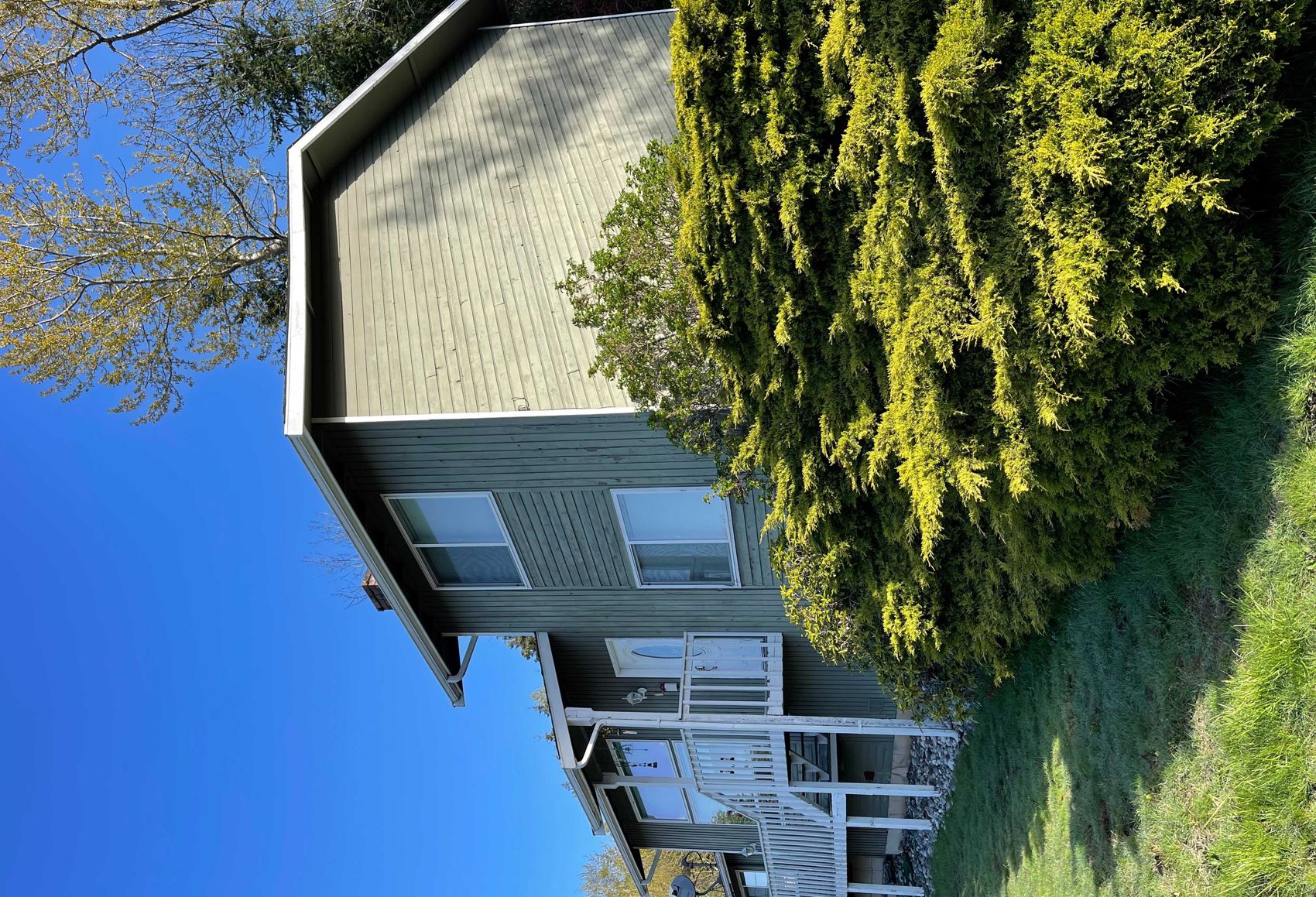
Seven Oaks sits inland in Wesley Chapel, which changes the mix of pressures compared to a beachfront Tampa Bay address — there's no salt-air corrosion concern here the way there is closer to the Gulf, so that's one variable homeowners in this neighborhood genuinely don't need to worry about. What does apply, and applies hard, is the combination of hurricane wind exposure, wind-driven rain, and Central Florida's humidity load. This part of Pasco County sees long, wet, humid summers, and any gap in the water-resistive barrier or a fastener pattern that lets a panel flutter in wind will let moisture work behind the cladding, which shows up later as mold, soft sheathing, or stained interior walls — problems that are expensive to fix because you have to open the wall back up to get to them.
UV exposure is also a real factor for material choice, even though it doesn't show up on a permit checklist. Florida sun is intense and constant for most of the year, and lower-grade vinyl siding can chalk, fade, or become brittle well before it reaches the end of a manufacturer's stated lifespan. That doesn't change what code requires, but it does change what's worth installing — a product that meets the minimum wind-load approval and still looks and performs well a decade later is a different value proposition than one that barely clears the bar.
Termites are a background consideration too. Subterranean termites are established throughout this part of Florida, and while siding itself isn't a termite target, the sheathing and framing behind it are. Correct flashing and drainage — the same details inspectors check for wind and water performance — also keep wood-based wall components dry enough to resist termite damage, since termites and moisture problems tend to travel together.
Start by asking any contractor bidding the job for the specific Florida Product Approval number for the siding they're proposing, and ask them to show you the installation instructions tied to that number — not a generic spec sheet. A legitimate installer will have this ready without hesitation, because it's the same document they'll need to hand an inspector.
It's also worth being honest about trade-offs. Code-compliant, properly fastened siding with full tear-off and correct flashing costs more up front than a quick cosmetic overlay — a full re-side with tear-off, house wrap, and a wind-rated product typically runs meaningfully higher than a bargain quote that skips demolition or uses unapproved fasteners. That gap is the cost of the wind-load and water-management work actually holding up in a storm, not padding. Alpine Exteriors, license RB29003900, walks Seven Oaks homeowners through the product approval and fastening documentation as part of every siding proposal, specifically so there's no ambiguity about what's being installed and why it's rated the way it is.
Yes. Pasco County requires a permit for siding replacement because it's a wind-load-rated exterior component under the Florida Building Code, and the permit process is what triggers the inspection that verifies the correct product approval and fastening schedule were actually used.
Not automatically. The specific product has to carry a Florida Product Approval (or an accepted Miami-Dade Notice of Acceptance) for the wind pressures in this area, and it has to be installed to that approval's fastening instructions — a product without documented approval for your wind zone can fail inspection even if it's a well-known brand.
Siding alone usually isn't the line item that moves premiums the most — roof-to-wall connections, roof shape, and opening protection carry more weight on the OIR-B1-1802 wind mitigation form. That said, code-compliant siding installed correctly supports the overall wind-resistance picture insurers evaluate, and it's worth mentioning to your agent when the form is updated.
Ask for the permit record from Pasco County and, if available, the original product approval documentation from whoever did the work. If there's no permit on file for a past re-side, or the fastener spacing looks noticeably wide compared to what manufacturers typically specify, it's worth having a licensed contractor inspect it before assuming it will perform in a storm.
If you're weighing a siding replacement in Seven Oaks, Wesley Chapel, or elsewhere in Pasco County, Alpine Exteriors can walk you through the specific product approvals and fastening details that apply to your address and give you a straightforward, documented proposal — no guesswork about whether it will pass inspection. Reach out to schedule a look at your home and get a written estimate that spells out exactly what's being installed and why.