
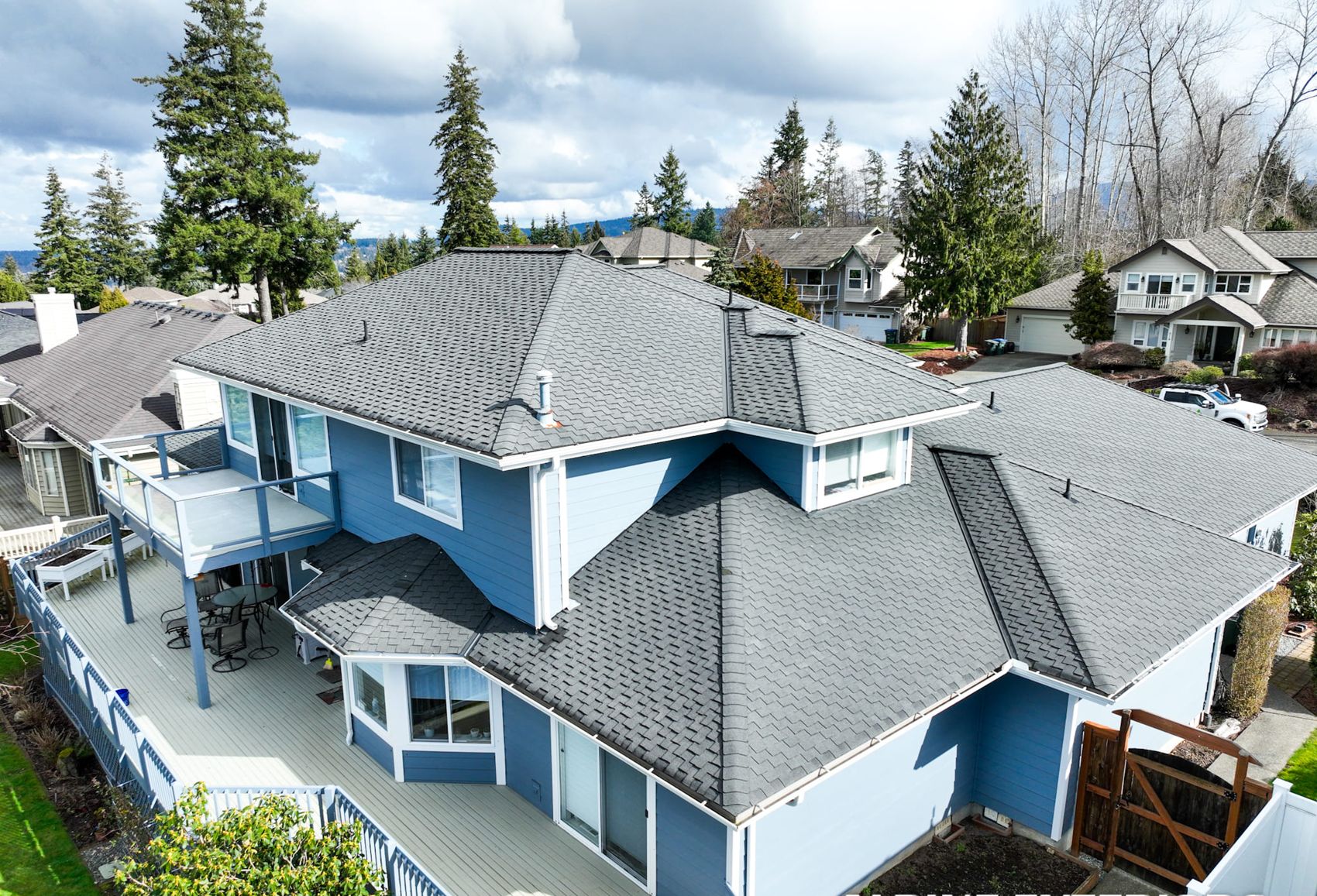
Siding in Tampa, Wesley Chapel, Lutz, Land O' Lakes, New Port Richey, Plant City, and Zephyrhills works harder than siding almost anywhere else in the country. Between June and November, wind-driven rain during tropical storms and hurricanes gets forced sideways and upward under laps, trim, and J-channel that would never see water in a calmer climate. The rest of the year, Tampa Bay's humidity keeps moisture sitting against the wall assembly, which is exactly what mold, mildew, and rotting substrate need to take hold behind the panels. Add in some of the most intense UV exposure in the continental U.S., which chalks and fades paint finishes and embrittles lower-grade vinyl over time, and it's clear why a siding system that looks fine from the curb can be quietly failing underneath.
A few conditions matter enough locally that they deserve their own mention. Subterranean termites are active in this part of Florida essentially year-round, and they target wood trim, fascia, and any wall sheathing that's stayed damp behind siding — not the vinyl or fiber cement itself, but the wood components around it. In waterfront and near-coastal pockets closer to the Gulf, such as parts of New Port Richey, airborne salt accelerates corrosion on fasteners, flashing, and metal trim faster than it would a few miles inland. And because this region falls under the Florida Building Code, any siding product installed here — and any replacement panels used for repairs — needs a valid Florida Product Approval rated for the wind pressures at your address. That matters at claim time, too: insurers use the OIR-B1-1802 wind mitigation inspection form to help set windstorm premiums, and the condition of your siding, soffit, and roof-to-wall connections factors into that picture.
None of this means siding here is a losing battle. It means maintenance has to be routine rather than occasional, and it has to target the specific ways this climate attacks a wall system. The checklist below is organized around those failure points.

Not every failed item on this list means a full siding replacement, and it's worth being honest about that up front. A few chalky or faded panels on a sun-beaten wall are a cosmetic issue you can live with for a while, or address with a wash and, on paintable materials, a fresh coat. Minor mildew staining often comes off with a soft wash using a mild cleaner and low-pressure rinse — high-pressure washing can force water behind panels or damage the surface, so it's not the right tool here.
Cracked caulk lines and small gaps around trim are a reasonable DIY fix for a handy homeowner using an exterior-grade sealant rated for Florida heat and UV exposure; just recheck the work after the next hard rain to confirm it held. Loose fasteners can sometimes be reset, though repeated nail pops in the same spot often signal that the underlying panel has expanded and contracted beyond what it should, which points to an installation or material issue rather than a one-time fix.
Soft spots in trim, fascia, or sheathing are a different category. Once wood has gone soft, painting over it or caulking around it does not stop the underlying rot or termite activity — it just hides it for a while. The same goes for any panel that's visibly buckled, missing, or pulling away from the wall: patching around a compromised panel doesn't restore the wind resistance the whole assembly is supposed to have as a system. In both cases, the honest answer is that the damaged section needs to come off so someone can see what's actually happening behind it before deciding on a repair versus a broader replacement.
Bring in a licensed contractor when a problem goes beyond surface cleaning and simple resealing. That includes any soft, spongy, or visibly rotted wall section; siding that's cracked, buckled, or missing after a storm; recurring mold or mildew that keeps returning after washing, which can mean moisture is trapped behind the panels rather than just sitting on top of them; and any repair that will involve removing and replacing panels, since Florida Building Code requires replacement materials to carry a current Florida Product Approval matched to your home's wind exposure. A qualified contractor can also tell you whether what you're seeing is isolated or a sign that the whole system — house wrap, flashing details, fastening pattern — needs attention, which a homeowner usually can't judge from the outside alone.
It's also worth having a professional assessment before hurricane season each year, not just after damage appears. A pre-season check can catch a loose panel or failing flashing detail while it's still a small fix, and if you're due for an updated wind mitigation inspection for insurance purposes, that's a natural time to combine both. Alpine Exteriors, FL license RB29003900, performs these inspections and repairs across the Tampa Bay area and can walk a homeowner through what's cosmetic, what's worth monitoring, and what genuinely needs to be addressed before storm season.
A close visual walk-around twice a year — once before hurricane season and once after — catches most developing problems early. Homes near the coast or in heavily shaded, low-airflow lots may benefit from checking a bit more often, since salt exposure and trapped moisture both accelerate wear.
Yes. Under the Florida Building Code, siding installed in this region needs a Florida Product Approval that matches the wind pressures for your specific location, and that applies to replacement panels used in repairs as well as full installations. Using an unrated or mismatched product can leave a wall vulnerable exactly where a homeowner assumes it's protected.
Surface mildew that washes off easily and doesn't return is usually cosmetic. Mold that keeps coming back in the same spot, especially with any softness in the wall behind it, is a sign that moisture is getting trapped rather than shedding properly, and that's worth having looked at before it spreads to the sheathing.
Yes. Termites aren't interested in vinyl or cured fiber cement, but they will readily attack the wood fascia, trim, and sheathing those materials are fastened to. Checking wood components for softness or hollow-sounding spots is just as important as checking the panels themselves.
A checklist is a good starting point, but it can't tell you what's happening behind a wall that looks fine on the surface. If any item here raised a question, or if it's simply been a while since your siding was looked at by someone who does this work daily, Alpine Exteriors serves homeowners throughout Tampa, Wesley Chapel, Lutz, Land O' Lakes, New Port Richey, Plant City, and Zephyrhills and can provide a straightforward, no-pressure inspection ahead of the next storm season.