
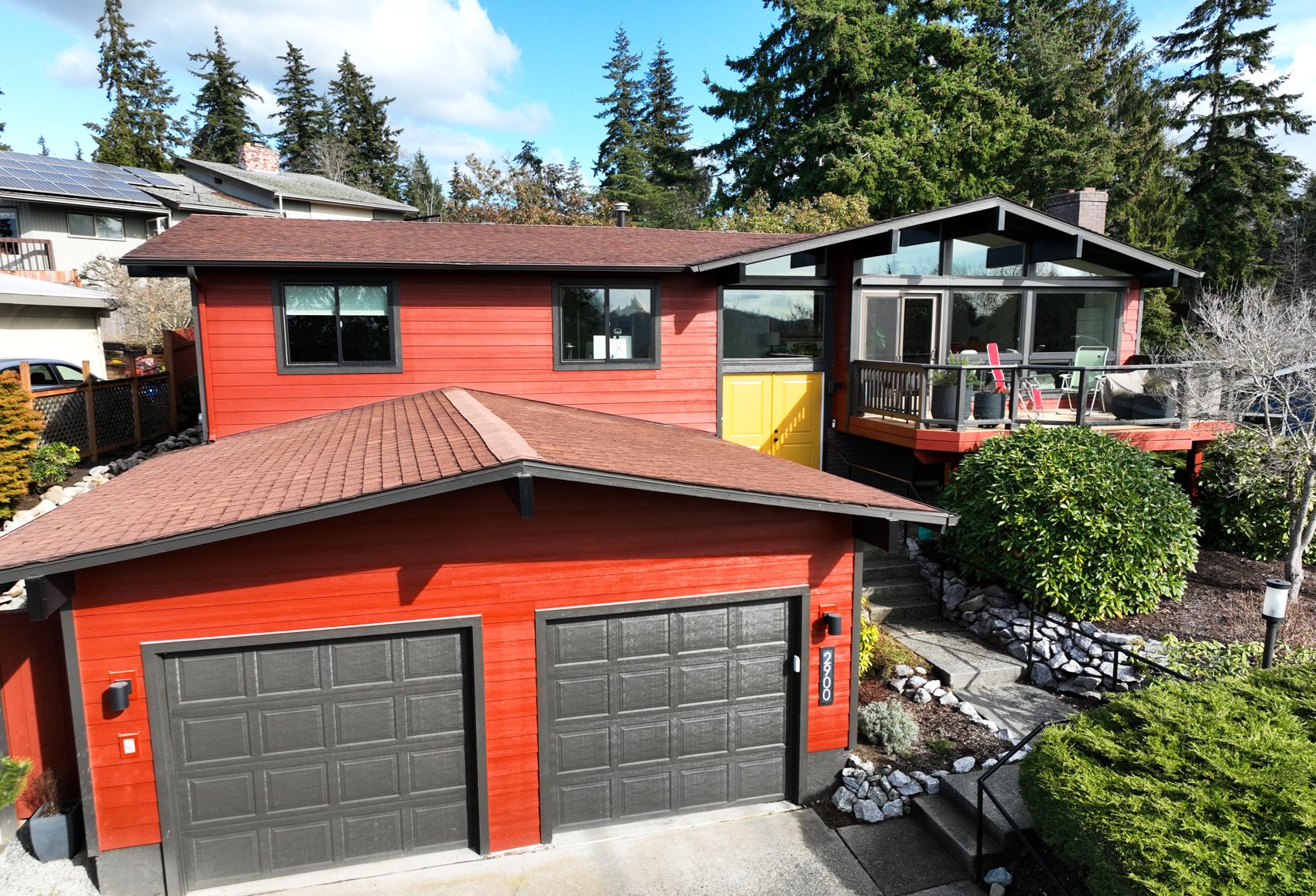
A siding quote in Tampa Bay is really three numbers pretending to be one: the material cost, the labor and prep work, and the details buried in the fine print that decide whether the job survives a Gulf Coast summer. Read those three pieces separately before looking at the bottom-line total, and the price starts to make sense.
Most homeowners compare quotes the way they'd compare grocery receipts — total against total, which works fine when the products and scope are identical. It falls apart when one contractor is quoting a thinner vinyl profile with a stapled installation and another is quoting a wind-rated nailing pattern over a drainable house wrap. Same job description on paper, very different house underneath.
A complete siding quote should break out several line items, not just a lump sum. Tear-off and disposal of the old siding is one — some contractors fold this in, others charge it separately, and a few skip mentioning it until the invoice. The house wrap or moisture barrier should be named specifically, not just described as "weather barrier," because the difference between a basic wrap and a drainable, wrinkle-resistant one matters in a climate that stays humid for most of the year.
Flashing around windows, doors, and roof-to-wall transitions deserves its own line, since this is where water actually gets into a wall assembly. Fastener type and spacing should be specified too — not as a technicality, but because the nailing schedule is what determines whether the installation meets the wind rating the product is actually approved for. Trim, corner posts, caulking and sealant, and — if the material is fiber cement — the paint or finish system all belong in the estimate as named components, not vague allowances.
Warranty terms are where quotes quietly diverge. There are two separate warranties at play: the manufacturer's material warranty, which covers defects in the product itself, and the contractor's labor or workmanship warranty, which covers whether it was installed correctly. A low bid that's silent on the labor warranty isn't necessarily a bad deal, but it's an incomplete one — ask for it in writing. Permit fees and who is responsible for pulling the permit should also be spelled out; in most Tampa Bay jurisdictions, exterior siding replacement requires a permit, and skipping it can create problems later at resale or with insurance.
Tampa, Wesley Chapel, Lutz, Land O' Lakes, New Port Richey, Plant City, and Zephyrhills all sit inside wind zones defined by the Florida Building Code, which sets design wind speeds by location and requires that exterior products — siding included — carry a Florida Product Approval (or an accepted Miami-Dade Notice of Acceptance) showing they're rated for the wind pressures at that address. This isn't paperwork for its own sake. It determines the actual fastening schedule: how many nails per panel, how far apart, and where. A quote that doesn't reference product approval or a specific fastening pattern hasn't really priced a wind-rated installation — it's priced a generic one.
Wind-driven rain is the other half of that equation. Wind pushes rain sideways and upward under trim and around openings in a way that vertical rain never does, so flashing details around windows, doors, and any wall penetrations matter more here than they would in a drier, calmer climate. A siding job that looks fine for the first year can start leaking at those transitions during the next tropical system if the flashing was an afterthought.
Humidity works on a slower timeline but is just as relevant. Tampa Bay stays warm and wet for most of the year, and any wall assembly that traps moisture behind the cladding creates conditions for mold growth and, over time, for wood-destroying organisms — subterranean termites are established throughout this region and will exploit damp wood wherever they find it. A drainage gap or drainable wrap behind the siding, and flashing that actually sheds water instead of trapping it, matters more here than the color or texture of the siding itself.
UV exposure is intense and constant. Lower-grade vinyl siding can fade, chalk, or lose rigidity faster under Florida sun than the same product would in a milder climate, which is why the thickness and capstock quality of vinyl — and the fade-resistance rating behind a fiber cement paint system — are worth asking about directly rather than assuming all products in a given material category perform the same.
For homes closer to the Gulf — parts of New Port Richey and other coastal pockets of Pasco County in particular — salt-laden air accelerates corrosion on fasteners and exposed metal trim. Standard fasteners can start rusting and staining the siding within a few years in that environment; stainless steel or coated fasteners cost more up front but hold up considerably longer. It's a fair question to ask a contractor whether they adjust fastener spec based on proximity to the coast, because not every crew does.
One more regional detail worth knowing: many Florida insurers offer premium credits for wind-mitigation features, documented on the state's OIR-B1-1802 wind mitigation inspection form. A siding replacement itself doesn't usually change that form's results, but if a contractor is also working on soffits, roof-to-wall connections, or opening protection at the same time, ask them to document what was done — it can make a difference when a wind-mitigation inspector comes through later.
Start by getting two or three quotes broken into the same categories described above — material, labor, tear-off, house wrap, flashing, fasteners, and warranty — rather than a single number. If a contractor won't itemize, ask them to; a legitimate estimator can walk through it without difficulty.
None of this requires becoming an expert in building codes. It just means asking a contractor to show their work, the same way you would with any other estimate involving materials and labor you can't fully inspect once it's closed up behind a finished wall.
The spread usually comes down to what's included rather than markup. Two quotes for "vinyl siding installation" can differ by thousands of dollars because one includes tear-off, a drainable house wrap, and a wind-rated fastening schedule with product approval documentation, while the other is a bare material-and-labor number with none of that specified. Material grade matters too — thicker vinyl with better UV-resistant capstock, or a heavier fiber cement panel, costs more than entry-level product, and that difference shows up in the quote even before labor is factored in.
Yes, in practice. Homes in higher design wind speed areas need a denser fastening pattern, sometimes additional flashing or trim detailing, and materials carrying a valid Florida Product Approval or Miami-Dade NOA rated for that wind pressure. A contractor pricing to that standard will generally cost more than one quoting a generic installation that isn't actually engineered for the wind loads at your specific address, even if the visible finished product looks similar.
Both hold up here when installed correctly, and both have real trade-offs worth weighing honestly. Vinyl is lighter, generally less expensive installed, and won't rot, but lower-grade vinyl can fade or become brittle faster under intense Florida UV, and it can show waviness if not fastened correctly for thermal movement. Fiber cement resists fire and impact well and holds paint longer than many expect, but it's heavier, typically costs more installed, and needs properly maintained caulking and paint to keep moisture from working into cut edges and fastener points. Neither is a wrong choice; the right one depends on budget, maintenance appetite, and how long you plan to stay in the home.
Look for two separate warranties, not one. The manufacturer's material warranty covers product defects — things like cracking, excessive fading beyond the manufacturer's stated tolerance, or premature failure of the material itself — and its length and terms vary by manufacturer and product line. The contractor's labor or workmanship warranty is separate and covers installation errors, such as improper flashing or fastening that leads to a leak. Ask for both in writing, ask how long each lasts, and ask whether either is prorated or transfers if you sell the home.
If you're weighing siding quotes for a home in Tampa, Wesley Chapel, Lutz, Land O' Lakes, New Port Richey, Plant City, or Zephyrhills, Alpine Exteriors will walk the exterior with you and provide a written, itemized estimate that names the product, the fastening schedule, the house wrap, and the warranty terms — the details that actually determine how the job performs once it's on the wall. Alpine Exteriors is licensed in Florida under RB29003900. Reach out for a quote and bring your other estimates along; a side-by-side comparison is the fastest way to see what's actually being offered.