
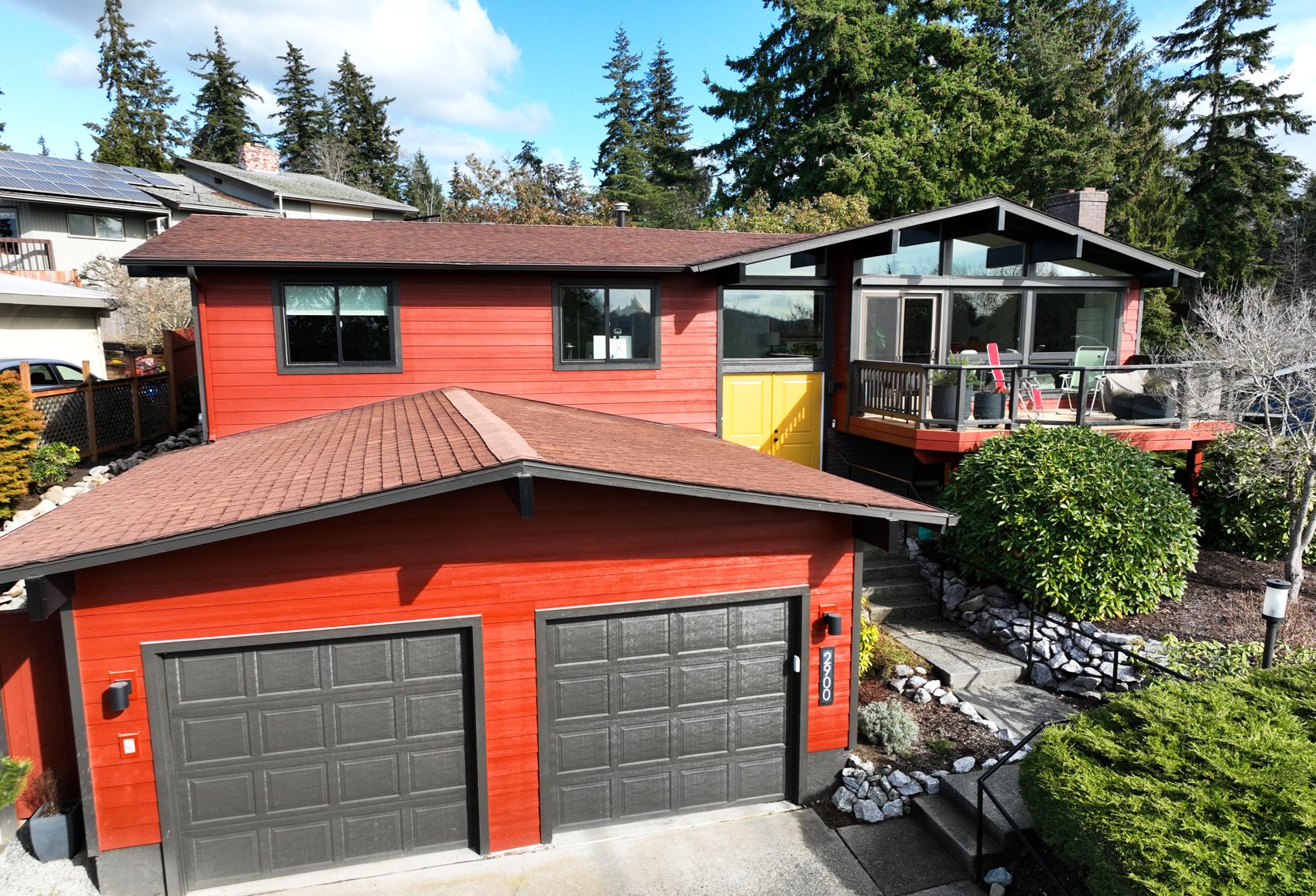
Moon Lake sits in unincorporated Pasco County, ringed by mature oak canopy and close enough to both the lake and the Gulf lowlands that humidity rarely lets up. Homes here take a different kind of beating than siding two states north: long stretches of damp shade from the tree cover, sudden downpours that drive rain sideways during summer storms, and UV exposure strong enough to break down materials that were never rated for it. If you've noticed something off about your siding lately, it's worth a closer look before a cosmetic issue becomes a structural one. This guide walks through the warning signs we see most often on Moon Lake homes, what's usually causing them, and how to decide whether you can wait or need to act now.
Warping and buckling. On a Moon Lake property this is most often heat-related. Vinyl siding expands and contracts with our temperature swings, and if it was installed too tightly, without room to move, or if a run of panels sat in direct afternoon sun for years, the material can ripple permanently. Fiber cement doesn't warp the same way, but it can bow if moisture gets trapped behind it. Either way, once a panel has visibly buckled, it isn't going to flatten back out on its own.
Cracking and splitting. Intense Florida UV breaks down the plasticizers in lower-grade vinyl over years of exposure, leaving it brittle. A cracked panel isn't just cosmetic — it's an opening for wind-driven rain to get behind the cladding during a summer storm or tropical system, which is exactly the moisture path that leads to rot and mold underneath.
Bubbling or peeling paint and finish. This usually points to moisture trying to escape from inside the wall assembly, or moisture that's already trapped behind the siding with nowhere to go. In a shaded, humid setting like Moon Lake, wall cavities can stay damp longer than they would on a lot with more sun and airflow, and that trapped moisture pushes finishes off from underneath.
Soft or spongy spots. Press gently near window trim, corners, and the bottom courses close to grade. If the wall gives instead of feeling solid, water has likely been getting behind the siding for a while and the substrate underneath is starting to break down. In older Moon Lake homes with wood-based trim and fascia, this is also where we most often find termite activity — subterranean termites are active throughout Pasco County, and softened wood behind siding is an easy target once moisture has already weakened it.
Mold, mildew, and dark streaking. Some surface mildew is normal in our climate and washes off. What's concerning is staining that returns quickly after cleaning, or growth that follows the seams and panel edges — that pattern usually means water is getting in at the joints, not just settling on the surface from ambient humidity.
Gaps, separation, and pulled panels. Siding is engineered to flex slightly and shed water, but panels that have visibly separated from the wall or from each other are no longer doing that job. This is a wind-load issue as much as a water issue — the Florida Building Code sets attachment and wind-pressure requirements for exterior cladding, and siding that's pulling loose was either installed with inadequate fastening for the wind zone or has fatigued after years of storm cycles.
Fasteners backing out. Repeated expansion and contraction can work nails and screws loose over time, especially on panels that were face-nailed too tightly to begin with. Once a fastener is proud of the surface, that panel is no longer secured the way it should be, and it becomes one of the first things wind can catch during a storm.
Rising cooling bills. Siding isn't your primary insulation layer, but failed or gapped siding lets humid outside air reach the sheathing and wall cavity more easily, which can affect how hard your HVAC system has to work, particularly through a Tampa Bay summer.
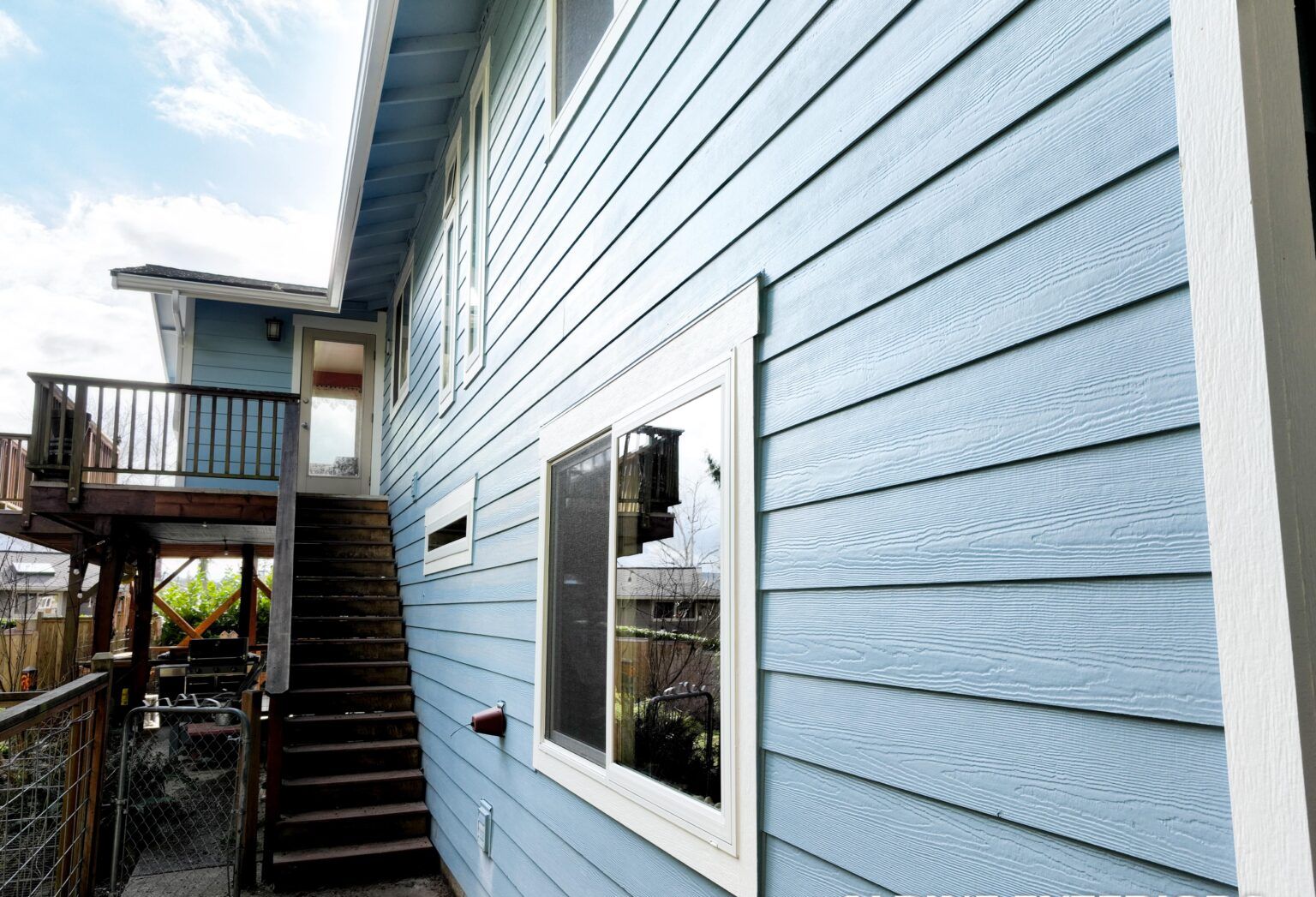
Not every issue on this list means you need a crew out this week. A few isolated hairline cracks, mild surface mildew that cleans off easily, or slight fading are cosmetic concerns you can plan around on a normal timeline. Treat these as urgent instead: any soft or spongy wall section, panels that have visibly separated or are missing, active water intrusion you can see or smell inside, or storm damage after a named system or a strong summer downburst. Wind season here runs through the fall, and a panel that's already loose is far more likely to fail completely — and let water into the wall assembly — the next time we get sustained wind-driven rain. If you're not sure which category your situation falls into, that uncertainty itself is a reason to get a professional opinion rather than guess.
Start with a visual walk around the exterior in daylight, checking corners, trim lines, and any area near downspouts or low-hanging tree branches where moisture lingers longest. Photograph anything that concerns you, and note whether the issue is isolated to one wall or shows up in multiple spots — that pattern matters for diagnosing the cause. From there, get an inspection from a licensed contractor rather than relying on a patch job, especially if you suspect moisture has reached the sheathing or framing. A proper inspection should check not just the siding surface but the water-resistive barrier and flashing behind it, since siding is only one layer of the wall's defense against rain. If replacement turns out to be the right call, ask what product approval documentation applies to the siding being proposed — Florida Product Approval numbers confirm the material has been tested for the wind pressures required in this area, which matters more here than in most parts of the country. It's also worth asking your insurance agent whether a wind mitigation inspection (OIR-B1-1802) makes sense once new siding and any related exterior work is complete, since some insurers factor recent exterior upgrades into that assessment.
Alpine Exteriors has handled siding inspections and replacements across the Tampa Bay area, including Moon Lake and the surrounding Land O' Lakes and New Port Richey neighborhoods, and we're upfront that not every job needs a full tear-off. Sometimes a section repair and better flashing detail solves the problem; sometimes the wall has been wet long enough that a full re-side is the more honest answer. We'd rather tell you which one you actually need than sell you the bigger job by default.
Costs vary widely based on the size of the home, the material chosen, how much of the substrate needs repair before new siding goes on, and site access. As a rough range, homeowners in this area often see whole-house siding projects fall somewhere between $9,000 and $25,000 depending on material and scope, though a section repair can cost far less. The only way to get an accurate number is a written estimate after an in-person inspection, since hidden moisture damage behind the old siding can change the scope significantly.
Often, yes — if the damage is isolated and the underlying sheathing is still sound, a section repair or panel replacement can be a reasonable, less expensive fix. The catch is that older siding lines can be discontinued or faded enough that new panels won't match perfectly, and if moisture has traveled beyond the visibly damaged area, a spot repair can mask a bigger problem instead of solving it. An inspection will tell you which situation you're actually in.
It depends on your policy, your deductible structure, and whether the damage is clearly tied to a specific wind or storm event versus gradual deterioration, which most policies exclude. Wear from age, sun exposure, or long-term moisture intrusion is typically treated as a maintenance issue rather than a covered loss. Document damage with photos right after a storm and talk to your agent before assuming either way — we can provide a written damage assessment if you need documentation to support a claim.
Ask for the Florida Product Approval number on any siding product you're considering, and confirm the installation method matches what that approval requires for your specific wind zone — attachment spacing and fastener type both affect real-world wind performance, not just the material itself. A contractor who can walk you through this, rather than just naming a brand, is a good sign they're installing to code rather than just to habit.
If any of the signs above sound familiar, it's worth getting a straight answer before the next storm season tests your siding for you. Alpine Exteriors is a licensed Florida contractor (RB29003900) serving Tampa, Wesley Chapel, Lutz, Land O' Lakes, New Port Richey, Plant City, Zephyrhills, and the Moon Lake area. Reach out to schedule an inspection, and we'll give you an honest read on whether you're looking at a repair, a partial re-side, or a full replacement — along with what it would take to get your home's exterior back to holding up the way it should against Florida's weather.