

In Zephyrhills and the rest of Pasco County, siding is a wind-resistant building assembly under the Florida Building Code, not just a cosmetic finish. Every product installed on a permitted job has to carry a valid Florida Product Approval and be fastened according to a schedule that matches the wind speed and exposure category assigned to your specific lot, and that fastening schedule — not the brand name on the box — is what actually determines whether the siding stays on the wall in a tropical storm.
That single fact explains most of what follows in this guide: why the same vinyl or fiber cement siding can be installed two different ways on two different houses and both be code-compliant, why a permit and inspection matter even for a "simple" re-siding job, and why the inspector who shows up before the wall gets closed up is checking nail spacing and product labels rather than color and style.
The Florida Building Code adopts wind speed maps from the ASCE 7 engineering standard, and those maps assign an ultimate design wind speed to every county in the state. For Pasco County, including Zephyrhills, that design wind speed generally falls in the 140-150 mph range for a typical single-family home (Risk Category II), though the exact number for your address depends on exposure category and is something your contractor or the county plan reviewer can confirm during permitting. Exposure Category B applies to most suburban, wooded, or built-up subdivisions common around Zephyrhills, while Exposure Category C applies to more open terrain — flat pasture, newly cleared development, or land near open water — where wind pressures on a wall are higher because there's less surrounding structure and vegetation to break up the wind. A house on a freshly cleared lot on the edge of town can carry a higher wind pressure rating than an identical house three streets over in an established, tree-lined neighborhood, even though both are in the same city.
Once the design wind speed and exposure are known, every siding product has to be matched to a Florida Product Approval — either a statewide FL number issued through the Florida Product Approval system, or a Miami-Dade Notice of Acceptance (NOA), which Florida also accepts outside the counties that require it. That approval isn't a general "this brand is fine in Florida" stamp — it's tied to a specific tested assembly: the exact panel or plank, the fastener type and size, the fastener spacing, and the substrate it's fastened into. Swap any one of those variables and the approval, technically, no longer applies. This is where a lot of re-siding jobs quietly go wrong: a crew reuses the fastening pattern from the old siding, or spaces nails wider to save time, and the installed wall no longer matches the tested and approved assembly even though the product itself is code-listed.
Fastening details matter more here than in most parts of the country. Nails or screws need to be corrosion-resistant — hot-dip galvanized or stainless steel — because Florida's humidity accelerates corrosion on lower-grade fasteners over the life of the siding, and a corroded fastener loses holding power exactly where you need it during a storm. Fasteners need to penetrate a minimum depth into the stud or a code-rated sheathing, and for vinyl siding specifically, fasteners should be driven straight and left with a small amount of play rather than pinned tight, so the panel can expand and contract with Florida's wide daily temperature swings without buckling. Underneath the siding, a water-resistive barrier — house wrap or building paper — with properly lapped and taped seams is what keeps wind-driven rain from a summer thunderstorm or tropical system from finding its way behind the cladding and into the wall cavity, even when the outer siding itself performs exactly as designed.
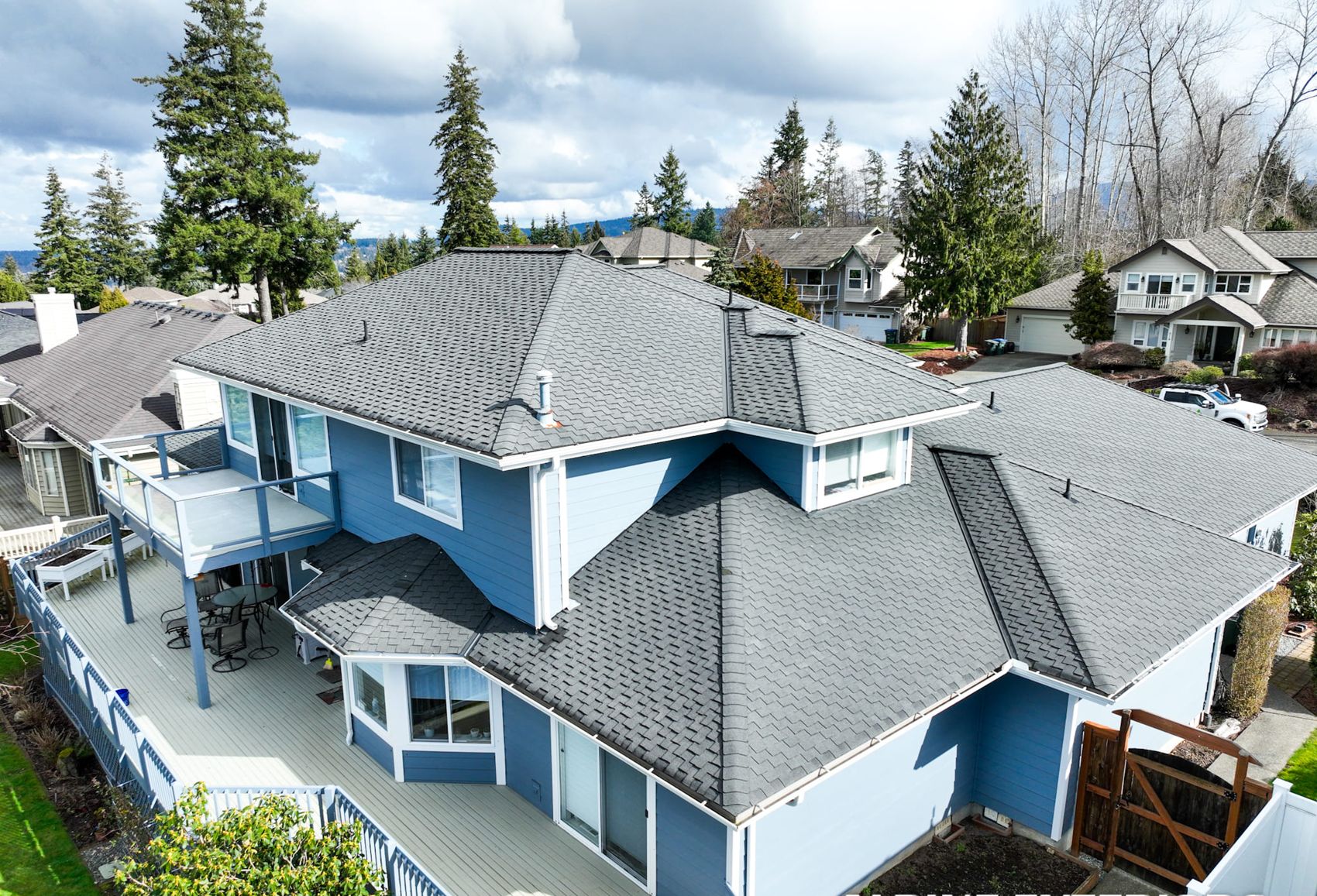
Zephyrhills and most of inland Pasco County sit outside the High-Velocity Hurricane Zone that governs Miami-Dade and Broward counties, so homeowners here don't deal with that zone's more restrictive impact-testing rules. Zephyrhills is also generally far enough inland that it typically falls outside the Wind-Borne Debris Region trigger that applies closer to the immediate coastline, where certain openings require additional impact protection. That distinction matters because it's easy for a homeowner to over-assume — or under-assume — what applies based on what they've heard about coastal Tampa Bay or South Florida, when the correct answer for a given property depends on its specific location and exposure, not general reputation.
What doesn't change moving inland is the storm exposure itself. Pasco County still sits squarely in Florida's hurricane and tropical storm path, and Zephyrhills sees the same tropical systems, sustained winds, and — arguably more often day to day — intense summer thunderstorm outflow winds that can gust hard with very little warning. Those thunderstorm gusts don't get the attention hurricanes do, but they hit siding fasteners just as directly, which is part of why the fastening schedule is enforced year-round and not treated as a hurricane-season-only concern.
Humidity is the other constant. Zephyrhills runs hot and humid for most of the year, and that moisture load pushes on siding from both directions — as wind-driven rain trying to get behind the panels during storms, and as ambient humidity that can promote mold and mildew growth on and behind any siding that isn't ventilated or flashed correctly. Intense, near-year-round UV exposure is a real factor too: Florida sun fades color and degrades sealants and lower-grade vinyl faster than it would in a milder climate, which is worth weighing when choosing a product and finish, not just a wind rating. And because subterranean termites are common throughout this part of Florida, any wood elements involved in a siding job — furring strips, trim, fascia boards — should be pressure-treated or otherwise termite-resistant rather than assumed safe by default. Zephyrhills isn't a barrier-island or immediate-coastline market, so salt-air corrosion isn't the daily factor it is on the Pinellas beaches, but the combination of heat, humidity, UV, and storm wind together is still a demanding environment for exterior materials.
Start by confirming a permit is actually being pulled. In Pasco County, re-siding generally requires a building permit and inspection, and a contractor who suggests skipping that step to save time or money is skipping the mechanism that verifies the wind design and fastening were actually done correctly — not a piece of paperwork you can safely waive.
Ask to see the Florida Product Approval number for the specific siding product going on your home, and ask, in plain terms, what fastening schedule is being used and how it matches your address's wind speed and exposure category. A contractor who can answer that without hesitation is one who's actually pricing and installing to the design requirement, rather than to a generic "how most jobs get done" habit.
It's also worth being realistic about what re-siding does and doesn't do for your insurance premium. Most of the credits on Florida's wind mitigation inspection form (OIR-B1-1802) are tied to roof shape, roof covering, roof-to-wall connections, and opening protection — not wall siding specifically — so a new siding job by itself usually won't move your wind mitigation discount much, even though it's still doing real structural and weatherproofing work. If lowering premiums is a goal, that's a separate roof- and opening-focused conversation worth having alongside, not instead of, a siding project. Alpine Exteriors can walk through both scopes honestly rather than overselling what a siding-only job will do for your policy.
Usually not by much on its own. The wind mitigation credits insurers apply in Florida are weighted heavily toward roof shape, roof covering, roof-to-wall attachment, and opening protection rather than wall siding, so re-siding is a wind-resistance and weatherproofing upgrade first, not primarily an insurance-discount project. If reducing your premium is the main goal, ask about a wind mitigation inspection alongside any exterior work so you know what's actually eligible.
It depends on your exact address and exposure category, but most single-family homes in Zephyrhills fall in the range the Florida Building Code assigns for Pasco County, generally around 140-150 mph ultimate design wind speed for a typical suburban lot. A more open or recently cleared lot can be rated higher due to its exposure category. Your contractor or the county plan reviewer confirms the specific number during permitting rather than it being a single fixed figure for the whole city.
In most cases, yes — re-siding a home is generally treated as a permitted job requiring inspection under the Florida Building Code, not a minor cosmetic repair you can skip past. Pasco County Building Construction Services is the authority that reviews and inspects the work, and skipping the permit removes the check that verifies the fastening and product approval actually match your home's wind design.
No — siding work that involves the building envelope generally needs to be performed or supervised by a licensed Florida contractor, and it's worth confirming a company's license before signing anything. Alpine Exteriors holds Florida contractor license RB29003900 and pulls permits for its Zephyrhills and greater Tampa Bay siding projects rather than working around that process.
If you're planning a siding project in Zephyrhills or anywhere else in Pasco County — Wesley Chapel, Lutz, Land O' Lakes, New Port Richey, Plant City, or the Tampa area — the details covered here (product approval, fastening schedule, exposure category) are exactly what should show up in your written estimate, not just the material and color. Alpine Exteriors, Florida contractor license RB29003900, prices siding jobs to the wind design your address actually requires and pulls the permits and inspections that go with it. Reach out for a walkthrough and a straightforward estimate that spells out the product approval and fastening plan for your home before any work begins.