
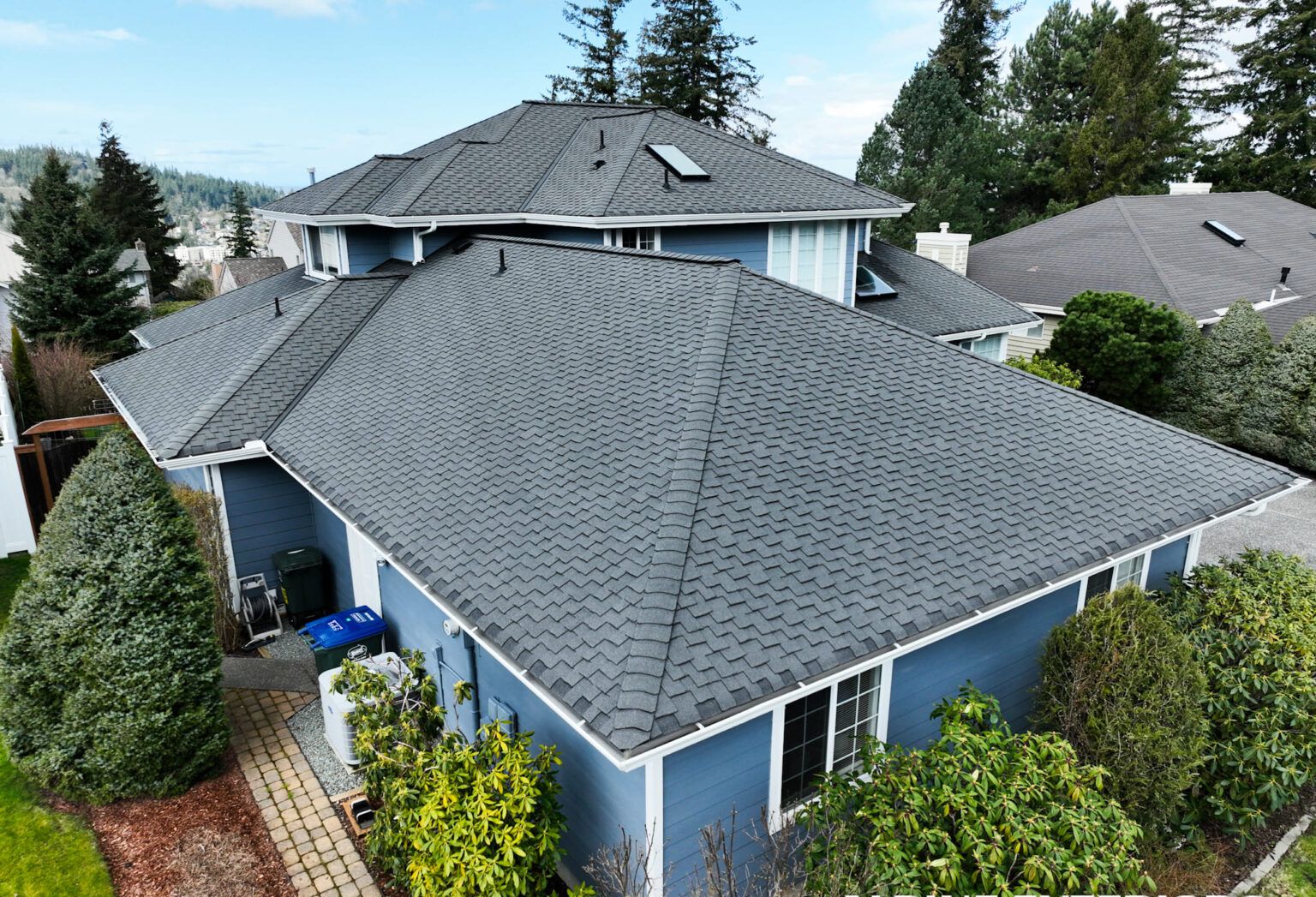
If you're pricing out a re-side in Odessa, you're probably finding that "how much does James Hardie siding cost" doesn't have a single answer — and it shouldn't. A one-story ranch off Gunn Highway with simple rooflines prices very differently than a two-story lakefront home near Lake Tarpon with dormers, multiple gables, and a screened lanai to work around. This page walks through the real cost ranges Alpine Exteriors sees on Pasco County projects, what actually moves those numbers, and how to read a quote so you're comparing contractors fairly instead of just comparing bottom-line totals.
Alpine Exteriors installs James Hardie fiber cement siding throughout the greater Tampa Bay area — Tampa, Wesley Chapel, Lutz, Land O' Lakes, New Port Richey, Plant City, Zephyrhills, and Odessa — so the ranges below reflect what this specific region actually costs to build in, not a national average pulled from a market with different labor rates, different code requirements, and a very different climate.
For a full re-side using James Hardie lap siding on a typical single-family home in the Odessa/Pasco County market, most projects land in a wide range because home size and complexity vary so much. Smaller, simpler homes sit toward the low end and larger two-story homes with heavy trim work, shake or board-and-batten accents, and extensive tear-off sit toward the high end. Rather than quote a single number that won't apply to your house, use the table below to see which factors push a project toward the low end of the range versus the high end.
| Cost Factor | What It Covers | Typical Impact (Low to High) |
|---|---|---|
| Home size (total siding square footage) | Larger homes cost more in total but often less per square foot due to efficiencies of scale | Low: under 1,800 sq ft | High: 3,000+ sq ft two-story |
| Siding profile | Traditional lap siding vs. shingle/shake panels, vertical board-and-batten, or mixed profiles | Low: single lap profile | High: multiple profiles/accent mixing |
| Tear-off and disposal | Removing existing siding (stucco, vinyl, wood, or old fiber cement) and hauling debris | Low: single layer, easy access | High: multiple layers, stucco removal, difficult disposal access |
| Substrate repair | Replacing rotted or moisture-damaged sheathing found once old siding comes off | Low: little to no damage found | High: widespread sheathing replacement |
| Trim, fascia, and soffit detail | Window/door trim wraps, corner boards, frieze boards, fascia, and soffit work | Low: minimal trim package | High: extensive custom trim detail |
| Finish | Factory-applied ColorPlus finish vs. field/site painting after installation | Low: field-painted standard color | High: premium ColorPlus finish |
| Roof and wall complexity | Number of stories, dormers, gables, bump-outs, and cut-in access around lanais or pools | Low: single-story, simple rectangle | High: two-story with multiple rooflines |
| Permitting and code compliance | Permit fees, inspections, and installation methods that meet Florida Building Code wind-pressure and water-intrusion requirements for the home's exposure | Low: standard permit | High: additional engineering or inspection requirements |
Two Odessa homes of similar square footage can still land on opposite ends of this range once you factor in how much of the existing wall assembly needs to be rebuilt versus simply re-clad. Homes built in the 1980s and 1990s with original wood siding or early-generation fiber cement have often absorbed decades of Florida humidity, and it's common to find soft sheathing at window sills, corner boards, and anywhere flashing wasn't detailed well the first time. That's not a defect specific to Odessa — it's just what happens to wood-based sheathing in a climate that stays warm and humid most of the year — but it does mean the "surprise" repair line is more likely here than in a drier climate.
Beyond the table above, a handful of Pasco County-specific realities tend to shift a quote:
A written proposal that's actually useful to compare should spell out, at minimum:
If a quote is a single lump-sum number with no breakdown, ask for the itemized version before comparing it to anyone else's bid. It's the only way to know whether one contractor is cheaper because they're more efficient, or cheaper because they've quietly left out tear-off, sheathing repair, or a proper weather barrier.
Because the line items above can vary so much between bids, comparing two proposals by their bottom line alone is close to meaningless. A few things worth checking directly:
Most siding contractors, Alpine Exteriors included, can point homeowners toward third-party financing options for a re-side, and many homeowners also use a home equity line of credit or a renovation-focused loan product through their bank or credit union. Terms, rates, and qualification vary by lender and by your individual credit profile, so it's worth getting quotes from more than one financing source rather than accepting the first offer presented alongside a siding bid.
On the insurance side, it's worth understanding what a re-side does and doesn't change. Florida's wind mitigation credit system, documented on the OIR-B1-1802 Uniform Mitigation Verification Inspection Form, is driven mainly by roof shape, roof-to-wall connections, and opening protection (impact windows, shutters) — not by exterior wall cladding. New siding by itself usually won't trigger a big premium change through that form. That said, two things are still worth doing: tell your insurance agent about the project so your dwelling replacement cost estimate stays accurate, and keep your Florida Product Approval documentation and contractor invoices on file. If you ever need to file a wind or water-intrusion claim down the road, having proof that the siding was installed to code with the correct product approval can matter during that claims process. Given how much the Florida property insurance market has shifted over the past few years, an accurate, well-documented exterior is a small piece of protecting your position with your carrier.
For most homeowners in this climate, yes, and the reasoning is mostly about what Florida does to exterior materials over time rather than looks alone. Fiber cement doesn't provide a food source for termites, holds up better than vinyl under sustained UV exposure without going brittle or badly faded, and resists the wind-driven rain that comes with tropical systems better than lighter-weight claddings when it's installed and flashed correctly. Vinyl still has a place on some budgets, but the higher upfront cost of fiber cement is generally offset by a longer service life in a climate this demanding.
Timelines depend heavily on the size and complexity factors covered above, and Florida's wet season can add scheduling delays that a drier climate wouldn't. A straightforward single-story home moves faster than a two-story home with heavy trim detail or unexpected sheathing repair once tear-off begins. Rather than commit to an exact day count before a contractor has seen the house, ask for a range and for how weather delays are handled in the contract.
Not usually in a direct way. The wind mitigation credits most Florida insurers apply are tied to roof characteristics and opening protection documented on the OIR-B1-1802 form, not wall cladding. New siding can still matter indirectly — it affects your home's overall condition and replacement cost estimate — so it's worth a conversation with your agent after the project, and worth keeping your product approval and installation paperwork in case you ever need it for a claim.
Some, but less than homeowners sometimes expect. Odessa sits inland from the Gulf, so it doesn't see the direct salt spray exposure that waterfront homes in coastal Pinellas County deal with, and that's genuinely one less concern for siding durability here. But Odessa homes are still built to the same Florida Building Code wind provisions as the rest of the Tampa Bay region, still sit in a humid, mold-pressure climate for most of the year, still get intense UV exposure, and still deal with the same subterranean termite pressure as the rest of Pasco County. In practice, that means the siding specification doesn't change much between an Odessa home and a coastal one — it's mainly the salt-air consideration that drops off the list.
Ranges are useful for budgeting, but the only number that actually matters is the one that reflects your specific home — its square footage, its current siding, its roofline, and what's underneath once tear-off starts. Alpine Exteriors serves Odessa as part of our Pasco County service area, alongside Tampa, Wesley Chapel, Lutz, Land O' Lakes, New Port Richey, Plant City, and Zephyrhills, and we're happy to walk your property, point out anything we can see before tear-off (and flag what we won't know until we're into it), and put together an itemized proposal you can actually compare against other bids. Florida contractor license RB29003900. Reach out to schedule a site visit and get a written estimate for your James Hardie siding project.