
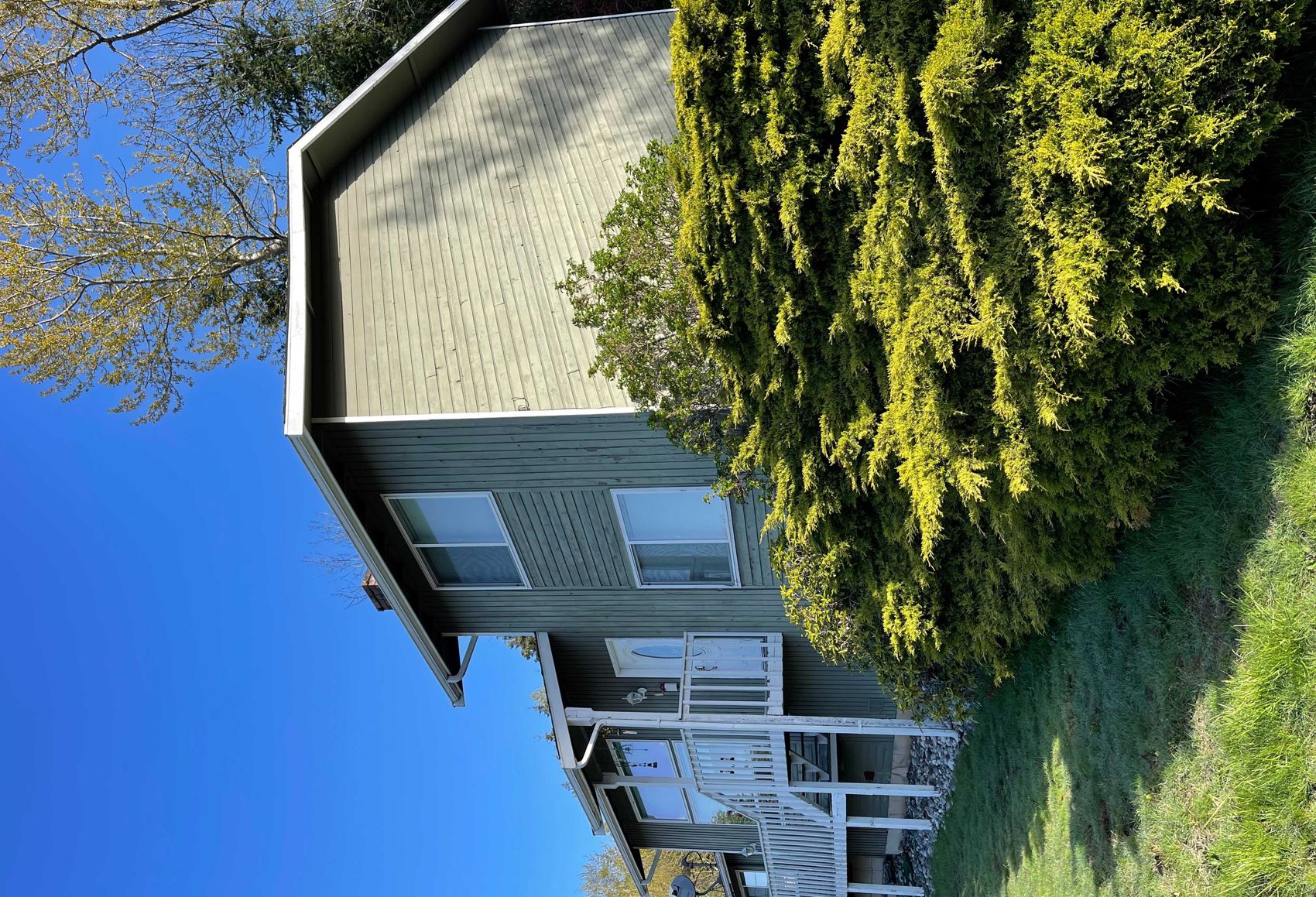
After a windy afternoon or a tropical system pushes through Tampa Bay, it's worth walking the perimeter of your house and looking up, not just at eye level. Wind damage to siding rarely announces itself with a dramatic bang — more often it shows up as small gaps that widen over the following weeks. The clearest sign is a panel or section that has visibly separated from the wall, sometimes just a quarter-inch, sometimes enough that you can see the house wrap or sheathing behind it. Check whether a suspect panel flexes or rattles when pressed from the ground with a gloved hand or a broom handle — healthy siding sits flat and doesn't move.
Other clues include siding that has popped out of its locking channel at the bottom edge, nail heads that have backed partway out of the panel, or a faint clicking or flapping sound on breezy days that wasn't there before. Look closely at corners, around windows, and near the roofline, since these are stress points where wind uplift concentrates first. If a panel looks slightly bowed compared to its neighbors, or a seam that used to be tight now shows a sliver of daylight, that's early separation, not just cosmetic wear. Homeowners in Wesley Chapel, Lutz, and Land O' Lakes with two-story homes should check upper-story siding with binoculars rather than climbing a ladder after a storm, since wind loads are typically higher at that elevation.
Tampa Bay's siding problems are shaped by a specific combination of conditions that don't apply everywhere. Hurricane-season wind loads are the biggest factor — even storms that stay well offshore or downgrade before landfall can generate gusts strong enough to work siding loose over repeated cycles of flexing. Siding is designed to handle some movement, but panels installed with nails driven too tight, spaced too far apart, or without enough clearance for expansion are far more likely to pull loose the first time real wind uplift hits them. Wind-driven rain compounds this: once a panel lifts even slightly, water gets behind it during the next storm, and that moisture accelerates corrosion of fasteners and softens the wood or sheathing underneath, which further loosens whatever is holding the siding on.
Add this region's near-constant humidity, and water trapped behind siding stays damp far longer than it would in a drier climate, creating conditions for mold growth on the back side of panels and on sheathing that's often invisible until the siding comes off for repair. Intense UV exposure through most of the year also makes vinyl and some composite products more brittle over time, so panels that have baked in the sun for a decade or more are more prone to cracking or losing their grip in the locking channel under wind stress, rather than flexing and recovering the way newer material would. For homes closer to the Gulf, salt-laden air adds another layer, corroding exposed fasteners and trim faster than it would inland in Plant City or Zephyrhills. Termites are a separate but related concern in this region — they don't damage vinyl or fiber cement siding itself, but they can quietly compromise the wood furring strips or sheathing behind it, so a panel that seems to be pulling away for no clear reason sometimes turns out to be attached to wood that no longer has much holding strength.
Not every loose panel is an emergency, but the timeline for addressing it matters more here than in a drier, calmer climate. A single panel that's slightly separated but still fully attached at the top can often wait a few weeks for a scheduled repair, especially outside of hurricane season. What changes the urgency is any sign that water is actively getting behind the siding — staining, a musty smell near an exterior wall, or soft drywall on the interior side. That points to moisture already reaching the sheathing, and in Florida's humidity that can turn into a mold problem within days, not months.
It's also worth treating loose siding as more urgent if a named storm or tropical system is approaching. A panel that's marginally attached today can become airborne debris in a strong gust, which creates a hazard for neighboring property and often turns a simple repair into a full-panel or full-wall replacement once wind gets behind the gap and peels back adjacent sections. If separation shows up with a storm in the forecast, it's worth getting it looked at before landfall rather than after. Outside of storm season, scheduling an inspection within a week or two is usually sufficient.
Whether a loose section needs a spot repair or a broader replacement usually comes down to three things: how much of the wall is affected, the age and condition of the surrounding siding, and what's found once the panel comes off. A single panel that popped loose from wind uplift, with dry sheathing underneath and fasteners in reasonable shape, is often a straightforward repair — re-securing or replacing that one section, sometimes with a matching salvaged piece if the product profile is discontinued, which does happen with older vinyl siding.
Replacement becomes the more honest recommendation when the loose siding is a symptom of something larger: sheathing that's gone soft from trapped moisture, multiple panels affected across one elevation, fasteners that are visibly corroded throughout a section, or siding old enough to be brittle and prone to cracking on removal. In those cases, patching one spot often just relocates the problem to the panel next door within a season or two. It's fair to note the tradeoffs: a repair is cheaper and faster, often a few hundred dollars for a small section, but it won't address underlying moisture or fastening issues elsewhere on the wall. A full elevation replacement costs more — commonly several thousand dollars depending on square footage and material — but gives a chance to correct installation problems, upgrade underlayment, and confirm the new material carries current Florida Product Approval for the wind zone. Alpine Exteriors typically recommends pulling a section of the affected panel during the initial inspection so the homeowner can see the sheathing condition firsthand before deciding which way to go, rather than guessing from the outside.
Some prevention is about the material and installation, and some is about maintenance habits homeowners can keep up themselves.
None of this makes siding wind-proof, but it meaningfully reduces how often small separations turn into bigger repairs.
For a single small panel with no visible water damage, a homeowner comfortable on a ladder can sometimes tap a popped panel back into its locking channel, but it's easy to over-drive a fastener or miss that the sheathing underneath has already softened. If the same spot has come loose more than once, that's usually a sign of an underlying issue worth having a contractor look at rather than repeating a DIY fix.
Many homeowner policies in Florida do cover wind damage to siding, though coverage details, deductibles, and whether a named storm was involved all affect the outcome. An OIR-B1-1802 wind mitigation inspection on file can also affect your premium and, in some cases, claim handling. It's worth documenting the damage with photos and calling your insurer before starting repairs, since some policies require an adjuster to see the damage first.
If there's no sign of water intrusion and no storm in the immediate forecast, a few weeks is usually not a problem. That said, Florida's humidity means exposed sheathing starts absorbing moisture from the air even without rain, so a few weeks shouldn't stretch into a full season, especially heading into hurricane season.
No. Vinyl siding is generally more susceptible to wind separation than fiber cement because it's lighter and relies more heavily on its locking channel and fastener spacing, while fiber cement is heavier and typically screwed or nailed more rigidly. That doesn't make fiber cement immune to wind damage, but the failure mode is often different — cracking rather than lifting.
If siding on your home in Tampa, Wesley Chapel, Lutz, Land O' Lakes, New Port Richey, Plant City, or Zephyrhills has pulled away after a windy day, it's worth having it looked at before the next storm finds the gap. Alpine Exteriors (FL license RB29003900) inspects the siding, checks the sheathing underneath, and gives a straight answer on whether a section repair or fuller replacement makes sense for your situation. Reach out to schedule a visit.