
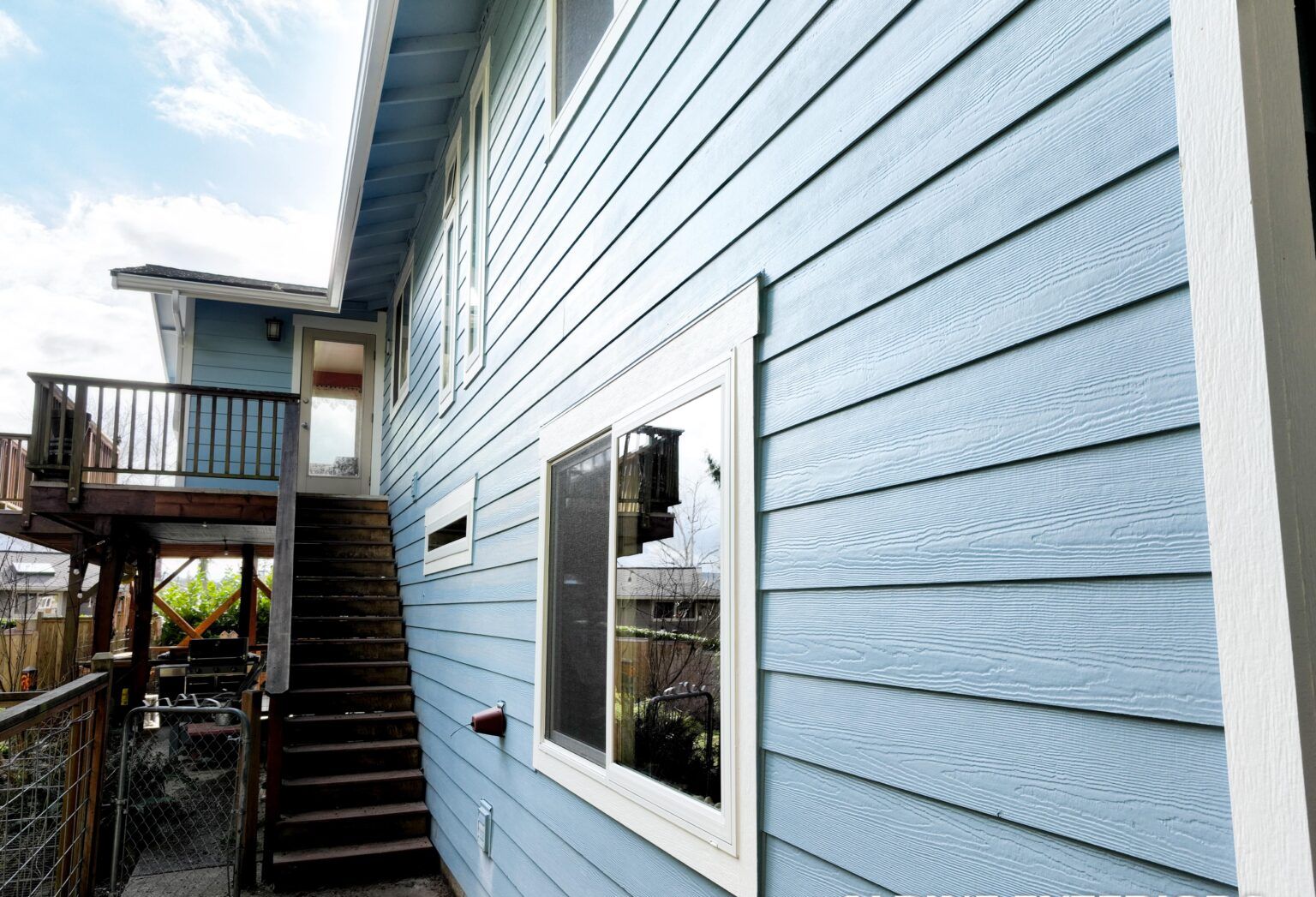
If your Holiday home needs to shrug off Gulf-front humidity, salt-laden air drifting in from the Anclote River and the Gulf of Mexico, and the wind-driven rain that comes with a Pasco County tropical system, James Hardie fiber cement is usually the stronger long-term choice — especially on homes within a mile or two of the water, or on any home where the owner wants a look closer to real wood board-and-batten or shake without wood's rot risk. Vinyl siding still has a legitimate place here: it's the lower-upfront-cost option, it installs faster, and on a well-shaded, inland lot away from direct salt exposure — think the interior stretches of Land O' Lakes or Zephyrhills — it can perform acceptably for a couple of decades if it's a heavier panel rated for Florida wind zones. The real trade-off is how much direct coastal exposure and storm risk your specific lot carries versus how much you want to spend today. Alpine Exteriors installs both products across Tampa Bay and can walk a Holiday homeowner through the wind and moisture considerations specific to their address, but the short version: fiber cement handles wind-driven rain, humidity, and UV better over a 30-plus-year horizon, while vinyl is the budget-conscious pick for homeowners planning a shorter hold period or working with a tighter renovation budget.
James Hardie fiber cement siding is a blend of cement, sand, and cellulose fiber pressed into planks, panels, or shingle-look pieces, then factory-primed or fully finished with Hardie's ColorPlus coating. In a place like Holiday, where the Gulf sits close enough that salt spray reaches inland on onshore winds, fiber cement's resistance to moisture absorption matters more than it would further from the coast. It doesn't provide a food source for termites, which is a real consideration in Pasco County given how active subterranean termites are in the sandy soil common to this part of Florida. It also doesn't soften, warp, or delaminate the way some lower-grade composite products can under sustained humidity. James Hardie's plank and panel lines carry Florida Product Approval and are commonly specified to meet Florida Building Code wind-load requirements for the wind speeds seen in Pasco County, which matters both for code compliance and for the wind mitigation credits an insurer may recognize on an OIR-B1-1802 form. The material is heavier and less flexible than vinyl, so it holds up better against wind-driven rain intrusion at laps and won't rattle or bow in gusty conditions the way thinner panels sometimes do.
The honest drawbacks: fiber cement costs more to install because it requires specialized blades, more labor hours, and a crew trained in Hardie's fastening and joint-treatment specifications; it's heavier to handle and ship; and while ColorPlus finishes are baked-on and fade-resistant, unfinished or field-painted fiber cement will eventually need repainting, typically on a longer cycle than most people assume but not never. It's also not a DIY-friendly product — correct fastener spacing, gapping, and flashing behind butt joints are what actually deliver the moisture performance the product is capable of, so installer quality matters as much as the material itself.
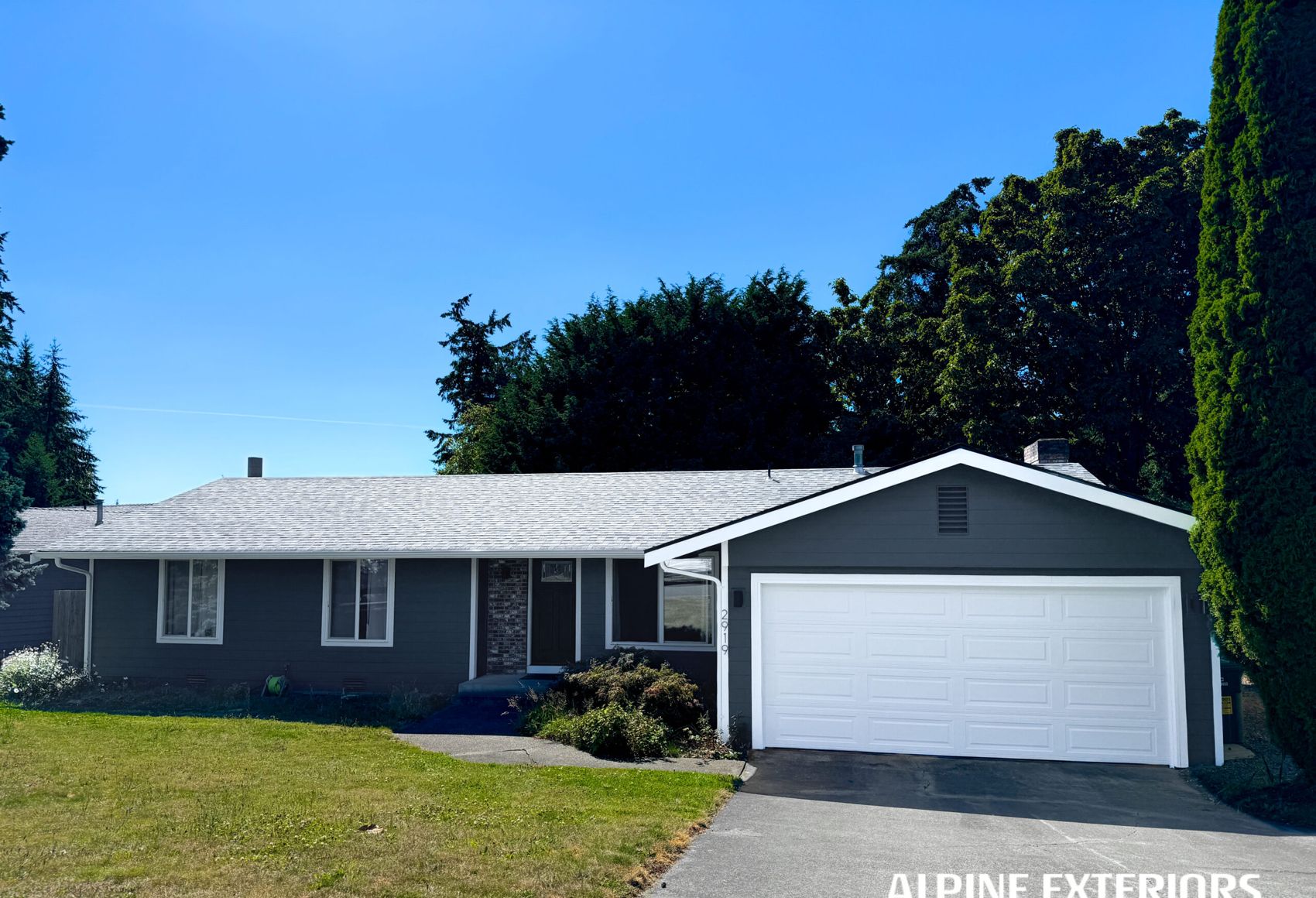
Vinyl siding is an extruded PVC product available in a wide range of profiles, from traditional clapboard to Dutch lap and shake-style panels, and it remains popular in Tampa Bay because it's inexpensive relative to fiber cement, goes up quickly, and never needs painting. Modern vinyl aimed at Florida markets is formulated with UV-stabilizing additives to resist the fading and chalking that intense Gulf Coast sun caused in older-generation vinyl, and heavier-gauge panels are rated for wind speeds that can meet Florida Building Code requirements when installed with the correct fastening pattern and starter strip. Vinyl doesn't rot and termites have no interest in it, which covers two of Pasco County's more common siding failure modes.
Where vinyl struggles here is heat and impact. Dark vinyl colors absorb more solar heat and can warp or buckle in direct west- or south-facing exposure, which is a real consideration on open Holiday lots without mature tree canopy. Vinyl is also more prone to cracking on impact — hail, a stray branch in a tropical storm, or a lawn mower kick-up — and once a panel cracks, it's a repair rather than a spot-fix, since discontinued colors can be hard to match years later. Wind-driven rain is the other weak point: vinyl relies on lapped, non-sealed joints for water shedding, so in a wind-driven downpour some moisture reaching behind the panels is normal by design, which is why correct house wrap and flashing detail matters even more under vinyl than under fiber cement. None of this makes vinyl a bad choice — it's a legitimate, code-compliant, lower-cost option — but it's a different risk profile than fiber cement, not simply a cheaper version of the same thing.
The table below reflects how these two products typically compare for a Holiday, FL installation, assuming each is installed correctly to Florida Building Code wind and moisture requirements. Treat the cost figures as planning ranges, not quotes — real-world numbers vary with home size, trim complexity, and how much of the existing wall assembly needs repair before new siding goes on.
| Factor | James Hardie Fiber Cement | Vinyl Siding |
|---|---|---|
| Installed cost | Roughly $9–$14 per sq. ft. installed, varying with trim and prep work | Roughly $4–$9 per sq. ft. installed, varying with panel thickness |
| Typical lifespan | 30–50 years, with periodic repainting if not a factory ColorPlus finish | 15–30 years, shorter on unshaded, sun-exposed elevations |
| Maintenance | Occasional caulk and paint touch-up; rinse to remove salt film near the coast | Rinse periodically to remove salt film and pollen; no painting required |
| Appearance | Authentic wood-grain, shake, and board-and-batten profiles; holds crisp paint lines | Wide color and profile range but a more uniform, less dimensional look up close |
| Wind-driven rain performance | Heavier panel and sealed joint detailing resist water intrusion better | Lapped joints allow designed drainage but rely more on the underlying wrap |
| Impact resistance | Resists dents and cracking from wind-blown debris better | More prone to cracking on hard impact; color-matched patch repairs can be difficult |
For most Holiday addresses, the deciding factors are proximity to the Gulf and how long the owner plans to stay in the home. Properties near the Gulf Harbors canals, Baillies Bluff Road, or anywhere salt-laden air is a daily reality benefit from fiber cement's resistance to moisture absorption and its resistance to the pitting and chalking salt exposure can accelerate in vinyl over time. Homes with more tree cover further inland, toward Land O' Lakes or Wesley Chapel, where sun exposure and salt drift are both lower, are reasonable candidates for a well-rated vinyl product, particularly if the project budget is the primary constraint.
Alpine Exteriors generally recommends fiber cement on full re-sides where the existing sheathing or house wrap is also being replaced, since that's the point where getting the moisture-management details right costs the least incremental money — it's far cheaper to install a proper drainage plane and Hardie correctly the first time than to retrofit it later. For a homeowner planning to sell within the next few years, vinyl's lower cost can make more sense, since it recovers a reasonable share of its cost at resale without requiring the buyer to place a premium on a material they may not personally value as highly. Whichever route a Holiday homeowner takes, Alpine Exteriors (Florida contractor license RB29003900) recommends confirming the specific Florida Product Approval for whatever panel or plank is quoted, since not every color or profile within a manufacturer's line carries the same wind rating — a detail that affects both code compliance and what shows up on a wind mitigation inspection.
In most cases, yes, particularly on homes exposed to sustained humidity and salt air. Fiber cement doesn't absorb moisture the way wood does, so its main aging factor here is UV exposure and, if left unfinished, repainting cycles. Vinyl can also last a long time if it's a heavier panel installed correctly and kept out of intense afternoon sun, but thinner or older vinyl is more likely to show heat warping or brittleness after repeated hurricane seasons of UV and humidity cycling. The lifespan gap tends to show up more in edge cases — direct sun, storm impacts, coastal proximity — than in a mild, shaded inland yard.
Siding material itself isn't typically a line item on the OIR-B1-1802 wind mitigation inspection form, which focuses on roof shape, roof-to-wall connections, opening protection, and similar structural items — but the overall wind rating and installation quality of your exterior envelope can factor into an insurer's broader underwriting picture. Code-compliant siding installed with current Florida Product Approval is part of showing a well-maintained, storm-ready home. It's worth asking your insurance agent directly how they weigh siding condition, since carriers vary.
Neither product should be thought of as a liability when installed to Florida Building Code specifications and matched to the correct wind rating for your address. Vinyl is not structural and doesn't burn as readily as untreated wood, though it can soften near high heat sources. Both materials, installed with the fastening schedule and panel rating appropriate for Pasco County's wind speeds, are code-compliant choices; the real risk in either case comes from under-spec panels, incorrect fastening, or skipped flashing details, not from the base material itself.
It's possible, and some Holiday homeowners do it deliberately — fiber cement on the more exposed, street-facing, or sun-battered elevations and vinyl on a sheltered rear or side wall. It's worth deciding this upfront with a contractor rather than mixing reactively after a partial failure, since matching trim, corner details, and paint sheens across two materials takes some planning to look intentional rather than patched.
Every Holiday lot carries a slightly different mix of sun, salt, and wind exposure, and the right siding choice depends on those specifics more than on a blanket recommendation. Alpine Exteriors, Florida contractor license RB29003900, serves Holiday and the rest of Pasco County alongside Tampa, Wesley Chapel, Lutz, Land O' Lakes, New Port Richey, Plant City, and Zephyrhills, and can walk your property, check its Florida Product Approval requirements, and put together a straightforward comparison of James Hardie and vinyl options — with real cost ranges — before you commit to either one.