
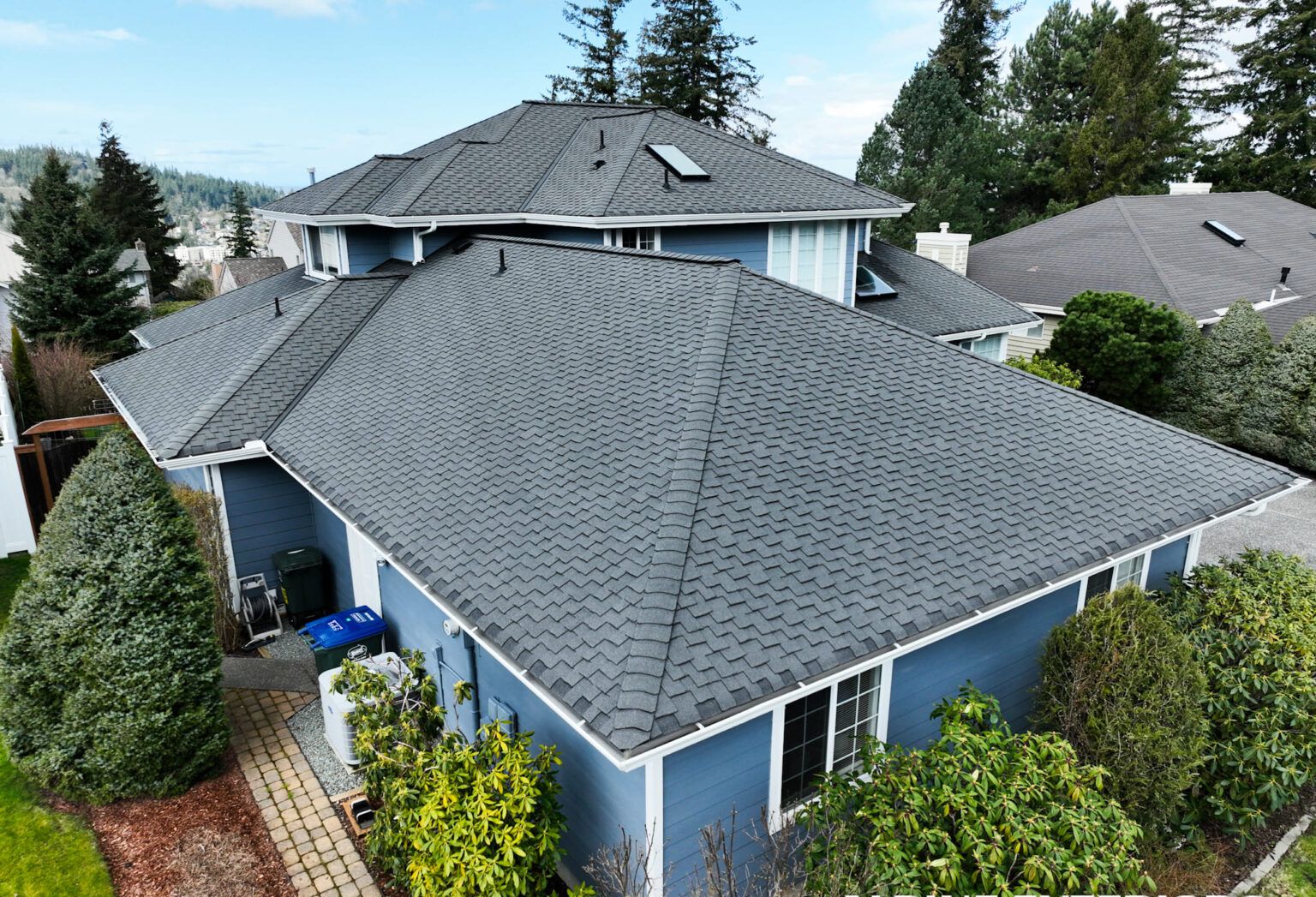
If your home in Lutz or elsewhere in Pasco County sits fully exposed to open sky and wind, gets a lot of direct afternoon sun, or you plan to own it for fifteen-plus years, James Hardie fiber cement siding is usually the better long-term match. It holds paint and color longer under Florida's UV load, doesn't give termites anything to feed on, and carries strong wind and impact performance when installed to its Florida Product Approval. If your priority is the lowest upfront cost, you're re-siding a rental or a shorter-hold property, or the lot is smaller and more sheltered by mature tree cover, a quality wind-rated vinyl product installed to Florida Building Code standards can still be a sound, budget-friendly choice. Neither material is wrong for this climate — the right pick depends on your budget, how long you plan to stay in the home, and how exposed your specific lot is during Tampa Bay's storm season.
James Hardie siding is manufactured from a mixture of Portland cement, sand, and cellulose fibers, pressed and cured into lap planks, shingle-style panels, and vertical panel siding. Hardie produces lines engineered specifically for Florida's humidity and storm exposure, backed by Florida Product Approval numbers that local building departments, including Pasco County's, review as part of a siding permit. Because it's cement-based rather than organic, fiber cement gives termites nothing to chew on, doesn't rot when it stays damp after a summer downpour, and holds its finish under the intense, near-constant UV exposure Tampa Bay sees for most of the year.
The tradeoffs are real. Fiber cement is heavy — a pallet of it weighs several times what the same run of vinyl does — so installation takes longer and costs more in labor, and it has to go up following Hardie's exact fastening schedule and the Florida Building Code's wind-load requirements, or the wind and impact ratings the product is approved for don't actually apply to the finished wall. It also needs caulking at trim joints and butt seams and, if it isn't a factory-finished ColorPlus product, repainting periodically to keep its weather seal intact. Installed correctly, though, it's one of the more storm- and humidity-resilient claddings available in this market.
Vinyl siding is an extruded PVC panel product that's been a mainstay in Florida residential construction for decades because it's light, comes pre-colored so there's no painting after installation, and generally costs less upfront than fiber cement for the same square footage. Modern vinyl lines include insulated backer panels, thicker-gauge panels that resist minor impacts and wind flutter better than economy-grade vinyl, and wind-rated products that carry their own Florida Product Approval numbers for our design wind speeds. It never needs painting, doesn't feed termites, and a yearly rinse with a garden hose is usually all the maintenance it needs.
The drawbacks show up over time rather than on day one. Florida's UV load fades vinyl color faster than it fades a factory-baked Hardie finish, and dark colors fade the most, so a saturated navy or dark green vinyl installed today may look noticeably lighter in ten to fifteen years. The material also becomes more brittle as it ages in the heat, so an older panel is more prone to cracking from lawn equipment or wind-blown debris than a newer one. And because vinyl is only as wind-resistant as its installation, panels that are over-nailed, spaced incorrectly, or that use a builder-grade product not rated for our wind zone are the pieces we most often see pull loose in a strong summer storm — the material itself usually isn't the weak point, the product grade and installation are.
Set side by side, the two materials trade off in fairly predictable ways once you factor in Tampa Bay's climate.
| Factor | James Hardie Fiber Cement | Vinyl Siding |
|---|---|---|
| Upfront cost | Higher material and labor cost; installation takes longer due to the product's weight and fastening requirements | Lower material cost and faster installation; generally the less expensive option upfront |
| Lifespan | Often decades of service with proper installation and periodic caulk and paint upkeep | Typically a shorter service life, especially in high-UV, high-heat exposure like ours |
| Maintenance | Periodic caulk inspection; repainting every several years unless a factory-finished ColorPlus product | Minimal — occasional washing; no painting, but faded panels can't be spot-repainted to match |
| Wind and storm performance | Strong wind and impact ratings when installed to its Florida Product Approval and fastening schedule | Can perform well with a wind-rated, code-approved product properly installed; lower-grade vinyl is the more common storm casualty |
| Humidity and moisture tolerance | Cement-based composition won't rot or support fungal growth; handles Tampa Bay's humidity well | Doesn't absorb moisture itself, but poor installation can let wind-driven rain get behind panels |
| Appearance | Authentic wood-look plank, shingle, and panel textures; holds color well over time | Wide color range and lower-profile options; can look and feel less substantial up close, especially in bright direct sun |
Lutz and the surrounding Pasco County communities we serve — Wesley Chapel, Land O' Lakes, New Port Richey, Zephyrhills, and Plant City — all fall under the same Florida Building Code wind provisions. This area isn't in the state's High-Velocity Hurricane Zone that covers Miami-Dade and Broward, but homes here still have to meet a real design wind speed and wind-borne debris standard, particularly on exposed second stories, gable ends, and homes near open fields or retention ponds with fewer windbreaks. Whichever siding you choose, Alpine Exteriors verifies the product's Florida Product Approval number and installs to the fastening schedule that approval requires, since that paperwork trail matters if you ever need to document the work for insurance or resale.
Humidity is the other constant here. Pasco County sits deep in Tampa Bay's subtropical humidity, with a long, wet summer season and homes that hold moisture in the air for months at a time even between storms. Fiber cement's cement-based composition doesn't feed mold or mildew and won't swell or rot the way an organic material could, which is a genuine advantage on shaded, north-facing walls or heavily landscaped lots where siding stays damp longer after a storm. Vinyl doesn't absorb water either, but it depends entirely on the house wrap and flashing behind it doing their job — if wind-driven rain gets behind a panel during a tropical system, it's the wall assembly underneath that needs to dry out and stay mold-free, not the vinyl itself.
Termite pressure is worth factoring in too. Subterranean termites are active throughout Pasco County, and while neither Hardie nor vinyl feeds termites directly, the wood trim and furring strips often used behind either siding type can become a target if they're not properly flashed and sealed. That's as much an installation detail as a material choice, and it's one more reason the crew doing the work matters as much as the product itself.
Some homeowners also ask whether new siding affects their wind mitigation inspection for insurance purposes. The state's uniform wind mitigation inspection form, OIR-B1-1802, focuses mainly on roof covering, roof-to-wall connections, and opening protection rather than wall cladding, so new siding by itself typically won't change that discount. It's common, though, for homeowners to bundle a siding replacement with other exterior hardening work — impact-rated windows, updated roof-to-wall connections — before requesting that inspection.
For a typical owner-occupied home in Lutz where you plan to stay for a decade or more, we usually point toward James Hardie: the color retention under our UV load, the wind performance when installed correctly, and the resistance to humidity-driven problems tend to be worth the higher upfront cost over a 20- to 30-year ownership horizon. For an investment property, a home going up for sale in the next few years, or a tighter budget where a wind-rated, code-approved vinyl product fits better, vinyl remains a legitimate option — the key is choosing a product actually rated for our wind zone rather than a builder-grade panel installed loosely to save labor time. Alpine Exteriors walks through both options on-site because the right answer really does change based on your home's exposure, roofline, and how long you're planning to own the house.
Yes, in most cases. Fiber cement material costs more per square than vinyl, and because Hardie panels are heavier and require a specific fastening pattern to meet its Florida Product Approval, installation labor runs higher too. The gap narrows over the life of the siding, though, since Hardie typically goes longer between repaint cycles and tends to hold up longer overall, so the higher upfront number isn't the whole cost picture.
A vinyl product that's rated for our design wind speed, carries its own Florida Product Approval, and is installed to that approval's fastening schedule can perform reasonably well in a hurricane. Most of the storm-related vinyl failures we see afterward trace back to older, lower-grade panels or installations where nailing spacing wasn't followed, not to vinyl as a category being unable to handle wind. Fiber cement generally has a wider margin for error in wind-driven rain and airborne debris, but well-installed, wind-rated vinyl is not an unreasonable choice.
It helps in the sense that the material itself is cement-based and won't rot, swell, or feed fungal growth the way an organic material could, which matters on shaded or heavily landscaped walls that stay damp longer after our summer storms. It doesn't make a home immune to mold, though — that depends on the house wrap, flashing, and ventilation behind any siding material doing their job, fiber cement or vinyl.
Most full siding replacements in unincorporated Pasco County and the surrounding Tampa Bay municipalities require a building permit, and the permit review will reference the Florida Product Approval number for whichever siding product is installed. Alpine Exteriors, FL license RB29003900, handles that permitting and approval documentation as part of a siding project so you have the paperwork on file if it's ever needed for insurance or resale.
Every Lutz property is a little different — roof pitch, tree cover, sun exposure, and how open the surrounding lot is all change which siding makes more sense for your home. If you'd like a straight comparison of James Hardie and vinyl for your specific house, including current material and installed cost ranges for your square footage, request an on-site estimate and we'll walk the exterior with you, point out anything your current siding is already telling us, and lay out both options side by side before you decide.