
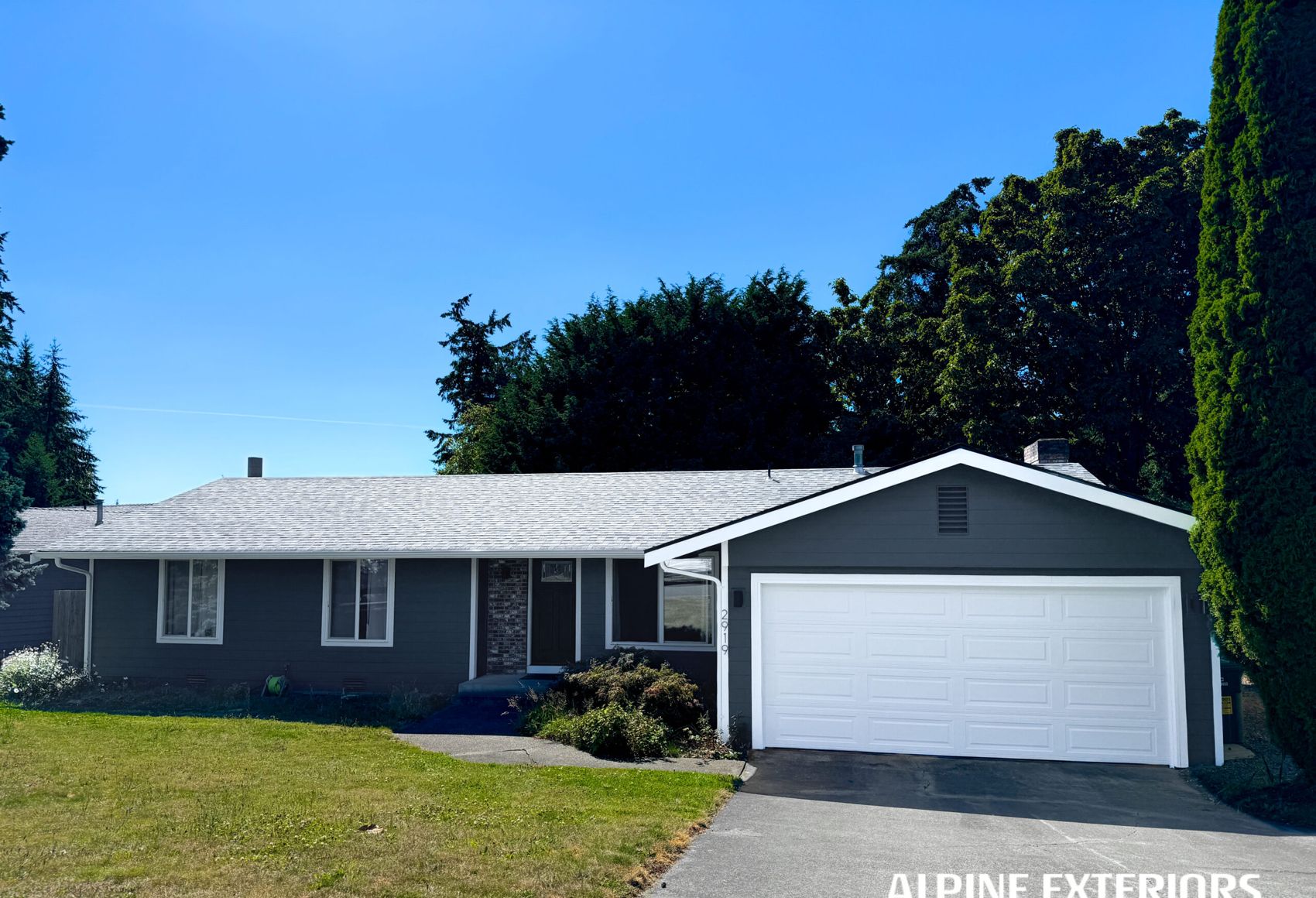
If you're re-siding a home in Starkey Ranch or elsewhere in Pasco County, the choice usually comes down to two materials: James Hardie fiber cement and vinyl. Both are sold throughout Tampa Bay, both can be installed to meet current code, and both have owners who are happy with them. But they behave very differently once they're facing a Gulf-adjacent climate — afternoon thunderstorms that drive rain sideways, humidity that never fully lets up, intense UV load for most of the year, and the wind speeds Pasco County's building code is written around. This page walks through both materials on their own, then head-to-head, so you can make a decision based on how your specific house and budget line up, not on which product a salesperson happens to carry.
For most two-story homes, corner lots, and anything close to open water or a retention pond edge in Starkey Ranch, James Hardie fiber cement is the more durable long-term choice — it holds paint and color better under Florida UV, resists wind-driven rain intrusion better when flashed and installed correctly, and isn't a food source for termites. Vinyl is a legitimate option for owners who want to keep upfront cost down, are re-siding a rental or a home they don't plan to hold for decades, or have a simpler single-story elevation with generous soffit overhangs that keep most rain off the wall. It is not a bad product — it's a different set of trade-offs, and for the right budget and situation it's a reasonable call.
James Hardie siding is a cement, sand, and cellulose fiber composite, available in lap, board-and-batten, and shingle profiles, either factory prepainted through Hardie's ColorPlus finish or field-painted after installation. It carries Florida Product Approval for use in the state and is engineered to be installed to meet the wind and water-resistance provisions of the Florida Building Code once fastening schedules and house-wrap details are followed. Because it's essentially an inorganic cement product, it doesn't provide a food source for subterranean or drywood termites, which matters in Pasco County where termite pressure is a routine part of home maintenance, not an occasional concern. It also doesn't soften, warp, or swell from humidity the way wood-based sidings can, and it holds up well to the intense, near-year-round UV exposure that fades cheaper synthetic products faster here than in northern climates.
The trade-offs are real, though. Fiber cement is heavier and more labor-intensive to install than vinyl, which pushes labor cost up and means installer skill matters more — poor flashing or fastening on any siding system can let wind-driven rain behind the wall, but the consequences of a sloppy Hardie install (cracked boards, exposed fastener corrosion, caulk failures) are more expensive to fix than a missed vinyl panel. Field-painted Hardie will need repainting on a normal exterior paint cycle, though ColorPlus factory finishes are formulated to hold color longer under UV than standard field paint. It's also a harder material to work with when a homeowner wants to do their own patch repairs later.
Vinyl siding is an extruded PVC panel product, sold in a range of profiles and a more limited practical color range than fiber cement (dark colors are more prone to heat distortion in direct sun, which is worth knowing before you pick a color for a west-facing elevation in Florida). Modern vinyl rated for high-wind regions is tested and labeled for wind resistance, and products used in Pasco County installations should carry the Florida Product Approval and wind-load rating appropriate for the site — this isn't the vinyl your grandparents' house had. It's lighter, faster to install, and generally the lower-cost option up front, which is a legitimate factor for a lot of homeowners.
Vinyl's weak points in this climate show up over time rather than on day one. It can become brittle with prolonged UV exposure over many years, and panels that aren't installed with correct nailing slots and expansion clearance can buckle or blow off in high wind rather than flex with the gust the way a properly hung panel should. Because it's a lapped, unglued panel system, wind-driven rain during a tropical system can find its way behind panels at corners, J-channels, and butt joints if house wrap and flashing weren't detailed carefully — the siding itself doesn't rot, but whatever is behind it can if water gets trapped and the wall assembly can't dry out in Florida's humidity. Vinyl also can't be repainted to change the home's color later; you're committed to the color you buy.
| Factor | James Hardie Fiber Cement | Vinyl Siding |
|---|---|---|
| Installed cost | Higher material and labor cost; wide range depending on profile, factory finish, and trim detail | Lower material and labor cost; typically the more budget-friendly option up front |
| Lifespan in this climate | Long service life when properly installed and maintained; resists humidity, UV, and won't feed termites | Long service life is achievable, but UV and impact resistance degrade with age faster than fiber cement |
| Maintenance | Periodic caulk and paint touch-up (longer intervals with ColorPlus factory finish); occasional board replacement if impacted | Low routine maintenance; occasional washing, but panel replacement can be tricky if the exact color has since discontinued |
| Storm/wind performance | Rated under Florida Product Approval; heavier panel resists wind-driven rain intrusion when correctly flashed | Rated products meet code wind loads, but is more prone to buckling or blow-off if installation details are imperfect |
| Appearance | Wide color range, crisp shadow lines, can be repainted to change the home's look later | More limited practical color range (dark colors risk heat distortion); cannot be repainted |
Starkey Ranch is a newer master-planned community, and most sections carry HOA architectural standards that govern acceptable siding materials, colors, and trim details — worth confirming with your HOA's design guidelines before you finalize a product or color, since some communities in this part of Pasco County are more restrictive about vinyl on street-facing elevations or require specific board widths and reveal patterns that fiber cement handles more naturally. Beyond the HOA question, a few site conditions tend to tip the decision:
There isn't a universal right answer — it's a question of how the specific elevation, lot, and HOA rules line up with your budget. Alpine Exteriors walks Starkey Ranch homeowners through both options on-site, including how each material would be detailed around your home's actual window and roof-to-wall transitions, before recommending one.
James Hardie products carry Florida Product Approval for use across the state, and the correct fastening schedule and trim details are selected based on the wind design pressures that apply to your specific address under the Florida Building Code. Your county wind zone and any recorded wind mitigation features (documented on forms like the OIR-B1-1802 wind mitigation inspection) can also affect installer fastening choices and, separately, your insurance premium.
Vinyl siding rated for high-wind regions and installed with the manufacturer's specified nailing pattern and expansion clearance is designed to meet the wind loads required by the Florida Building Code for this area. The larger real-world risk isn't the panel failing outright but water finding its way behind panels at corners and joints during wind-driven rain if the house wrap and flashing weren't detailed carefully during installation — which is an installation-quality issue more than a material limitation.
Standard vinyl siding is not designed to be repainted — the color is extruded through the full thickness of the panel, and painting it can void the manufacturer's warranty and lead to heat absorption issues the panel wasn't engineered for. James Hardie fiber cement, by contrast, can be repainted down the road, whether it originally had a factory ColorPlus finish or a field-applied paint job, which gives you more flexibility if your color preferences or HOA palette options change.
Neither material rots, but the real mold-and-humidity risk with any siding system is moisture getting trapped behind the panels rather than the panels themselves growing mold. Fiber cement's inorganic composition and vinyl's non-organic PVC composition both resist material breakdown from humidity; the deciding factor is correct house-wrap, flashing, and ventilation detailing behind whichever product you choose, since Tampa Bay's humidity gives a wall assembly little margin for error if water gets trapped.
The best way to decide between James Hardie and vinyl for your specific house is to have both priced and specified for your actual elevations, not a generic estimate. Alpine Exteriors, Florida contractor license RB29003900, serves Starkey Ranch and the rest of Pasco County alongside Tampa, Wesley Chapel, Lutz, Land O' Lakes, New Port Richey, Plant City, and Zephyrhills. Contact Alpine Exteriors for an on-site evaluation and a side-by-side quote on both materials so you can compare real numbers for your home before deciding.