
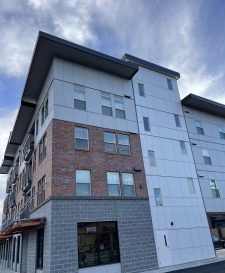
Both housewrap and liquid-applied weather-resistive barriers (WRB) can pass Florida Building Code review and keep water out of a wall assembly when they're detailed correctly — the failures we see in Tampa, Wesley Chapel, Lutz, Land O' Lakes, New Port Richey, Plant City, and Zephyrhills almost always trace back to bad seams, missed flashing, or fasteners that back out in wind, not to the product itself. For a straightforward re-side or a new build with a conventional stud wall, a taped synthetic housewrap installed correctly is usually the more cost-effective, faster choice and performs well against Tampa Bay's wind-driven rain if every seam and penetration is sealed. For homes with a lot of window and door penetrations, complex rooflines, stucco-to-siding transitions, or masonry substrates — common in the older Tampa neighborhoods and newer stucco builds spreading through Wesley Chapel and Land O' Lakes — a liquid-applied WRB creates a fully adhered, seamless membrane that removes the seam-failure risk entirely, at a higher material and labor cost. Neither one is a universal upgrade; the right pick depends on the wall's geometry, the substrate, and how much you're willing to spend up front to reduce long-term risk.
Housewrap is a spun or woven synthetic sheet, mechanically fastened to the sheathing and lapped shingle-style, with the horizontal and vertical seams sealed using manufacturer-approved tape. It's the barrier most contractors in this region have installed for decades, and when it's detailed properly — correct lap direction, taped seams, flashing integrated at every window and door head before the wrap goes on — it does a solid job of shedding bulk water while still allowing the wall assembly to dry outward, which matters in a climate where indoor air conditioning keeps interior surfaces cooler than the humid air outside for most of the year.
The tradeoff is that housewrap's performance lives entirely in its installation. Every seam, every fastener hole, and every penetration for hose bibs, dryer vents, and electrical is a potential entry point if it isn't taped or sealed. In wind-driven rain events, which Tampa Bay sees regularly during summer storms and tropical systems, water is pushed sideways and upward against the wall, not just down it — a housewrap installation that would perform fine in a calm-weather climate can leak here if laps face the wrong way or tape adhesion fails in heat and humidity over time. UV exposure is also a factor during construction: most housewraps carry a limited UV exposure window (often 60 to 180 days depending on the product) before they need to be covered with cladding, and Florida's sun is intense enough that a wrap left exposed too long on a delayed job can degrade before the siding ever goes on.
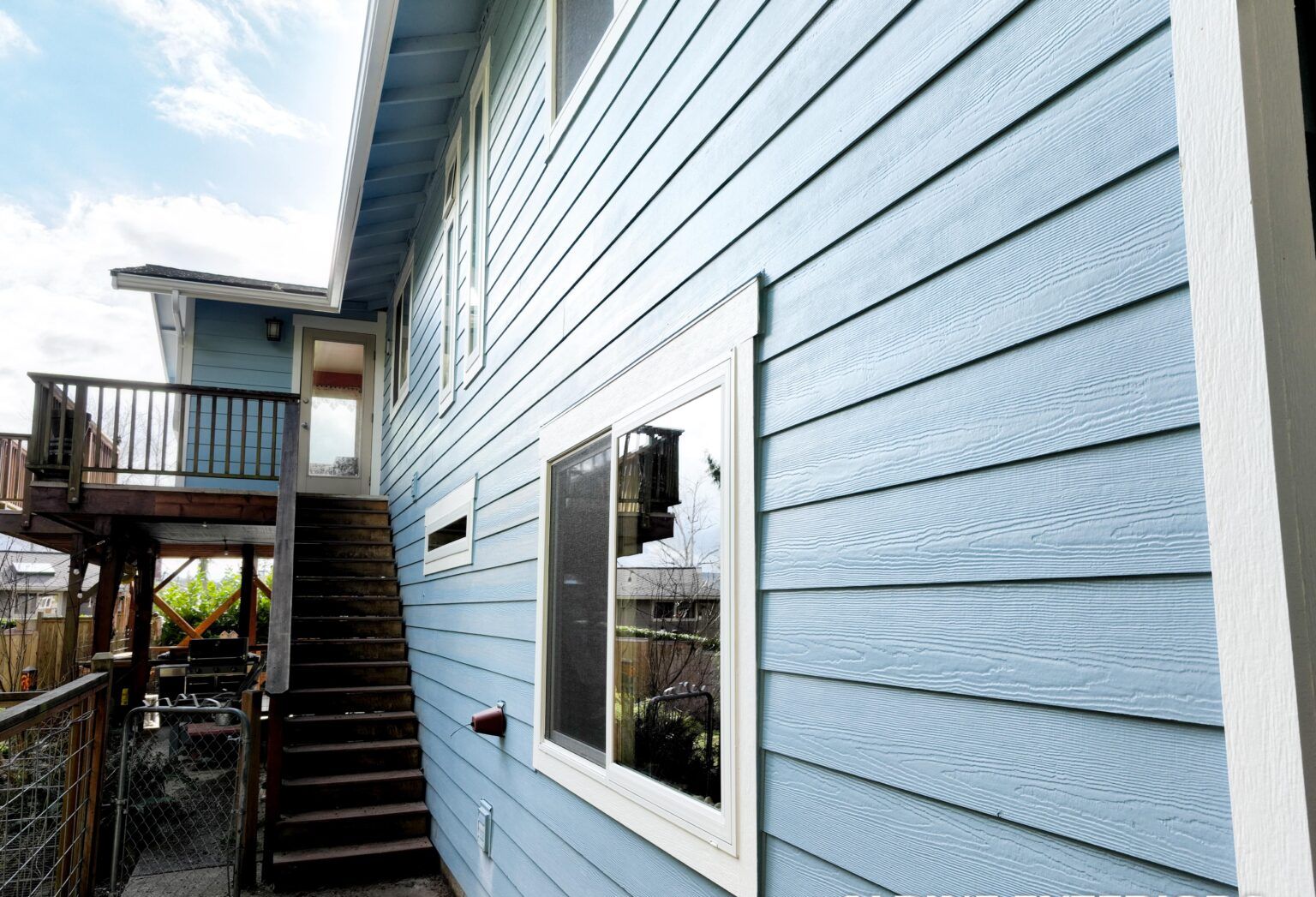
A liquid-applied WRB is a fluid membrane — typically an elastomeric or acrylic coating — rolled, sprayed, or trowel-applied directly onto the sheathing to form a continuous, fully adhered barrier with no laps or seams to fail. Because it bonds to the substrate rather than sitting mechanically fastened over it, it can also function as an air barrier in the same application, which is a real advantage on homes with complicated geometry: dormers, multiple roof pitches, deep window bucks, or transitions between siding and stucco, all of which are common across the newer developments in Wesley Chapel, Land O' Lakes, and Zephyrhills as well as remodels in older Tampa and Plant City housing stock.
Liquid WRBs generally tolerate Florida's humidity and UV exposure better during the construction window since many products are designed to stay exposed longer than sheet housewrap before cladding goes on, and once cured they resist wind-driven rain intrusion without relying on tape adhesion holding up over years of heat cycling. The drawbacks are real, too: material and labor costs run higher, application is more sensitive to temperature and humidity at the time of installation (a rushed application in Tampa's summer humidity can affect cure time and film thickness), and it requires a crew that's actually trained on the specific product rather than general carpentry skills. A poorly applied liquid WRB — too thin in spots, missed at inside corners — can fail just as a poorly taped housewrap can. Neither product removes the need for a skilled installer.
| Factor | Mechanically Fastened Housewrap | Liquid-Applied WRB |
|---|---|---|
| Cost | Lower material cost; installation is faster and familiar to most siding crews, which keeps overall project pricing on the lower end of typical WRB ranges | Higher material cost and slower, more labor-intensive application; expect a noticeable premium over housewrap on a comparable wall area |
| Lifespan | Long service life when seams stay taped and fasteners hold; most quality synthetic wraps are rated for decades behind cladding, but real-world life depends on how well the seams were sealed at install | Long service life with no seams to open up over time; performance is tied more to initial cure quality than to ongoing seam integrity |
| Maintenance | Essentially none once covered by siding, but any later penetration (a new vent, a satellite mount) needs to be re-flashed and re-taped correctly or it becomes a leak point | Essentially none once covered; later penetrations still need proper detailing, but there are no adjacent seams for a poor patch to undermine |
| Appearance | Not visible once cladding is installed; has no bearing on the finished look of the home | Not visible once cladding is installed; occasionally used as a visible air barrier under stucco repairs, but on a siding job it's fully hidden |
For most single-family homes in Tampa, Plant City, and Zephyrhills with straightforward wall lines and a standard set of windows and doors, we generally recommend a quality taped housewrap installed with attention to lap direction and flashing sequence. It meets Florida Building Code requirements for a water-resistive barrier, holds up to wind-driven rain when installed correctly, and keeps the project budget reasonable without giving up real-world performance. Alpine Exteriors installs housewrap on the large majority of siding replacements for exactly this reason — it's proven, it's compatible with the Florida Product Approval listings for the siding systems we install, and it doesn't require specialty application crews or extended cure-time scheduling.
Where we steer clients toward a liquid-applied WRB is on homes with genuinely complex geometry — multiple roof intersections, a lot of dormers, stucco-to-siding transitions, or older homes in the established Tampa neighborhoods and Lutz and New Port Richey areas where the original sheathing has settling, gaps, or irregularities that make a clean, continuous lap job difficult. In those cases the seamless, fully adhered nature of a liquid WRB removes a category of risk that no amount of careful taping fully eliminates, and for homes near the Gulf side of our service area where salt-laden air accelerates corrosion on exposed fasteners and hardware, a continuous membrane with fewer mechanical attachment points can be a genuine advantage over the life of the wall assembly. It's also worth asking your contractor whether the wall system you're planning affects your wind mitigation inspection — the OIR-B1-1802 wind mitigation form used for homeowner's insurance discounts looks primarily at roof-to-wall connections, roof covering, and opening protection rather than the WRB itself, but a properly documented, code-compliant wall assembly still matters when an adjuster or inspector reviews the full scope of work.
Whichever barrier is right for a given house, the wind loads this region is built to resist under the Florida Building Code mean the WRB has to be paired with correctly installed, code-approved siding and fastening patterns — the barrier is one layer of a system, not a standalone fix. Alpine Exteriors evaluates the substrate, the wall geometry, and the siding product being installed before recommending one approach over the other, because the wrong pairing can undercut even a well-installed WRB.
The Florida Building Code requires a water-resistive barrier behind most siding installations, but it doesn't mandate housewrap over liquid-applied products or vice versa — both can satisfy code when the specific product carries the appropriate Florida Product Approval and is installed per its listed instructions. What matters for a permit and inspection is that the chosen product is used within its approval and installed the way the manufacturer's tested assembly specifies.
Generally no — a liquid-applied WRB is designed to bond directly to sound sheathing, not to an existing sheet membrane, and applying it over old housewrap can prevent proper adhesion and cure. On a re-side, the existing wrap typically needs to come off down to the sheathing so either a new housewrap or a liquid membrane can be applied to a clean, sound substrate, which also gives your contractor a chance to check the sheathing underneath for hidden moisture or rot before closing the wall back up.
Both products are designed to stop bulk water intrusion from the outside while still allowing the wall to dry outward, which is important given how much of the year Tampa Bay spends at high humidity — but neither one is a mold remediation product or a substitute for proper attic and wall ventilation. If a home already has an interior moisture or mold problem, that needs to be diagnosed and addressed separately; the WRB's job is prevention going forward, not fixing existing damage.
Not directly — neither housewrap nor liquid-applied WRB is a termite barrier, and termite protection in this region is handled through soil treatment, bait systems, or physical barriers installed separately from the WRB. The one indirect connection is that a WRB failure that lets in sustained moisture can make wood framing more attractive to termites over time, which is one more reason correct installation matters regardless of which product you choose.
If you're planning a re-side or new siding installation anywhere from Tampa and Wesley Chapel down through Lutz, Land O' Lakes, New Port Richey, Plant City, or Zephyrhills, Alpine Exteriors (Florida contractor license RB29003900) can walk your home's actual wall geometry and substrate condition with you and recommend the WRB approach that fits the job — not a default. Contact us for an on-site look and a straight answer on what your home needs.