
Homeowners across Tampa, Wesley Chapel, Lutz, Land O' Lakes, New Port Richey, Plant City, and Zephyrhills ask the same question when their wood trim starts cupping, staining, or pulling away from the wall: what does it actually cost to replace it with PVC? The honest answer is that PVC trim pricing in this region spans a wide range because the material itself is only part of the bill. Wind load requirements, the number of corners and transitions on a house, and how much rotted wood has to come off first all move the number more than the trim boards do. Below is a realistic breakdown of what drives PVC trim pricing in the Tampa Bay area, so you can read a quote and know whether it reflects the actual scope of your home or just a low number meant to get a signature.
Most Tampa Bay homeowners replacing fascia, rake boards, corner boards, window and door casings, or frieze board with cellular PVC trim should expect a moderate-to-wide range depending on the size of the home, the number of stories, and how much of the existing wood is compromised. A small trim package on a single-story ranch home will land far below a full trim replacement on a two-story home with dormers, multiple gables, and extensive fascia runs. Because PVC is sold in varying thicknesses and profiles, and because labor to strip out rotted wood varies enormously from house to house, any contractor who quotes a single flat number without inspecting the home first should be treated with caution.
| Cost Factor | Typical Low | Typical High |
|---|---|---|
| Trim profile and width (simple flat stock vs. decorative or multi-piece profiles) | Narrower, single-piece boards | Wide, layered, or decorative crown and band profiles |
| Board thickness and grade (standard cellular PVC vs. denser, higher-load trim boards) | Thinner, lighter-duty stock | Thicker, denser boards rated for longer spans |
| Home height and access (single story, walk-up gables vs. two-story with steep pitches) | Ground-level, easy ladder access | Multi-story, steep roof, lift or staging required |
| Total linear footage of trim being replaced | Spot repairs or one elevation | Full-house fascia, rake, and corner board replacement |
| Removal and disposal of existing wood trim, including hidden rot | Sound wood, straightforward removal | Termite or moisture damage extending into sheathing or framing |
| Fastener and flashing specification for wind-driven rain and coastal exposure | Standard corrosion-resistant fasteners | Stainless fasteners and upgraded flashing near the Gulf-facing side of the region |
| Paint or factory finish (paint-grade PVC finished on site vs. pre-finished color) | Site-painted, standard color | Factory-finished or custom color-matched boards |
A handful of Tampa Bay-specific conditions push PVC trim pricing higher than what a homeowner might see quoted in a milder climate. Florida's building code requires exterior trim and the fasteners holding it to be rated for the wind loads and wind-driven rain that come with hurricane season, and any trim tied into a home's water-resistive barrier or window and door flashing has to meet the fastening schedule spelled out under the Florida Building Code. That means more fasteners per board, sealant at every joint, and sometimes a heavier trim profile than a homeowner outside a wind-borne debris region would ever need. When trim is part of a larger exterior scope, the products used typically carry a Florida Product Approval number, and a contractor should be able to produce it on request.
Humidity is the other major factor. Tampa Bay's combination of heat and moisture is exactly the environment that causes wood trim to fail in the first place — cupping, splitting, and mold growth on painted wood surfaces are common complaints, and termites frequently find their way into softened or unpainted wood trim long before anyone notices a problem from the ground. That's a major part of why homeowners switch to PVC: it does not absorb water, does not feed termites, and does not require repainting on the same cycle wood does. But it also means that by the time a homeowner calls for a quote, the wood trim being removed is often more deteriorated than it looks, and a contractor won't know exactly how much rot is hiding behind a fascia board until it comes off. That uncertainty is usually handled with an allowance for additional wood repair, which is worth asking about up front.
Intense Florida UV is a factor for the trim itself, not just installation. Lower-grade PVC trim that isn't formulated with adequate UV inhibitors can yellow, chalk, or become brittle faster in Tampa Bay's sun exposure than it would in a northern climate, so higher-quality PVC trim with a stronger UV package generally costs more up front but holds its finish and color longer. For homes closer to the Gulf — New Port Richey and similar coastal pockets in particular — salt-laden air can accelerate corrosion on standard fasteners and fixtures, which is another reason stainless or heavily coated fasteners cost more but make sense that close to the water.
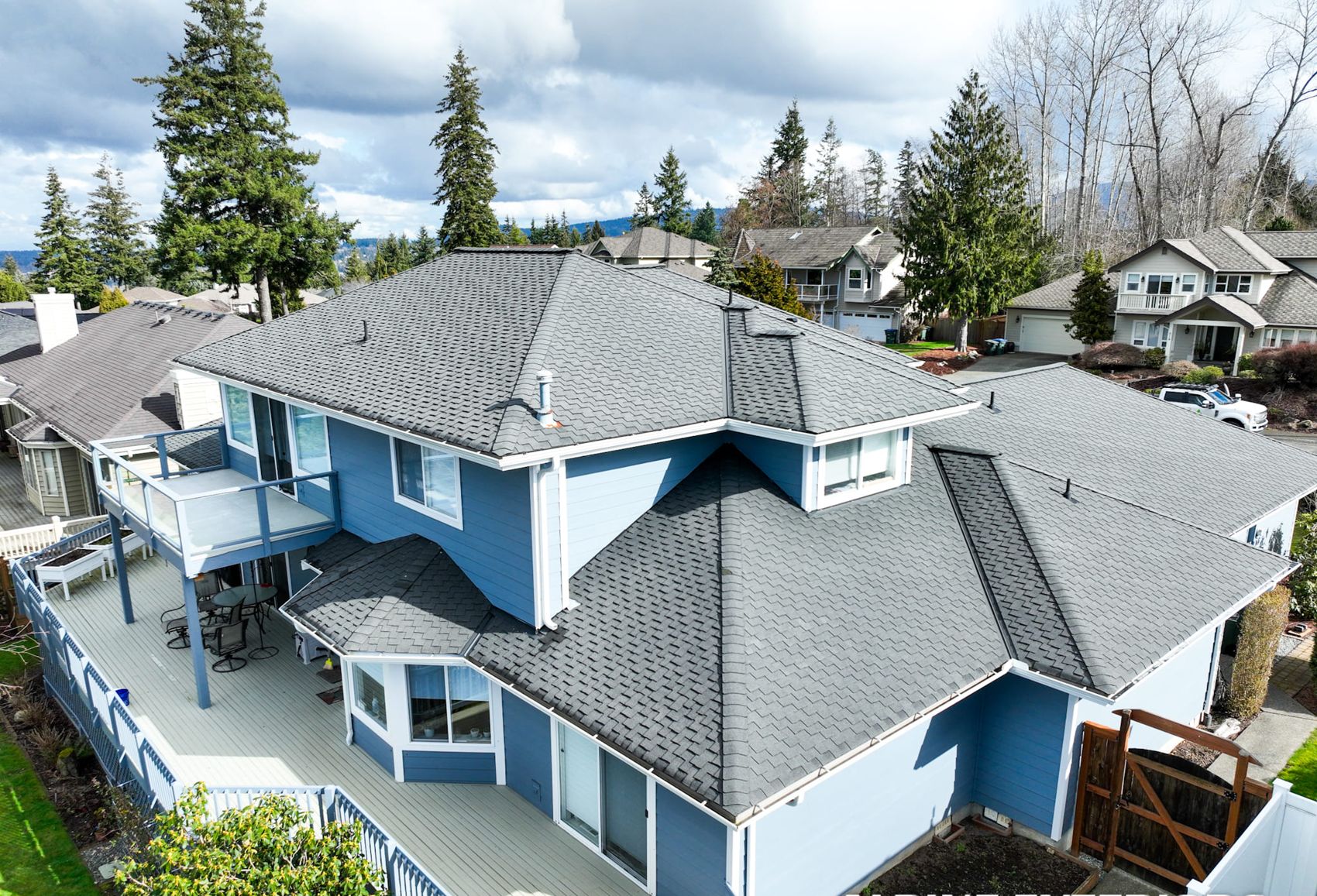
Finally, the shape of the house itself matters as much as anything on this list. A home with a simple gable roof and few corners needs far less trim, fewer cuts, and less labor than a home with multiple roof planes, dormers, bay windows, or decorative gable returns. Every inside and outside corner, every window and door casing, and every transition between trim pieces adds labor time, so two homes of similar square footage can land at very different price points purely because of architectural complexity.
A trustworthy PVC trim quote in the Tampa Bay area should spell out more than a total dollar figure. Look for a written breakdown of the linear footage of trim being replaced, broken out by location (fascia, rake, corner boards, window and door casings, frieze board, etc.), along with the specific product brand, profile, and thickness being used. The quote should note the fastener type being specified, particularly if any part of the home is closer to the coast where corrosion resistance matters more. It should also spell out how joints and seams will be sealed, since a poorly sealed joint is one of the most common places wind-driven rain finds its way behind trim.
Beyond materials, a complete quote should address whether a permit is required and who is responsible for pulling it — trim work tied into flashing, water-resistive barriers, or structural sheathing repair often falls under permitting requirements in Florida, and a contractor working under proper license and permit is accountable for passing inspection. The quote should also state who handles removal and disposal of the old wood trim, what happens if hidden rot is discovered once boards come off, the expected project timeline, and what warranty applies to both materials and labor. Alpine Exteriors builds quotes around this level of detail specifically so homeowners aren't surprised by add-on costs mid-project.
The biggest mistake homeowners make when comparing PVC trim quotes is assuming the lowest number is the best deal. Two bids that look similar on price can represent very different scopes of work — one might specify a thinner, lighter-duty PVC board while another uses a thicker, denser product rated for longer spans and better impact resistance. Before comparing dollar figures, line up the specifics: same trim thickness, same fastener spec, same amount of linear footage, and the same approach to removing and replacing rotted wood underneath.
PVC trim replacement is usually treated as an exterior maintenance or improvement project rather than a storm-damage repair, which means homeowners' insurance typically won't cover it unless the trim failure is directly tied to a covered wind or storm event and documented as such. If trim work is happening alongside broader exterior improvements like siding, roofing, or window replacement, it's worth asking your insurance agent whether the combined work affects your wind mitigation inspection or the OIR-B1-1802 wind mitigation form, since upgrades to flashing, fastening, and opening protection can sometimes influence a windstorm insurance discount even when trim by itself does not qualify on its own.
For homeowners who'd rather not pay the full project cost up front, many contractors — Alpine Exteriors included — can point clients toward financing options offered through third-party lenders, which typically involve a credit application and fixed monthly payments rather than a lump sum. A home equity line of credit is another route some homeowners use for larger exterior projects that bundle trim with siding or fascia work. Whichever route you take, get the full scope and product specification in writing before financing is arranged, since changing the scope after financing is approved can complicate the paperwork.
For most homes in this region, yes — PVC trim generally costs more than basic wood trim up front, but it doesn't absorb moisture, doesn't feed termites, and holds paint or factory finish far longer in Tampa Bay's humidity and UV exposure. Homeowners who've already dealt with rotted fascia or termite-damaged corner boards tend to see the higher initial cost as worthwhile because it reduces how often they'll be repainting or replacing trim going forward.
Timeline depends heavily on how much trim is being replaced and how much hidden wood rot is found once removal begins. A limited trim package on one or two elevations of a single-story home typically moves faster than a full-house replacement on a two-story home with multiple rooflines, and any discovery of extensive rot in the sheathing behind the trim will extend the schedule since that repair has to happen before new PVC goes up.
It depends on the scope. Cosmetic trim replacement that doesn't disturb flashing, the water-resistive barrier, or structural sheathing may not trigger a permit, but trim work tied into window and door flashing, fascia integrated with roof edge metal, or any repair involving damaged sheathing generally does fall under Florida Building Code permitting requirements. A licensed contractor should tell you up front whether your specific project needs one and should pull it themselves rather than leaving that to the homeowner.
Cellular PVC trim doesn't provide the cellulose termites feed on and doesn't absorb water the way wood does, which removes two of the biggest reasons trim fails in this climate. It isn't indestructible — impact damage, improper fastening, or low-quality UV-resistant formulations can still cause problems over time — but for the humidity, mold pressure, and termite activity common across Tampa Bay, it holds up meaningfully better than untreated or even painted wood trim over the long run.
Every home in Tampa, Wesley Chapel, Lutz, Land O' Lakes, New Port Richey, Plant City, and Zephyrhills carries its own combination of roofline, wind exposure, and existing wood condition, which is exactly why an accurate PVC trim estimate has to start with an in-person look at the house rather than a number pulled from a website. Alpine Exteriors can walk your home, identify where rot or termite damage may already be hiding behind the fascia and corner boards, and put together a written quote that spells out the product, the fastening approach, and the full scope before any work begins. If you're weighing PVC trim against a repaint of your existing wood trim, or trying to understand why one quote came in well above another, reach out to Alpine Exteriors for a straightforward, itemized estimate for your property.