
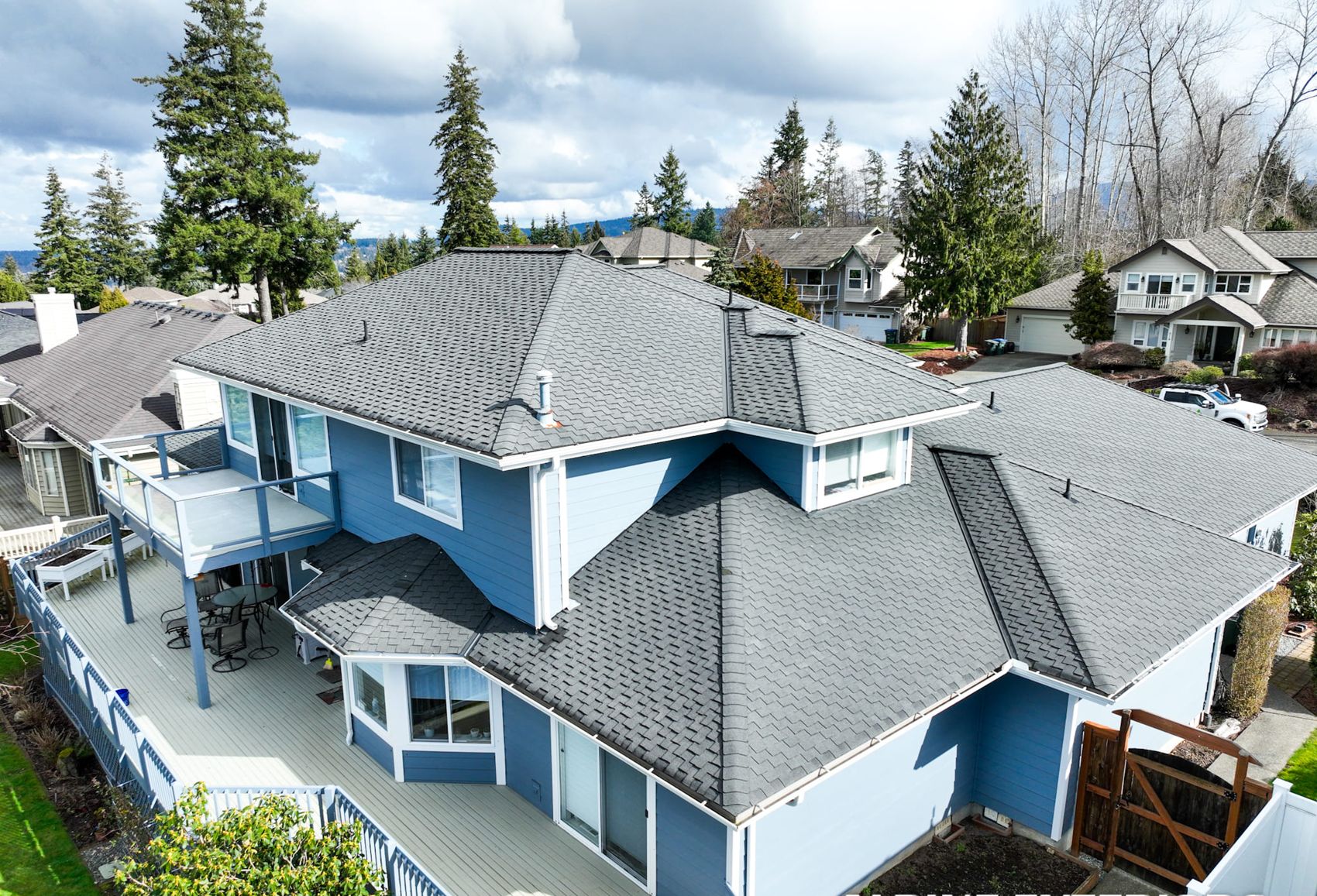
Most siding problems in Bayonet Point come down to three causes: wind-driven rain forcing water behind panels, sustained humidity feeding mold and rot at seams and corners, and UV exposure making older vinyl or hardboard brittle enough to crack. If the damage is limited to a handful of panels, cracked corner posts, or a section that took a hit from a storm or a falling branch, repair is usually the right call. If the damage is spread across multiple elevations, the siding is original to a home built before current wind-load standards, or you're finding soft wood and moisture behind more than one section, replacement starts to make more financial sense than chasing repairs year after year.
Alpine Exteriors works throughout the Tampa Bay side of Pasco County, including the Bayonet Point and New Port Richey area, and the pattern we see on repair calls out there is pretty consistent — it's rarely one big failure, it's a handful of smaller ones that started small and got worse because nobody had a reason to look closely until a storm made them obvious.
Bayonet Point sits close enough to the Gulf that homes get the coastal weather pattern without necessarily being marketed as "waterfront," which means a lot of owners underestimate how hard the exterior of the house is working. The damage patterns we run into most often are:
A siding repair conversation in Bayonet Point isn't the same as one in a drier, inland climate, and it shouldn't be treated the same way. A few things specific to this area change how repairs should be approached:
First, wind load matters more here than in most of the country. The Florida Building Code sets wind speed design requirements that vary by location, and homes in this part of Pasco County are built to withstand meaningful hurricane-force gusts. Any siding product installed or repaired here needs a valid Florida Product Approval for the wind zone, and the fastening pattern matters as much as the material itself — a beautiful panel installed with the wrong nailing schedule will still fail in a storm.
Second, humidity changes what "repair" actually means. In a drier climate, a cracked panel is mostly a cosmetic and weatherproofing issue. Here, any opening in the siding envelope is also a moisture and mold entry point, and Florida's humidity means trapped water behind siding doesn't dry out on its own the way it might in an arid climate. That's why a proper repair in this area usually includes checking the house wrap or felt behind the damaged section and the condition of the sheathing, not just swapping in a new panel and calling it done.
Third, insurance and wind mitigation paperwork can be part of the conversation. Many Pasco County homeowners have an OIR-B1-1802 wind mitigation inspection on file for insurance purposes, and the condition and installation quality of exterior siding and trim can factor into that inspection and into premium discounts. A repair that isn't done to code, or that uses a product without a current Florida Product Approval, can complicate that paperwork down the line.
Finally, termites and coastal humidity mean wood-adjacent materials need more scrutiny here than they would in a drier region. A repair estimate that only looks at the visible siding and skips the trim, fascia, and any exposed wood transitions is missing a real risk factor for this area.
Start with a close, honest look rather than guessing from the driveway. Walk the exterior after a rain and look for: staining that runs downward from a seam, panels that flex or feel soft when pressed, gaps that have opened up at corners or around windows, and any spot where paint or caulk has clearly failed. Photograph problem areas and note which side of the house they're on — north and shaded walls tend to show moisture and mold issues first, while south and west walls tend to show UV fading and brittleness first.
From there, the repair-versus-replace decision usually comes down to how contained the problem is and what's happening behind the siding, not just how the panels look from the street.
| Situation | Repair usually makes sense | Replacement usually makes sense |
|---|---|---|
| Extent of damage | A few panels or one elevation, clearly tied to a single event (storm impact, a fallen branch) | Damage spread across multiple walls or found in several unrelated spots |
| Age of siding | Siding is under roughly 10-12 years old and otherwise sound | Siding is original to an older home or already showing widespread brittleness and fading |
| What's behind it | Sheathing and house wrap are dry and intact once opened up | Sheathing is soft, discolored, or shows active mold once opened up |
| Matching material | Current product line, or a close discontinued match, is still available | Profile, color, or panel length is discontinued and no close match exists |
| Wood/termite condition | No signs of insect activity in adjacent trim or framing | Termite damage or rot is found in trim, fascia, or framing |
Matching existing siding is its own challenge in this area because siding lines get discontinued, and sun-faded color on a ten-year-old wall almost never matches a brand-new panel straight out of the box, even in the "same" color. On a repair job, Alpine Exteriors typically pulls replacement panels from a less visible elevation (like a rear wall) and installs new material there instead, so any slight color mismatch ends up somewhere it won't be noticed from the street or the driveway. When the existing product line is fully discontinued and no close match exists, that's usually the point where a full re-side of at least one elevation, if not the whole house, becomes the more sensible option rather than a patchwork of mismatched panels.
Whoever does the work should be pulling a permit where the scope requires one, using a siding product with a current Florida Product Approval for this wind zone, and should be willing to open up a damaged section far enough to show you the sheathing before closing it back up. If a contractor won't do that last part, that's a reasonable place to ask more questions before signing anything.
Look at how widespread the damage is and what condition the sheathing is in once a damaged section is opened up. Isolated cracks, one storm-damaged panel, or minor caulking failures on siding that's otherwise sound and reasonably current usually point to a repair. Damage that shows up in multiple unrelated spots, soft or discolored sheathing behind the siding, or siding old enough that matching panels are hard to source usually points toward replacing an elevation or the whole house instead of chasing repairs one at a time.
It can, and it often does faster than homeowners expect. Because this area gets sustained humidity along with wind-driven rain during storms, a small gap doesn't just let in a little water occasionally — it lets in moisture that then has a hard time drying out fully between rain events. That combination is exactly what feeds mold growth and wood rot behind siding, so a gap that looks minor is worth sealing or repairing promptly rather than waiting for it to become visibly worse.
Sometimes closely, but rarely perfectly, especially on siding that's several years past installation, since Florida's UV exposure fades color unevenly over time. The more reliable approach is choosing where the new material goes — often a less visible wall — rather than assuming a brand-new panel will disappear seamlessly next to sun-faded ones on a highly visible elevation. If the exact product line is discontinued, replacing a full elevation or the whole house is usually a better long-term outcome than an obvious patch.
Yes, if the repair is more than a minor cosmetic fix, the replacement material and fastening should meet the Florida Building Code wind requirements for this area and carry a valid Florida Product Approval, and the work should be permitted where required. This matters both for the home's actual storm performance and because installation quality can be relevant to wind mitigation paperwork, like an OIR-B1-1802 form, that many Pasco County homeowners keep on file for insurance purposes.
If you're seeing cracked panels, staining, or soft spots on your Bayonet Point home, it's worth getting a real look before deciding between a repair and a bigger project. Alpine Exteriors, Florida contractor license RB29003900, serves the Tampa Bay area including Pasco County, and can walk your property, open up a damaged section to check what's happening underneath, and give you a straightforward assessment of whether a repair will genuinely hold up or whether replacement is the more honest long-term answer. Reach out to schedule a siding evaluation for your Bayonet Point home.