
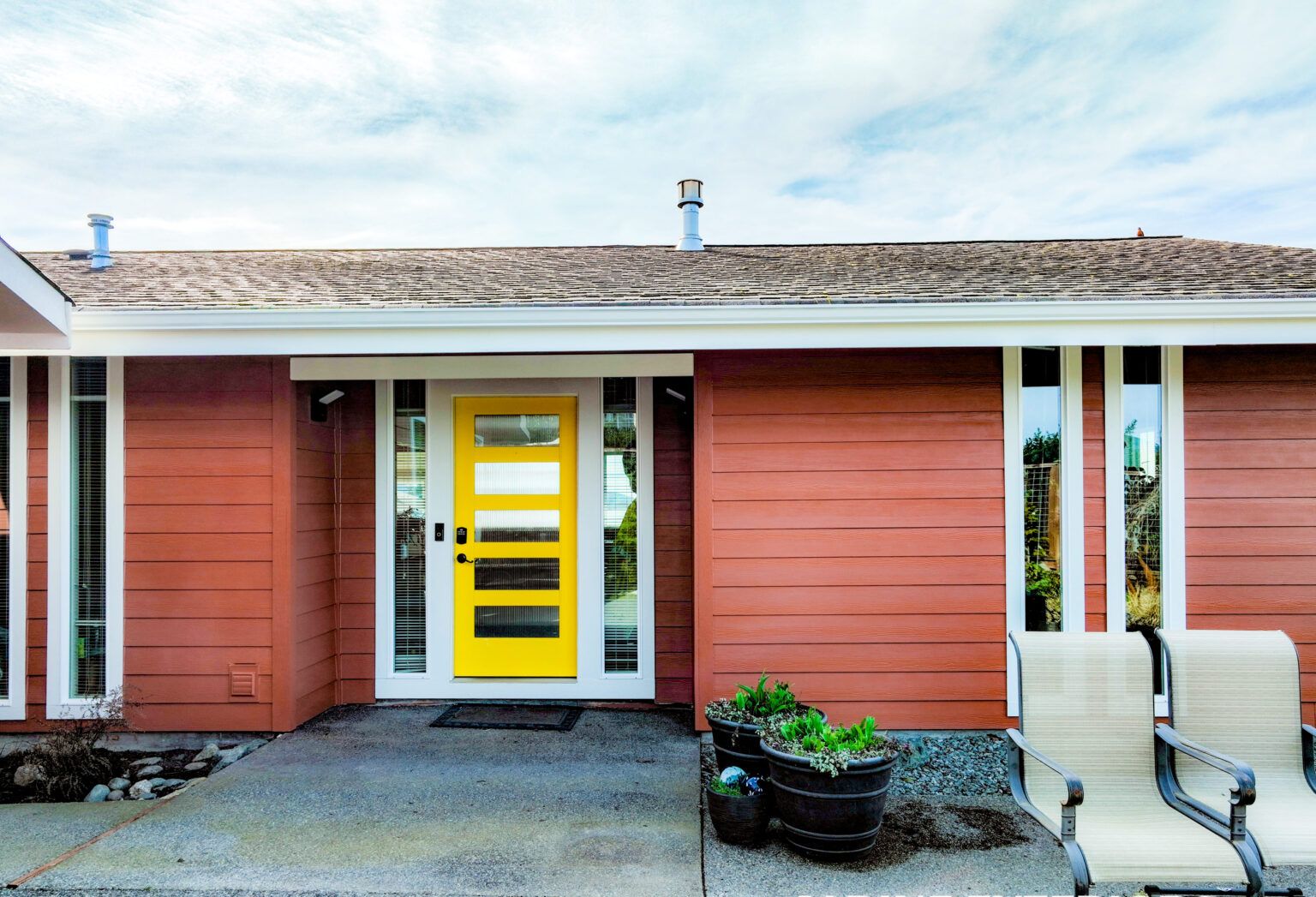
If a storm has come through Bayonet Point and your siding looks cracked, lifted, or stained, the short version is this: document it with photos before you touch anything, then get it inspected by someone who can tell the difference between fresh storm damage and ordinary wear, because that distinction determines whether an insurance claim holds up. Waiting doesn't help — wind-driven rain that gets behind a panel keeps doing damage to the sheathing underneath long after the storm itself has passed.
Bayonet Point sits close enough to the Gulf that even storms that don't make direct landfall nearby can still push heavy rain sideways into homes for hours, and that's a different kind of stress than a hard rainstorm falling straight down. Siding that looks fine from the driveway can still have water intrusion at the seams, the corner posts, or around window trim, which is why a walk-around inspection after any named storm or strong squall line is worth doing even when nothing looks obviously wrong.
Vinyl and fiber cement siding don't usually fail because a panel simply blows off in one dramatic moment — that does happen in the worst gusts, but it's the less common failure mode. More often, damage builds in stages. Wind uplift works a panel loose at one nail or clip, then that loosened edge flutters in the next round of gusts, working the fasteners further out and letting wind-driven rain behind the panel. Once water is behind the cladding, it's sitting against house wrap, sheathing, and in older homes sometimes bare wood furring, and Pasco County's humidity means that moisture doesn't dry out on its own the way it might in a drier climate. It sits, and it feeds mold and rot from the inside where nobody's looking.
Hail is a secondary factor here compared to some other parts of the country, but wind-blown debris is a real one — palm fronds, roof gravel, loose fencing, and yard furniture that wasn't secured all become projectiles in a tropical system or a severe thunderstorm outflow, and they can crack or puncture siding on impact. Fiber cement resists punctures better than vinyl but can crack or chip at impact points, and a hairline crack in fiber cement is an entry point for water even if it looks minor.
Older siding is also simply more vulnerable regardless of the material. Fasteners loosen over the years from thermal cycling — Florida's daily swing between intense sun and afternoon storms expands and contracts siding constantly — and a panel that was borderline before the storm is the one that fails during it. This is why the same storm can strip siding off one house on a street and leave the house next door untouched: it's rarely just about wind speed, it's about the condition of the installation going in.
A few conditions specific to this part of Florida change how siding ages and how it fails, and they're worth understanding before you decide what to repair and how.
None of these conditions are unique on their own, but the combination — high wind design requirements, constant humidity, strong UV, termite pressure, and salt air, all in the same house — is a specific set of stresses that a siding system either handles well or doesn't, depending on the materials and how it was installed.
After a storm, the practical sequence matters more than any single step in isolation.
It's also worth being honest about what a repair can and can't fix. If the siding failure exposed rotted sheathing or termite-damaged trim, patching the siding over that problem doesn't solve it — it just hides it again until the next storm. A good inspection after storm damage should look past the siding itself to what's underneath it, especially on a home that's more than 15 to 20 years old or has never had the siding removed and the wall inspected.
Fresh storm damage tends to be localized and directional — cracks and lifted panels concentrated on the side of the house that faced the wind, along with debris impact marks, bent corners, or panels pulled from their nailing hem. Age-related wear is usually spread more evenly across all sides of the house and shows up as fading, chalking, brittleness, or gradual warping rather than sharp breaks. An inspector can usually tell the difference by looking at how a crack or gap is shaped and where the fasteners have pulled through, but when it's genuinely unclear, that ambiguity itself is useful information for an insurance adjuster rather than something to guess at on your own.
Most Florida homeowners policies cover wind and storm damage to siding, but coverage details vary by policy, deductible structure, and whether you carry a separate hurricane deductible, which is common in this part of the state. Wear and tear, pre-existing damage, and gradual deterioration are typically excluded regardless of the policy, which is exactly why documentation and a clear-eyed inspection matter before a claim is filed. Alpine Exteriors can provide a written assessment of what's storm-related, but the coverage decision itself is always between you and your insurer.
It depends on the age and condition of the existing siding and whether a matching product is still available. If the siding is relatively new and the manufacturer's color and profile are still in production, a partial repair can look seamless and is the more cost-effective option. If the siding is older, faded from years of Florida UV exposure, or from a discontinued line, a partial patch will often stand out visibly next to the original material, and a full wall or full-house replacement — while a bigger job — ends up being the option that actually looks finished and holds up the same way across the whole surface.
Storm-rated vinyl and fiber cement products that carry Florida Product Approval for higher wind loads typically cost more than baseline products, and installation labor is a meaningful part of the total cost regardless of material, since correct fastening patterns and flashing details are what actually make the wind rating hold up in practice. Rough ranges vary a lot based on square footage, the number of corners and openings, and whether trim and fascia need to be replaced along with the siding, so a written estimate after an in-person look at the house is a more useful number than a general price per square foot.
If you're in Bayonet Point, Hudson, or anywhere else in Pasco County and you're not sure whether your siding came through the last storm in good shape, it's worth having someone look before the next system rolls through. Alpine Exteriors is a licensed Florida contractor (RB29003900) serving the Tampa Bay area, including Wesley Chapel, Lutz, Land O' Lakes, New Port Richey, Plant City, and Zephyrhills, and we can walk your property, document what we find, and give you a straight answer about what's storm damage, what's ordinary wear, and what your options actually are. Reach out to schedule an inspection.