
Picking a siding color feels simple until you're standing in a parking lot holding four almost-identical gray swatches, trying to imagine how they'll look on your house under the Gulf Coast sun in July versus the flat gray light of a January cold front. In Holiday and the surrounding Pasco County neighborhoods, the right color isn't just a style choice. It has to hold up to intense Florida UV, resist fading near the salt-tinged air off the Gulf and the Anclote River canals, coordinate with the palm-and-pine, sandy-soil landscape common here, and in many cases satisfy an HOA or deed restriction committee before a single panel goes up. Alpine Exteriors has installed and repaired siding across Tampa Bay long enough to know which colors age gracefully in this climate and which ones look great on a sample card and disappointing five years later. This guide walks through our actual picks, the reasoning behind them, and the tradeoffs we won't gloss over.
If you want the short version before reading the full breakdown: for most Holiday homes, we lean toward warm whites, light-to-medium grays with a warm undertone (often called "greige"), and soft sandstone or wheat tones. These three families consistently perform well here for three overlapping reasons. First, lighter colors reflect more solar heat than dark ones, which matters when a house sits under direct Florida sun for most of the day and helps reduce how hard the panels work thermally over the years. Second, lighter and mid-tone colors show far less visible fading over time than deep, saturated colors, because color fade is a function of how much pigment breakdown the eye can detect — a navy or black panel that fades ten percent looks obviously chalky, while a light gray or white that fades the same percentage is barely noticeable. Third, these tones read as timeless rather than trendy in most Pasco County HOA design guidelines, which tend to favor coastal, understated palettes over bold statement colors. None of this means darker or more saturated colors are off the table entirely — we cover where they can work later in this guide — but if you want the safest, best-performing choice for a Holiday home, start with this group.
We didn't rank these colors on looks alone. Every recommendation below was weighed against the conditions that actually affect a house in this part of Pasco County.
Warm white is close to a default recommendation for Holiday, and for good reason. It reflects heat well, shows the least visible fading of any color family over a ten-plus year lifespan, and pairs naturally with the region's bright light and green landscaping. It's also one of the easiest colors to get approved through an HOA design review, since most palettes list some version of white or off-white as a baseline option.
Pros: excellent heat reflectivity, minimal visible fade, broad HOA acceptance, timeless resale appeal.
Cons: can show dirt, pollen, and mildew staining more visibly than a mid-tone gray, and needs periodic washing to stay crisp; a flat, cool white (versus warm white) can look stark against Florida's warm light.
Gray has become the most common "safe modern" choice across Tampa Bay, and light-to-medium grays with a hint of warmth in the undertone work particularly well in Holiday. They photograph well against blue Florida sky, coordinate with concrete driveways and shell or paver walkways common in the area, and fade less noticeably than darker charcoal grays.
Pros: versatile with brick, stone, or shell accents; hides light dust and pollen better than pure white; reads as contemporary without looking trendy.
Cons: a gray with a cool, blue undertone can feel flat or even slightly cold under Florida's warm sunlight; darker grays inch back toward the heat-absorption and fade concerns of true dark colors.
Greige splits the difference between gray and beige, and it's become one of our most-requested colors on Holiday jobs over the past few years. It has enough warmth to feel inviting against the region's sandy soil and green foliage, but enough gray in it to avoid looking dated the way a straight tan sometimes can.
Pros: flatters both traditional and modern home styles, ages well without an obvious "trend expired" look, performs similarly to light gray on fade and heat.
Cons: because it sits between two color families, some HOA palettes categorize it inconsistently, so it's worth confirming approval before ordering; subtle undertone shifts between manufacturers can make it hard to color-match trim.
Warm tan and sandstone tones lean into the coastal Florida palette and tend to blend naturally with the sandy, sun-bleached look of a lot of Holiday's landscaping. They're a strong match for homes with a Spanish or coastal architectural influence, and they hide dust and light dirt better than white.
Pros: harmonizes with sandy soil, palm trees, and stucco or paver accents; forgiving of dirt and light staining; broadly HOA-friendly in coastal communities.
Cons: a tan that leans too orange or too yellow can look dated quickly and is one of the harder undertones to match years later if you ever need a partial repair or an addition, since dye lots shift over time.
Muted, grayed-down greens are less common but worth considering for homeowners who want something distinct without going bold. A true sage, not a bright or saturated green, sits quietly against oak and palm foliage and doesn't clash with the sky the way a stronger color might.
Pros: distinctive without being loud, complements green landscaping, generally reads as a calm, coastal-appropriate choice.
Cons: fewer HOAs pre-approve green as a standard palette color, so this one often needs a specific variance request; it's also a smaller-volume color for most manufacturers, which can mean longer lead times or fewer profile options.
A soft, desaturated blue can work beautifully on the right Holiday home, especially waterside or canal-adjacent properties where a coastal look fits the setting. Kept pale and gray-toned rather than bright or navy, it reflects heat reasonably well and doesn't fight with the natural blue of the sky.
Pros: distinctive coastal character, good heat reflectivity when kept light, strong fit for water-adjacent lots.
Cons: blue is one of the more polarizing color choices for resale, some HOAs restrict it to specific sections of a community, and a blue that's too saturated will fade and chalk more visibly than the lighter tones above.
A few color choices come up often enough in consultations that they deserve a direct, honest answer rather than a soft pass.
Very dark colors — black, navy, deep charcoal, dark brown. These look striking on a rendering and rough in year six. Dark siding absorbs significantly more heat under direct Florida sun, which accelerates thermal expansion and contraction in vinyl siding specifically, and many manufacturers restrict or void warranty coverage on their darkest color options for exactly this reason. Fade is also far more visible on dark colors — a small amount of pigment breakdown on black siding shows up as an obvious chalky, uneven look, while the same amount of fade on a light gray is nearly invisible. If you want a darker look, we generally steer clients toward using it as a trim, shutter, or accent color rather than full-field siding, or toward fiber cement products engineered to handle darker pigments better than standard vinyl.
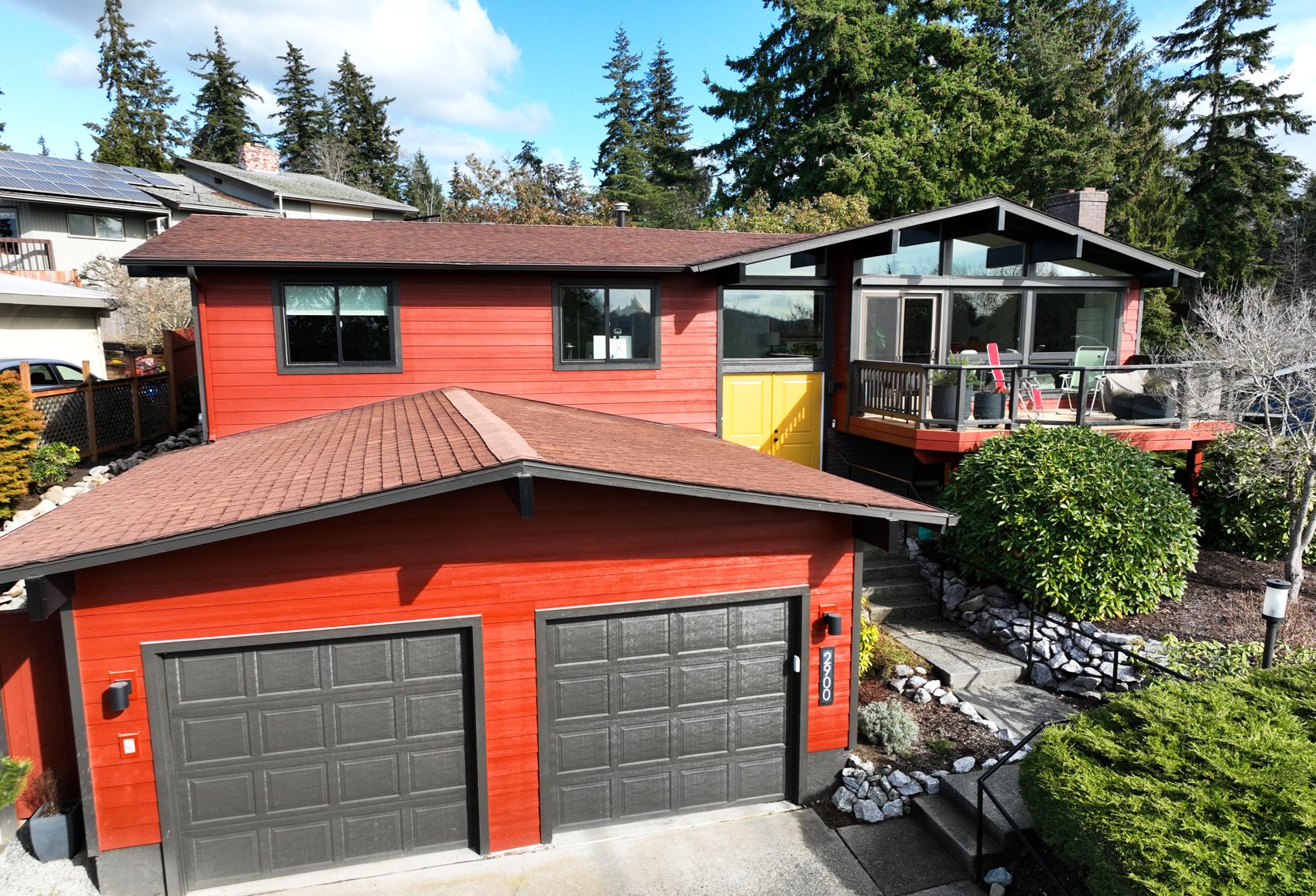
Bright, high-saturation colors. Bold reds, bright yellows, or saturated blues fade unevenly and fast under this much annual UV exposure, and most Holiday-area HOAs simply won't approve them outside of very specific historic or themed districts. They also tend to clash with the softer, sun-bleached look of the local landscape rather than complement it.
High-gloss finishes. A glossy sheen shows every imperfection, chalking patch, and mildew spot far more obviously than a matte or low-luster finish, and the humidity here means mildew is a recurring maintenance issue no matter what color you choose. Matte and satin finishes age more gracefully.
Colors picked without checking HOA guidelines first. This isn't a fade or heat issue, but it's the single most common and most avoidable problem we see. Ordering material in a color that later gets rejected by a design review committee means a delay at best and a costly reorder at worst. Confirm your community's approved palette, or get a written variance if you want something outside it, before material is ordered.
Many communities in and around Holiday do maintain an approved color palette or require design review committee sign-off before a siding color change, especially in planned developments and deed-restricted neighborhoods. Requirements vary widely by community, so we always recommend checking your specific HOA or deed restrictions before finalizing a color, and Alpine Exteriors can help pull sample boards that match common approved palettes in the area.
Yes, in practical terms. All exterior finishes fade under UV exposure over time, but the fade is far more visible on dark, saturated colors than on light or mid-tone ones, because a given amount of pigment breakdown creates a much more noticeable chalky or uneven look on black or navy than on white or light gray. Dark colors also run hotter in direct sun, which can accelerate wear on the material itself, not just the finish.
It affects maintenance more than color performance directly. High humidity creates conditions where mildew and algae staining can develop on any color, but that staining tends to be more visually obvious on very dark siding, where streaks show up as high contrast, and on very glossy finishes. Lighter, matte-to-satin finishes tend to hide minor mildew staining between cleanings better than dark, glossy ones.
Yes, and it's a common approach that gets the visual interest of a bolder color without the full fade and heat exposure of covering an entire house in it. Using a darker tone on shutters, a front-facing gable, a garage surround, or trim lets you add contrast in a smaller, easier-to-maintain area while keeping the main field in a color that performs well under full sun exposure across all elevations of the house.
Picking a siding color for a Holiday home comes down to balancing what looks right against your landscape and your neighborhood's expectations with what will actually hold its color and structural performance under years of Florida sun, humidity, and storm exposure. Alpine Exteriors, Florida contractor license RB29003900, works with homeowners across Tampa, Wesley Chapel, Lutz, Land O' Lakes, New Port Richey, Plant City, Zephyrhills, and Holiday to walk through real samples against your home's actual light and landscaping, confirm what your HOA will approve, and install siding rated for the wind and moisture demands of this area under the Florida Building Code. If you're ready to compare colors in person or just want an honest read on what will hold up longest on your specific home, reach out to Alpine Exteriors for a consultation.