
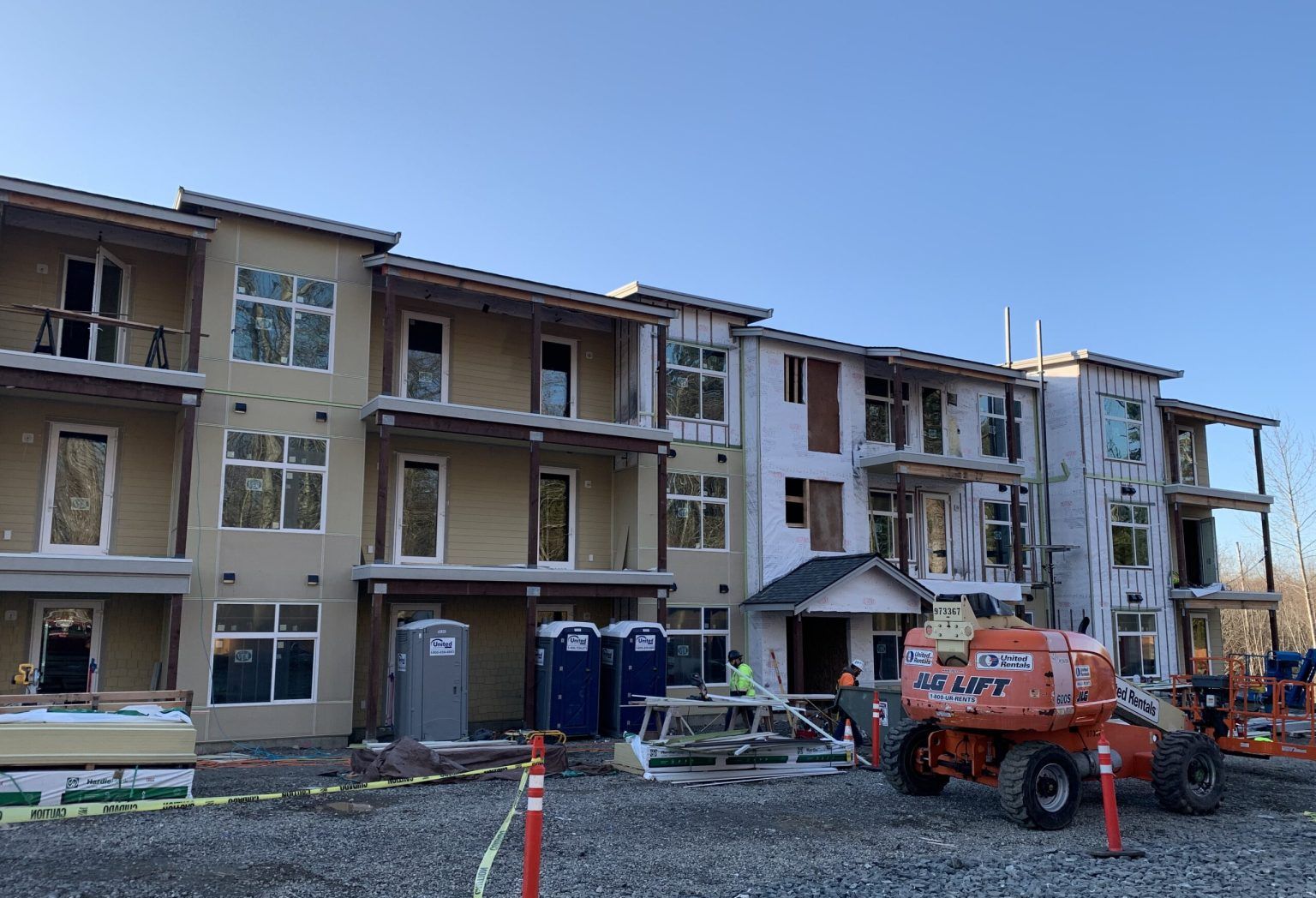
Zephyrhills sits well inland from the Gulf, but that doesn't make it an easy climate for exterior color. Between long stretches of intense Florida sun, humidity that never really lets up, and the wind-driven rain that comes with every named storm crossing Pasco County, the color you choose for your siding has to do more work here than it would in a milder climate. At Alpine Exteriors we've replaced and repaired siding across Zephyrhills, Wesley Chapel, Land O' Lakes and the rest of Tampa Bay long enough to know which colors hold up and which ones disappoint homeowners two or three summers in. This guide lays out what we've seen, plainly, including the tradeoffs.
If you want the short version before reading the reasoning: light-to-mid neutrals win most often in Zephyrhills. Warm whites, light grays, greige (gray-beige) tones, and soft khaki or dune shades consistently perform best because they reflect more solar heat, show UV fade less obviously than saturated colors, and clear most HOA and deed-restriction color palettes in the newer Pasco County developments without a fight. Mid-tone blues and soft sage greens are a close second choice for homeowners who want more character without stepping into higher-maintenance dark territory.
None of these are a guarantee of zero fade or zero maintenance — no exterior color is maintenance-free in this climate — but they age the most gracefully of the options homeowners typically ask us about.
We didn't rank these colors on looks alone. In Pasco County, a siding color has to survive several conditions that don't get much attention in generic "best siding colors" articles written for other parts of the country.
White and near-white tones reflect the most solar heat of any color family, which matters directly on siding that faces west or south all afternoon. They also tend to show UV fade the least dramatically, because there's less pigment saturation to break down and less contrast between "new" and "faded." The tradeoff is dirt and mildew visibility — a bright white wall shows pollen dusting, lawn-mower green stains, and mildew spotting faster than a mid-tone would, especially under roof overhangs or on the shaded north side where wet, humid air lingers. It also reads as fairly plain without contrast trim, so most homeowners pair it with a darker trim, shutter, or front door color to keep the house from looking flat.
Gray and greige (a gray-beige blend) have become the most common request we get across Tampa Bay, and for good reason in this climate. They hide dust film and light water spotting better than pure white, still reflect a reasonable amount of heat compared to darker colors, and fade in a way that's less visually jarring than saturated colors because the shift is subtle. They're also almost always on HOA-approved palettes in newer Pasco County subdivisions, since builders have leaned heavily on gray and greige for the last several years. The downside is that gray can look cold or sterile on more traditional Florida cottage or ranch-style homes without warm trim and stone or brick accents to balance it, and some lighter grays develop a faint greenish or yellowish cast over several years of UV exposure that's worth discussing with your installer before you commit.
These warmer neutrals suit the older ranch and ranch-cottage homes common around Zephyrhills and Plant City. They read as traditional Florida without being stark, and moderate tan tones fade more evenly than deep, saturated browns. The honest drawback is that tan and khaki can show pollen and oak tannin staining from nearby trees more visibly than gray does, and true dark brown or chocolate tones — while attractive in a showroom sample — run noticeably hotter in direct sun and are among the colors we see fade unevenly first, particularly on unshaded gable ends.
A soft, grayed-down blue is one of the few saturated colors we recommend without heavy caveats, mainly because the desaturated (grayish) blues used on siding today are formulated closer to a neutral than a bold color, so they hold up reasonably well against UV. It's a strong choice as an accent on a gable, dormer, or shutters, and works as a full-field color on craftsman and coastal cottage styles. Bright or saturated blues, on the other hand, are one of the harder colors to keep looking fresh here — the pigments used to get a vivid blue are more prone to visible chalking and fade under sustained Florida UV than the muted versions.
Soft, grayed sage greens work well against Pasco County's oak canopy and landscaping and can look genuinely good on the right home. The honest caveat: green sidings, more than most colors, tend to show mildew and algae streaking because the natural growth reads as a close color match rather than an obvious dark stain the way it would against white or gray. Homeowners who choose green should plan on more frequent exterior washing to keep it looking intentional rather than neglected.
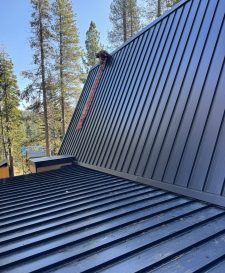
Deep charcoal and near-black siding has real design appeal and shows up often in modern renovation photos, but it's the color family we're most cautious about recommending broadly in this climate. Dark siding absorbs significantly more heat, which increases thermal cycling stress on the material and, on vinyl specifically, raises the risk of warping on sun-exposed walls over time — most manufacturers actually restrict which dark colors are approved for vinyl siding installation for exactly this reason, so not every dark shade you like is installable on every product line. Dark colors also show UV fade and chalking more visibly than light colors because the contrast between fresh and faded is so much greater. If a homeowner wants a dark exterior, we usually steer that toward fiber cement, which tolerates heat and repainting much better than vinyl, and we limit the darkest tones to shaded elevations or accent walls rather than a full, sun-exposed field.
Generally, yes. UV breakdown affects pigment in every color, but the visual result is more obvious on dark, saturated colors because the contrast between the original shade and the faded, chalky version is much greater than it is on a light neutral. Dark siding also runs hotter in direct sun, which adds thermal stress on top of the UV exposure.
Many neighborhoods in and around Zephyrhills and Wesley Chapel do have deed restrictions or an HOA architectural review process with an approved color list. It's worth checking your community's covenants or contacting the HOA before finalizing a color, since a rejected choice after materials are ordered can mean delays or added cost.
Color itself doesn't change a product's wind performance, but the specific siding line and its Florida Product Approval do, and not every color is offered across every rated product tier from every manufacturer. Alpine Exteriors checks that the color you want is available in the correct wind-rated line for your home's exposure before ordering.
In Pasco County's humidity, most light-colored siding benefits from a gentle wash once or twice a year to clear pollen film, dust, and early mildew before it sets in, particularly on shaded north-facing walls and under roof overhangs where moisture lingers longest.
Choosing a siding color in Zephyrhills means balancing how it looks with how it actually performs against Pasco County sun, humidity, and storms — and every home's sun exposure, tree cover, and HOA situation is a little different. Alpine Exteriors, FL license RB29003900, walks Zephyrhills and Tampa Bay homeowners through real samples against their own home's exposure, checks HOA and wind-rating requirements up front, and gives a straight answer about what will hold up and what won't. Contact Alpine Exteriors for a free on-site consultation before you commit to a color.