
Shady Hills sits in the rolling, tree-covered stretch of west-central Pasco County, far enough inland that the housing stock skews toward mid-century block ranches, 1980s-90s frame additions, double-wide manufactured homes on acreage, and a growing wave of new construction pushing out from US-19 and the Suncoast Parkway corridor. That mix means there's no single "right" siding for the area — the right answer depends on what's already on the house, how the walls are framed, and how much wind and moisture exposure the lot actually gets. Below is our honest read on what holds up here, based on what we see on service calls across Shady Hills and the rest of the Tampa Bay side of Pasco County.
For most Shady Hills homes, fiber cement lap siding is our first recommendation when a house is being fully re-sided or built new — it handles Florida humidity without swelling or rotting, carries strong wind and impact ratings under Florida Product Approval, and doesn't feed termites the way wood-based products can. Where budget is the deciding factor, or the home already has vinyl and just needs a partial repair or upgrade, thick-gauge, high-wind-rated vinyl siding is a reasonable second choice, especially on additions and outbuildings where the extra cost of fiber cement is harder to justify. Engineered wood siding has a place too, but it demands more disciplined installation and maintenance in this climate, so we recommend it selectively rather than as a default. There isn't a universal winner — there's a best fit for your particular house, budget, and how long you plan to own it.
We're not ranking these products on looks alone. In this part of Pasco County, five things separate siding that lasts from siding that becomes a problem within a decade:
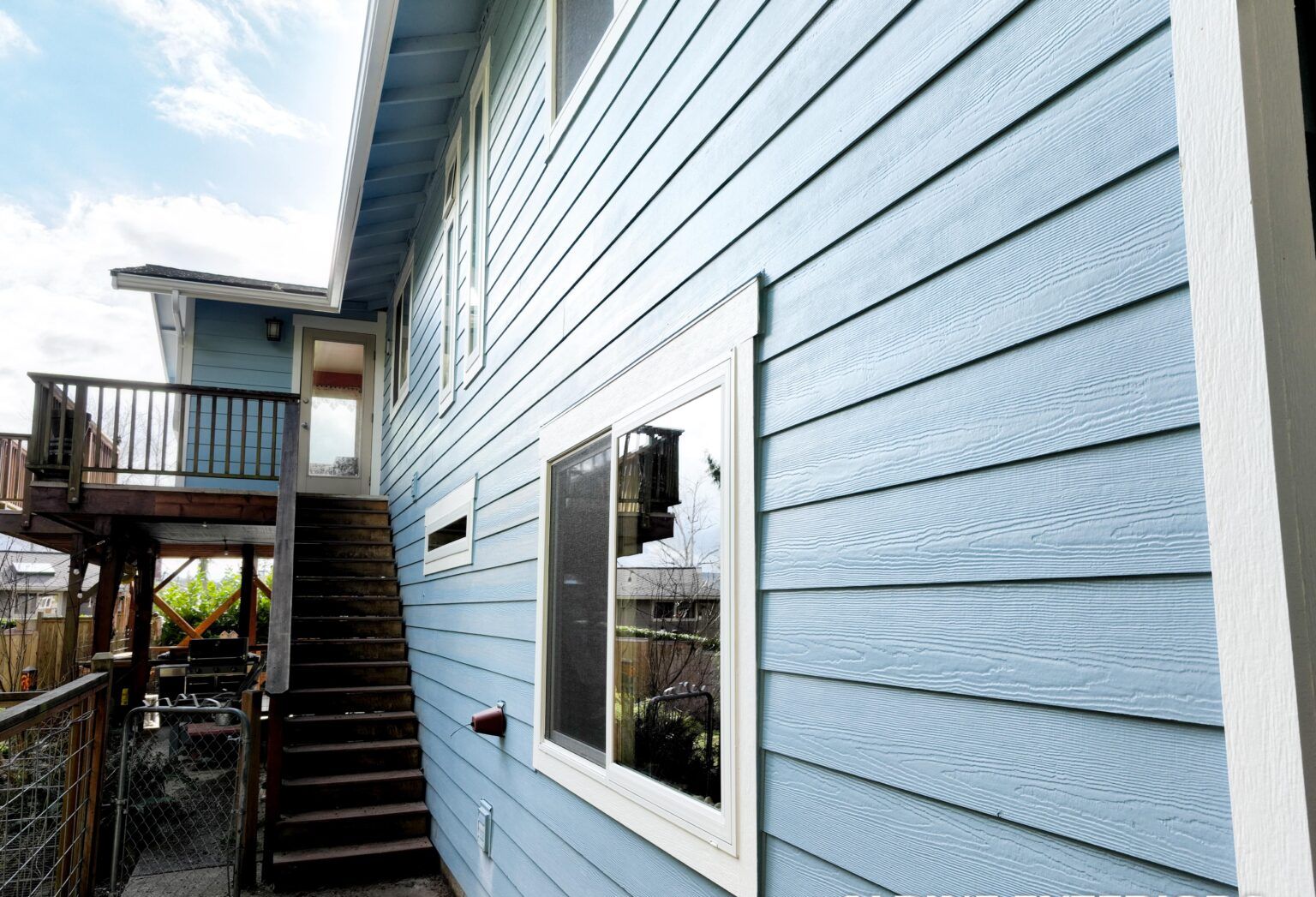
Fiber cement — cellulose fiber, sand, and cement pressed into planks or panels — is the option we install most often on full re-sides in this area, and for good reason. It doesn't absorb enough moisture to swell or rot, it isn't a food source for termites, and once it's painted or comes factory-finished, it holds color well against the sun for years longer than most vinyl. Fiber cement lap products carry documented wind and impact test data, which makes it straightforward to match a product to the wind pressures on a given elevation under Florida Product Approval.
Pros: excellent moisture and rot resistance, not attractive to termites, strong wind and impact ratings when properly fastened, holds paint and factory finishes well in intense UV, resists dings from lawn equipment and hail better than vinyl.
Cons: heavier and more labor-intensive to install than vinyl, which raises labor cost; it must be installed and fastened correctly (proper nailing pattern, clearances, and caulking) or you lose the moisture benefits it's known for; field-painted versions will eventually need repainting; upfront material and installation cost is higher than vinyl.
Vinyl remains common on Shady Hills homes, and modern, thicker-gauge vinyl with a high wind rating is a legitimate option — it's just not interchangeable with the thin builder-grade vinyl that was common decades ago. Look specifically for products with documented wind ratings under Florida Product Approval, not just a general "hurricane resistant" label on the box. Insulated vinyl, which has rigid foam backing laminated to the panel, adds some stiffness and a modest energy benefit, which matters on a house that runs air conditioning most of the year.
Pros: lower material and installation cost than fiber cement, low maintenance since it never needs repainting, wide color and profile selection, insulated versions add some rigidity and a small energy benefit.
Cons: dark colors absorb heat and can warp on west- and south-facing walls under direct Florida sun; lower-end vinyl can crack on impact from storm debris or from routine yard work; seams and J-channels are where water intrusion problems usually start if installation is sloppy; it doesn't add the same structural stiffness as fiber cement or a well-installed engineered wood system.
Engineered wood products — strand-based panels and lap siding with resin binders and a protective overlay — give you the look of traditional wood siding with better factory-applied moisture protection than solid wood. We do install this selectively in Shady Hills, usually on new construction or additions where the architectural style calls for a wood look and the budget doesn't stretch to fiber cement.
Pros: lighter than fiber cement, faster to install, good impact resistance for the weight, factory treatments resist fungal decay and insects better than untreated solid wood.
Cons: it is still a wood-based product, so cut edges, fastener holes, and any breach in the factory coating need to be sealed immediately or moisture will find its way in over time; in a climate this humid, that maintenance discipline matters more than it would in a drier state; it generally carries a shorter warranty against moisture-related failure than fiber cement in wet climates; not every version on the market has the same track record in Florida, so product selection matters as much as the material category.
You'll still find aluminum siding on older Shady Hills homes, sometimes original to the house and sometimes installed as a re-side decades ago. It's worth mentioning because replacing it, rather than repairing it, is usually the right call by this point.
Pros: doesn't rot or attract termites, lightweight, was a reasonably durable choice in its day.
Cons: dents easily and doesn't hold up well to hail or wind-driven debris; older installations rarely meet current wind and product-approval standards; seams and fastener points on aging aluminum are common places for water to get behind the panel; faded or chalky finishes are difficult to restore and usually signal it's time to replace rather than patch.
Untreated or minimally treated solid wood siding is the clearest one to avoid in this area. Between the humidity, the length of the wet season, and active termite pressure throughout Pasco County, solid wood lap siding requires a maintenance schedule most homeowners don't keep up with — regular repainting or resealing, prompt caulk repair, and vigilance about any spot where water can sit against the wood. When that maintenance lapses, rot and termite damage can be underway before it's visible from the ground.
We'd also steer people away from any siding product — vinyl, wood, or otherwise — installed without a wind rating that's actually documented for your wall's exposure category under the Florida Building Code. It's tempting to save money on a big siding job by using leftover or discontinued stock, but if it can't be tied to a current Florida Product Approval or accepted NOA, you don't actually know how it performs in a design wind event, and it can complicate an insurance wind mitigation inspection, the OIR-B1-1802 form, down the road.
Finally, be cautious about any siding replacement that doesn't address what's behind the existing panels. Old moisture damage, compromised sheathing, or termite activity discovered mid-project is common on homes that haven't been re-sided in 20-plus years, and covering it back up with new siding without repairing it first just delays a bigger problem.
For most full re-sides, yes. The extra upfront cost buys better moisture and termite resistance, stronger wind performance, and color that holds up longer under Florida sun, which usually adds up to a lower total cost of ownership even though the installed price is higher than vinyl.
Shady Hills isn't on the coast, but it's still inside the wind zones covered by the Florida Building Code, and Pasco County permitting requires siding products to carry valid Florida Product Approval for the wind pressures on your home's elevations. Being inland reduces some storm exposure, but it doesn't exempt the house from code-compliant wind performance.
Wind mitigation credits on the OIR-B1-1802 form are driven mainly by roof shape and opening protection features, not siding material itself, but a documented, code-compliant installation with proper permits helps if an adjuster or inspector ever asks how the exterior was attached and rated.
It depends on the condition of what's underneath. If the existing wall assembly is dry, sound, and free of rot or termite damage, some products can be installed over it; if there's any sign of moisture intrusion or pest damage, we recommend removing the old siding first so the sheathing and framing can be inspected and repaired properly.
Every Shady Hills property is a little different — lot orientation, existing wall construction, and how exposed the house is to sun and weather all factor into the right recommendation. Alpine Exteriors, FL contractor license RB29003900, serves Shady Hills as part of our Pasco County service area alongside Tampa, Wesley Chapel, Lutz, Land O' Lakes, New Port Richey, Plant City, and Zephyrhills. Contact Alpine Exteriors for an on-site look at your home and a straightforward, honest recommendation on which siding option actually fits your house and budget.