
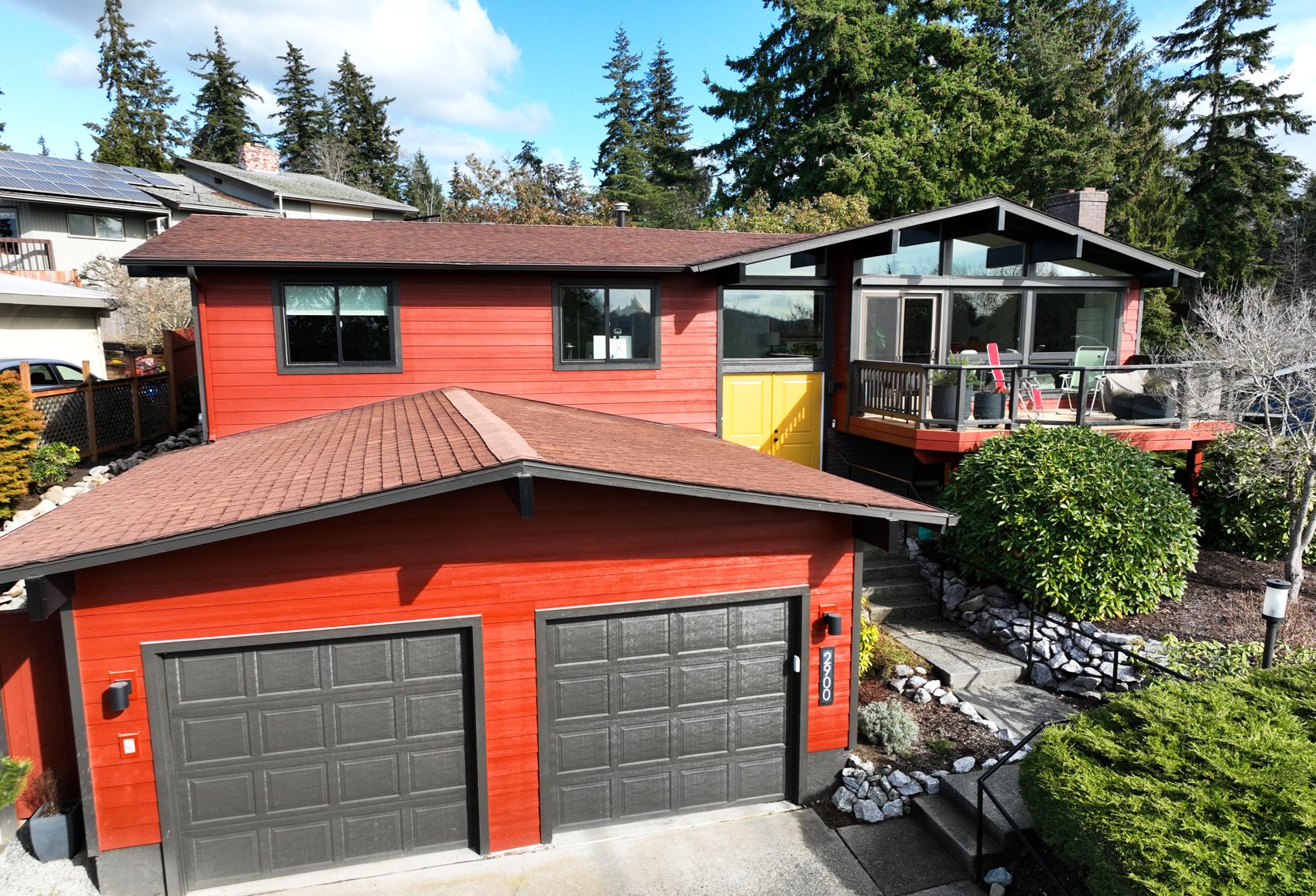
Most siding problems we see in Crystal Springs are caused by wind-driven rain working behind panels, sun-baked warping and fading, and moisture damage where humidity has had months or years to work on a wall. A small, isolated section of damage — a cracked panel, a few popped nails, a soffit gap after a storm — is almost always a repair. Damage that's spread across a wall, tied to rot behind the siding, or paired with siding that's more than 15-20 years old usually points toward replacement instead.
Crystal Springs sits in eastern Pasco County, a rural stretch between Zephyrhills and Plant City where a lot of homes are on larger lots with mature tree cover, well water, and older construction dating back a few decades. That combination shows up in the kind of siding damage we get called out for. Wind and storms are the biggest driver: even a fast-moving summer thunderstorm can push rain sideways hard enough to find any gap in caulking, flashing, or an old J-channel, and that water doesn't dry out quickly once it's behind the wall. Over a season or two, trapped moisture warps vinyl, delaminates fiber cement, and rots the OSB or wood sheathing underneath — by the time a homeowner notices a bulge or a soft spot, the damage is usually deeper than what's visible from the driveway.
UV exposure is the second big factor. Central Florida sun is intense and consistent almost year-round, and darker siding colors especially will fade, chalk, or become brittle faster here than in most of the country. Brittle vinyl cracks more easily from a stray baseball, a ladder bump, or just thermal expansion and contraction during a hot afternoon followed by a fast-cooling evening storm. Humidity adds a third layer: Pasco County's air is thick enough, most of the year, that any siding seam holding moisture becomes a mold and mildew risk, particularly on the shaded, less-ventilated sides of a house facing the wooded lots common around Crystal Springs. And because a fair number of homes out here still have wood-based trim, fascia, or older wood siding sections, termite activity is a real and ongoing concern — subterranean termites are established throughout this part of Florida, and any wood component in contact with damp mulch beds, ground contact, or trapped moisture behind siding is a target.
None of this means siding fails constantly — well-installed, well-maintained siding on a Crystal Springs home can go many years without trouble. It just means the failure points, when they happen, tend to trace back to one of these four things: wind-driven water intrusion, UV-driven brittleness, humidity/mold at seams and shaded walls, or termite damage to wood components.
A few things separate siding work here from what you'd plan for in a drier or colder climate. First, anything installed or replaced has to meet Florida Building Code wind-load requirements for this part of Pasco County, and the siding products themselves need current Florida Product Approval to be installed to code — that's not paperwork you can skip, and it affects which panels, fastening schedules, and starter/trim systems are acceptable. Second, insurers increasingly ask for an OIR-B1-1802 wind mitigation inspection when a roof or exterior is touched significantly; while that form is mostly about roof-to-wall connections and openings rather than siding itself, homeowners doing larger siding jobs sometimes bundle in a wind mitigation inspection because contractors are already on site and it can affect windstorm insurance pricing.
Third, because Crystal Springs is inland rather than coastal, salt-air corrosion isn't the issue it is for homes closer to the Gulf beaches — fasteners and trim here degrade more from heat cycling and moisture than from salt exposure. That's actually good news: it means the priority list for this area is wind resistance, water management, and UV durability rather than corrosion-resistant coastal-grade hardware. Fourth, the older housing stock and larger, tree-covered lots common in this part of Pasco mean more shaded, damp wall sections prone to mildew, and more properties where the original siding is old enough that exact color and profile matches are no longer manufactured — which changes how a repair should be approached.
Start with an honest look at scope before deciding anything. If the damage is a handful of cracked or missing panels, a section pulled loose in a storm, or isolated soft spots you can identify by pressing on the wall, a targeted repair makes sense — it costs less, it's faster, and it doesn't disturb siding that's still doing its job. If you're finding soft or spongy areas in more than one location, consistent warping across a whole elevation, or damage that keeps recurring in the same spot no matter how many times it's patched, that's usually a sign the underlying moisture or ventilation problem needs a broader fix, and full replacement of that wall (or the house) becomes the more honest recommendation.
Matching existing siding is its own challenge and worth planning for before work starts, not after. Vinyl and fiber cement color runs change over time, older siding fades unevenly from years of Florida sun, and manufacturers periodically discontinue profiles. In practice that means:
For termite-related wood damage, get any structural wood components inspected and treated before new siding goes back over them — closing up an active termite issue behind new siding just hides the problem and lets it keep progressing. And for any repair tied to storm damage, document it with photos and dates before repair work starts; that record matters if you end up filing a homeowner's insurance claim.
Alpine Exteriors works throughout this part of Pasco County, including Crystal Springs, Zephyrhills, and the surrounding Tampa Bay area, and we'll tell you plainly when a repair is the right call and when it isn't — including the cases where a "just patch it" job would cost you more in a year or two than doing it right now.
Look at how widespread the damage is and whether it keeps coming back. A few cracked or missing panels, storm damage isolated to one area, or a single soft spot you can pinpoint are generally repairable. If you're seeing warping or soft spots in multiple places, siding that's original to a home built decades ago, or a repair that failed again within a year or two, that's usually a sign the moisture or ventilation issue is bigger than one wall section and full replacement is the more cost-effective long-term answer.
In this part of Pasco County, that's almost always heat and moisture working together. Central Florida's UV exposure makes vinyl siding more prone to expansion, contraction, and brittleness than it would be in a milder climate, and if there's trapped moisture behind the panel from wind-driven rain or a humidity-related seal failure, the underlying sheathing can keep degrading even after the visible panel is swapped out. A repair that only replaces the surface panel without addressing what let water in behind it will usually fail again.
Sometimes it's a close match and sometimes it isn't, and we'll tell you which before starting. Sun exposure fades siding unevenly over the years, and older colors and profiles are sometimes discontinued by manufacturers. Where an exact match isn't realistic, options include pulling weathered panels from a hidden wall for the visible repair, or replacing a full elevation instead of patching a highly visible section with a near-but-not-quite match.
It depends on your policy, the cause of damage, and your deductible — we can't tell you what your specific coverage says. What we can tell you is that documenting the damage with photos and dates before any repair work begins matters if you plan to file a claim, and that a wind mitigation inspection using the state's OIR-B1-1802 form is a separate process from a siding repair, though some homeowners choose to have both done around the same time.
If you're in Crystal Springs or anywhere else in the Tampa Bay area and you're not sure whether your siding needs a patch or a full replacement, Alpine Exteriors will come take a real look and tell you honestly which one you need. We're licensed Florida contractors (RB29003900) working throughout Tampa, Wesley Chapel, Lutz, Land O' Lakes, New Port Richey, Plant City, Zephyrhills, and the surrounding Pasco County communities. Reach out for an on-site inspection and a clear, no-pressure recommendation before you spend money on a repair that might not be the right fix.