
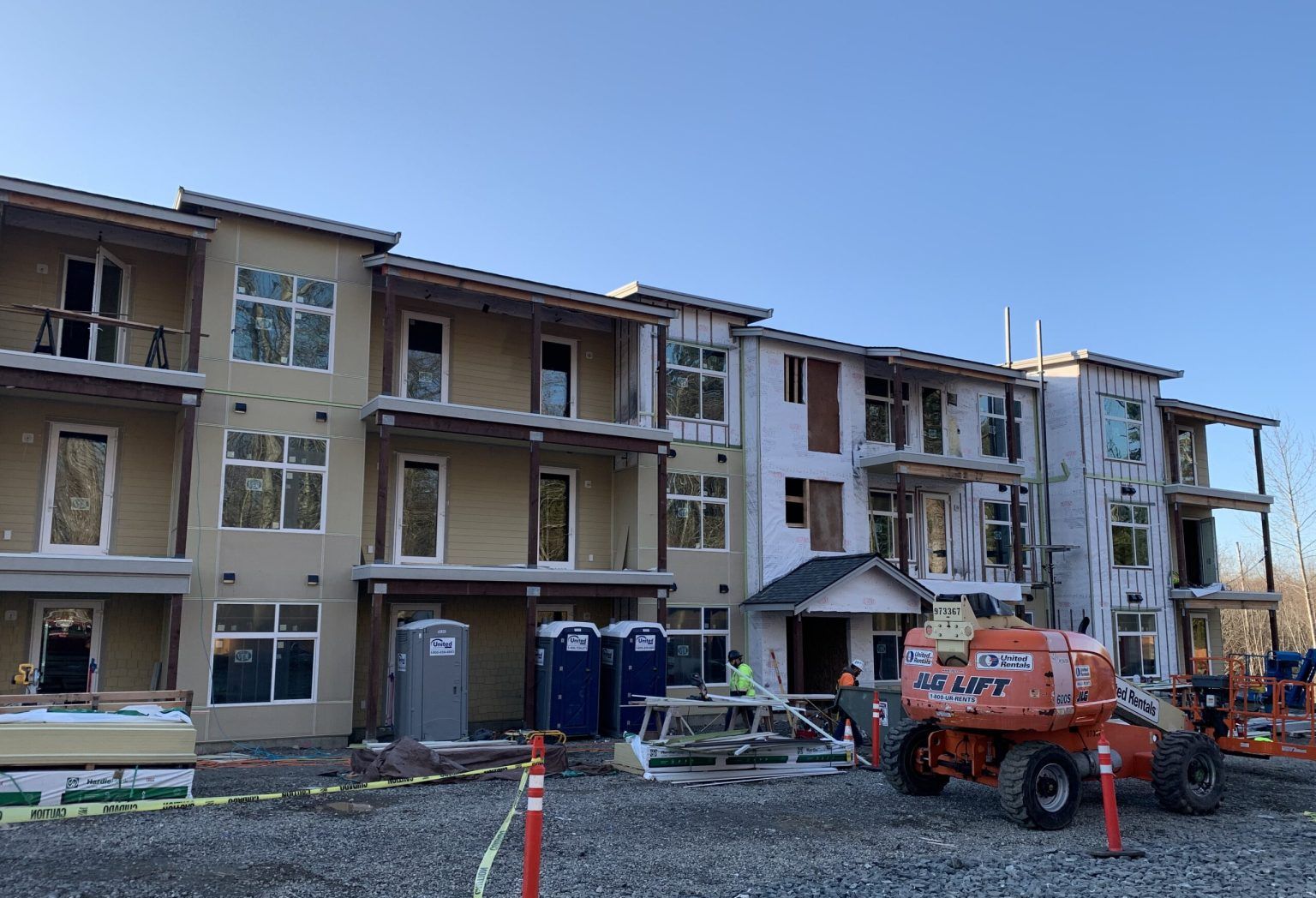
In Elfers, siding isn't just a cosmetic choice — it's a wind-rated wall component regulated under the Florida Building Code, and the product you install has to carry a valid Florida Product Approval (or accepted Miami-Dade Notice of Acceptance) rated for the wind pressures your specific lot sees. Fastening pattern, panel thickness, and the weather-resistive barrier underneath all have to match what that approval requires, not just what looks right on the wall.
Every siding product sold for use in Florida is tested to specific ASTM standards — commonly ASTM D3679 for vinyl siding and ASTM E330/E331 for structural wind load and water penetration — and the results are documented in a Florida Product Approval filed with the Florida Department of Business and Professional Regulation. That approval isn't a formality. It's a document that specifies exact fastening schedules (nail or screw spacing, penetration depth into sheathing or studs), maximum panel exposure, and the design pressure rating the product is good for. A siding panel rated for a lower wind pressure than what Pasco County's wind maps require for your address isn't legal to install, no matter how good it looks.
Pasco County sits in the Florida Building Code's wind speed zones that generally fall in the 140-150 mph ultimate design wind speed range, with the exact number depending on your specific location, exposure category (open terrain versus sheltered by trees and structures), and the risk category of the building. Elfers, being close to the Gulf and along the Pithlachascotee River corridor, tends to land on the higher end of that range compared with homes further inland in Pasco. That matters because the fastening schedule and product rating that would pass inspection in, say, Zephyrhills isn't automatically adequate in Elfers. A contractor pulling a permit has to confirm the design pressure for the specific address, not just use a generic install pattern across the whole county.
Elfers isn't a coastal barrier-island community, but it's close enough to Gulf-driven weather that wind-driven rain is a real design consideration, not a theoretical one. During a tropical system, wind doesn't just push against the wall — it drives water sideways and upward under laps, seams, and around penetrations like hose bibs, light fixtures, and dryer vents. This is why the weather-resistive barrier underneath the siding (typically a synthetic house wrap or, on some assemblies, felt) and the flashing details around every penetration matter as much as the visible siding itself. A siding job that looks perfect from the curb but skipped correct flashing or overlapped the wrap wrong will leak the first time a named storm sits offshore for a day or two.
Humidity is the other constant here. Pasco County runs hot and humid for most of the year, and any moisture that gets behind siding — through a bad seam, a missing kick-out flashing, or house wrap installed upside down — doesn't dry out quickly. It sits against the sheathing and framing, which is exactly the environment mold and wood rot need. This is one of the reasons fiber cement and vinyl have mostly displaced wood lap siding in new work around here; wood siding isn't impossible to maintain in this climate, but it demands a level of upkeep — repainting, caulking, inspection — that a lot of homeowners underestimate until they're dealing with soft trim boards.
Termites are a factor too, though they affect the wall assembly more than the siding product itself. Subterranean termites are established throughout Pasco County, and any wood-based trim, furring strips, or sheathing behind the siding is a potential food source if moisture gets in. This is another reason correct flashing and drainage matter as much as the wind rating — a wall that stays dry behind the cladding is far less inviting to termites than one with chronic hidden moisture.
Salt air is a milder concern in Elfers than it would be on a barrier island, since the property isn't directly on open Gulf water, but it's close enough that salt-laden air does move inland on onshore winds, especially after storms. That's enough to accelerate corrosion on lower-grade fasteners and untreated metal trim over the years, which is part of why fastener spec matters as much as fastener count.
UV exposure is intense and constant. Florida gets more sun hours than most of the country, and it shows up as chalking, fading, and eventual brittleness in lower-grade vinyl siding, especially on south- and west-facing walls. This doesn't cause a code failure, but it's a real durability and appearance issue homeowners should weigh when choosing a product, since a siding color that fades unevenly after a few Florida summers is a common source of buyer's remorse.
Before signing a contract for a full re-side in Elfers, ask the contractor for the Florida Product Approval number of the specific siding product they're proposing, and confirm the fastening schedule they plan to use matches what that approval requires for your wind zone and exposure category — not a generic pattern used everywhere. A legitimate contractor should be able to produce this without hesitation.
It's also worth being honest about tradeoffs. Higher wind-rated vinyl siding, thicker gauge panels, and fiber cement all cost more than baseline products, and the price difference between a code-minimum installation and one built with real margin above the minimum can be significant. Alpine Exteriors generally recommends homeowners in Elfers and similar wind-exposed parts of Pasco County budget toward the higher end of typical siding cost ranges rather than the lowest bid, since the cheapest vinyl products on the market often carry the lowest wind ratings and the thinnest gauge — exactly the wrong tradeoff in a wind zone like this one.
In most cases, yes — a full re-side is treated as a permitted job by Pasco County Building Construction Services, since it involves the weather-resistive barrier and structural attachment of a wind-rated assembly, not just a cosmetic swap. Small repairs or replacing a handful of damaged panels may not require a separate permit, but it's worth confirming with the building department or your contractor before work starts, since doing permitted work without a permit can complicate an insurance claim or a future home sale.
Vinyl siding sold for Florida installations generally uses thicker panel gauges, reinforced nailing hems, and tighter fastener spacing than siding rated for lower-wind regions of the country, and it carries a Florida Product Approval documenting the tested wind pressure rating. Standard national-grade vinyl siding, even if it looks identical on a shelf, may not carry an approval sufficient for Pasco County's wind zones, which is why checking the approval number matters more than checking the brand name.
It can help modestly if it's part of a broader wind mitigation improvement, but siding by itself is a smaller line item on the OIR-B1-1802 wind mitigation inspection form compared with roof covering, roof-to-wall connections, and opening protection like impact windows or shutters. Homeowners hoping for a significant premium reduction should treat new siding as one piece of a larger wind mitigation strategy rather than the main driver.
Pasco County inspectors typically check fastener type, spacing, and penetration against the manufacturer's printed installation instructions referenced in the product's Florida Product Approval, along with visible details like proper nailing hem engagement (not overdriven or underdriven), correct panel overlap, and flashing at windows, doors, and other penetrations. This is why keeping the manufacturer's instructions on site during the final inspection, and using a contractor who installs to that spec rather than a shortcut pattern, avoids the delay of a failed inspection and a required rework.
If you're planning a siding replacement or repair in Elfers or elsewhere in Pasco County, Alpine Exteriors can walk your property, confirm the wind zone and product approval requirements for your specific address, and put together a plan that accounts for the fastening schedule, weather barrier, and flashing details Pasco County inspectors will be looking for. Alpine Exteriors holds Florida contractor license RB29003900 and serves the greater Tampa Bay area, including the Elfers and New Port Richey area of Pasco County. Reach out to schedule a walkthrough and get a written scope before any contract is signed.