

For most Tampa Bay homes, stucco is a solid choice — but only when it's installed correctly over the right substrate and someone stays on top of caulking and repaint cycles. It performs best on the concrete block houses that make up the majority of the region's housing stock, and it performs worst on wood-frame walls or additions where drainage details get rushed.
Stucco has been the default finish on Florida concrete block homes for decades, and there's a good reason for that pairing. A traditional three-coat stucco system applied over concrete masonry unit (CMU) walls is bonding to a substrate that doesn't rot, doesn't feed termites, and doesn't move much with humidity swings. That combination is a big part of why stucco has such a long track record in Tampa, Wesley Chapel, Lutz, and the rest of the region — the wall behind it is inherently stable.
The picture changes on wood-frame construction. When stucco is applied over wood sheathing — common on additions, gable ends, second stories, and some newer subdivisions — it depends entirely on a correctly built weather-resistant barrier and drainage plane behind it to keep incidental moisture from reaching the wood. Skip or shortcut that layer, and moisture that gets past hairline cracks or poorly sealed penetrations has nowhere to go. It sits against the sheathing, and over months or years that leads to hidden rot and mold inside the wall cavity — long before any staining shows up on the surface. This is exactly the failure mode that drove a wave of stucco-related construction litigation in Florida in the 2000s, and it's still the single biggest risk factor with this cladding today.
Cracking is the other honest drawback. Stucco is a rigid, cementitious material, and it will develop some hairline shrinkage cracking as it cures and as the building moves seasonally — that's cosmetic and normal. The problem is that homeowners and even some inspectors have trouble telling a cosmetic hairline crack apart from a crack that's actually a moisture entry point, particularly around window and door corners where stress concentrates. Left unsealed, either type can eventually let water in.
On the plus side, stucco is non-combustible, holds paint well when properly primed, resists impact better than most lightweight sidings, and doesn't provide termites anything to eat directly. It also gives homeowners more flexibility in color and texture than most panel or lap sidings, since it's field-applied rather than factory-finished.
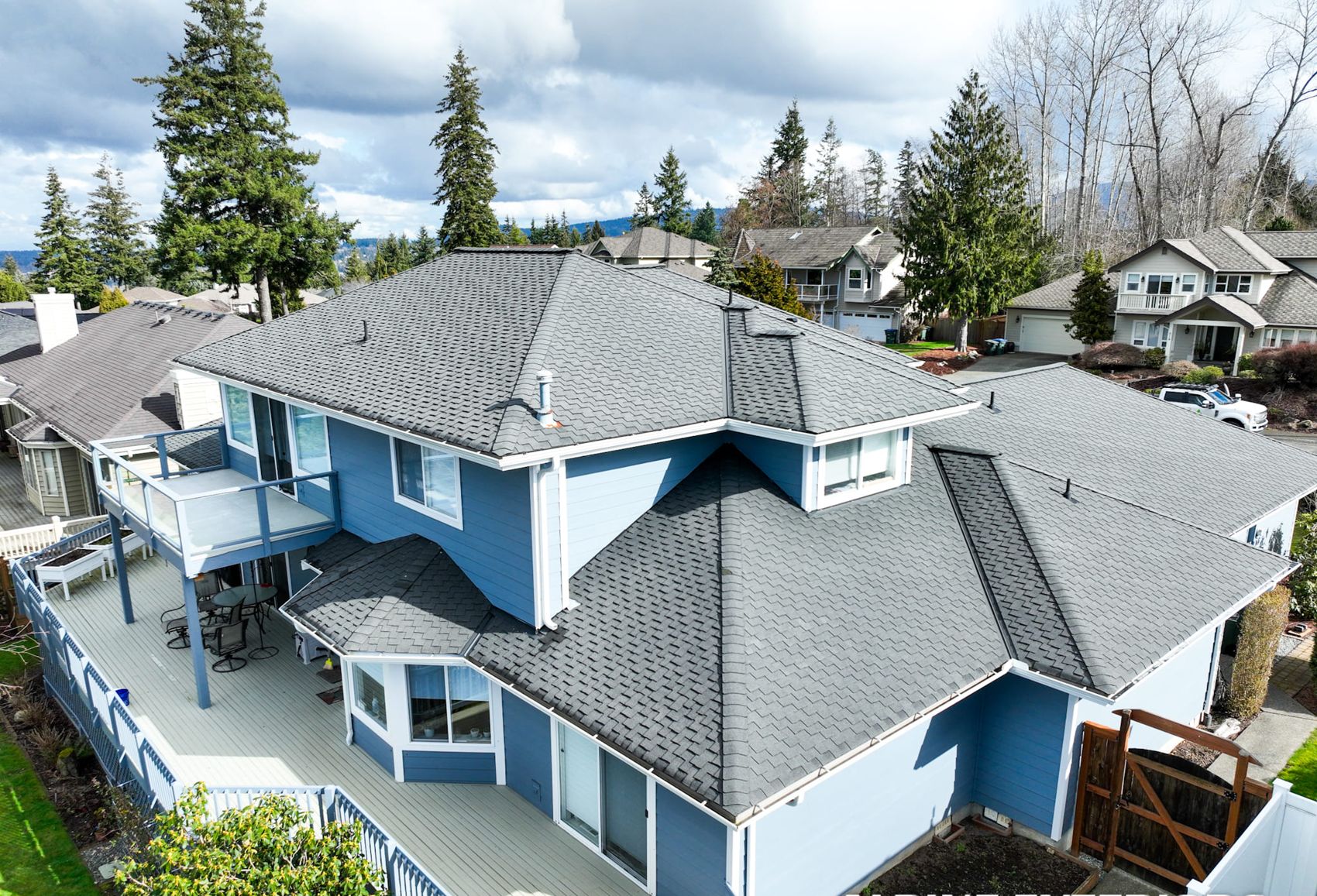
A handful of regional conditions change how stucco should be specified and maintained here compared with a drier or cooler climate.
Hurricane wind loads and wind-driven rain. Wall assemblies in this region are designed to the wind speeds mapped under the Florida Building Code, and stucco has to handle more than static wind pressure — it has to keep out rain that's being driven sideways for hours during a tropical system. A crack or gap that would be a minor cosmetic issue somewhere with gentler weather becomes a real intrusion point here, which is why the drainage plane and weep screed behind the finish matter as much as the finish coat itself.
Humidity and mold pressure. Tampa Bay's year-round humidity and near-daily summer thunderstorms create conditions where any trapped moisture behind stucco doesn't dry out quickly. Shaded or north-facing walls are also prone to surface mildew growth on the finish coat itself, which is a cosmetic nuisance but a useful early sign that a wall isn't drying between rain events.
Intense UV. The subtropical sun here is harder on acrylic finish coats and paint than most of the country sees, and chalking and fading show up faster. Repaint cycles that might stretch longer in a milder climate tend to come around sooner in this region.
Termites. Florida carries heavy pressure from both native subterranean termites and, in some pockets, Formosan termites. Stucco and block themselves aren't a food source, but wood furring strips, trim, and framing behind wood-frame stucco assemblies are — and a hairline crack near grade can hide a termite mud tube from view for a long time, delaying detection.
Salt air. Properties closer to the Gulf, including parts of New Port Richey, deal with salt-laden air that accelerates corrosion of galvanized metal lath, casing beads, and fasteners if those components aren't rated for it. That's a detail that's easy to overlook until a control joint starts rust-staining a few years in.
Florida Building Code and product approvals. Stucco wall assemblies here have to meet Florida Building Code requirements for a code-compliant weather-resistant barrier and drainage plane behind the finish coat. Synthetic stucco finish systems and the foam trim components sometimes used with them typically carry Florida Product Approval listings, and a contractor should be able to show that documentation for anything beyond a traditional three-coat system.
Whether stucco makes sense for your house comes down to what's behind it and how it's built, not the material in the abstract. A few practical steps:
Alpine Exteriors works through these questions with homeowners across Tampa Bay every week, and the honest answer is different for every house — it depends on what's behind the wall, not just what color you want on the outside.
Some hairline cracking is normal as stucco cures and the building moves seasonally, and on its own that's a cosmetic issue rather than a structural one. It becomes a real problem when cracks go unsealed, because Tampa Bay's wind-driven rain during storms can push moisture through even small openings, especially around window and door corners where stress concentrates.
It can work, but it depends entirely on the weather-resistant barrier and drainage plane behind it. Wood-frame stucco assemblies without a properly built drainage layer are the setup that led to widespread hidden rot and mold problems in Florida, so this is the one detail worth verifying in writing before work begins.
Generally, no. The wind mitigation inspection insurers use in Florida, documented on the OIR-B1-1802 form, focuses primarily on roof covering, roof-to-wall attachment, and opening protection rather than wall cladding, so a stucco project on its own typically doesn't move that discount one way or the other.
There's no fixed number that holds for every wall, since sun exposure, orientation, and the quality of the original finish coat all affect it, but the intense UV in this region tends to fade and chalk acrylic finishes faster than in milder climates. A yearly look at the finish for chalking, cracking, and caulk failure is the simplest way to know when it's due rather than guessing on a calendar.
If you're weighing stucco against another cladding, or you already have stucco and aren't sure whether what you're seeing is cosmetic or a real moisture problem, Alpine Exteriors can take a look and give you a straight answer. We're a licensed Florida contractor (RB29003900) serving Tampa, Wesley Chapel, Lutz, Land O' Lakes, New Port Richey, Plant City, and Zephyrhills, and we'd rather tell you a repair will hold up than sell you a full re-stucco you don't need. Reach out for an on-site evaluation before your next repaint or before hurricane season puts this year's cracks to the test.