

Northdale sits inland in Hillsborough County, tucked between Tampa, Lutz, and Land O' Lakes. Because it isn't a beachfront neighborhood, homes here don't take the direct salt spray that houses along the Pinellas beaches or south Tampa's bayfront deal with, so corrosion from salt air is a smaller factor on Northdale siding than it is closer to the Gulf. That said, Northdale shares almost everything else that shapes how exterior cladding ages across the Tampa Bay region, and a lot of it is harder on siding than most homeowners realize until something fails.
Summer here means near-daily afternoon thunderstorms, and those storms don't just drop rain straight down — wind-driven rain gets pushed sideways into seams, J-channel, and butt joints, especially on the west and southwest faces of a house where prevailing storm winds tend to hit hardest. During an active tropical season, that same wind-driven rain problem intensifies with tropical storms and hurricanes, when sustained wind loads and gusts test every fastener and lap joint at once. Between storms, Hillsborough County's humidity stays high for most of the year, which means any water that does get behind siding has a hard time drying out — that's the setup for mold, mildew, and rot rather than one dramatic event.
Add in Florida's UV exposure, which is intense enough to chalk, fade, and gradually embrittle vinyl and fiber cement finishes faster than in milder climates, and a steady subterranean termite presence throughout inland Hillsborough County, and you have a climate that quietly wears siding down from several directions at once. Many Northdale homes date to the 1970s through 1990s, and siding installed under older code cycles may not meet current Florida Building Code wind-load and fastening requirements — that matters both for storm performance and, increasingly, for insurance underwriting. Some Northdale homeowners have also had a wind mitigation inspection done for their OIR-B1-1802 insurance form, and exterior cladding condition can factor into how an insurer views the whole envelope. A routine walk-around inspection, done once or twice a year and again after any significant storm, catches small problems while they're still small. Alpine Exteriors put this checklist together from what we actually see on siding calls across Tampa Bay, not as a sales pitch but as a practical tool homeowners can use themselves before deciding whether a repair call is needed.
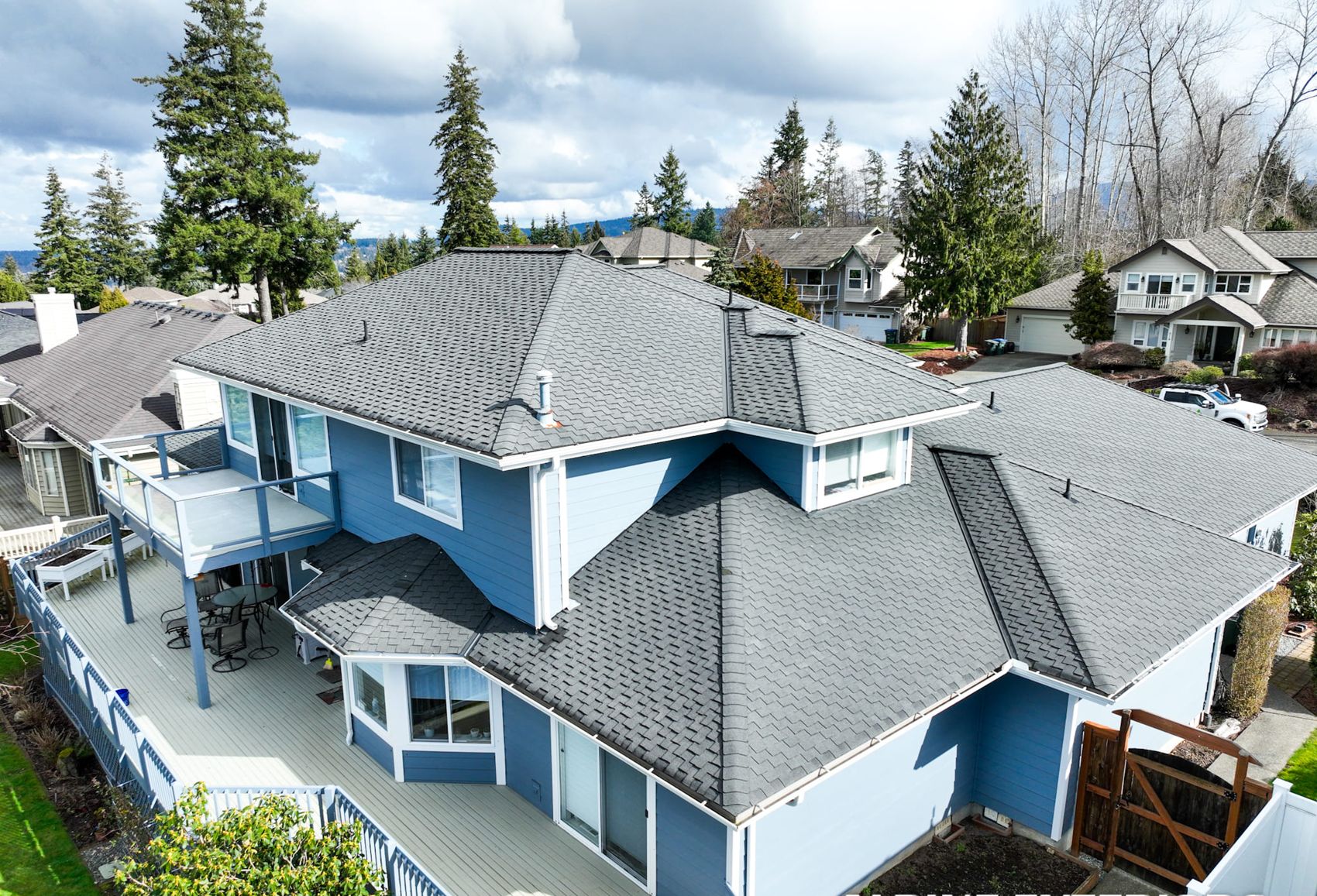
Not every failed item on this checklist means a full re-side. Start by documenting what you find — a few photos with the date, and a note of which side of the house it's on (this matters, since west- and southwest-facing walls in this area tend to take the most wind-driven rain and sun exposure). If you find staining or softness, check the corresponding interior wall or attic space nearby for a matching water stain; that tells you whether the problem is still surface-level or has already reached the framing.
Small, isolated issues — a single loose panel, a short run of cracked caulk, one popped fastener — are often reasonable for a handy homeowner to address, provided the underlying sheathing is dry and sound. Resist the urge to simply caulk over a soft or stained area without finding out why it's wet first; sealing in trapped moisture in this humidity almost always makes mold and rot worse, not better. If you find several failed items clustered in one area, or the same issue repeating on more than one elevation, that's a sign the problem is systemic rather than a one-off, and it's worth having someone look at the whole wall assembly rather than patching each spot individually. It's also worth timing non-urgent repairs ahead of hurricane season rather than after storm damage has already occurred, since loose or aging siding is far more likely to fail under sustained wind loads.
Some findings are worth a professional opinion regardless of how minor they look at first. Call a licensed contractor if you find soft or spongy sheathing behind the siding, since that indicates moisture has already compromised the structure underneath and patching the surface won't fix it. The same goes for any sign of termite mud tubes or frass — that's a call for a licensed pest professional first, and likely a siding contractor afterward to address any damaged wall material. If more than a few panels show warping, cracking, or fastener failure across different parts of the house, it usually points to an installation or product issue rather than isolated wear, and it's worth having someone verify whether the existing siding actually carries current Florida Product Approval for the wind zone your home is in. Homeowners preparing a wind mitigation inspection for insurance, or dealing with damage after a named storm, should also loop in a licensed contractor, since documentation of code-compliant repairs can matter for both insurance claims and resale. Alpine Exteriors, FL license RB29003900, handles these kinds of full assessments for homeowners across Tampa, Wesley Chapel, Lutz, Land O' Lakes, New Port Richey, Plant City, Zephyrhills, and Northdale, and can tell you honestly whether you're looking at a repair or a replacement.
A basic walk-around inspection twice a year — once before hurricane season starts and once after it winds down — is a reasonable baseline for most Northdale homes, with an added check after any storm that brought sustained high winds or heavy wind-driven rain to the area. Homes with older siding, mature trees close to the exterior, or a known history of moisture issues may benefit from checking a bit more often.
Standard homeowners insurance doesn't typically require a siding inspection on its own, but many Florida insurers use a wind mitigation inspection, documented on the state's OIR-B1-1802 form, to help set premiums, and the overall condition of the exterior envelope can come up during that process or during a four-point inspection on older homes. It's worth asking your insurer directly what they require, since standards vary by carrier and by the age of the home.
Termites themselves target wood, not vinyl or fiber cement siding directly, but they routinely damage the wood trim, sheathing, and framing that siding is attached to. Since Hillsborough County has an active subterranean termite population, it's common on older homes to find termite damage hiding behind siding panels or beneath trim near ground level, which is why checking for mud tubes and soft wood is part of a thorough siding inspection, not a separate concern.
There's no single answer that fits every home, and each material comes with real trade-offs. Fiber cement tends to resist UV fading and holds paint well over time, but it's heavier and typically costs more to install than vinyl. Quality vinyl siding rated for higher wind zones can perform well and costs less upfront, but lower-grade vinyl is more prone to UV brittleness and heat warping in intense Florida sun. Whatever material you choose, confirming it carries a valid Florida Product Approval for your home's wind zone matters more for long-term performance here than the material brand alone.
A checklist like this one is a good starting point, but it can't replace a trained eye on a ladder checking flashing, fastening, and hidden moisture up close. If your Northdale home turned up more than a couple of items on this list, or you'd simply rather have a professional confirm what you're seeing, Alpine Exteriors offers siding inspections for homeowners throughout Tampa, Wesley Chapel, Lutz, Land O' Lakes, New Port Richey, Plant City, Zephyrhills, and Northdale. As a licensed Florida contractor (RB29003900), we'll give you a straightforward assessment of what needs attention now, what can wait, and what your options are — no pressure, just an honest read on your home's exterior.