
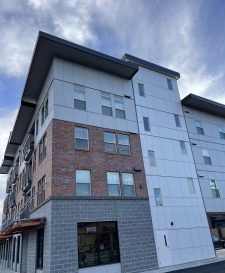
Trinity sits inland from the Gulf by roughly ten miles, tucked into Pasco County between New Port Richey and Lutz, but the distance doesn't buy the siding on your home much of a break. Summer humidity sits in the high 80s and 90s for months, afternoon storms roll through almost daily from June through September, and the sun here delivers a UV load that most siding products elsewhere in the country never have to survive. Add in the occasional direct hurricane threat and the steady presence of subterranean and drywood termites across Pasco County, and you have a climate that is genuinely hard on exterior cladding. Most siding failures we see in Trinity neighborhoods off Trinity Boulevard, Mitchell Boulevard, and around the Fox Wood and Champions Club areas don't happen overnight. They build slowly, and by the time they're visible from the street, there's often already damage happening behind the panels that you can't see. This page walks through what to look for, what's actually causing it in this climate, and how to decide whether you're looking at a weekend's worth of patience or a problem that needs attention now.
When siding bubbles or feels soft under light pressure, moisture has almost always gotten behind it. In Trinity, this is frequently traced back to wind-driven rain during summer thunderstorms or tropical systems, which forces water sideways and upward under laps and around fasteners that were only ever designed to shed water moving straight down. Older hardboard or lower-grade fiber cement siding is especially prone to this once its factory coating has worn thin. Once moisture is trapped against sheathing in this kind of heat and humidity, it doesn't dry out on its own — it sits there.
Vinyl and some composite sidings can warp when repeated cycles of intense Florida sun and afternoon heat push the material past what it was engineered to handle, especially on west- and south-facing walls that take the brunt of the afternoon sun. Buckling can also show up after a storm, when wind gets up under a loose panel and distorts it even if it doesn't tear away. A panel that's buckled is no longer sealing the wall behind it the way it should.
Fiber cement and engineered wood siding can crack from impact — a stray branch during a storm, a lawn tool, hail in a bad system — but they can also crack simply from age and thermal movement, expanding and contracting through Florida's temperature swings until a seam finally gives. Once a crack opens, it's a direct path for wind-driven rain to get behind the panel.
Dark streaking or a greenish-black film is usually mold, mildew, or algae, and Trinity's humidity gives all three plenty to work with, particularly on shaded north-facing walls or anywhere airflow is blocked by landscaping planted close to the house. A musty smell near an exterior wall is a stronger warning sign than the visual staining alone — it often means moisture has been sitting against the sheathing long enough to start affecting the wood underneath, not just the siding surface.
Peeling or bubbling paint on siding or trim is frequently a moisture signal rather than just an aging-paint problem. When water is trying to escape from behind the siding, it pushes the paint film off from underneath. Intense UV exposure accelerates ordinary paint aging here too, but paint that's failing in patches rather than uniformly is worth a closer look.
Pasco County has consistent termite pressure, both subterranean colonies working up from the soil and, in some pockets, drywood termites entering through untreated wood trim or gaps in siding. Small holes, frass (termite droppings that look like fine sawdust), or wood that feels soft or crumbly when pressed with a screwdriver are all signs worth acting on. Termite damage behind siding can progress for a long time before it's visible from outside.
Standard steel fasteners that weren't rated for coastal or high-humidity exposure will rust and stain the siding around them. It's a cosmetic issue at first, but a rusted fastener is also a weaker fastener, and in a wind event that matters.
Sealant and trim joints move over time, and in a climate with this much thermal cycling and this much wind loading, gaps can open faster than in milder climates. These gaps are a direct entry point for wind-driven rain during the exact storms that put the most stress on a home's exterior.
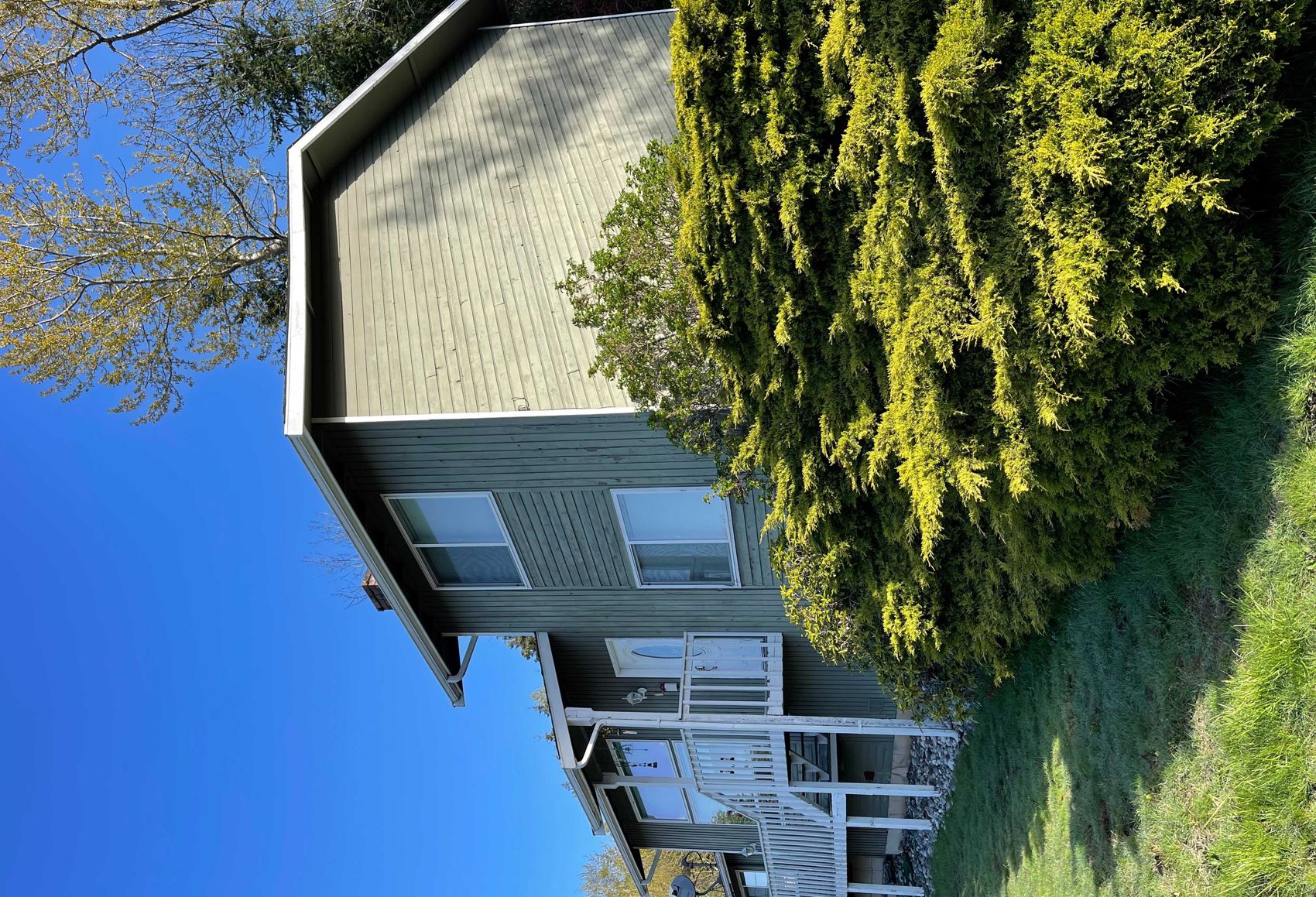
Some of these signs call for a phone call this week; others can reasonably go on a list for your next scheduled maintenance visit. Soft or spongy panels, a musty smell near an exterior wall, visible termite activity, or damage from a recent storm all fall into the urgent category — every day that moisture or pests keep working behind the siding adds to the eventual repair. The same goes for any gap or hole large enough to let water or pests in ahead of the next named storm; in a hurricane-prone area, it's worth closing those before wind-driven rain finds them.
On the other hand, minor fading, light chalking on older paint, a small hairline crack in one panel, or mild surface algae on a shaded wall are things you can typically monitor and schedule for routine attention rather than treat as emergencies. The distinction usually comes down to one question: is moisture or a pest actively getting behind the siding right now, or is this surface wear that hasn't compromised the barrier yet? When in doubt, a short inspection answers that question far more reliably than guessing from the ground.
Start with a visual walk around the house in daylight, pressing gently on any suspicious spots, especially low on the walls and around windows, doors, and corners where water tends to concentrate. Check the attic and any accessible exterior wall from the inside for staining, softness, or odor. If you find soft spots, active pest signs, or storm damage, it's worth having someone look at it before it's covered back up by scheduling any other repair work — once new siding or paint goes over a hidden problem, it's harder and more expensive to find later.
Alpine Exteriors inspects siding on Trinity homes and can tell you honestly whether you're looking at a spot repair, a partial re-side of the affected elevation, or a full replacement, along with the trade-offs of each. Replacement siding installed to current standards should carry Florida Product Approval for its wind rating, since Trinity falls under the wind provisions of the Florida Building Code, and if you're also updating your homeowner's insurance wind mitigation form (OIR-B1-1802), documentation of code-compliant materials and installation can matter there too. Alpine Exteriors, license RB29003900, has worked on homes throughout the Tampa Bay area, including Trinity, Wesley Chapel, Lutz, Land O' Lakes, New Port Richey, Plant City, and Zephyrhills, and can walk you through options honestly, including where a repair genuinely makes more sense than a full replacement.
Costs vary widely depending on the siding material, how much of the wall is affected, whether there's hidden sheathing or structural damage behind the panels, and how much of the house needs work versus a single elevation. A single-panel spot repair might run a few hundred dollars, while a full re-side of a home can run well into the thousands to tens of thousands depending on square footage and material choice. The only reliable way to get an accurate number is an in-person inspection, since estimating from photos alone tends to miss hidden damage.
Sometimes, if the siding itself is structurally sound and the paint failure is genuinely just surface aging rather than a symptom of trapped moisture underneath. But if paint is peeling because water is pushing it off from behind, repainting over that problem just hides it temporarily while the damage underneath continues. An inspection before painting is the safest way to know which situation you're in.
It depends on the cause and your specific policy. Sudden storm or wind damage is often covered, while damage from long-term neglect, gradual moisture intrusion, or termites typically is not. Documentation matters here — photos, an inspection report, and your wind mitigation form (OIR-B1-1802) can all factor into a claim, so it's worth talking to your insurance agent about your specific policy language before assuming either way.
Given the humidity, UV exposure, and storm activity typical of this region, an annual walk-around inspection is a reasonable baseline for most homes, with an additional check after any significant storm that brought heavy wind or wind-driven rain. Homes with older siding, prior repair history, or known termite activity in the neighborhood may benefit from checking more often.
If you're seeing any of these signs on your Trinity home, it's worth getting an honest, in-person look before the problem grows behind the wall where you can't see it. Alpine Exteriors serves Trinity and the surrounding Tampa Bay communities and can give you a clear read on what's actually happening with your siding, what it will take to fix it, and what can reasonably wait. Reach out to schedule an inspection and get a straightforward assessment, not a sales pitch.