
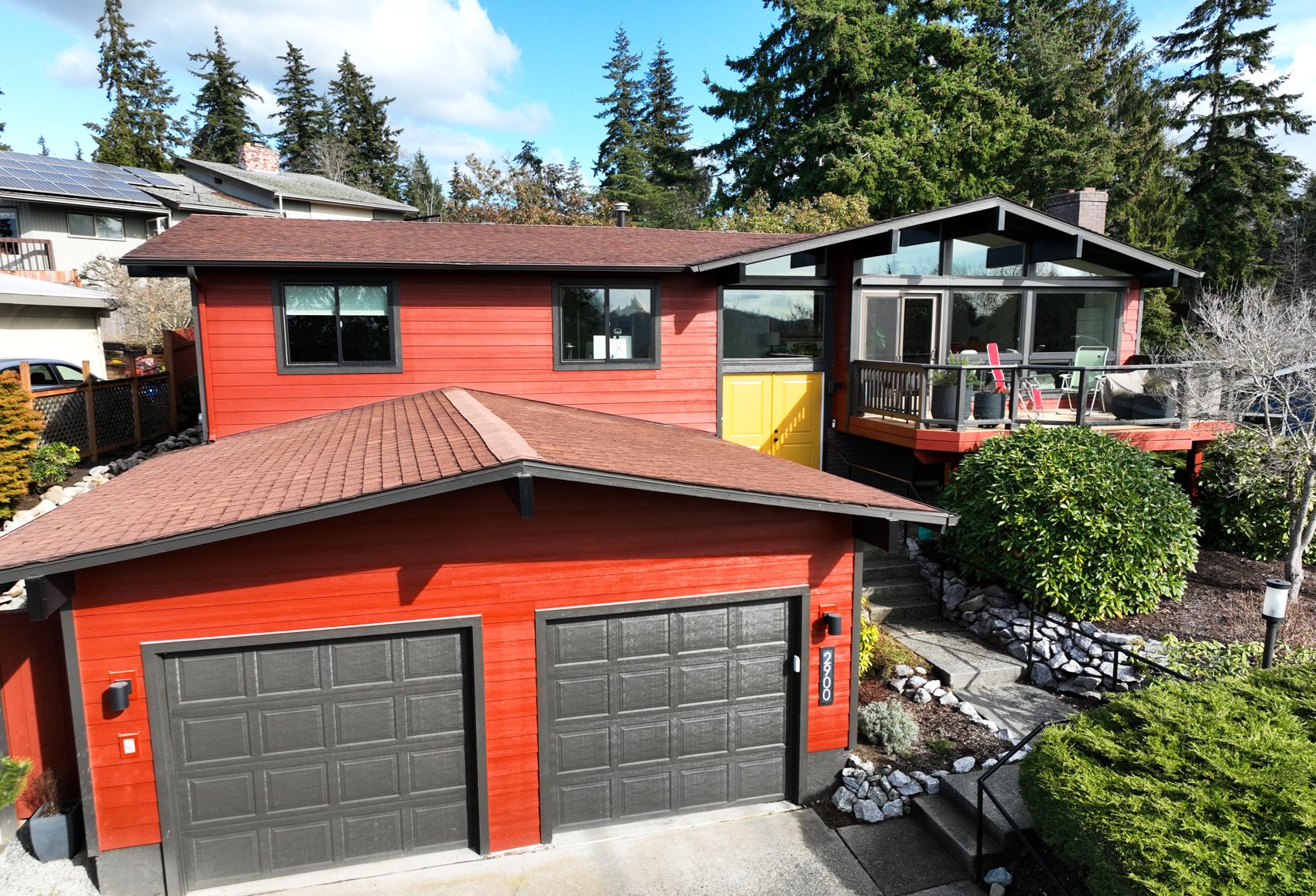
After a hard summer storm or a hurricane's outer bands move through Seven Oaks, siding damage is rarely just cosmetic. Wind-driven rain works its way behind a cracked panel, a popped fastener, or a lifted corner long before any damage is visible from the driveway, so siding that shifted, cracked, or blew off during a storm should be treated as a moisture-intrusion issue first and an appearance issue second.
The safest move is to document what you see right away, keep additional water from reaching the wall cavity once it's safe to be outside, and have the full wall assembly checked by a licensed contractor before deciding how to handle repairs or an insurance claim.
Lap siding, whether vinyl, fiber cement, or a stucco-over-frame assembly, is built to shed rain that falls mostly straight down. A Tampa Bay storm doesn't send rain straight down — sustained wind pushes it sideways and upward into laps, seams, and trim joints that were never meant to face that kind of pressure. Add gusts strong enough to create negative pressure on the leeward side of the house, and panels that looked fine the week before can flex, pop a fastener, or peel back at a corner.
Once water gets past the outer layer, it lands on the house wrap or building paper and, eventually, the wall sheathing underneath. In a drier climate that moisture might evaporate in a day or two. In Tampa Bay's humidity, a wet wall cavity can stay wet for a week or more, and mold and mildew can start colonizing damp sheathing and framing within 24 to 48 hours. That's why a storm that only knocks loose two or three siding panels can still lead to a much bigger repair if the intrusion goes unaddressed through a humid stretch of weather.
Sun exposure plays a role, too. Central Florida's UV load is intense, and years of it make caulking, trim boards, and the plastic in vinyl siding more brittle than the same materials would be farther north. A storm that would just flex an intact, well-maintained wall can crack sealant or shatter a sun-brittled panel outright. In a lot of cases, what looks like sudden storm damage is really years of UV aging that finally gave way under wind load.
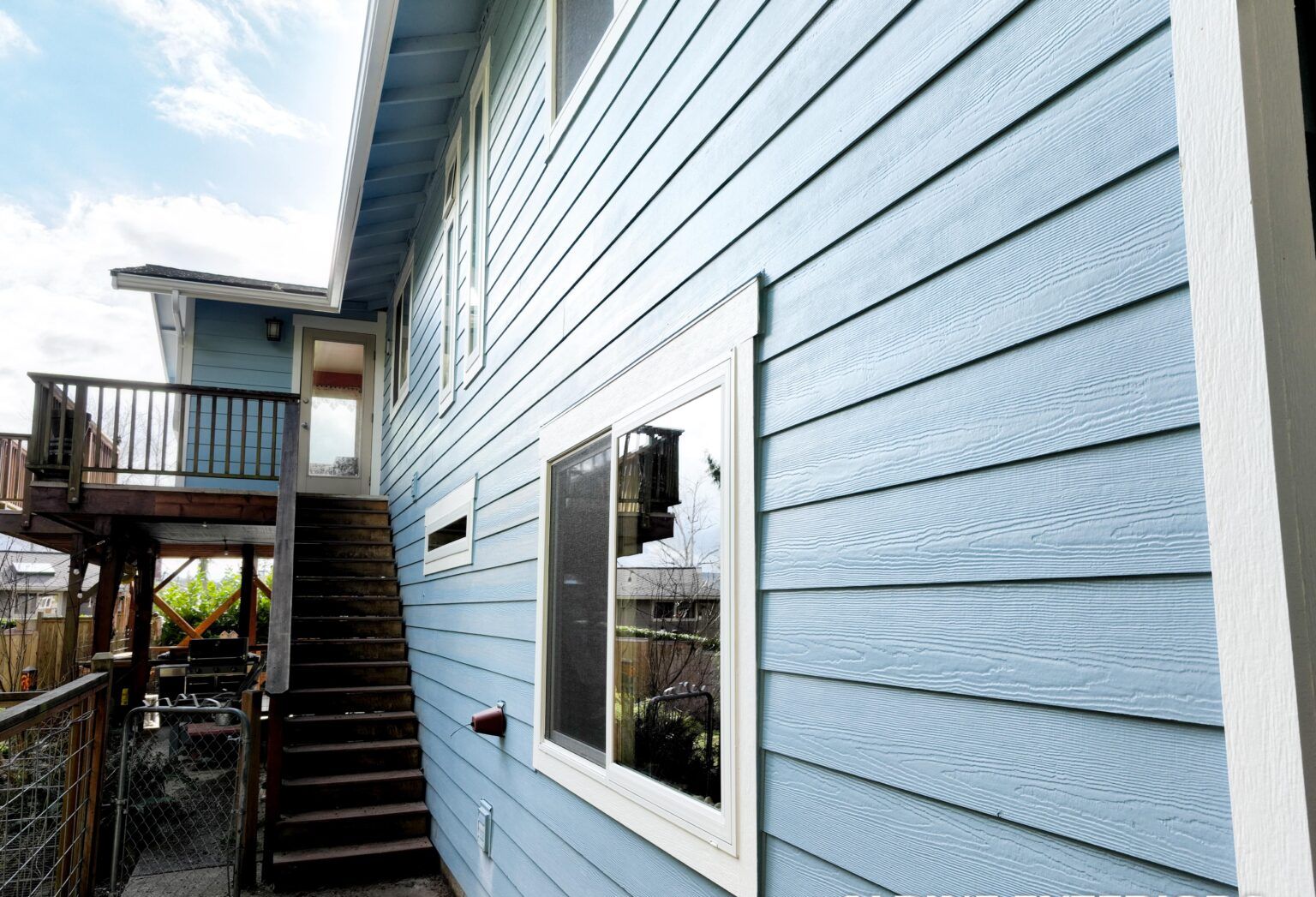
Most homes in Seven Oaks were built in the 2000s and 2010s, after Florida rewrote its building code following the 1992 hurricane season, so the siding, house wrap, and fastening schedules were installed under Florida Building Code wind-load and product-approval rules rather than older, looser standards. That's a real advantage in a storm, but it only holds if the original installation was done correctly and if replacement materials carry a matching Florida Product Approval (FL number) for the wind exposure at that specific lot — a detail that's easy for an inexperienced crew to skip.
The neighborhood's namesake oak canopy cuts both ways. Mature trees knock down summer heat and are a big part of why the community looks the way it does, but they're also a source of storm damage that a lot of homeowners don't expect from siding: wind-thrown limbs, acorns, and Spanish moss debris that dent, gouge, or puncture panels during a blow. Heavy shade also keeps certain wall sections — especially north-facing walls tucked behind landscaping — damp and slow to dry between storms, which is exactly the kind of spot where mildew shows up first.
Pasco County also sees frequent, ordinary summer thunderstorms on top of whatever a named tropical system brings, so wall assemblies here take repeated small hits all season, not just one event a year. Damage often accumulates in stages: a fastener works loose in June, a seam opens a little more in July, and then an August storm finally pushes enough water behind the panel to show up as a stain on the living room wall.
One thing that's genuinely different about Seven Oaks compared with Pinellas beach communities or bayfront Tampa neighborhoods: it's well inland from the Gulf and from Tampa Bay itself, so it doesn't deal with the constant salt-air corrosion on fasteners, trim, and metal flashing that coastal siding takes on day after day. That's a real advantage for long-term material life. It doesn't mean Seven Oaks is sheltered from wind, though — once a hurricane's wind field moves onshore, inland communities get largely the same sustained winds and gusts as the coast, just without the storm surge.
Pasco County also carries a meaningful subterranean termite population, and storm-damaged siding is one of the more common ways termites get an opening. Once wind-driven rain has been soaking wall sheathing, fascia, or framing behind a cracked panel for a few weeks, that wood is exactly the kind of persistently damp material termites are drawn to. A siding repair that gets put off for a season can quietly turn into a wood-destroying-organism problem that costs a lot more to fix than the original storm damage would have.
Start with safety, not repairs. Wait until wind has died down and the property is clear of downed lines before walking the exterior, and don't get on a ladder to inspect anything above the first story yourself — that's a job for a contractor with the right equipment.
Once it's safe, walk every elevation of the house and look for:
Photograph everything, including any debris still lying against the house, before you clean up. Then call your insurer to report the damage and ask directly whether it's being handled as a wind or named-storm claim, since that affects your deductible. It's also worth asking your adjuster or agent whether your policy pays replacement cost or actual cash value on siding — older siding is often paid out at depreciated value, which can leave a real gap between the claim check and the cost to redo a full elevation.
Get a written estimate from a licensed contractor before you sign anything with a repair company that shows up uninvited after a storm — that's common in Tampa Bay after any significant weather event, and not every crew doing storm work is licensed or planning to be around for a warranty call next year. Alpine Exteriors, licensed in Florida as RB29003900, inspects the wall assembly (not just the visible panel), documents what's found for the insurance file, and can tell you honestly when a section can be patched versus when a full elevation needs to come off.
Be realistic about matching. If your siding is more than a few years old, sun fading and possible discontinued colors or profiles mean a patched repair may not match the surrounding panels perfectly, even with the correct product. That's worth discussing with your contractor and your insurer up front rather than after the work is done. Costs for storm siding repair in the Tampa Bay area range widely depending on material, how much of the wall is affected, and whether sheathing or framing behind the siding also needs replacing — a like-for-like panel swap on one elevation is a very different job from a full tear-off with sheathing repair.
If you're in Seven Oaks specifically, check your HOA's architectural guidelines before committing to a material or color change on a full re-side — the community has standards for exterior appearance, and getting that approval sorted early avoids delays once repair work is scheduled. A Pasco County building permit is required for siding replacement beyond minor spot repair, and the permitted product needs a Florida Product Approval number on file. If a contractor is already on your roof or soffits for storm repairs, it's also a reasonable time to ask about having your wind mitigation inspection (the OIR-B1-1802 form insurers use for discounts) reverified, since some of what it documents — roof-to-wall connections, soffit condition — overlaps with storm repair work anyway.
Here's the same walk-around checklist Alpine Exteriors uses during storm-damage inspections in Seven Oaks:
| Area to Check | What to Look For | Why It Matters |
|---|---|---|
| Windward wall panels | Cracks, bowing, missing sections | First place wind-driven rain gets behind the wall |
| Seams and trim joints | Separation at J-channel, corner posts, window/door trim | Common entry point for wind-driven rain |
| Interior walls (same side) | Staining, soft drywall, musty smell | Sign water has already reached the wall cavity |
| Soffit and fascia | Cracks, sagging, gaps | Tied to the same roof-wall connection insurers evaluate |
| Base of exterior walls | Debris, limbs, impact marks | Confirms cause of damage for insurance documentation |
Most Florida homeowners policies cover sudden wind damage to siding, but coverage details vary by carrier and by policy, and a separate, often higher hurricane deductible usually applies to damage tied to a named storm rather than an ordinary thunderstorm. Whether your siding is reimbursed at replacement cost or actual cash value (which factors in depreciation for age) also depends on your specific policy, so it's worth reading that section or asking your agent directly rather than assuming either way.
Look at the pattern: storm damage tends to be concentrated on the wall that faced the wind and often lines up with debris impact or a single obvious event, while pre-existing failure — sun-brittled caulk, chalky or faded panels, fasteners that were already loose — tends to show up more evenly across the house regardless of wind direction. In practice the two often overlap, since brittle, aged material is exactly what gives way first in a storm, which is part of why a contractor inspection before filing a claim is worth the time.
Siding itself generally isn't a line item on the wind mitigation inspection form insurers use for discounts, but related work like soffit, fascia, and roof-to-wall connections can be, so if a storm repair touches those areas it's worth having the wind mitigation inspection updated afterward rather than assuming your existing discount still reflects the current condition of your home.
There's no fixed timeline, but Tampa Bay's humidity means the safe window is shorter than it would be in a drier climate — a cracked panel that keeps rain out most days can still let enough moisture behind the wall over a few weeks to start mold growth or attract termites to damp sheathing. Even if you can't schedule full repairs right away, a temporary weather-tight cover over the damaged section is far better than leaving it open through another round of storms.
If Seven Oaks took a hit in the last storm and you're not sure whether it's a caulk-and-touch-up job or something more, Alpine Exteriors (FL license RB29003900) inspects siding damage across Wesley Chapel, Tampa, Lutz, Land O' Lakes, New Port Richey, Plant City, and Zephyrhills, and will tell you plainly what's cosmetic and what's a moisture problem before you spend money or file a claim. Reach out for an inspection while the damage is still fresh — it's easier to document, and easier to fix before a few more humid weeks turn a repair into a bigger project.