
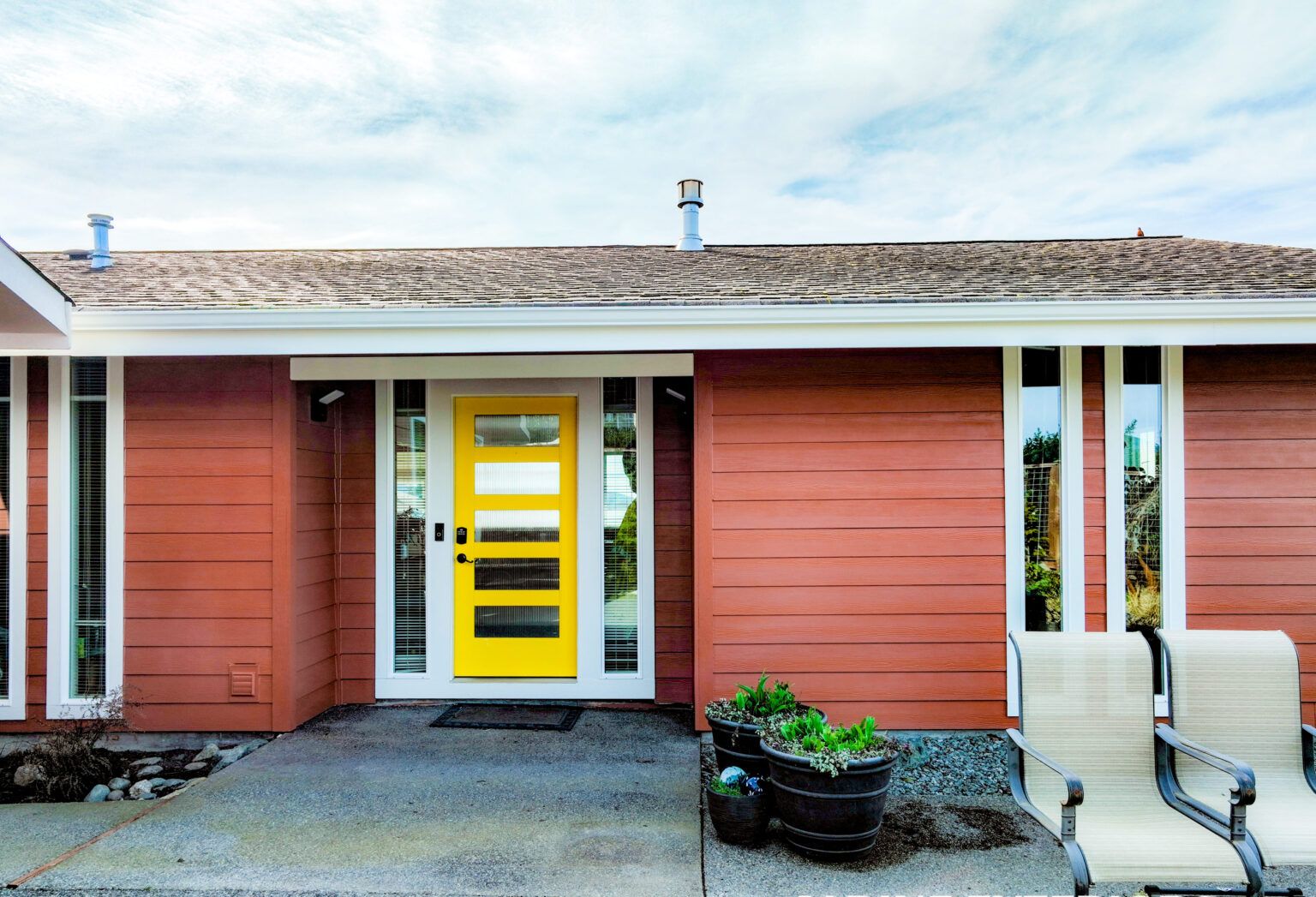
Seven Oaks is one of the larger established neighborhoods in Wesley Chapel, and a lot of its homes are now old enough that the original siding is showing its age. If you live off Boyette Road or anywhere inside the Seven Oaks footprint and you've started noticing something "off" about your exterior walls — a wave here, a soft spot there, a stain that won't wash off — it's worth taking seriously. Siding failure in Tampa Bay rarely announces itself with a single dramatic event. It's usually a slow accumulation of small signs, and by the time water damage or wood rot shows up on the inside of the house, the siding has often been letting moisture in for a year or more. This page walks through what to look for, why it happens here specifically, and how to tell the difference between something you can watch for a season and something that needs a contractor now.
Wavy or buckled panels. This is one of the most common complaints we hear from Seven Oaks homeowners with vinyl siding. The panels look like they're rippling, especially along a full wall section rather than in one isolated spot. In most cases this comes down to heat: vinyl expands and contracts with temperature swings, and Tampa Bay's summer sun on a west-facing wall can push surface temperatures well above what the siding was designed to handle if it was installed too tight or without the manufacturer's specified nailing clearance. Older installations, especially from builders who weren't accounting for our specific heat load, are more prone to this than recent work done to current Florida Product Approval standards.
Gaps, cracks, and pulled panels. A gap where two panels meet, or a panel that's visibly separated from the wall at a corner or a window, is a wind and water entry point. Wesley Chapel doesn't take direct hurricane landfalls every year, but it absorbs plenty of wind-driven rain from tropical systems that track through central Florida, and that rain doesn't fall straight down — it drives sideways into any opening in the siding. A gap that seems cosmetic in dry weather can be pushing water behind the wall assembly every time a storm comes through, which is a big part of why Florida Building Code product approvals for siding specify fastening patterns and wind-load ratings rather than leaving installation to guesswork.
Soft or spongy spots. If you press on a section of siding — particularly near the bottom of the wall, under windows, or below a roofline where water sheets off — and it gives like cardboard, that's usually rot in the sheathing behind it, not just a problem with the siding surface. This is one of the more serious signs on this list because it means the water intrusion has been happening for a while. Fiber cement and wood-based siding products are more susceptible to this than vinyl, but vinyl siding with a compromised water-resistive barrier behind it can hide the same problem for longer, since the plastic surface itself doesn't visibly rot.
Peeling or bubbling paint. On painted siding or trim, bubbles and peeling almost always mean moisture is trying to escape from underneath the paint film. Tampa Bay's humidity is high enough, year-round, that any trapped moisture behind a paint layer has nowhere to go and eventually pushes the paint off rather than drying out through it. If you're seeing this on trim boards around windows and doors more than on the field of the wall, it often points to a flashing or caulking failure at that specific opening rather than a whole-house siding problem.
Streaking, mildew, and musty odors. Some surface mildew on the north side of a house, or wherever shade and moisture linger, is common in this climate and not automatically a sign of failure — it's often just a cleaning issue. What matters is whether the growth keeps coming back quickly after cleaning, whether it's paired with a musty smell inside the house near that wall, or whether it's concentrated around a specific seam or penetration rather than spread evenly. Persistent, localized mildew is frequently a sign that water is getting behind the siding in that one spot and staying wet long enough to feed mold growth, rather than just sitting on the surface.
Termite and wood-boring insect signs. Central Florida has significant termite pressure, and any wood trim, fascia, or wood-based siding product is a potential target, especially where it's been kept damp by a siding failure. Small round holes, crumbling or "shelled" wood texture, or fine sawdust-like frass near the base of trim boards are signs worth having checked promptly, because termite damage compounds quickly once it starts and can affect structural framing, not just the siding itself.
Rising energy bills. This one is easy to overlook because it doesn't look like a siding problem at all. But wall insulation that's absorbed water loses much of its R-value, and an HVAC system working harder to keep up in our humidity and heat will show up on the electric bill before it shows up as a visible siding defect. If your cooling costs have crept up over a year or two with no other changes to the house, it's worth having the exterior wall assembly inspected, not just the AC unit.
Not every item on this list needs a same-week response, but some genuinely do. Here's a practical way to sort them.
Address soon, but not an emergency: Minor surface mildew that cleans off and doesn't return quickly, a single small ripple in one panel on a hot wall, faded or chalky color on older vinyl, or a bit of paint wear on trim that's otherwise solid. These are worth putting on a maintenance list and watching over the next storm season, but they're not actively letting water into the structure yet.
Get it looked at before the next storm season, ideally within a few weeks: Gaps or cracks at seams and corners, panels that have started to pull loose, peeling paint that's spreading, or streaking that keeps coming back after cleaning. These are the signs that tend to worsen quickly once wind-driven rain gets behind them, and Wesley Chapel's storm season (June through November) is exactly when that happens.
Call a contractor now: Soft or spongy spots anywhere on the wall, visible wood rot, active termite signs, a musty smell inside the home near an exterior wall, or any siding that has actually detached in a storm. At this stage the underlying structure may already be compromised, and every additional wet season makes the repair bigger and more expensive. This is also the point where a homeowner's insurance carrier may start asking questions during a wind mitigation inspection tied to the OIR-B1-1802 form, since visibly deteriorated siding and unsecured panels can affect how a home is rated.
The right first step is almost always a hands-on inspection rather than guessing from the ground. A lot of the signs above look similar from a distance — a stain could be mildew or it could be a sign of rot underneath — and the only reliable way to tell them apart is to get close to the wall, press on a few spots, and in some cases pull a section of siding to check the sheathing behind it. When Alpine Exteriors inspects a Seven Oaks home, the goal is to give a straight answer about which sections are cosmetic, which are heading toward a problem, and which need attention before the next named storm comes through, rather than recommending a full re-side when a targeted repair would do the job.
If the inspection turns up isolated damage — a few panels near one downspout, trim around a single window — a repair or partial replacement is often enough, and it's the more budget-friendly path. If the damage is spread across multiple walls, or if the original installation didn't meet current wind-load expectations for this area, a full siding replacement using products with current Florida Product Approval ratings is usually the more durable long-term choice, even though it's the bigger upfront cost. Either way, it helps to get more than one opinion before committing to a full re-side, and to ask any contractor directly what wind rating and code compliance the proposed product carries for Pasco County installations.
It depends heavily on scope. A localized repair — replacing a few damaged panels or resealing trim around one or two windows — is generally a modest cost measured in the hundreds of dollars. A full siding replacement on an average Seven Oaks home runs into the thousands to tens of thousands of dollars depending on square footage, the product chosen, and how much of the underlying sheathing needs to be replaced. We don't quote firm numbers without seeing the house, since the condition of what's behind the siding drives the price as much as the siding itself does.
Sometimes, yes. If the mildew is surface-level and the wall underneath is solid, a wash is often all that's needed, and it's worth trying before assuming the worst. The distinction is whether the growth keeps returning quickly in the same spot — that pattern usually means moisture is getting trapped behind the siding at that location, and cleaning the surface won't fix the underlying source.
Coverage varies by policy and by cause of loss, so this is really a question for your insurance agent. What we can tell you is that documented wind damage from a named storm is treated very differently than gradual deterioration or lack of maintenance, and an up-to-date wind mitigation inspection (the OIR-B1-1802 form) that reflects properly secured, code-compliant siding can affect your premium either way.
A targeted repair on a section of wall can often be done in a day or two. A full replacement on a single-family Seven Oaks home more typically takes one to two weeks depending on the size of the house, weather delays during our summer storm pattern, and whether any sheathing or framing repair is needed underneath before the new siding goes on.
If any of the signs above sound familiar, it's worth getting a professional set of eyes on the house before the next round of Tampa Bay storms tests it further. Alpine Exteriors is a licensed Florida contractor (RB29003900) serving Seven Oaks, the rest of Wesley Chapel, and the surrounding Tampa Bay communities including Lutz, Land O' Lakes, New Port Richey, Plant City, and Zephyrhills. Reach out for an inspection, and we'll tell you plainly whether you're looking at a minor repair, a bigger project, or something that can reasonably wait — no pressure toward the most expensive option.